
How Poppy Is Actually Pronounced in Everyday Speech
| Element | Phonetic Detail | Quick Tip |
|---|---|---|
| Standard Pronunciation | POP-ee | Say “pop” like the sound, then add a light “ee.” |
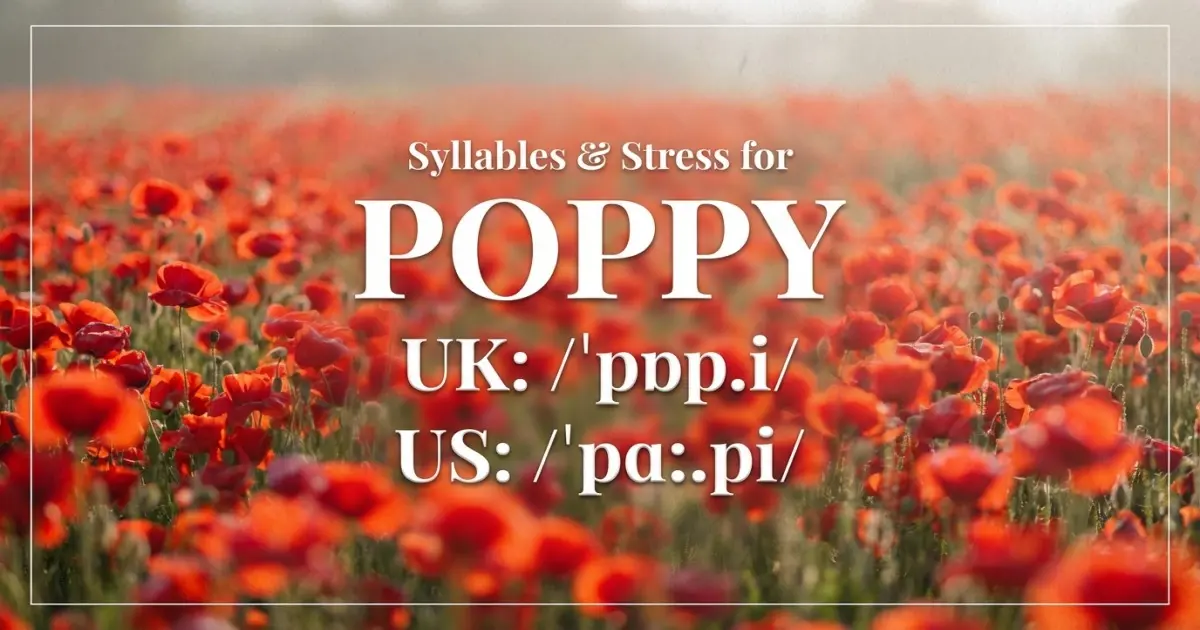
| IPA (US) | /ˈpɑːpi/ | The first vowel is open, like “ah” in “father.” |
| IPA (UK) | /ˈpɒpi/ | The first vowel is shorter and rounder, like “o” in “lot.” |
| Syllables | 2 (POP–ee) | Keep the rhythm even and clear. |
| Stress | First syllable | Emphasize “POP,” not the ending. |
| Ending Sound | “-ee” /i/ | Keep it light and quick, not stretched. |
Poppy Pronunciation Basics: Syllables, Stress, and Flow
Poppy is built on a simple two-syllable structure: POP–ee. The first syllable carries the stress, which means it is spoken more strongly and slightly longer than the second. This stress pattern gives the name its forward momentum—it begins with impact and ends with softness.
The “p” sound at the beginning is a plosive consonant. It is produced by briefly stopping airflow and then releasing it, creating a small burst of sound. This gives the name its crisp, energetic opening. Because the same consonant appears again in the middle, the rhythm feels reinforced rather than diluted.
The second syllable, “ee,” functions as a soft landing. It is a high front vowel, meaning the tongue is positioned forward in the mouth and the sound is relatively closed. This creates a light, bright finish that balances the stronger opening.
Together, these elements produce a name that feels complete within a very short space. The rhythm is clear, the stress is predictable, and the sound transitions smoothly from strong to soft.
Why the First Syllable Matters Most
Because Poppy is stress-initial, the first syllable defines how the name is perceived. If “POP” is pronounced clearly, the rest of the name naturally falls into place. If it is weakened or rushed, the entire name can sound unclear.
Keeping the Ending Light and Natural
The “ee” ending should not be overemphasized. Extending it too much can make the name sound exaggerated. A quick, clean finish maintains the natural rhythm.
Poppy Across Accents: Subtle Differences in Sound
While Poppy is pronounced similarly across English-speaking regions, the main variation lies in the vowel of the first syllable. This difference is small but noticeable.
In American English, the vowel tends toward /ɑː/, producing a sound closer to “pah-pee.” It is slightly more open and relaxed. In British English, the vowel is /ɒ/, resulting in a shorter, rounder “pop-ee.”
Despite this variation, the structure of the name remains consistent. The stress stays on the first syllable, and the ending remains a clear “ee.” This consistency is one reason Poppy travels easily across accents without losing its identity.
American English Patterns
The American version often sounds a bit broader due to the open vowel. This can make the name feel slightly more relaxed in tone.
British English Patterns
The British version is more compact, with a tighter vowel sound. This gives the name a slightly sharper, more contained quality.
Common Mistakes When Saying Poppy
Overstretching the Ending
One of the most common mistakes is extending the “ee” sound too long, turning it into something like “POP-eee.” This disrupts the balance of the name and makes it sound less natural.
Flattening the First Syllable
If the first syllable is not clearly stressed, the name can lose its defining rhythm. Saying “puh-pee” instead of “POP-ee” weakens the structure and makes the name less recognizable.
Adding Extra Sounds
Occasionally, speakers may insert an extra vowel or soften the consonants too much, especially if they are unfamiliar with the name. Keeping the pronunciation simple and direct avoids this issue.
Poppy and Its Sound Neighbors
Poppy shares phonetic space with other short, two-syllable names that feature repetition and a soft ending. Names like Molly or Holly follow a similar pattern, combining a stressed first syllable with a lighter second.
This pattern is common in English because it is easy to process and pleasant to hear. The repetition of consonants and the use of an “ee” ending create a sense of familiarity, even when the name itself is distinctive.
Poppy stands out within this group because of its plosive “p” sounds, which are more energetic than the softer consonants in many similar names. This gives it a slightly brighter and more dynamic quality.
Practicing Poppy: How to Get the Sound Right Quickly
Break It Into Two Clear Beats
Start by saying “pop” as a standalone word. Then add a quick “ee” sound. Combining them smoothly—POP-ee—helps establish the correct rhythm.
Use Everyday Reference Words
Think of “pop” as in a popping sound, followed by “ee” as in “see.” This familiar reference makes the pronunciation intuitive.
Practice in Natural Sentences
Saying the name within a sentence helps reinforce its natural flow. For example: “Poppy is over here,” or “Have you met Poppy?” This ensures the pronunciation feels integrated rather than isolated.
Poppy Pronunciation as a Balance of Energy and Ease
Poppy succeeds as a spoken name because it balances clarity with character. The strong opening gives it presence, while the soft ending keeps it approachable. This combination allows the name to feel both lively and effortless.
Its pronunciation does not require adjustment or explanation in most contexts. The structure is intuitive, and the sound pattern is familiar. At the same time, its specific combination of consonants and vowels gives it a distinct identity.
In the end, Poppy is a name that demonstrates how sound shapes perception. It is not just what the name means, but how it is said that gives it life. And when spoken naturally—POP-ee—it carries exactly the kind of brightness and ease that the name suggests.