
Nicknames for Patrick: Options That Feel Friendly, Casual, and Natural
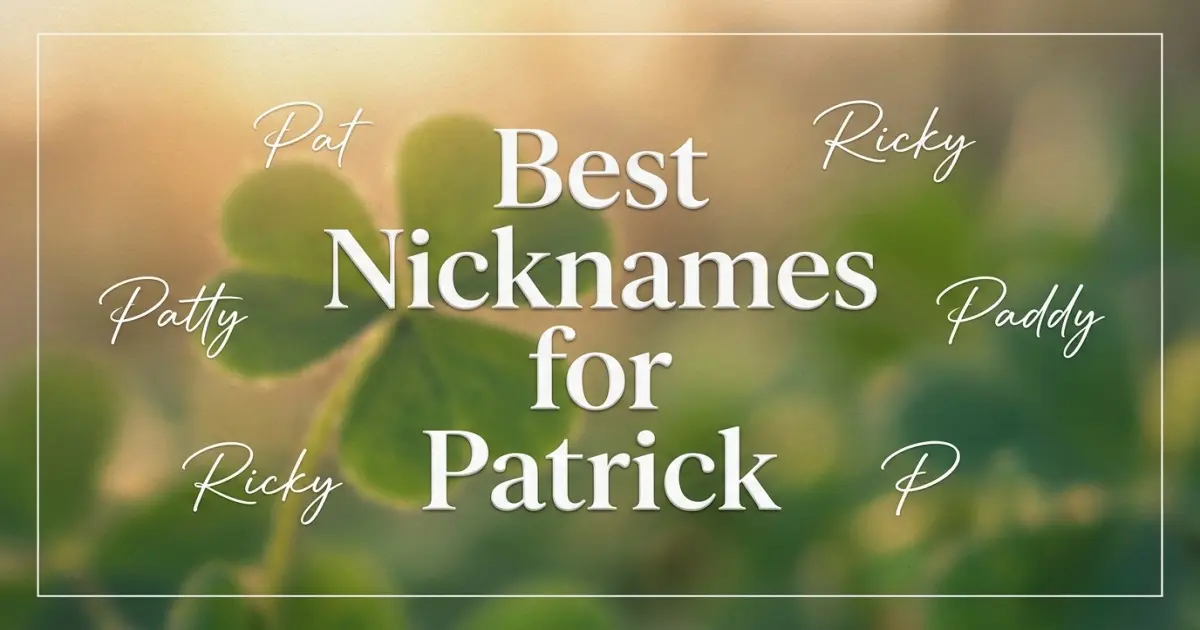
A nickname is not just a reduction in length. It is a reduction in distance. The full name belongs to forms, classrooms, introductions, and all the places where identity has to be legible before it can be personal. The nickname belongs to whoever is close enough to alter the shape of the name without breaking it. Friends cut for speed. Siblings cut for habit. Parents soften for tenderness. Partners often create a version that feels less like a formal label and more like a private language.
That matters with Patrick because the full name is already so socially complete. It is familiar, balanced, and easy to say in almost any setting. Official data shows it remains widely recognized in current use, and that social familiarity affects the nickname culture around it. Patrick does not need a nickname in order to work. When one appears, it usually exists to change tone rather than solve a practical problem. It can make Patrick friendlier, warmer, more Irish, more old-fashioned, or more private. And because the stress falls so clearly on the first syllable, the most believable nicknames stay close to that front sound rather than wandering far from it. Nicknames add personality at the surface, but the deeper weight of the name still sits in Patrick meaning.
What Patrick’s nickname landscape reveals about the name itself
| Group | Suggested Nicknames | Persona | Use Context |
|---|---|---|---|
| Classic familiar forms | Pat, Paddy | Recognizable, grounded, socially easy | Family, school, community life, everyday casual use |
| Historical and affectionate forms | Patty, Paddy | Warm, traditional, relationship-led | Older relatives, family use, heritage-minded circles |
| Peer shorthand | Pats, P | Quick, modern, lightly playful | Friends, siblings, texting, team settings |
| Playful home forms | Pat-Pat, Paddy-boy | Tender, child-centered, intimate | Parents, grandparents, early childhood, home use |
| DIY private forms | Pat-bear, P | Relationship-specific, affectionate, homegrown | Partners, very close family, inner-circle language |
Patrick has a smaller nickname world than some parents expect, and that is part of its strength
Why fully formed names often generate fewer but better nicknames
Patrick belongs to a class of names that are already finished in public life. It is not overly long, not difficult to pronounce, and not so formal that people feel obliged to cut it down immediately. That means its nickname world is selective rather than sprawling. Instead of producing a dozen equally plausible short forms, Patrick tends to keep a handful of enduring ones that people actually use.
This is often a good sign. Names with too many possible nicknames can become tonally confused. Patrick is more disciplined. The full name stays strong in public, while the nicknames emerge only where familiarity has earned them. Historically, forms such as Pat, Paddy, and Patty have been closely linked to Patrick, and that long familiarity helps them feel lived-in rather than freshly invented.
Why tone matters more than convenience with Patrick
Because Patrick is already easy to carry, a nickname changes atmosphere more than it changes function. Pat makes the name plainer and friendlier. Paddy makes it more culturally specific and more warmly traditional. Patty softens it further and gives it a slightly older familiar feel. Pats pushes it into casual peer speech. P turns it into modern shorthand. These are not merely shorter versions. They are different emotional versions of the same identity.
Patrick keeps most of its nickname energy in the opening syllable
The opening zone: why Pat feels inevitable
The most natural nickname for Patrick is still Pat. The reason is structural. The first syllable carries the stress, so the ear already hears it as the core of the name. English nickname habits almost always shorten toward the stressed opening when that opening is strong enough to stand alone, and Patrick fits that pattern perfectly. These nickname choices read more clearly once the spoken shape of the full name is in view, so see how to pronounce Patrick.
Pat also works across life stages. On a child, it sounds warm and uncomplicated. On an adult, it remains credible in professional and public life. That durability is part of what makes it so powerful. A nickname that can survive childhood, work, friendship, and older age without sounding misplaced is not a fallback form. It is a real parallel identity.
Why Pats belongs to the peer world
Pats is a lighter variation on the same opening zone. Compared with Pat, it sounds more casual, slightly more teasing, and more clearly shaped by friend-group speech. This kind of added final s often appears in close social circles because it makes the name feel more internal to the group without changing it too dramatically.
That means Pats is believable, but narrower in use. It is less likely to be chosen by grandparents or on formal documents, and more likely to arise among siblings, old school friends, or teammates who speak in quick shorthand. It belongs to familiarity of habit rather than tenderness.
Patrick’s strongest affectionate forms come from tradition as much as from sound
Why Paddy changes the social temperature of Patrick
If Pat is the clean and universal short form, Paddy is the nickname that carries more history and atmosphere. Historically, Paddy developed as a shortened form of Patrick and later became a name in its own right in some contexts. That history matters because it makes Paddy feel older and more rooted than a casual modern invention would.
Emotionally, Paddy softens the full name without weakening it. It sounds warmer, more regional, and more familial. For some families, especially those with Irish heritage or affection for older naming traditions, Paddy gives Patrick a friendlier and more culturally textured life. It is less neutral than Pat and more specifically colored by history and tone. That is exactly why some parents love it and others prefer to keep it in the family sphere rather than use it everywhere.
Why Patty feels older and more intimate now
Patty is a historically recognized familiar form, but modern ears often hear it differently than earlier generations did. Because it now overlaps strongly with feminine nickname culture in some settings, it tends to feel more private, old-fashioned, or relationship-specific when attached to Patrick. That does not make it implausible. It simply changes where it feels most natural.
In practice, Patty works best where family history, older relatives, or affectionate household speech keep it alive. It is less likely to feel like the default public nickname for a modern boy named Patrick, but it still makes sense as an intimate familiar form. That is important to acknowledge. Good nickname writing should reflect how people actually hear names now, not only how a guidebook once listed them.
Patrick’s ending is weaker as a nickname source, which is why the back half rarely takes over
Why ending-led cuts feel less natural for Patrick
The last syllable of Patrick is not where most listeners locate the identity of the name. The stress is too firmly planted at the front. That is why nicknames built from the back half rarely feel as inevitable as Pat or Paddy. The name simply does not want to live there in the same way.
This is useful to recognize because it keeps the nickname system believable. Not every name divides neatly into multiple phonetic zones that can each support a strong everyday short form. Patrick is a front-led name. Its best nicknames accept that rather than fight it.
Why modern shorthand moves toward initials instead of reinvention
Because the ending does not naturally generate a strong independent nickname, modern casual culture often reaches for the initial instead. P works best in texting, sports, sibling shorthand, and close peer groups where a single letter is enough to carry the full identity. It is efficient, contemporary, and highly context-bound.
What P does not usually carry is warmth. It belongs to speed more than tenderness. That makes it real, but narrow. It is less a family nickname than a modern convenience.
Which Patrick nicknames actually last as he grows
The forms most likely to survive from childhood into adulthood
If the question is durability, the strongest answers are Pat and Paddy, with Pats and P surviving in more limited social lanes. Pat remains the safest all-purpose nickname because it works almost everywhere. Paddy can also last beautifully, especially in families or communities where its historical and cultural texture feels natural rather than overly marked.
Pats may survive in long-term friend culture, and P can persist in text-driven environments, but neither usually replaces the full social reach of Pat. Patty can endure as a family name, though it now tends to live more privately than publicly.
The names most likely to stay inside the family circle
Forms like Pat-Pat, Paddy-boy, and Pat-bear are the kinds of names that usually remain inside the household or intimate circle. That does not make them less real. In many lives, the private nicknames are the ones with the deepest emotional weight. They are not designed for public use. They are designed for affection.
In the end, Patrick has a nickname system that suits the name perfectly: stable, familiar, and human. A boy can remain Patrick in formal life, become Pat almost anywhere casual, turn into Paddy in warmer or more heritage-conscious settings, and gather softer names at home. That is not a narrow nickname life. It is a well-built one, and well-built nicknames are usually the ones that last.