
Paloma Name Meaning: History, Emotion, and Enduring Style
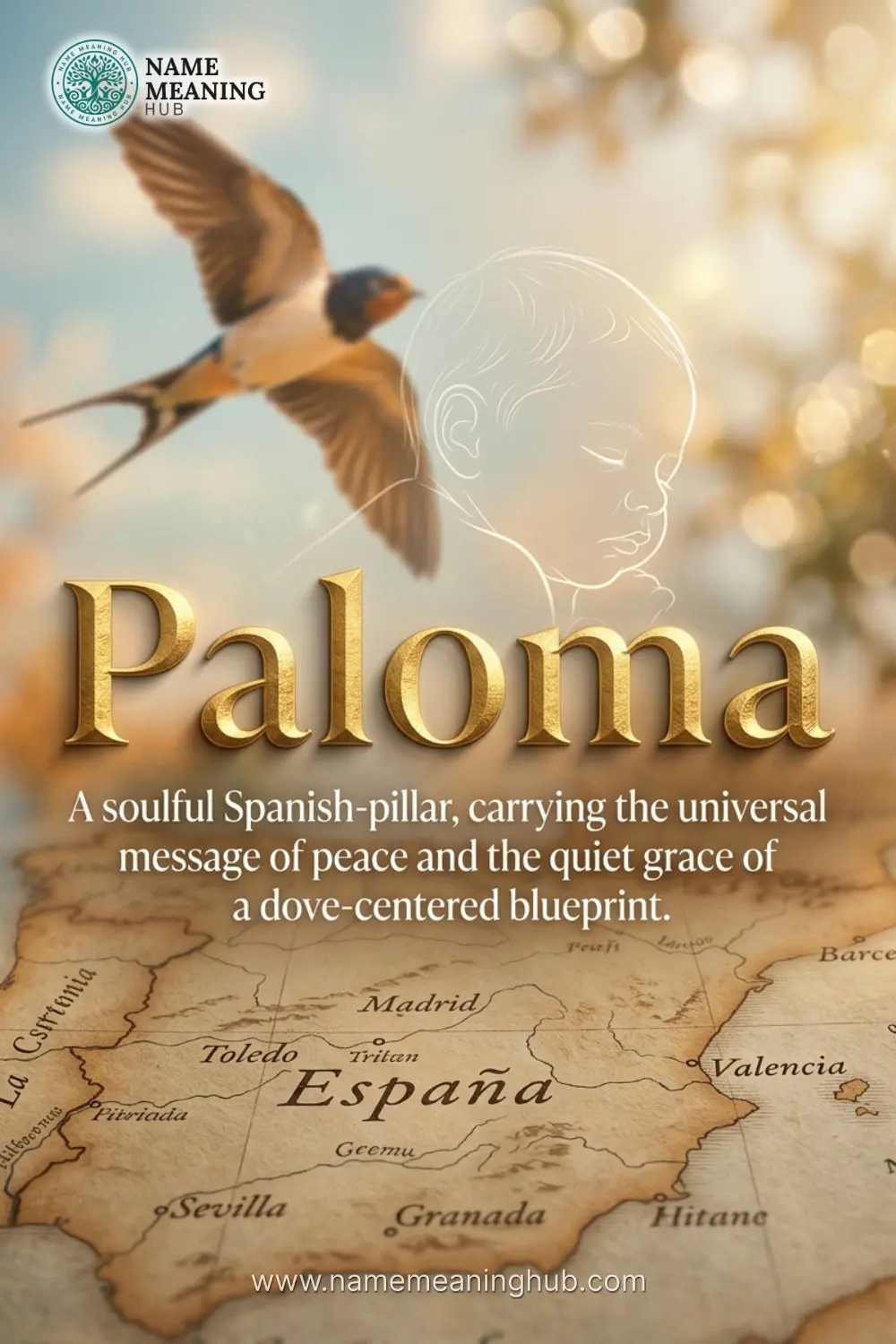
Paloma is one of those names that seems to arrive already carrying an image. You do not hear it first as an abstract cluster of syllables. You hear it with wings. As a Spanish name meaning “dove,” Paloma enters language through symbol before it enters biography. That matters, because the dove is one of the oldest and most enduring creatures in the human imagination. It has been asked, across centuries, to stand for peace, tenderness, return, blessing, and the fragile but persistent possibility that gentleness can survive catastrophe. A name built on that image is never only decorative. It carries an emotional inheritance older than fashion.
What makes Paloma especially interesting, though, is that it does not sound weak. Soft, yes. Graceful, certainly. But not weak. Pronounced puh-LOH-muh, the name has a rounded, embodied sound. It opens quietly, gathers warmth in the middle, and lands with a steady calm. Official data shows Paloma remains inside the U.S. girls’ Top 1000 in 2024, which gives it a useful social position: visible enough to feel real, uncommon enough to preserve its atmosphere. That is exactly where a name like Paloma tends to shine. It feels familiar without feeling overhandled, symbolic without feeling theatrical, and elegant without becoming remote. In the best sense, it is a peace name with weight in the body.
Paloma's U.S. popularity rank over time, 1921–2024
Popularity statistics are based on official data from the Social Security Administration baby name records.
Paloma: A Poetic and Universal Symbol of Peace
Paloma reads as a name with one unmistakable center of gravity, where the girls’ side of the chart provide its primary visibility. Reaching its height in 2024, it continues to behave as a reliable choice parents trust for its soft sound and evocative connection to the dove.
The absence of crossover usage reinforces its focused feminine profile. Meaning “dove,” its rhythmic three-syllable structure provides a texture of refined charm and spiritual strength.
Paloma already tells a story before the child does
| Key Facts | Information | Quick Insight |
|---|---|---|
| Name | Paloma | Paloma feels complete and image-rich at first meeting, which gives it unusual memorability without needing complication. |
| Primary Gender Usage | Female | Its current usage is clearly feminine, but the sound has enough depth to keep it from feeling overly delicate. |
| Origin | Spanish | The Spanish framing gives Paloma directness and warmth, because it feels like a living word rather than a distant derivation. |
| Meaning | Dove | This is not just a bird image. It is a symbol of peace, return, tenderness, and the kind of calm that survives pressure. |
| Pronunciation | puh-LOH-muh | The soft opening and rounded center make the name feel graceful, while the full vowels keep it grounded and audible. |
| IPA | /pəˈloʊmə/ (US), /pəˈləʊmə/ (UK) | The core rhythm stays steady across major English accents, which helps the name travel well. |
| Syllable Count | 3 | Three syllables give Paloma enough movement to feel elegant, but not so many that it becomes cumbersome. |
| U.S. girls’ rank (2024) | No. 971 | This ranking keeps Paloma in the sweet spot where it feels known, intentional, and still lightly distinctive. |
Paloma is a dove name, but not a fragile one
The quickest mistake a listener could make with Paloma is to assume that a dove name must be only soft. The symbol is gentler than an eagle, certainly, and quieter than a lion. But it is not empty gentleness. Historically, the dove has rarely meant mere prettiness. It has carried messages. It has marked return after danger. It has appeared in art, poetry, and religious imagination as a sign not of ornamental peace, but of peace recovered, peace carried, peace offered after upheaval. That is a more demanding meaning than simple sweetness.
Paloma therefore belongs to a category of names whose emotional force lies in restraint. It does not announce conquest, fire, or thunder. Instead, it implies the kind of strength that refuses spectacle. In human terms, that often reads as composure, tact, emotional steadiness, and an ability to soften a space without disappearing inside it. This is one reason the name works so well in contemporary life. Many parents want names that feel feminine without making softness equivalent to weakness. Paloma offers that balance almost perfectly.
Why the dove in Paloma means more than peace alone
Peace, in naming language, can sometimes sound passive. But the dove has almost never represented passivity in the deeper symbolic tradition. It represents motion toward safety, the possibility of return, and the persistence of hope after uncertainty. A dove does not dominate a landscape. It changes the emotional reading of that landscape. That is exactly the kind of symbolic intelligence Paloma carries. It is a name about atmosphere, but atmosphere with memory inside it.
This matters because names are often chosen less for literal meaning than for the kind of person they suggest. Paloma suggests someone whose presence might calm rather than impress, but in a way that still holds form. It imagines grace not as decoration, but as influence.
Why Paloma feels stronger than many other gentle names
Some soft names risk sounding airy enough to vanish. Paloma does not. The reason is partly symbolic, but also sonic. The meaning gives it depth, but the sound gives it body. That combination keeps the name from becoming merely poetic. It remains livable. On a child, Paloma sounds affectionate and bright. On an adult, it can sound dignified, warm, and quietly self-possessed. That is usually the sign of a name with real structural strength.
Why Paloma sounds grounded even while the image takes flight
Pronounced puh-LOH-muh, Paloma has one of the most useful balances a name can have: it sounds graceful without sounding thin. The opening syllable is soft and unstressed. The middle syllable expands into the warm LOH sound. The final syllable closes gently, but not weakly. This gives the name a bodily rhythm. It moves, but it also lands.
That matters because a bird-name meaning could easily have become too airy if the sound pattern were lighter. Instead, Paloma is made of rounded vowels and grounded consonants. The p gives it a clear start. The l, a liquid consonant, lets the sound flow without hardening it. The m in the final syllable gives the ending warmth and weight. Even before anyone knows the meaning “dove,” the ear already senses that this is not a brittle name. It is calm, but embodied.
This is part of why Paloma succeeds socially. It does not ask the listener to choose between elegance and warmth. It carries both. The sound is polished enough for formal use, but rounded enough to remain intimate in ordinary life. It can be spoken tenderly at home, but it also looks and sounds complete on a professional introduction, a certificate, or a stage.
The center of Paloma is where the name opens fully
The stressed middle syllable, LOH, is crucial. It gives the name its spaciousness. Without that long, open center, Paloma might feel clipped or overly slight. With it, the name acquires warmth and confidence. The central stress is what keeps the sound from drifting into pure softness. It gives the name its chest voice.
Why Paloma’s ending keeps the name human
The final -muh matters more than people often notice. It makes the name feel finished without sounding hard. That is a subtle but important distinction. If Paloma ended on a sharper consonant, it might feel more fashionable but less tender. The gentle close allows the dove symbolism to remain believable. The ending helps the whole name sound like something that belongs not just in poetry, but in a family.
Paloma carries Spanish warmth in a way many symbolic names do not
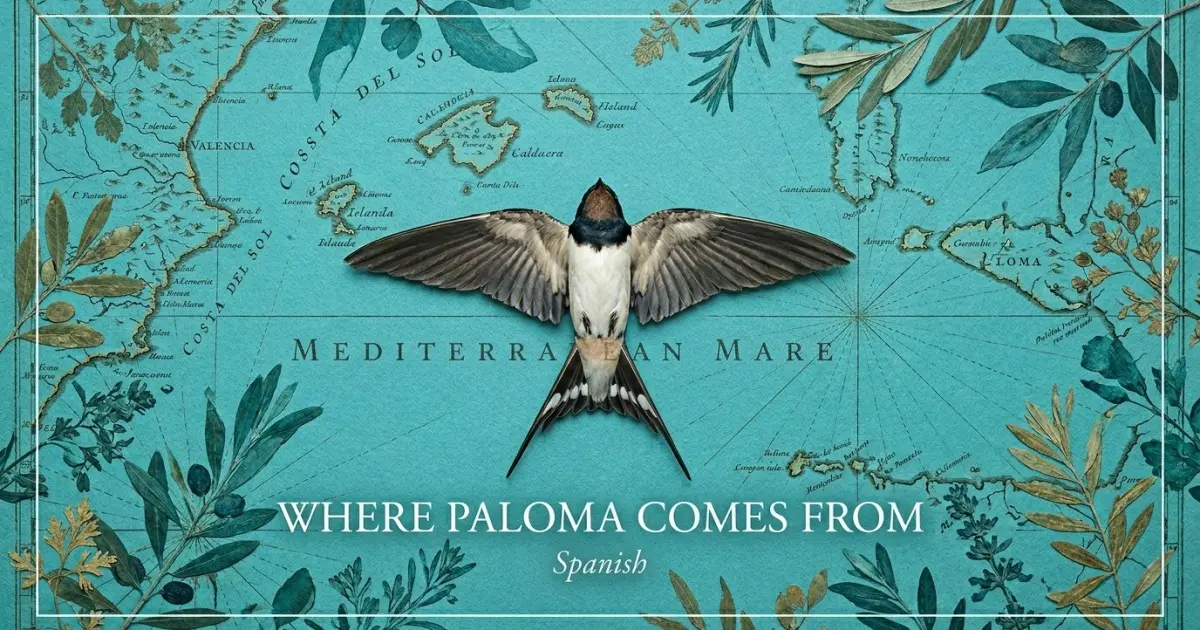
Because Paloma is a Spanish name meaning “dove,” it has a rare kind of transparency. Some names carry a symbolic meaning only through etymological history, and most listeners never feel the connection. Paloma is different. It feels close to its image. Even people who do not know Spanish often sense that the name carries a direct, intact identity rather than a hidden root. That creates immediacy.
This directness is one reason the name never feels overdesigned. Paloma does not sound like a concept assembled for effect. It sounds like a real word with a life of its own. That gives it warmth. It also gives it a subtle cosmopolitan ease. The name feels international without becoming abstract, romantic without becoming ornamental, and distinctive without being difficult to say.
Spanish-origin names often succeed in English when they retain this blend of clarity and music. Paloma does exactly that. It is easy for English speakers to pronounce once heard, but it still keeps enough of its original flavor to feel rooted. That is a very valuable combination. It means the name can travel across communities without losing its sense of origin or becoming socially awkward. To browse more names from this linguistic and cultural background, explore baby names of Spanish origin.
There is also something stylistically useful about how Paloma wears its elegance. It does not feel aristocratic or severe. It feels warm, cultured, and self-contained. That makes it a compelling choice for parents who want a name with beauty and imagery, but who do not want a child’s name to sound too fragile, too ornate, or too tightly attached to trend.
Paloma at the edge of the chart keeps its symbolism intact
Official Social Security Administration (SSA) data places Paloma at No. 971 for girls in the United States in 2024. That ranking tells a very specific story. Paloma is not obscure. It exists in current naming life. People are choosing it. But it also remains comfortably outside the most crowded part of the chart, which allows the name to retain a sense of selectiveness and atmosphere. If you are building a shortlist around names like Paloma, browse more girl names and meanings.
This is especially important for a symbol-rich name. Names that depend strongly on image often lose some of their force when they become too common. A dove name works best when it still feels hand-chosen rather than mass-adopted. Paloma’s current ranking gives it exactly that advantage. It is visible enough to be socially easy, but rare enough to remain intentional.
That makes the name particularly attractive to parents who want recognizability without repetition. A child named Paloma is unlikely to spend her whole life explaining the name, but she is also unlikely to be one of many in the same room. This is often the ideal position for a modern name: familiar enough to function, uncommon enough to belong strongly to one person.
In other words, Paloma occupies a useful kind of rarity. It is not isolating rarity. It is curated rarity. The kind that suggests taste rather than novelty for novelty’s sake.
Paloma offers peace, but not passivity
One of the strongest things that can be said about Paloma is that it redefines what gentleness sounds like in a name. Too often, gentle names are assumed to be weak names, or names that will only suit a narrow kind of femininity. Paloma quietly resists that assumption. It offers peace, but not passivity. It offers elegance, but not distance. It offers a symbol of calm, but one that has always been tied to movement, return, and message-bearing.
That is why the name has unusual versatility. On a child, it can sound tender and luminous. On an adult, it can sound composed, interesting, and fully built. It does not rely on cuteness. It relies on atmosphere, and atmosphere often ages better than charm. The dove inside the name remains meaningful across time because it can be read differently at each stage of life: innocence in childhood, composure in adulthood, peace won rather than merely imagined in maturity.
This layered readability gives Paloma one of the best qualities a symbolic name can have. It is not trapped in one emotional register. It can be sweet without becoming childish, calm without becoming bland, and elevated without becoming remote. That is why it feels less like an aesthetic flourish and more like a real identity.
Where Paloma opens three more doors
Paloma with middle names can lean vintage, luminous, or sharply modern
Because Paloma already carries such a strong image, the middle name plays an important framing role. A crisp middle can make it feel more tailored, while a softer one can deepen the name’s poetic atmosphere. The pairing choice matters more here than it might with a flatter first name. If you want the full pairing logic behind that contrast, see middle names for Paloma.
Paloma nicknames change the distance, not the symbol
The full name is complete enough to stand on its own, but its nickname possibilities can make it feel more playful, more intimate, or more everyday. The dove image remains, but the social temperature changes depending on who is speaking. To see how those different moods shorten in real life, explore nicknames for Paloma.
Paloma pronunciation works because the music is already built in
puh-LOH-muh is one of the name’s greatest strengths. The soft opening, open center, and warm ending make the name easy to carry in real life while preserving all of its elegance. For the detailed stress pattern, accent notes, and IPA, see how to pronounce Paloma.
Why Paloma stays in the mind after the introduction
Paloma succeeds because it offers more than beauty, but never stops being beautiful. The dove at its center gives the name an ancient emotional vocabulary: peace, return, gentleness, hope, and the strange durability of calm. The sound of the name keeps that symbolism close to the body. It does not float away into abstraction. It remains usable, warm, and vividly human.
That combination is what gives the name its staying power. Official data shows Paloma remains uncommon enough to feel deliberate, and that suits it. A symbolic name should still feel chosen. It should still feel as though someone listened for it rather than simply followed a chart. Paloma carries that quality. It sounds like a name selected for atmosphere and kept for substance.
In the end, Paloma leaves behind a very particular kind of impression. It does not flash. It steadies. It does not overwhelm. It alters the room quietly. That is the deeper genius of the name. The dove has never really been a symbol of weakness. It has been a symbol of what remains possible after noise, after fear, after wandering. Paloma carries that whole inheritance in three soft syllables. And that is what makes Paloma more than graceful. It makes Paloma profound.