
How to Pronounce Omar: What People Often Get Wrong
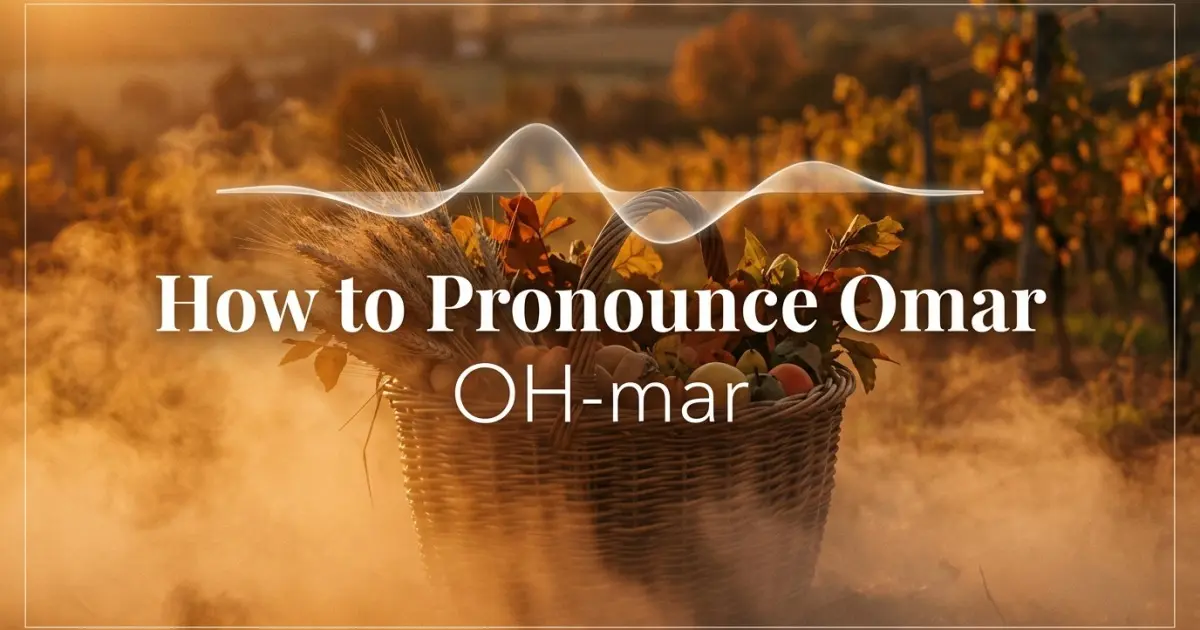
The most revealing moment in Omar’s pronunciation often happens in a very ordinary place: a teacher reading a new attendance list, a receptionist calling from a waiting room, a host pausing over a reservation book and deciding where the stress belongs before speaking. Omar usually creates only a brief hesitation, and for a useful reason. The name looks familiar enough to feel accessible, but it also carries a clear Arabic identity that reminds readers not to rush. Once spoken aloud, though, the name settles quickly. In everyday English, Omar is said as OH-mar.
That ease is one of the name’s quiet strengths. Omar does not depend on unusual consonants or a difficult rhythm to sound distinctive. It gets its elegance from balance: a broad opening syllable, a warm consonant in the middle, and a second syllable that lands with calm rather than force. The result is a name that sounds rooted and dignified without becoming heavy. It is memorable not because it is difficult, but because it is proportioned well.
How Omar Is Actually Said in Real Life
| Element | Phonetic Detail | Quick Tip |
|---|---|---|
| Everyday pronunciation | OH-mar | Put the weight on the first syllable and let the second one open naturally. |
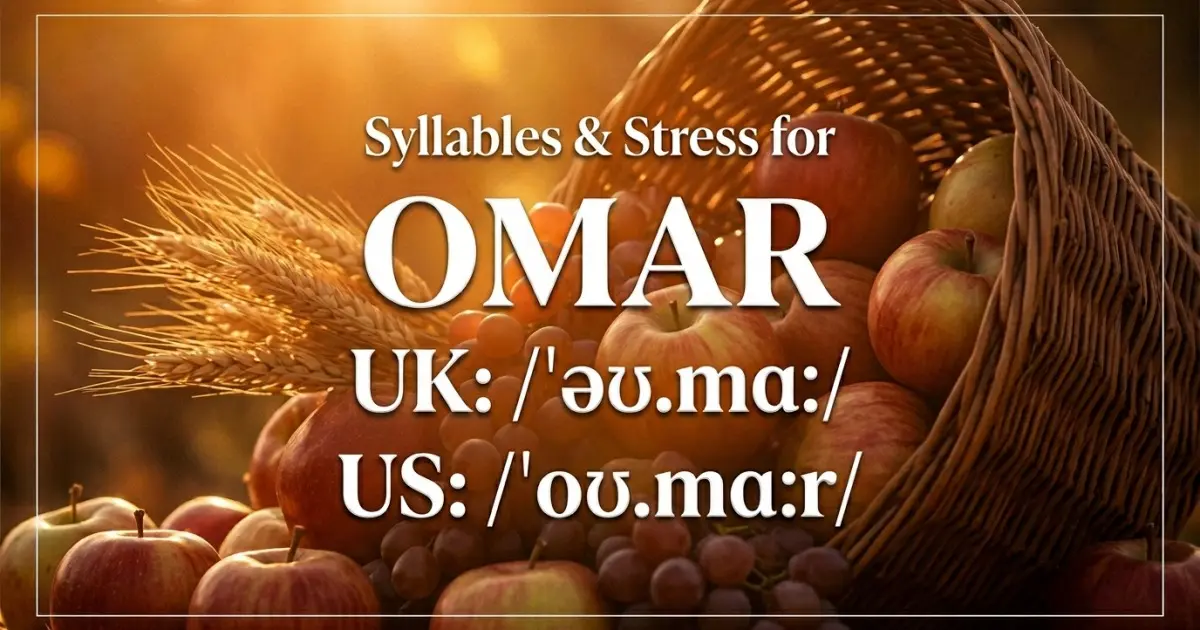
| U.S. IPA | /ˈoʊmɑːr/ | The first syllable has a rounded long O sound, followed by a clear second syllable with an audible final r. |
| U.K. IPA | /ˈəʊmɑː/ | The rhythm stays the same, but the ending is often softer because many British accents reduce or drop the final r. |
| Syllable count | 2 syllables | Think of Omar as one strong beat followed by one open, steady second beat. |
| Stress pattern | First syllable stressed | If the stress shifts to the second syllable, the name immediately starts sounding unnatural in standard English use. |
| Middle consonant | /m/ nasal consonant | The m gives the name warmth and helps connect the two syllables smoothly. |
| Ending quality | Broad open vowel in the second syllable | Do not clip the second half too sharply; it should sound open and calm rather than rushed. |
Omar Begins with Weight and Opens into Warmth
The easiest way to pronounce Omar well is to hear its shape rather than overanalyze its letters. The first syllable carries the main stress: OH. The second syllable, mar, should sound open and settled, not swallowed. This is why the name feels so balanced. It starts firmly, but it does not end abruptly. Instead, it moves into a fuller second syllable that gives the whole name room to breathe. Before focusing only on syllables and stress, it helps to step back into the fuller frame of Omar meaning.
Why the first syllable matters so much
The first syllable in Omar carries the stress in both American and British English. In the U.S. IPA, that opening is shown as /oʊ/, a diphthong that begins rounded and glides slightly. In the U.K. IPA, it appears as /əʊ/, which starts a little lighter but reaches a very similar sound. In ordinary speech, both versions are close enough that most listeners simply hear OH. That first stressed syllable gives the name its stability.
Because Omar is only two syllables long, the placement of stress is especially important. If the first syllable is weak, the whole name loses its center. A good pronunciation makes the opening clear and calm, not exaggerated and not rushed.
What the second syllable is doing
The second syllable is what keeps Omar from sounding clipped. It opens into a broad ah sound, represented in the IPA by /ɑː/. This gives the name warmth and width. In American English, the final r is usually pronounced, which produces the fuller ending /mɑːr/. In many British accents, the final r is reduced or not pronounced unless another vowel follows, so the ending is often closer to /mɑː/. Either way, the feeling is the same: the second syllable should not be clipped shut too quickly.
That is one reason Omar sounds mature. The name does not simply hit the ear and stop. It expands slightly in the second half. That gives it a composed, open finish.
Omar Is Easier Than It First Looks, but the Mistakes Are Predictable
Omar is not a difficult name, but speakers who encounter it visually before hearing it may still make a few common mistakes. Most of those errors come from uncertainty about where the stress belongs or from trying to flatten the vowels too much into ordinary English spelling habits.
The most common mistake patterns
One common mistake is putting too much stress on the second syllable, which can make the name sound off-balance. Another is clipping the second vowel too sharply, as though the name should end almost immediately after the m. A third is making the opening too flat, turning the first syllable into something less rounded than OH. These errors usually do not happen because the name is hard. They happen because speakers move too quickly and miss the name’s internal calm.
The fix is simple. Stress the first syllable, keep the opening rounded, and let the second half open naturally. Omar sounds best when it is spoken steadily, not abruptly.
Why Omar is not supposed to sound rushed
Unlike very clipped modern names that depend on fast consonant closures, Omar has a more spacious rhythm. The name contains a nasal consonant in the middle, the m, and nasal consonants often add warmth and continuity to a word. That means Omar benefits from flow. If it is said too quickly, the two syllables can collapse into each other and lose the dignified shape that makes the name appealing in the first place.
In practice, this means speakers should resist the urge to treat Omar like a blunt, one-beat name. It is short, but it is not abrupt.
Omar Across Accents Keeps Its Identity Intact
One of Omar’s strongest practical qualities is that it remains highly recognizable across English accents. The U.S. and U.K. IPA forms differ only slightly, mainly in the way the first syllable begins and in whether the final r is fully pronounced. The stress remains in the same place, and the overall rhythm stays stable. That makes the name unusually easy to carry across regions.
What changes between U.S. and U.K. speech
In American English, the ending usually sounds more fully rhotic, meaning the final r is clearly present: OH-mar. In many British accents, the final r may disappear in ordinary speech unless a following word begins with a vowel, which leaves the second syllable sounding slightly softer: OH-mah. The identity of the name, however, does not change. The first-syllable stress, the middle m, and the broad second vowel keep it recognizable immediately.
Why that stability suits the name
A name like Omar benefits from this consistency because much of its dignity comes from proportion. It does not rely on a fragile pronunciation detail or a single local accent habit. It stays itself. That stability is part of what makes Omar feel internationally usable. It carries clear origin and character, but it does not become hard to manage when it crosses into another English-speaking setting.
For everyday life, that is a real advantage. The name can remain rooted without becoming phonetically burdensome.
How to Practice Omar Until It Feels Natural
The easiest way to learn Omar is by rhythm: one strong syllable, one open syllable. OH-mar. Once that shape is heard, the name becomes easy to carry into ordinary sentences. The goal is not to overperform the vowels. The goal is to preserve the name’s natural balance.
Sound neighbors that help the ear
For many English speakers, the first syllable is close to the sound in go or show, though slightly more rounded depending on accent. The second syllable opens toward mar, with a broad vowel similar to the ah sound many speakers hear in words like father. Those comparisons are not perfect for every accent, but they help place the name in familiar territory quickly. Because the strongest energy lands early, the shorter forms often grow from the opening of the name, and that pattern is easier to see in nicknames for Omar.
Another useful way to hear Omar is as a name that becomes easier the moment you slow down by half a second. If spoken steadily, the vowels organize themselves naturally. If rushed, they blur.
Practice lines that make Omar sound lived-in
Pronunciation becomes most natural when the name is spoken inside ordinary phrases rather than repeated like a drill. These lines help the rhythm settle:
Omar is ready.
I spoke with Omar yesterday.
Omar and Elias are on the list.
This is Omar Gabriel Hassan.
In each of these lines, notice that the first syllable leads and the second one breathes. That is exactly how the name is meant to work. Omar sounds best when it is allowed to remain open.
In the end, Omar is a strong example of how a name can sound elegant without being difficult. Its pronunciation is stable, its rhythm is clear, and its broad vowels give it warmth that many short names do not have. Say the first syllable as OH, let the second syllable open into mar, and the name immediately sounds as it should: balanced, dignified, and fully alive.