
Best Middle Names for Oliver: Elegant, Classic, and Sweet Ideas
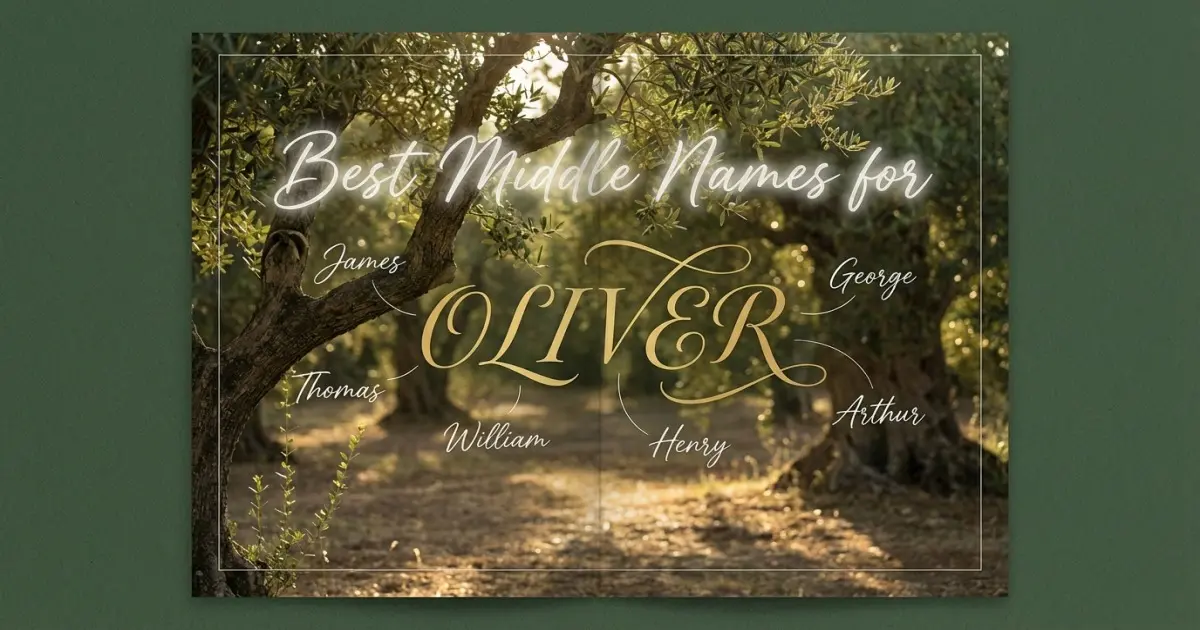
A middle name often does its most important work out of sight. It is not usually the name shouted across the playground or printed largest on the birthday cake. Instead, it appears in the quieter places where identity becomes more deliberate: on registration forms, in school records, in graduation programs, in signatures, and in those family conversations where memory and intention meet. That hidden role is exactly why it matters. A middle name can carry heritage without making a child feel copied, soften a formal first name, sharpen a gentle one, or create a private bridge between public identity and family history. In practical terms, it is often the part of the full name that makes the whole arrangement feel chosen rather than merely assembled.
That is especially true with Oliver. Official data shows Oliver is one of the most established boys’ names in current U.S. use, which means the first name already arrives with strong public recognition, broad social ease, and a polished, dependable image. The middle name therefore has a very specific job. It does not need to explain Oliver. It needs to shape it. It can make Oliver sound more tailored, more literary, more grounded, or more modern. It can honor a grandfather without turning the child into a junior. It can also solve the practical problem that every good full name must solve: rhythm. The best middle names for Oliver are not simply attractive on their own. They give Oliver a better second line. Pairing is practical, but it still rests on the first name’s deeper frame, so the best place to begin is Oliver meaning.
Where Oliver finds its strongest second line
The best middle names for Oliver usually do one of three things: they tighten the rhythm, deepen the style, or personalize a very familiar first name. What matters most is not whether the middle is fashionable in isolation, but whether it helps Oliver land cleanly with the surname.
| Style | Recommended Names | Why it works with Oliver |
|---|---|---|
| Crisp classic | James, Reid, Grant, Charles, Dean | These names give Oliver a firm finish and balance its rounded warmth with structure. |
| Quiet vintage | George, Arthur, Hugh, Walter | They deepen Oliver’s traditional character without making the full name feel old-fashioned. |
| Modern tailored | Blake, Finn, Gray, Brooks | These add a cleaner contemporary edge and keep Oliver from sounding overly expected. |
| Family-honor bridge | John, Thomas, Edward, Michael | Traditional honor names sit naturally after Oliver and let family meaning come through without strain. |
| Literary and refined | Julian, Bennett, August, Sebastian | They preserve Oliver’s cultivated tone while adding a more expressive second movement. |
Why Oliver usually needs a middle name that adds shape
Oliver already brings warmth and movement
Oliver is a three-syllable name with a rounded opening and a friendly, highly recognizable cadence. Because the first name already sounds full and sociable, the middle name often works best when it introduces a little more firmness. This is the key principle behind most successful pairings. Parents sometimes assume that a warm first name should be followed by another equally flowing name, but with Oliver that can make the full combination feel soft at both ends. Oliver Elias or Oliver Adrian can certainly work with the right surname, yet they often ask the ear to process two names that move in the same smooth direction.
By contrast, Oliver James, Oliver Reid, and Oliver Dean succeed because the middle provides a clearer landing. The full name feels more architectural. Oliver opens generously, then the middle gives it a beam to rest on. This is why one-syllable and compact two-syllable middles are often especially strong here. They do not fight Oliver’s character. They frame it.
Contrast helps a familiar first name feel more individual
Research suggests that when parents choose a very familiar first name, the middle name often becomes the place where individuality re-enters the picture. That logic fits Oliver perfectly. Since Oliver is so widely accepted and currently so visible, the middle can do useful identity work. It can cool the name down, roughen it slightly, make it sound more scholarly, or connect it more openly to family tradition.
Oliver Grant feels brisker than Oliver Michael. Oliver George feels more patrician and old-world. Oliver Blake sounds more contemporary and streamlined. The first name remains the same, but the middle changes the social temperature. Once you hear the middle name as a tonal instrument rather than just an extra slot, better pairings become easier to spot.
Oliver with short middles sounds clean, steady, and complete
One-syllable middles give Oliver a confident stop
One of the most reliable formulas for Oliver is a compact middle with a firm consonant structure. Names such as James, Reid, Grant, Dean, Blake, and Finn work well because they complete the phrase efficiently. Oliver already has enough movement to feel generous. A short middle prevents the full name from becoming too padded.
Oliver James is perhaps the most classic example. It is broadly wearable, socially familiar, and adaptable across age and profession. Oliver Reid is leaner and slightly cooler, with a more editorial modernity. Oliver Grant adds substance and a quiet seriousness. Oliver Finn feels brighter and more contemporary, though it is best with a surname that is not already too clipped. Oliver Dean has a clean mid-century sharpness that can make the full name feel especially tailored.
Short middles are especially useful with longer surnames
The value of a short middle becomes even clearer when the surname has two or three syllables. Oliver James Sullivan, Oliver Grant Ramirez, and Oliver Reid Thompson all move with ease because the middle keeps the line from sagging in the middle. Historically, many of the most durable male full names follow this same rhythm: a fuller first name, a disciplined middle, then the family name.
Short middles also tend to age well on paper. They fit cleanly in signatures, school forms, formal invitations, and monograms. That may seem minor at first, but full names live in written systems for decades. A middle that sounds good and behaves well visually is usually worth more than a middle chosen only for novelty.
Oliver gains depth when the middle carries history or family weight
Traditional middles make Oliver sound rooted, not heavy
If the goal is to make Oliver feel deeper rather than trendier, traditional middles are often the smartest choice. George, Arthur, Thomas, Edward, and Hugh work well because they add lineage and gravity without overwhelming the first name. Oliver is warm enough to absorb these older forms gracefully. The result can feel distinguished rather than dated.
Oliver George has a polished Anglo-classic quality. Oliver Thomas feels steady, familiar, and exceptionally versatile. Oliver Hugh is more compact and slightly rarer, which can make the combination feel especially refined. Oliver Edward is fuller and more formal, best when the surname is short enough to support that extra weight.
Honor names work best when the full name still gives the child room
Many families use the middle position to honor a father, grandfather, uncle, or important family surname. That remains one of the most practical uses of the middle name. Historically, the middle slot has often served exactly this purpose: preserving continuity without requiring exact repetition in daily life. That can be especially valuable if parents want to respect tradition while still giving the child a distinct first identity.
With Oliver, this often means that a traditional honor middle will sound better than a full junior-style duplication. Oliver John may achieve more than repeating an entire father’s name. Oliver Michael or Oliver Edward can carry family memory while leaving the child socially separate. In some cases, a shortened or edited honor form works best. A grandfather named Frederick may lead more gracefully to Oliver Fred or Oliver Reid through family association than to Oliver Frederick if the surname is already long. The tribute matters, but so does the breathing room of the full line.
Oliver and the surname have to sound like one sentence
Test Oliver with the last name aloud, not just on paper
One of the most useful naming habits is also the simplest: say the full name out loud with the surname. Research and practical naming advice alike point to the same truth here. Names often change character when they meet the family name. A combination that looks elegant alone may lose its balance once the surname enters. That is why Oliver should never be paired in theory only. A pairing can look elegant in print and still feel clumsy aloud, so where there is any risk of collision, it helps to test the sound in how to pronounce Oliver.
If the surname is short, Oliver can handle a slightly longer or more expressive middle. Oliver Bennett Shaw or Oliver Julian Price can work because the surname closes quickly. But if the surname is long, dense, or multi-syllabic, the middle should usually become more disciplined. Oliver James Villanueva is cleaner than Oliver Sebastian Villanueva. The question is not which middle is more beautiful in isolation. It is which one lets the whole structure breathe.
Initials, repeats, and accidental echoes deserve a final check
Initials are easy to overlook and surprisingly worth checking. Middle names appear frequently as initials on official forms, signatures, academic records, and digital profiles. Before settling on a combination, write out the full initials in both standard and monogram order if monograms matter in your family. Also watch for awkward repetitions. Oliver Owen Ortiz may sound more like a tongue exercise than a name, while Oliver Brooks Baker may repeat consonant clusters more heavily than intended.
It is also wise to check for famous-name collisions. A name can be perfectly respectable and still feel too close to a widely recognized public figure once the surname is added. The strongest names usually survive this kind of practical audit with ease.
Oliver can lean classic, modern, or literary depending on the middle
For a classic Oliver, choose reserve
If you want the full name to feel intergenerational and stable, middles like James, Thomas, George, Charles, and Edward are especially strong. These names give Oliver a dependable backbone and will rarely feel tied to one moment in fashion.
For a modern Oliver, choose edge and clarity
If you want Oliver to sound cleaner and more current, lean toward Reid, Blake, Finn, Gray, or Brooks. These names streamline the overall impression and add a contemporary sharpness without fighting Oliver’s warmth.
For a more literary Oliver, choose breadth without excess
Oliver already has a cultivated quality, so middles like Julian, August, Bennett, and Sebastian can build on that atmosphere. The caution is simple: use these longer middles only if the surname is short enough to support them. Otherwise, the full name may become overextended.
What to test before Oliver goes on the birth certificate
- Say the full name aloud several times with the surname at normal speed.
- Use the middle name to add shape, not just more softness or more syllables.
- Check initials carefully in both everyday use and formal abbreviation.
- If you are honoring family, protect the tribute but still edit for flow.
- Be aware that very common combinations such as Oliver James are appealing for a reason, but slightly less expected pairings like Oliver Grant or Oliver Hugh may feel more distinctive.
- Picture the name on a child, on a university application, and in an adult signature. The best combinations feel convincing in all three places.