Nicknames for Nicolas: Everyday Nicknames with Real Charm
A nickname is rarely just a shorter version of a name. It is a social signal. It tells you who is allowed close, who is speaking with affection, who is trying to sound playful, and who prefers a cleaner, more public version of the same identity. Some nicknames are family-only and soften a child’s image at home. Others travel outward into school, sports, friendships, and adult life until they become almost a second first name. That is why nickname logic matters more than many parents expect. A good nickname does not merely save syllables. It changes temperature.
Nicolas is especially rich territory for this because the full name already contains several different moods. It starts with a strong, crisp opening, then relaxes into softer sounds by the end. That gives it room to produce nicknames with very different personalities. One path leads to the dependable classic Nick. Another leads to the sleeker, more international Nico. Further out on the edges are childhood forms, family-only diminutives, and playful DIY versions that may never appear on a school register but can feel completely natural in daily life. The point is not to invent as many as possible. It is to understand which nicknames feel believable, when they tend to emerge, and what kind of version of Nicolas each one reveals. Before judging which short form feels right, it helps to look again at the full identity of the name in Nicolas meaning.
What the Nickname World of Nicolas Really Reveals
| Group | Suggested Nicknames | Persona | Use Context |
|---|---|---|---|
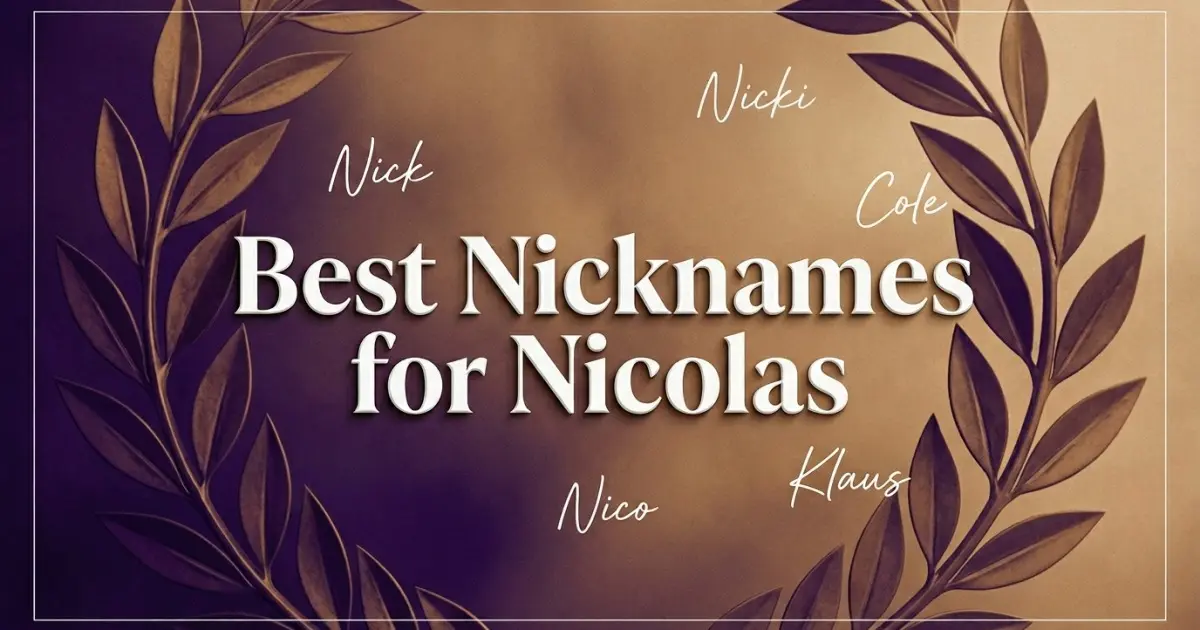
| Classic everyday forms | Nick, Nic | Grounded, familiar, dependable | School, work, sports, casual adult life |
| Sleek modern forms | Nico, Niko | Stylish, international, relaxed | Friends, creative circles, daily use from childhood onward |
| Affectionate childhood forms | Nicky, Nikky | Warm, sweet, family-centered | Home use, early childhood, grandparents and siblings |
| Short-form minimalists | Nik, Nic | Crisp, sporty, text-message simple | Teammates, usernames, informal peer use |
| Playful ending-based forms | Cole, Colie, Las | Inventive, intimate, slightly unexpected | Family jokes, close friends, private use rather than formal settings |
| DIY personality spins | N, Nics, Nicoo, Kiki | Highly personal, situational, relationship-specific | Inside circles, siblings, texting, teasing affection |
Nicolas Begins with a Built-In Classic
The opening of Nicolas does a great deal of the nickname work almost automatically. Because the first sound is so clear and familiar, most people instinctively reach for Nick first. That is not an accident. Nick is one of those classic English-language shortenings that feels complete in itself. It does not sound provisional or childish. It sounds like a full social identity. That gives Nicolas a major advantage: the formal name and the everyday nickname both feel sturdy.
Why Nick feels inevitable
Nick is the most durable nickname for Nicolas because it extracts the strongest sound unit from the beginning of the name and stops there. It is brisk, masculine, and socially effortless. Research into modern naming habits suggests that short, one-syllable nicknames often survive because they work equally well in childhood, on a sports field, and in professional life. Nick passes that test easily. A toddler called Nick sounds lively. A teenager called Nick sounds normal. An adult called Nick does not need to explain himself.
This also makes Nick the safest option for parents who like having flexibility. They can choose Nicolas for the birth certificate and still know that the child has access to a nickname that will never feel awkward in the adult world. It is a practical shortening, but it is not bland. The clipped ending gives it confidence.
Where Nic fits differently from Nick
Nic is quieter and more visual than Nick. Spoken aloud, the two sound nearly identical, but on paper Nic feels a little cleaner and more contemporary. It often appears in texting, signatures, usernames, and among people who prefer stripped-down forms. Nic suits Nicolas when the goal is minimalism rather than traditional familiarity. It is not warmer than Nick. If anything, it feels slightly more curated.
That is why some families use Nick in speech and Nic in writing without thinking much about the distinction. Nicolas allows that easily. The opening zone of the name is so strong that it can produce both the classic and the streamlined version without strain.
Nicolas Softens Beautifully into Nico
If Nick is the dependable road out of Nicolas, Nico is the more stylish one. Nico works because it catches the name just as it begins to open up. Where Nick uses the hard stop, Nico follows the first syllable into the softer middle and creates something lighter. The emotional effect is immediate. Nico sounds more relaxed, more modern, and more international.
This is one of Nicolas’s biggest strengths as a nickname-rich name: it can generate two major everyday options with genuinely different personalities. Nick and Nico are not mere spelling variants. They create different social vibes. Nick sounds grounded and conventional in the best sense. Nico sounds artistic, breezier, and slightly more cosmopolitan.
Why Nico often feels younger, then grows well
At first glance, parents sometimes assume Nico is the more youthful option. It certainly has bounce and friendliness in early childhood. But it also ages surprisingly well. Because it already exists as an established short form across multiple naming traditions, Nico does not sound invented or overly cute. A little boy called Nico feels spirited. A grown man called Nico can sound elegant, creative, or quietly European depending on context.
This makes it especially attractive for parents who love Nicolas but suspect Nick feels too plain for their taste. Nico preserves the sophistication of the full name while adding ease. It also tends to work very well in multicultural or multilingual families, where a short form that travels smoothly can be a real advantage.
Where Niko enters the picture
Niko is a plausible modern spin rather than the default shortening. It changes the visual mood more than the sound. Families may choose it because they like the sharper, more phonetic look, or because it fits the wider style of siblings’ names. Niko is believable, human, and increasingly familiar, but it does read as a stylistic choice. If Nico is the natural soft modern, Niko is the more deliberately updated version.
For that reason, Niko works best when the family already likes contemporary spellings or wants the nickname to stand a little apart from the formal name. It is still plausible for Nicolas. It simply feels less automatic than Nico.
Nicolas Has a Gentler Childhood Register Too
Not every nickname is meant to travel into adulthood untouched. Some are there to mark closeness, age, and tenderness. Nicolas supports that beautifully because the full name is formal enough to welcome warmer diminutives without losing dignity. The obvious example is Nicky.
Why Nicky still works
Nicky is affectionate, familiar, and unmistakably personal. It is the sort of nickname grandparents, siblings, and parents may use for years even after the child starts introducing himself differently in public. Historically, -y endings have been common in English pet forms because they soften the name and make it sound held rather than presented. That is exactly what Nicky does. It makes Nicolas feel smaller, sweeter, and more domestic.
The key is realism. Nicky is very plausible in early childhood and family life. It is less likely to become the chosen adult identity unless the person actively prefers it. That does not make it weaker. It simply means it belongs to the intimacy side of the nickname map rather than the public one.
How family use can differ from public use
Many children grow up with two nickname layers at once: a public short form and a home short form. Nicolas lends itself naturally to that pattern. A boy might be Nico at school and Nicky at home, or Nick to friends and Nics to a sibling. This is worth remembering because parents do not have to choose one permanent nickname in advance. Real life usually sorts these things into zones of relationship.
The Far End of Nicolas: Playful and DIY Possibilities
The ending of Nicolas is softer and less nickname-obvious than the front, but it still offers a few relationship-specific possibilities. These are not the mainstream options. They are the nicknames that emerge inside households, among cousins, or within close friendships where sound play matters more than convention.
Cole can come out of the middle-to-ending section if a family hears the softer internal shape more than the hard beginning. Colie is a more affectionate extension of that idea. Las is possible in a teasing, clipped way, though it is much rarer and more situational. Kiki can arise naturally from the repeated hard k sound families hear inside Nicolas, especially when young siblings are doing the naming work. N or Nics belong to text culture and private circles rather than formal use, but they are believable as modern shorthand.
The caution here is simple: not every plausible nickname deserves equal billing. Nicolas is strongest when the nickname grows organically from actual relationships. The full name already provides enough character that it does not need an artificially quirky short form. The best DIY options are the ones that sound like something a real family would accidentally keep saying.
Which Nicolas Nickname Tends to Last
If the question is longevity, the strongest long-term forms are clearly Nick and Nico. They are the nicknames most likely to function across age, context, and personality. Which one lasts usually depends less on the name itself than on the image the family prefers.
Choose Nick if you want Nicolas to have a straightforward, familiar, durable public face. Choose Nico if you want the shorter form to feel more fluid, stylish, and internationally at ease. Keep Nicky for warmth, Nic for minimalism, and the ending-based inventions for close circles that naturally create them.
That is the real gift of Nicolas as a nickname name. It is not locked into one social identity. The full name is formal and generous. The opening gives you confidence. The middle gives you style. The ending gives you intimacy and play. Few names offer that many believable registers without feeling unstable. Nicolas does, which is why its nickname landscape feels less like a problem to solve and more like a set of doors the child can walk through as his life becomes more fully his own.
Short Forms FAQ for Nicolas
What is the most natural nickname for Nicolas?