
Nevaeh Pronunciation: An Easy Guide to Saying It Naturally
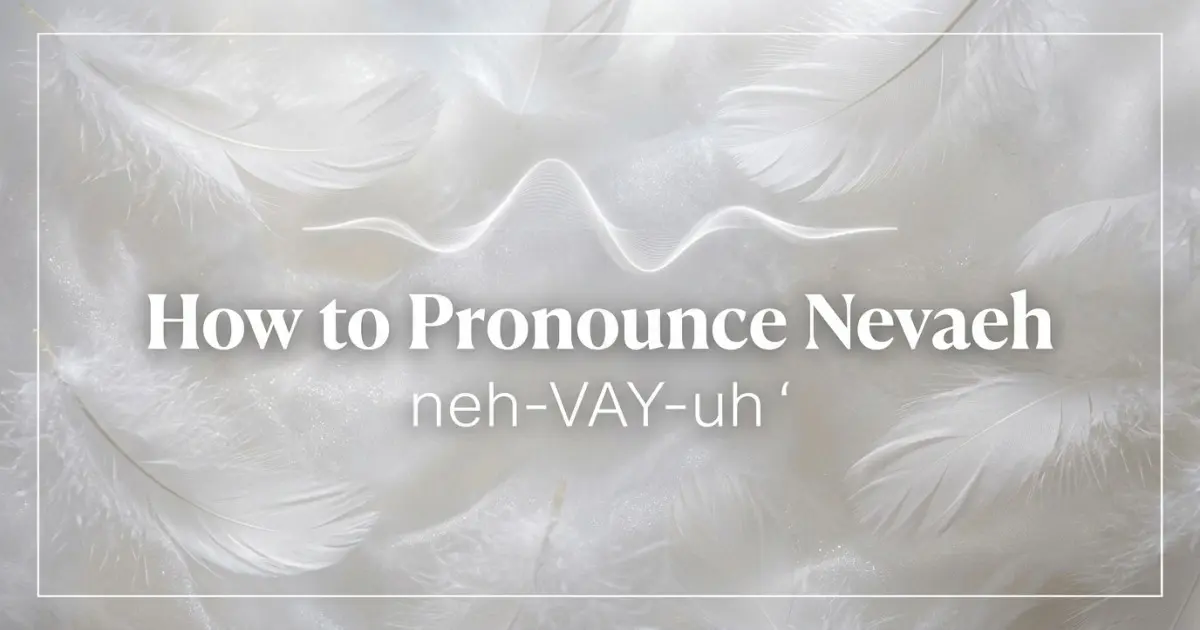
The real pronunciation test for Nevaeh rarely happens in a calm conversation about meaning. It usually happens in motion: a teacher on the first day of school, a nurse calling a patient from a waiting room, a coach reading a roster at speed, a speaker glancing at a name card seconds before saying it aloud. Nevaeh is exactly the kind of name that can create a half-second pause in those moments. Not because it is impossible, but because the spelling makes people think before they speak. It looks like something that needs decoding. That is part of the name’s modern identity.
What matters is that once the intended pattern is heard, the name becomes much easier than its letters first suggest. The structure is stable: three syllables, a soft opening, a strong middle, and a gentle finish. Official data shows Nevaeh remained widely visible in the United States in 2024, which helps keep the spoken form socially familiar. The standard pronunciation here is nuh-VAY-uh. The name does not drive its force from the beginning. It gathers itself and opens in the center. That central lift is what makes Nevaeh sound smoother, warmer, and more lyrical than many people expect the first time they see it written down.
What Nevaeh’s spelling is really clarifying about how the name is said
Before looking at likely mistakes or accent notes, it helps to lay out the main pronunciation pattern clearly. Nevaeh becomes much more intuitive once the stress and vowel movement are heard together.
| Element | Phonetic Detail | Quick Tip |
|---|---|---|
| Everyday pronunciation | nuh-VAY-uh | Keep the first syllable light and let the middle syllable carry the name. |
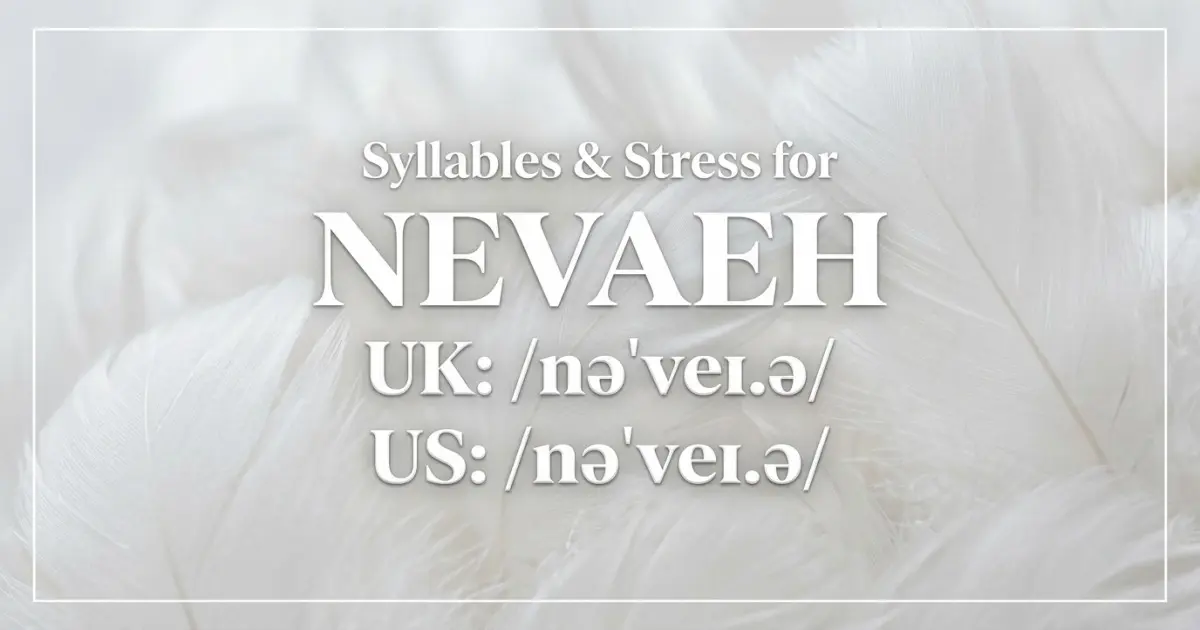
| IPA (US) | /nəˈveɪə/ | The opening vowel is a soft schwa, the relaxed uh sound heard in many unstressed English syllables. |
| IPA (UK) | /nəˈveɪə/ | The UK form aligns closely with the US form, so the overall stress and rhythm stay the same. |
| Syllable count | 3 syllables | Hear it as nuh / VAY / uh, not as two big beats and not as a rushed single unit. |
| Stress pattern | Primary stress on the second syllable | The name should rise in the middle. That is the key to making it sound natural. |
| Ending sound | Final unstressed -uh | Let the name soften at the end rather than clipping it or over-pronouncing the last vowel. |
Nevaeh sounds right when the middle syllable does the real work
Why the opening of Nevaeh should stay light
The first syllable of Nevaeh is not supposed to dominate. In the standard pronunciation, it begins with a schwa, the soft unstressed vowel heard in words like about or sofa. This matters because many pronunciation mistakes happen when speakers try to give the opening too much weight. Nevaeh does not begin with a dramatic, emphatic beat. It begins more quietly and leaves room for the center to bloom. Before focusing only on syllables and stress, it helps to step back into the fuller frame of Nevaeh meaning.
That softer opening is part of what makes the name feel more graceful in speech than it may look on paper. The spelling can seem visually dense or unusual, but the sound does not arrive heavily. It eases in. That is one reason the name can feel surprisingly fluid once heard aloud.
Why the stress belongs on “VAY”
The real anchor of Nevaeh is the second syllable: VAY. This is where the main stress falls, and it is what gives the name its shape. If the first syllable is the doorway, the middle is the room itself. Without that strong center, Nevaeh can start sounding tentative or over-explained. With it, the name becomes clear and memorable.
This is also where the name gets much of its brightness. The vowel in VAY opens the sound outward, which helps the name feel lighter and more lyrical than a purely mechanical reversal might suggest. That bright middle is doing a lot of work. It turns a visually unusual name into something that actually travels quite well in conversation.
Why the last syllable of Nevaeh should taper gently
After the stressed middle, the name closes with a light final uh. That last syllable should not compete with the middle for attention. It should soften the landing. The final vowel is part of why Nevaeh does not sound abrupt. It lets the name descend gently instead of ending on a hard stop.
Linguistically, that matters because English speakers often find names easier when they have one clear stressed syllable and lighter surrounding material. Nevaeh follows that pattern well. The result is a name that feels smoother in the mouth than its spelling initially promises.
Where Nevaeh gets misread, and why those slips are so common
Nevaeh is often over-read because people know the story of the spelling
One of the unusual things about Nevaeh is that many people meet the explanation before they fully trust the pronunciation. They know it has been formed by reversing a familiar English word, so they sometimes approach the name as if they need to decode it live rather than simply say it. That can lead to stiffness. The name starts sounding like a puzzle rather than a spoken identity.
In practice, that is the main issue: not a fundamentally difficult pronunciation, but a speaker hesitating because the spelling feels self-conscious or unfamiliar. Once that hesitation drops away, the spoken form is much more natural.
The most likely mistake is stressing the wrong part of Nevaeh
The core pronunciation risk is misplaced stress. Some speakers may flatten the name, spreading too much equal weight across all three syllables. Others may accidentally overemphasize the first syllable because they are reading carefully rather than speaking naturally. Both versions make the name sound less fluid than intended.
The correction is simple: lighten the opening, strengthen VAY, and let the ending soften. Once the second syllable becomes the clear center, the name settles into place quickly.
Sound neighbors can pull Nevaeh sideways
Nevaeh also lives near a set of modern names with similar vowel movements, which can create confusion. Names like Nevaeh, Naya, Neva, and even some -vaya or -veah forms can make the eye search for familiar patterns. That does not mean the name is unstable. It means speakers sometimes try to compare it to neighboring sounds before trusting the actual form in front of them. The way the name resolves at the end often decides which short forms feel natural in speech, and that becomes clearer in nicknames for Nevaeh.
The best way through that is to hear Nevaeh as its own rhythm rather than as a variation of something else. It is not a cousin of another familiar name in pronunciation. It has its own pattern, and that pattern is steady once learned.
Nevaeh across accents stays more stable than the spelling suggests
US and UK speakers mostly agree on Nevaeh here
One practical strength of Nevaeh is that the provided US and UK IPA forms align closely: /nəˈveɪə/. That kind of consistency matters. Some names look manageable on the page but split into different accepted pronunciations in different English-speaking regions. Nevaeh, in this usage, does not do that in any major structural way. The light opening, stressed middle, and softened ending remain intact.
This gives the name a kind of spoken stability that its spelling does not always advertise. Visually, it may look like a name that could break apart differently across accents. In practice, the shared IPA pattern helps keep it anchored.
What may change slightly, and what stays fixed
Accent may alter the precise texture of the opening schwa or the breadth of the middle vowel very slightly. Some speakers may make the final syllable lighter, while others may give it a touch more presence. But those are minor color differences. What stays fixed is much more important: three syllables, stress on the second, soft opening, gentle ending.
That stability is one reason Nevaeh works better aloud than some skeptics expect. Once the pattern is established, it is not especially fragile.
How to practice Nevaeh until it feels natural in everyday speech
Break Nevaeh into three beats, then reconnect it
The easiest practice method is rhythmic. Say it first as three clear beats: nuh / VAY / uh. Then say it again as one flowing name. The first beat should stay light, the second should carry the emphasis, and the third should soften the exit. If the name starts feeling stiff, it usually means the opening is too strong or the ending is being over-pronounced.
A useful contrast practice is this:
- Nevaeh, not NEH-vuh-uh
- nuh-VAY-uh, not NAY-vay-uh
- light beginning, bright center, soft finish
Practice lines that sound like real life
Names are easiest to master inside ordinary speech. Try using Nevaeh in phrases such as:
- Nevaeh, your table is ready.
- This certificate is for Nevaeh Brooks.
- Can Nevaeh come to the office, please?
- I’m looking for Nevaeh Parker.
These lines matter because they place the name where it actually has to function: in classrooms, ceremonies, family life, and introductions. Nevaeh becomes much easier to trust once it is spoken as a normal name rather than examined as a spelling story.
Why Nevaeh sounds more graceful aloud than it first looks on the page
Nevaeh is a good example of a name whose pronunciation softens the visual boldness of its construction. On paper, the name can seem concept-driven, even slightly angular, because the spelling carries so much explanatory weight. In speech, however, it is less rigid than that. The schwa opening, bright middle vowel, and gentle ending create a more flowing sound than many people expect.
In the end, the best way to pronounce Nevaeh is also the most natural one: let the first syllable stay relaxed, let VAY carry the name, and let the last syllable taper softly. nuh-VAY-uh is not only the standard pronunciation. It is the version that best preserves what makes the name work aloud: clarity, warmth, and an unexpectedly smooth musical line.