
Nicknames for Nayeli: Nicknames That Sound Warm and Effortless
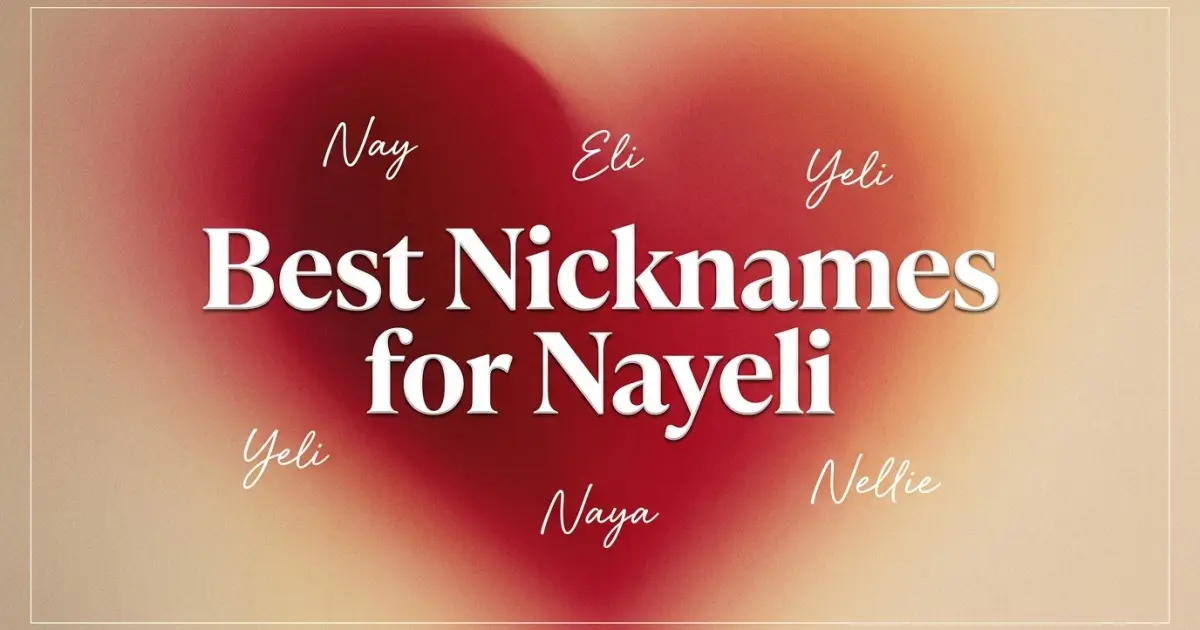
Nicknames are not just smaller versions of names. They are social signals. They tell you who is speaking from inside the family circle, who wants warmth instead of formality, who is trying out a new version of herself among friends, and how much of the full name’s original meaning a family wants to keep visible in daily life. A nickname can soften, sharpen, simplify, or personalize. That is why nickname logic matters. It is less about shortening for efficiency and more about deciding what kind of closeness the name should carry.
Nayeli is especially interesting because the full name already feels intimate. With a meaning given here as “I love you,” it does not enter the room as a neutral label waiting to be warmed up later. It already sounds relational. Pronounced nay-YEL-ee, the name has three syllables, a bright stressed center, and a gentle final release. Official data shows it is familiar enough in modern U.S. use to be recognized, but not so common that it feels automatic. That gives its nicknames an unusual role. They do not need to rescue the name from length or stiffness. They need to decide whether to make it lighter, cooler, more playful, or more private than the full form already is. Before judging which short form feels right, it helps to look again at the full identity of the name in Nayeli meaning.
What Nayeli’s nickname landscape reveals about the name
| Group | Suggested Nicknames | Persona | Use Context |
|---|---|---|---|
| Full-name loyalists | Nayeli | Warm, complete, emotionally direct | Everyday public use, formal settings, families who want the full meaning to stay visible |
| Opening-based forms | Nay, Naye, Nay-Nay | Bright, affectionate, easygoing | Family speech, school-age shortenings, sibling use, casual daily life |
| Center-driven forms | Yeli, Yelii | Distinctive, musical, more personal | Close family, bilingual circles, friend groups that prefer less obvious nicknames |
| Ending-led soft forms | Eli, Ellie, Lili | Gentle, playful, more pet-name than public default | Home use, toddler years, grandparents, intimate family settings |
| DIY playful forms | Yaya, Nayeli-Bee, Nay-Lou | Homey, childlike, relationship-specific | Private family language, affectionate routines, unlikely to replace the formal name in public |
Nayeli gives you three nickname zones, but not all of them work the same way
Unlike a one-syllable name that resists shortening or a very long name that almost demands it, Nayeli sits in the middle. It has three clear beats, which means families can build nicknames from the opening, the stressed center, or the ending. But those zones do not produce the same social effect. The opening feels easiest and most public. The center feels more distinctive and more intentionally chosen. The ending feels sweetest and most private. That is why Nayeli’s nickname life tends to reflect relationship more than convenience.
The opening of Nayeli creates the most natural everyday forms
The most intuitive nickname path begins at the front: Nay or Naye. These forms keep the first recognizable sound and make the name lighter without disconnecting it from the original. They work because the opening syllable is easy to hear, easy to repeat, and emotionally consistent with the full name. Nay sounds quick and bright. Naye can feel a touch softer on the page, especially for families who like a spelling that keeps the original name visually close.
Nay-Nay is the playful extension of the same zone. It is believable precisely because families often create doubled nicknames in early childhood when repetition feels affectionate rather than silly. It is not likely to become the child’s long-term public name, but it is exactly the kind of household form that can live comfortably in toddlerhood and inside sibling language.
The stressed center is where Nayeli becomes more distinctive
The most interesting part of Nayeli is the middle: YEL. That is where the voice naturally lands, and it is one reason the name sounds so memorable. Nicknames built from this center can feel more individual because they do not follow the most obvious route. Yeli is the clearest example. It keeps the emotional brightness of the full name while sounding more intimate and slightly more surprising than Nay. These nickname choices read more clearly once the spoken shape of the full name is in view, so see how to pronounce Nayeli.
This kind of nickname often emerges not from strangers but from the people closest to the child. Teachers or new acquaintances are more likely to default to Nay if they shorten at all. Yeli usually sounds more family-shaped, friend-shaped, or self-chosen. That makes it especially valuable for parents who want a nickname that feels affectionate without becoming generic.
Nayeli’s ending is where the softest pet forms begin
The final part of the name offers another route, but it usually creates softer, more home-centered forms rather than strong public defaults. Because Nayeli ends with an -ee sound and a light final syllable, the ending can easily be turned into playful diminutives. That is where forms like Eli, Ellie, or Lili may appear.
Why Eli and Ellie feel gentler than Nay
Eli and Ellie both come from the softer latter half of the name, which means they feel more tucked-in and affectionate than a brisk opening cut like Nay. They are also the sorts of nicknames that can drift a little farther from the original, which makes them more likely to belong in close family life rather than in fully public use. That does not make them weak options. It simply means they carry a different social signal. They say, “this is how we call her when we know her well,” not, “this is how everyone in the room identifies her immediately.”
For some families, that is exactly the appeal. A private nickname does not need to be the most obvious one. It only needs to feel true inside the relationship that uses it.
Why Lili and Yaya are more about affection than logic
Once a name enters household speech, strict phonetic logic matters less than emotional fit. That is how forms like Lili or Yaya can emerge from Nayeli without sounding impossible. They borrow repeated sounds, preferred rhythms, or the easiest syllables for a younger sibling to say. These are not formal nickname recommendations so much as realistic examples of how family language often behaves. Parents rarely set out to invent exactly these forms in advance. They arrive through use, and that is often why they stick.
The important thing is plausibility. A good playful nickname should sound like something a real family might naturally say at home, not something manufactured only because the article needed variety. Nayeli is melodic enough that these softer pet names feel believable when kept in their proper place.
Nayeli changes personality depending on which part you shorten
One of the best things about Nayeli is that the nicknames do not all point to the same social identity. Nay sounds bright and casual. Yeli sounds more intimate and distinctive. Eli or Ellie sounds gentler and more openly affectionate. Nay-Nay or Yaya sounds playful and clearly child-centered. That variety matters because nicknames are not neutral. They tell the world which emotional layer of the formal name a family wants to bring forward.
How age shifts may change which nickname feels right
In early childhood, doubled or sing-song forms often dominate because they are easy to repeat and emotionally warm. That is the stage where Nay-Nay, Yaya, or Lili may feel most natural. In school years, a brighter public shortening like Nay may take over because it is simple and easy for peers to adopt. Later, a more distinctive form like Yeli may feel more personal, especially if the child wants something that still sounds clearly connected to the original but less predictable than the obvious first-syllable cut.
Many names behave this way over time, and Nayeli is flexible enough to support that evolution. The key is not to lock the child too early into one version unless it clearly feels right.
Why the full form of Nayeli may still be the strongest long-term choice
Even with all these options, Nayeli is one of those names whose full form remains especially strong. It is not cumbersome. It is already lyrical, emotionally complete, and easy to say once learned. That means the child may move through life using Nayeli in most public settings and keeping nicknames for intimate circles only. That is not a failure of nickname potential. It is a sign that the original name already carries enough warmth and identity on its own.
Sometimes the smartest nickname strategy for Nayeli is simply to wait
Parents often feel pressure to choose both the formal name and the nickname at the same time, as though the naming work is unfinished without both. But Nayeli is a good reminder that some names reveal their best nickname only in real life. The family may expect Nay and discover that Yeli feels more natural. A sibling may invent Yaya. A grandmother may settle on Ellie. Or the child may strongly prefer full Nayeli almost all the time.
That flexibility is part of the name’s strength. Because the full name is already warm and musically satisfying, there is no practical need to force a shortened form early. It is often wiser to let the nickname emerge from relationship, age, and habit. The best nickname for Nayeli is usually the one that sounds like the same child, just heard from a closer room.
Common Questions About Nicknames for Nayeli
What is the most natural nickname for Nayeli?
Nay is often the most natural everyday nickname because it comes from the opening sound of the name and feels quick, bright, and easy for others to adopt.
Is Yeli a believable nickname for Nayeli?
Yes. Yeli comes from the stressed center of the name and often feels more intimate and distinctive than the obvious first-syllable shortening. It works especially well in close family or friend circles.
Does Nayeli need a nickname at all?
No. Nayeli is already melodic, manageable, and emotionally complete in full. Many families may find that the original name works so well that nicknames stay private or optional.
Are playful forms like Nay-Nay or Yaya realistic for Nayeli?
They are very realistic as home-only affectionate forms, especially in toddlerhood or within close family language. They are less likely to become the long-term public nickname, but they can feel very natural in intimate use.