
How to Pronounce Morgan: A Fast Pronunciation Guide That Helps
The real pronunciation test for a name rarely happens in a calm, rehearsed moment. It happens when a teacher reaches a class roster and has one second to decide whether to speak with confidence or hesitation. It happens at a graduation podium, in a waiting room, or at the start of a meeting when a name has to move from paper into air without losing its shape. Morgan is one of those names that usually passes that test well. It looks familiar, sounds grounded, and carries itself with the kind of clarity that makes people trust their instincts. But the ease of Morgan depends on one important thing: the weight of the name belongs at the front.
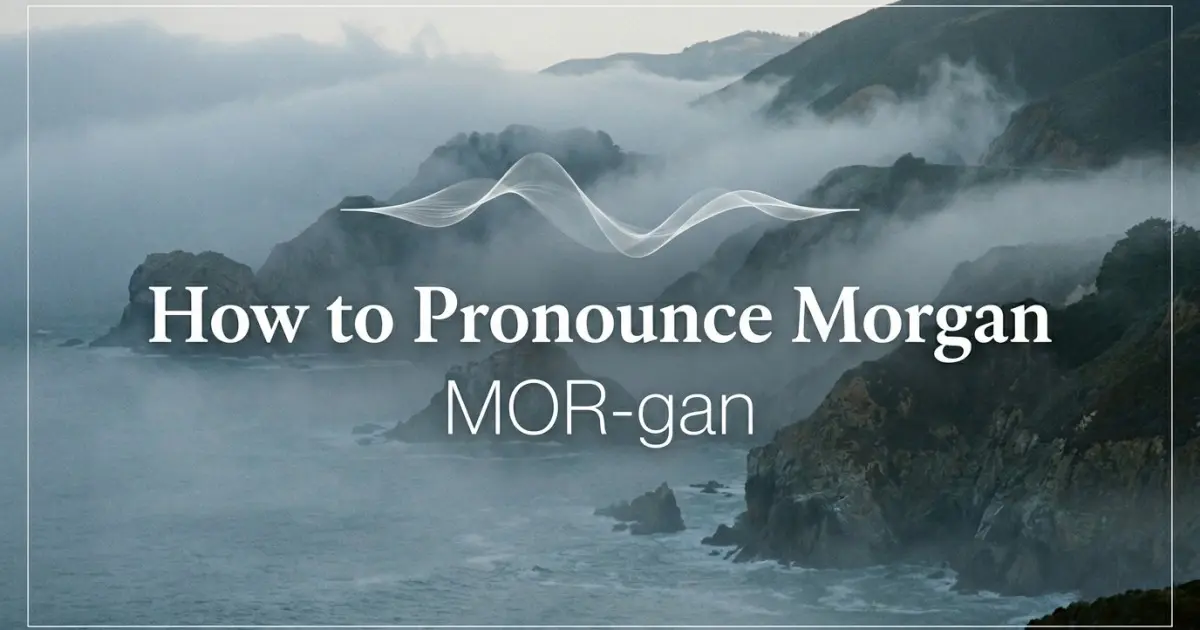
In everyday English, Morgan is pronounced MOR-gun. That opening syllable is what makes the name feel stable. It arrives broad and clear, then relaxes into a softer second syllable. The rhythm is simple, but the simplicity matters. Morgan sounds strong because it begins with substance and ends without strain. It is a name that does not need overpronunciation, only proportion. Once the first syllable is secure, the rest of the sound settles naturally into place.
How Morgan is actually said when the name is spoken naturally
| Element | Phonetic Detail | Quick Tip |
|---|---|---|
| Everyday pronunciation | MOR-gun | Think of two clear beats, with the first one carrying the weight and the second one softening the finish. |
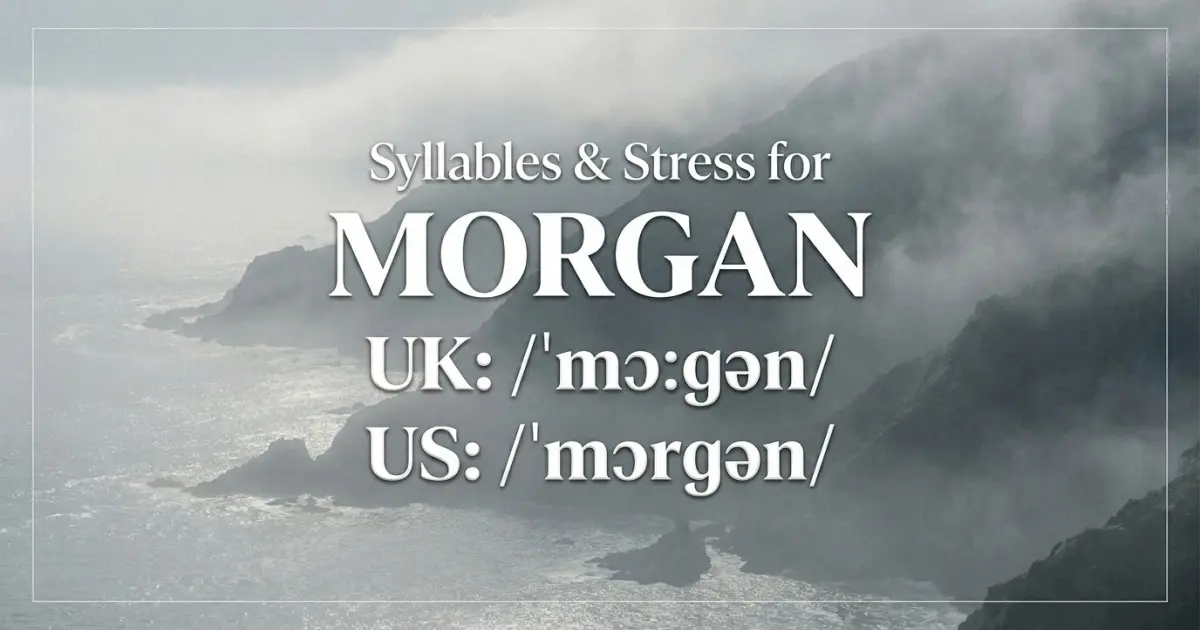
| IPA (US) | /ˈmɔːrɡən/ | The American form begins with a broad stressed vowel and ends in a light schwa-like second syllable. |
| IPA (UK) | /ˈmɔːɡən/ | The British form is very close overall, so the name stays stable across major English accents. |
| Syllable count | 2 syllables | Say it as MOR | gun, not as one rushed unit and not with equal weight on both parts. |
| Primary stress | First syllable | The first syllable should feel anchored. If the opening weakens, Morgan loses much of its calm authority. |
| Opening sound | Broad stressed MOR | Let the opening vowel feel full and round. That is the part listeners hear first and remember most. |
| Ending sound | Unstressed gun | Keep the second syllable lighter. It should complete the name, not compete with the opening. |
Why Morgan sounds stronger than it looks
The first syllable gives Morgan its authority
Morgan is only two syllables, but it does not sound slight. That is because the name puts its stress exactly where English speakers expect stability to live: right at the front. The opening MOR arrives with a broad vowel and a clear consonant frame. It sounds grounded before the second syllable even begins. This is one reason Morgan feels so reliable in speech. The name does not drift into itself. It stands. Before focusing only on syllables and stress, it helps to step back into the fuller frame of Morgan meaning.
That front-loaded structure also helps the name work across age, profession, and gender expression. A name that begins with clear weight tends to feel settled and self-possessed. Morgan benefits from that immediately. Even before anyone knows the meaning, the sound suggests steadiness.
The second syllable softens without weakening
If Morgan were all opening weight, it might sound too hard. But the second syllable prevents that. The ending relaxes into an unstressed, quieter sound that keeps the name from feeling overly severe. This is part of Morgan’s social versatility. The first syllable gives it strength; the second syllable keeps that strength approachable.
From a phonetic perspective, this is a very useful balance. The g in the middle provides a gentle stop in the name’s flow, but the final unstressed syllable prevents the sound from becoming abrupt. Morgan is therefore structured, but not stiff. That is one reason it feels so natural in everyday speech.
How Morgan behaves across American and British English
Morgan stays remarkably consistent from one accent to another
One advantage of Morgan is that its standard U.S. and UK pronunciations are very close in overall shape. The exact IPA symbols differ slightly in the treatment of the consonant cluster, but the listener still hears essentially the same two-beat rhythm: a strong MOR followed by a lighter second syllable. That stability is a practical gift. A name that remains recognizable across accents is easier to carry through public life.
Some names shift dramatically when they move between accents, especially if their vowels are unstable or their stress patterns are easy to misplace. Morgan usually avoids that problem. The name’s strongest feature is its broad, front-stressed opening, and that feature survives regional differences very well.
Where small accent differences can still appear
Of course, no name is spoken identically by every speaker. Some people will make the first vowel slightly rounder or longer. Others will make the second syllable a little more clipped. In British speech, the consonant transition may sound slightly smoother to some ears than in American speech. But these are matters of texture, not identity. Morgan still sounds like Morgan.
That consistency helps explain why the name feels so socially easy. Once people know the rhythm, they rarely lose it. The pronunciation settles quickly and stays settled.
The Morgan mistakes people make first
Overweighting the second syllable
The most common mistake is giving the second syllable too much force, as if both parts of the name deserve equal emphasis. They do not. Morgan sounds best when the first syllable carries the authority and the second simply completes the line. If the ending is overpronounced, the name can start to sound heavier and more awkward than it really is.
Underpronouncing the opening
The opposite problem also happens. Some speakers move through the first syllable too casually, almost flattening the name into an indistinct two-part blur. That weakens one of the name’s best features. Morgan needs that first broad vowel. The opening should sound clear and confident, not rushed away.
Trying to make the name more elaborate than it is
Because Morgan has Welsh roots and a serious meaning, some speakers instinctively overhandle it, as though it ought to sound more ceremonial. In reality, Morgan is elegant precisely because it is not fussy. The pronunciation does not need decoration. It needs balance: strong first beat, easier second beat, no unnecessary drama.
How to practice Morgan so it sounds like everyday life
Put Morgan into ordinary spoken phrases
The easiest way to internalize the pronunciation is to use the name where names actually live:
- “Morgan, your turn.”
- “This is Morgan.”
- “Has Morgan arrived yet?”
These examples matter because many names sound different in isolation than they do in connected speech. Morgan generally performs very well in motion. The stressed opening cuts through a sentence clearly, and the softer ending lets the name settle without sounding abrupt.
How to know you are saying Morgan naturally
You are probably pronouncing Morgan comfortably when the name feels like one stable movement rather than two equally heavy chunks. The first syllable should sound full and grounded. The second should sound lighter and more relaxed. If both parts feel equally stressed, the name may become too blunt. If the opening is weak, the name may lose its definition. Morgan works best when the balance is clear.
That is the deeper pronunciation lesson here. Morgan is not difficult, and it does not need performance. It needs a good first step and a calm finish. Once that proportion is in place, the name sounds exactly as it should sound: steady, usable, and quietly strong.
Common Questions About Pronouncing Morgan
How do you pronounce Morgan in everyday English?
The standard everyday pronunciation is MOR-gun, with the main stress on the first syllable.
Is Morgan pronounced differently in American and British English?
Only slightly. The overall rhythm stays the same in both: a strong first syllable followed by a lighter second syllable.
What is the most common pronunciation mistake with Morgan?
The most common issue is putting too much weight on the second syllable. Morgan sounds best when the opening carries the emphasis and the ending stays relaxed.
Why does Morgan sound so grounded even though the meaning is sea-born?
Its sound is grounded because the stress sits strongly at the front. The first syllable provides weight and stability, while the softer second syllable keeps the name approachable.