
How to Pronounce Mohamed: How to Say It Clearly and Naturally
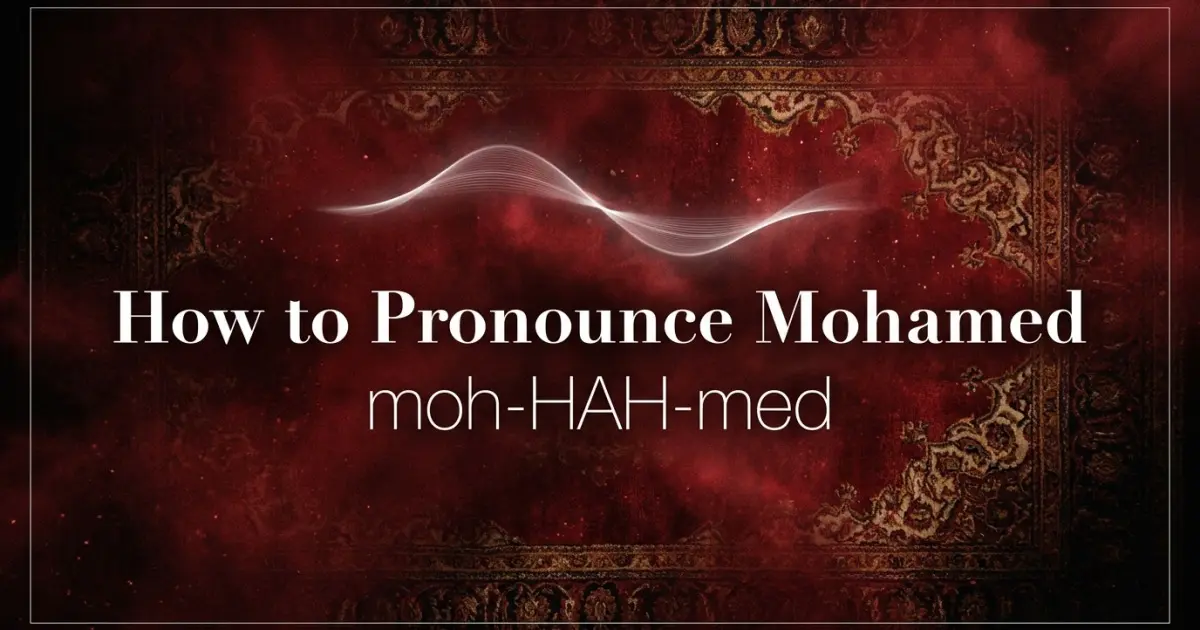
Imagine a school administrator reading names before an awards ceremony. Some names are quick to pass over, while others deserve a moment of respect because the rhythm matters. Mohamed is one of those names. The spelling is familiar to many people, but the clean pronunciation depends on placing the stress in the right place: mo-HAM-ed. The name rises in the middle, then releases softly at the end.
That central stress gives Mohamed its dignity in speech. The name is Arabic in origin, means “praised,” and has three syllables. Official data shows Mohamed ranked No. 548 for boys in the United States in 2024, so it is recognizable in American use while still carrying cultural depth. The everyday pronunciation is mo-HAM-ed: not MO-ha-med, not mo-ha-MED, and not a flattened two-syllable form. Once the middle syllable is understood as the anchor, the name becomes clear, graceful, and easy to use.
Mohamed Is Said With the Strongest Beat in the Middle
| Element | Phonetic Detail | Quick Tip |
|---|---|---|
| Everyday pronunciation | mo-HAM-ed | Let the name rise on HAM, then finish lightly. |
| Syllable count | 3 syllables | Break it into mo + HAM + ed, not two rushed beats. |
| Stress pattern | Second-syllable stress | The middle syllable should carry the clearest emphasis. |
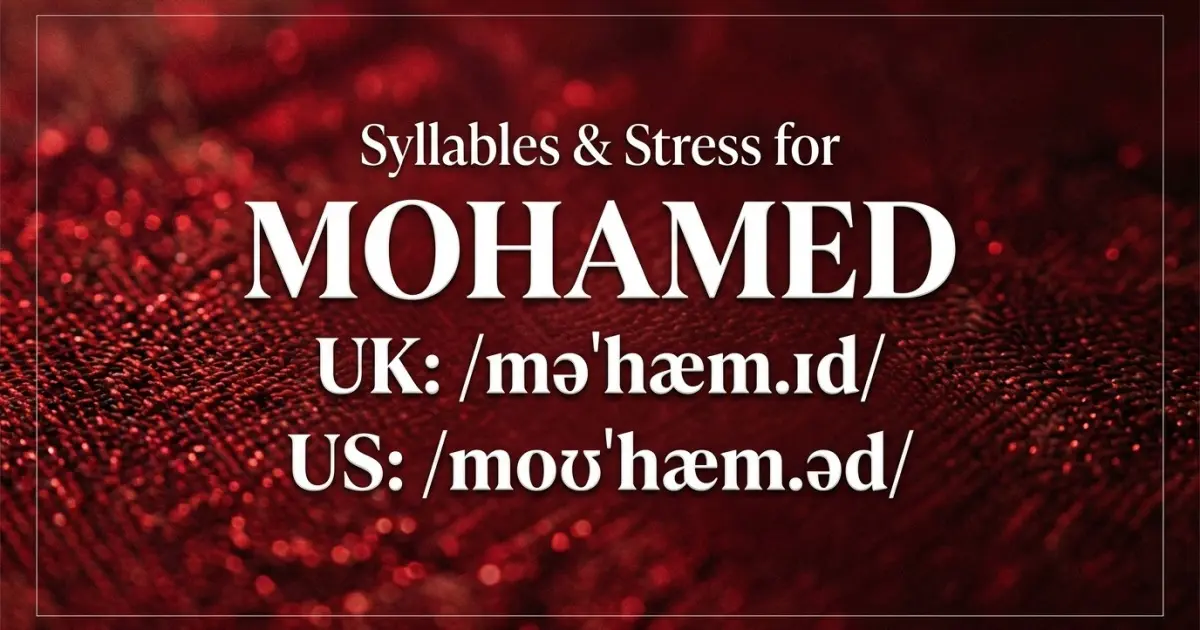
| U.S. IPA | /moʊˈhæməd/ | The stress mark before /hæm/ shows that HAM is the accented syllable. |
| U.K. IPA | /məˈhæməd/ | The first syllable may be more reduced in U.K. speech, but the middle stress remains the same. |
| Opening sound | mo or muh, depending on accent | Keep the first syllable light; it should not dominate the name. |
| Middle sound | HAM | This is the heart of the pronunciation and should be spoken clearly. |
| Ending sound | ed | Let the ending be soft and quick, not a heavy separate ending. |
The Three Syllables of Mohamed Should Rise and Settle
Mohamed has three syllables, but they do not carry equal weight. The first syllable prepares the name, the second syllable carries the stress, and the final syllable closes it gently. This is why the clearest spoken guide is mo-HAM-ed. The name should feel like a small arc: light beginning, strong center, soft ending. The sound matters more once you know what the name is meant to carry, which is why the wider frame starts in Mohamed meaning.
That arc matters because stress can change the character of the name. If the first syllable is made too strong, Mohamed can sound flattened. If the final syllable is stressed, the rhythm becomes unnatural. When the middle syllable receives the emphasis, the name sounds balanced and respectful.
The opening syllable should stay light
In American English, the first syllable may sound like mo, with a rounded long-o quality. In British English, it may be softer, closer to muh. Both versions can work within their accents, but neither should take the main stress. The first syllable is a doorway into the name, not the main room.
The middle syllable gives Mohamed its anchor
The stressed HAM syllable is the center of Mohamed. It should be clear and firm, but not shouted. This syllable holds the name together. When speakers say mo-HAM-ed, the name keeps its proper rhythm and avoids becoming too casual or blurred.
The final syllable should release gently
The ending -ed should be audible but light. It should not become a heavy final beat, and it should not disappear completely. In everyday speech, the ending often sounds relaxed, giving Mohamed a soft close after the stronger middle syllable.
Mohamed Sounds Different Across Accents, but the Stress Should Not Move
The U.S. IPA for Mohamed is /moʊˈhæməd/, while the U.K. IPA is /məˈhæməd/. The main difference is the opening vowel. American speakers may give the first syllable a clearer mo sound, while many British speakers may reduce it more lightly. This is an accent difference, not a change in the name’s core pronunciation.
The important constant is the stress. In both forms, the middle syllable carries the emphasis. That means Mohamed should remain mo-HAM-ed across English-speaking settings. The vowel color may shift, but the structure should stay stable: three syllables, middle stress, soft ending.
American pronunciation often begins with “mo”
In U.S. speech, Mohamed commonly begins with a rounded mo sound. The first syllable can sound more distinct than in some other accents, but it should still stay lighter than the second syllable. The name should not become MO-ham-ed.
British pronunciation may reduce the first syllable
In U.K. speech, the first syllable may sound closer to muh. This gives the name a softer opening, but the middle syllable remains strong. The practical guide is still mo-HAM-ed, with accent differences affecting the first vowel more than the rhythm.
Common Mohamed Pronunciation Mistakes Come From Shifting the Stress
Mohamed is not difficult to pronounce, but it is easy to distort if the stress moves. The most common mistakes are stressing the first syllable, stressing the last syllable, rushing the name into two beats, or overpronouncing the final ending. Each mistake changes the flow of the name. The correction is usually simple: slow it down and put the weight in the middle.
Mistake one: saying MO-ha-med
This version puts too much emphasis at the beginning. It may happen because English speakers often stress the first syllable of names. Mohamed works differently. The cleaner pronunciation is mo-HAM-ed, with the first syllable lighter.
Mistake two: saying mo-ha-MED
This shifts the stress too late. The final syllable should not carry the main force. Mohamed should rise in the middle, not at the end. A useful correction is: “The stress is on HAM: mo-HAM-ed.”
Mistake three: reducing it to two unclear syllables
In fast speech, Mohamed may be rushed until the three-part shape becomes unclear. The name should keep its three syllables. Saying it slowly once—mo, HAM, ed—helps restore the rhythm before returning to natural speed.
Mistake four: making the ending too heavy
The final -ed should be present, but it should not feel like a separate dramatic ending. The best pronunciation closes gently. Think mo-HAM-ed, not mo-HAM-EDD.
Mohamed Has Familiar Sound Neighbors, but Its Middle Stress Sets It Apart
Mohamed sits near related or neighboring forms such as Muhammad, Mohammed, Ahmad, Hamid, and Hamed in sound or cultural familiarity. These names may share related sound territory, but Mohamed has its own English-language rhythm as presented here: mo-HAM-ed. The spelling gives many speakers a clear path into the name, while the central stress gives it shape. Once the sound pattern is clear, some shortenings stop feeling optional and start feeling natural, and the clearest map is in nicknames for Mohamed.
Compared with shorter names like Omar or Amir, Mohamed feels more formal and complete. Compared with Ibrahim or Suleiman, it is more concise. Compared with Hamid or Hamed, it has a softer opening and fuller three-syllable movement. The pronunciation helps balance dignity with daily usability.
Practice Mohamed in everyday lines
“This is Mohamed.”
“Mohamed will be joining us today.”
“Can you give this to Mohamed?”
“Mohamed, your appointment is ready.”
“Congratulations, Mohamed.”
Practice Mohamed with full-name rhythm
Mohamed Ali keeps the full name concise and balanced.
Mohamed Zayn gives the name a crisp modern finish.
Mohamed Omar keeps the rhythm culturally cohesive and easy to say.
Mohamed Elias softens the full name with a melodic middle.
Mohamed Ibrahim creates a fuller, more formal rhythm.
Pronunciation FAQ for Mohamed
How do you pronounce Mohamed?
Mohamed is pronounced mo-HAM-ed, with three syllables and stress on the middle syllable.
How many syllables are in Mohamed?
Mohamed has three syllables: mo, HAM, and ed. The middle syllable is the strongest.
What is the IPA pronunciation of Mohamed?
The U.S. IPA pronunciation is /moʊˈhæməd/. The U.K. IPA pronunciation is /məˈhæməd/.
What pronunciation mistakes happen with Mohamed?
The most common mistakes are stressing the first syllable, stressing the final syllable, rushing the name into two beats, or making the ending too heavy. The clean pronunciation is mo-HAM-ed.