
Best Middle Names for Mercy: Thoughtful Pairings for Every Mood
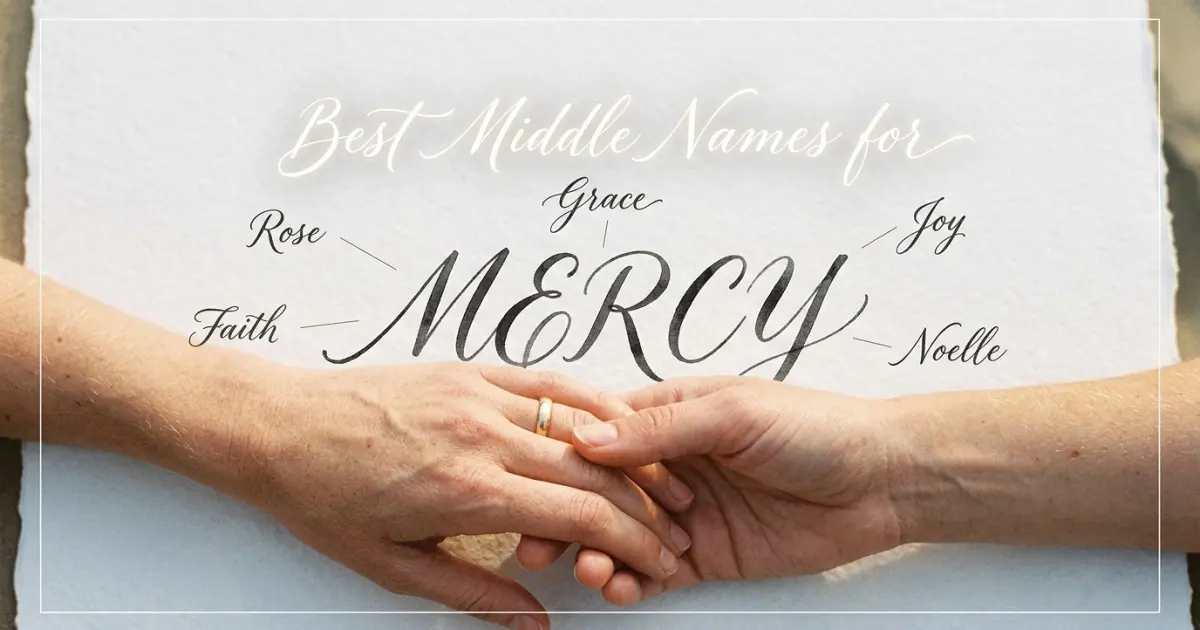
A middle name does more than fill the space between first name and surname. In most families, it carries the private layer of identity: the part that honors a grandmother, steadies a modern first name, softens a forceful one, or gives a child room to grow into different versions of themselves. The first name is public and repeated. The middle name is quieter, but it often does the more strategic work. It shapes rhythm, controls formality, influences initials, and changes the emotional temperature of the full name.
That quiet role matters especially with Mercy. Mercy is already a meaningful first name, one that arrives with moral and emotional resonance built in. It names compassion directly. That makes the middle name unusually important, because it decides whether the full combination feels lyrical, classic, modern, solemn, airy, or grounded. With Mercy, the best middle names are rarely random favorites. They are balancing tools. They help the full name feel like a person rather than only an idea. To make sure the middle name does not pull against the first name’s roots, it helps to check the heritage and tone carried in Mercy meaning.
What Mercy needs from the name that follows
| Style | Recommended Names | Why it works with Mercy |
|---|---|---|
| Classic and grounded | Jane, Claire, Ruth, Anne | These names steady Mercy’s emotional richness and keep the full name clear, elegant, and durable. |
| Soft and lyrical | Elise, Noelle, Lucia, Adeline | Mercy has a warm, firm opening. A more flowing middle adds music and prevents the combination from sounding overly severe. |
| Long and formal | Josephine, Catherine, Alexandra, Elizabeth | A longer middle gives Mercy more ceremony and creates a full name with range from childhood through adulthood. |
| Modern and clean | Quinn, Blake, June, Wren | These choices sharpen Mercy’s profile and make the full name feel current without erasing its depth. |
| Heritage and honor | Margaret, Louise, Teresa, Irene | Mercy pairs well with family names because its simplicity gives older or weightier middles room to breathe. |

Mercy sounds best when the middle name changes the pressure
Mercy is not a neutral first name. It carries meaning instantly, and that means the middle name should usually do one of two things. It should either ground the name by bringing restraint and structure, or widen it by adding texture and lyrical movement. What tends to be less effective is pairing Mercy with another name that delivers the same kind of moral or emotional charge in exactly the same register. A full name needs tension. Without it, the combination can begin to sound like a slogan instead of a person. A pairing can look elegant in print and still feel clumsy aloud, so where there is any risk of collision, it helps to test the sound in Mercy pronunciation guide.
This is where rhythm becomes crucial. Mercy has two syllables and a clear front stress: MUR-see. The first syllable is warm and weighty; the second is light and open. A middle name that answers this shape well can make the full name feel beautifully finished. Mercy Claire works because the crisp one-syllable second name closes the phrase cleanly. Mercy Josephine works because the quick first name opens into something longer and more stately. Mercy Elise works because the vowel movement softens the transition without blurring it.
Why balance matters more with Mercy than with many names
Because Mercy already says so much semantically, the middle name needs to control how much is being said overall. A classic name like Jane or Catherine helps Mercy feel anchored in ordinary life. A lyrical middle like Noelle or Lucia makes the full name gentler and more melodic. A sleek modern middle like Quinn or June gives it a contemporary edge. In each case, the middle name is not just adding beauty. It is regulating intensity.
Why echo can be risky after Mercy
Names with strong meaning often struggle when paired with another overtly thematic choice. Mercy Hope, Mercy Faith, Mercy Grace, or Mercy True may all be meaningful to a family, but they can also feel heavily message-driven. That does not make them wrong. It simply means the full name stops sounding incidental and starts sounding programmatic. For some parents that is exactly the intention. For others, a more mixed register will age better and feel more flexible in daily life.
Mercy with one-syllable middles feels composed and quietly strong
One of the safest and smartest routes with Mercy is the one-syllable middle. This is especially effective because Mercy already has warmth and softness in its two-syllable shape. A shorter middle gives the full name a cleaner line. It can also be very helpful when the surname is long, multisyllabic, or double-barrelled. In those cases, a compact middle keeps the whole name from becoming overstuffed.
Mercy Jane is a particularly durable combination. It has the kind of plain authority that makes many English-language names last. Mercy Claire is slightly cooler and more polished. Mercy Ruth feels firmer, older, and more serious in a good way, especially because Ruth shares the compassion register without repeating the same word-family. Mercy June has freshness and brightness, while Mercy Wren sounds more contemporary and airy. Each of these combinations changes Mercy’s mood without fighting it.
When short middles work best for Mercy
Choose a one-syllable middle if the surname is long, if you want a strong modern silhouette, or if you want Mercy to remain the emotional center of the name. Short middles let Mercy speak clearly without adding too much narrative around it.
Strong examples in this style
Mercy Jane, Mercy Claire, Mercy Ruth, Mercy June, Mercy Wren, and Mercy Blake all work because they finish the line decisively. They let the first name’s warmth stay present while avoiding excess softness.
Mercy with longer middles creates dignity and room to grow
Longer middles are often the best answer when parents love Mercy but want the full name to carry more ceremony. This is a useful instinct. Since Mercy is a word-name and emotionally transparent, a longer middle can supply traditional scaffolding. It gives the child options later in life and makes the full name feel more formally layered. Historically, that has been one of the best uses of the middle name: to let intimacy and structure coexist.
Mercy Catherine is excellent for this reason. The first name is plainspoken and meaning-rich; the middle is classic, durable, and socially neutral. Mercy Josephine adds warmth and sweep. Mercy Alexandra gives the name more stature and a slightly cooler, more authoritative finish. Mercy Elizabeth may be the most versatile of all, because the long established middle stabilizes the first without flattening its charm.
There is also a psychological advantage here. A child named Mercy Josephine or Mercy Catherine has an everyday first name that feels clear and memorable, but also a fuller naming reserve behind it. If she later wants more formality in professional or personal settings, the full name already provides it. This is one reason longer middles pair so well with meaningful first names. They prevent the name from being trapped in a single social register.
Why formal middles help Mercy age beautifully
Mercy already works on an adult, but a longer middle broadens the range. It allows the name to feel equally plausible on a child, a judge, a writer, a physician, or a grandmother. That elasticity is worth more than trendiness.
Which longer middles best support Mercy
Catherine, Josephine, Alexandra, Elizabeth, Matilda, and Eleanor are especially strong because they are structured without being fussy. They offer history and shape, not clutter.

Mercy and modern middles can work if the sounds stay clean
Parents who love Mercy often fall into two stylistic camps. One prefers heritage and gravity. The other wants to keep the first name’s simplicity but frame it in a more current way. That second route can work very well, but it depends on sound discipline. Because Mercy is already warm and emotionally resonant, a modern middle should usually be crisp, pared-back, and phonetically clear.
Mercy Quinn works because the second name adds tension and edge. Mercy Blake feels contemporary and slightly sharper, which can be useful if the surname is soft. Mercy June is modern without being abrupt. Mercy Wren is airy and compact, though it works best when the surname is sturdier. What all these pairings share is contrast. None of them tries to out-emote Mercy. They offer structure, line, and texture instead.
Mercy with family middles is often where the name becomes most human
Middle names are still the most natural place for family memory, and Mercy is unusually good at carrying that kind of inheritance. Because the first name already feels emotionally articulate, it can hold a plainer or older family middle without becoming dull. In fact, the contrast often makes the whole name more believable. Mercy Margaret, Mercy Louise, Mercy Irene, or Mercy Teresa can feel much more lived-in than pairings that try to make every part of the name equally poetic.
Why Mercy can absorb an older honor name so well
Some first names need a fashionable middle to stay lively. Mercy does not. Its meaning and sound already provide memorability. That gives you freedom. An older honor name can come in behind it and simply do its work.
When to modify a family name rather than repeat it exactly
If the inherited name creates awkward rhythm, difficult initials, or a heavy moral stack, a variant may be wiser. Louise may work better than Louisa. Anne may work better than Annabella. The goal is continuity, not rigidity.
Mercy also needs practical checks before the final choice
As naming books often remind parents, a beautiful pair on paper can fail once the surname enters. Mercy is especially dependent on this last step because its first syllable is rounded and voiced, and its second syllable opens lightly. A surname that begins with an awkward sibilant, repeats the same mer sound, or turns the whole name into rhyme can weaken the elegance very quickly. This is not a reason to overthink. It is simply a reason to test the full sequence aloud.
Initials matter too. Since Mercy is a meaningful word-name, an unfortunate middle initial can make the combination feel accidental or comic. So can an overly thematic pairing. Mercy Grace Thompson may be lovely to one family and a little too devotional to another. Mercy Wren Collins may sound stylish with one surname and too breathy with another. Full-name logic is relational. There is no universal winner apart from the one that truly fits the surname and the family’s style.
Practical caution notes for Mercy pairings
- Avoid pairing Mercy with another heavy abstract virtue unless you deliberately want a highly symbolic full name.
- Check initials with the surname before committing, especially if the middle is short and prominent.
- Be careful with middles that start with a harsh s-cluster if the surname also begins sharply; the transition from Mercy can become hissy or clipped.
- If the surname is long, use a short or mid-length middle. If the surname is short, Mercy can comfortably take a longer formal middle.
- Say the full name at natural speed, not just slowly. Awkwardness usually shows up in ordinary speech first.
Mercy works best when the middle name brings down the house lights just enough
The secret to pairing Mercy well is not to compete with it. The name already carries its own emotional weather. The middle name’s job is to control the light. Jane makes Mercy plainer and stronger. Claire makes it cleaner. Josephine makes it grander. Ruth makes it sterner. June makes it lighter. Catherine makes it more timeless. Once you know which version of Mercy you want the full name to become, the right middle often becomes obvious.
That is why Mercy is more flexible than it first appears. It is not only a virtue-name. It is a short, sonorous English first name with real shaping power. Give it a middle that offers contrast, steadiness, or inherited depth, and the result can feel beautifully complete. The best Mercy combinations do not dilute the first name’s meaning. They give it a frame strong enough to live in.