
How to Pronounce Maximus: How to Say It Clearly and Naturally
The easiest way to understand how Maximus is actually pronounced is to picture a real public moment: a teacher reading a class list aloud for the first time, a pediatric nurse stepping into a waiting room, a soccer coach calling boys to the sideline, or a barista pausing over the name on a paper cup. Maximus looks grand on the page, and because it is longer and more classical than many current boys’ names, people sometimes assume it must be harder to say than it really is. But once heard once, the pronunciation usually settles very quickly. It is orderly, not exotic. Formal, not complicated.
That balance is part of the name’s strength. Official data shows Maximus remains clearly present in current U.S. use, and one reason it stays wearable is that its spelling and sound align more closely than its dramatic appearance might suggest. The name is three syllables, yes, but they fall in a very predictable rhythm for English speakers: MAK-sih-mus. The first syllable carries the weight, and the next two step down in quick succession. In other words, the pronunciation sounds classical, but it is not fragile. It moves cleanly through ordinary speech.
What Maximus is really doing when people say it out loud
| Element | Phonetic Detail | Quick Tip |
|---|---|---|
| Common spoken form | MAK-sih-mus | Stress the first syllable clearly, then let the last two move more lightly. |
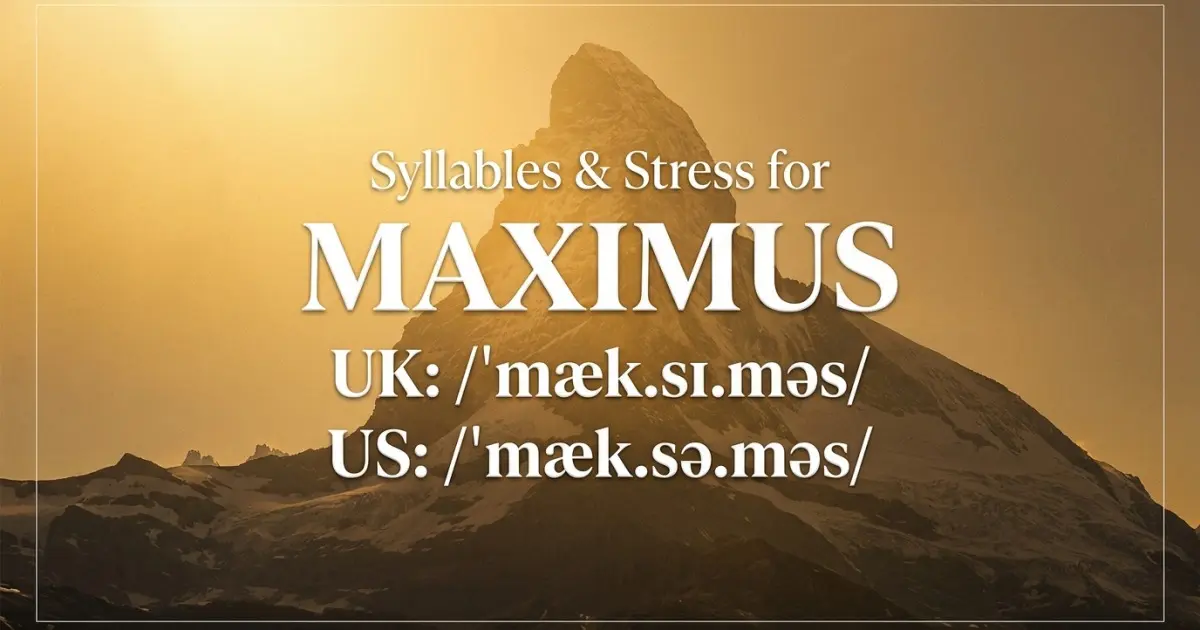
| U.S. IPA | /ˈmæksɪməs/ | The opening sounds like “max,” followed by two short unstressed syllables. |
| U.K. IPA | /ˈmæksɪməs/ | The British and American forms are essentially the same, which makes the name unusually stable across accents. |
| Syllable count | 3 syllables | Think of the name as one strong beat followed by two smaller echoes. |
| Stress pattern | First syllable stressed | The strongest part is MAK, not the middle or final syllable. |
| Main vowel | /æ/ as in “cat” | Keep the opening short and bright, not broadened into “mahx.” |
| Middle consonant cluster | /ks/ inside the first syllable | The x sound is part of the stressed opening, which helps the name sound crisp and decisive. |
| Most common risk | Over-latinizing or overdramatizing it | You do not need to make the name sound ceremonial; ordinary clear English usually works best. |
Maximus lives on the first syllable
The most important pronunciation fact about Maximus is stress. This is a three-syllable name, but it does not distribute its weight evenly. The first syllable carries the force: MAK. The second and third syllables follow more lightly, almost as if the name opens a gate and then steps through it in diminishing beats. When that rhythm is right, the name sounds confident and natural. When that rhythm is wrong, it can suddenly sound theatrical or uncertain. Before focusing only on syllables and stress, it helps to step back into the fuller frame of Maximus meaning.
Why the opening “Max” matters so much
The stressed opening uses the vowel /æ/, the same short front vowel heard in words like cat and back. That makes the start of Maximus more compact than some people expect. Because the name looks Roman and formal, there can be a temptation to broaden the sound too much, as though grandeur requires a heavier vowel. In everyday English, however, the strongest and most natural version begins just like Max.
This opening also contains the x sound, realized as /ks/. That consonant cluster gives the name its bite. It creates a little internal tension and helps the first syllable feel decisive. Without that crisp cluster, the name would be softer and blurrier. With it, Maximus sounds carved rather than vague.
Why the second and third syllables should not compete
After the strong opening, the final two syllables—-sih-mus—need to stay lighter. They are not swallowed, but they are secondary. This is one reason Maximus sounds more wearable than it looks. The name is long enough to feel grand, but the stress pattern makes it manageable. English speakers are very used to words and names that land strongly up front and then taper off. Maximus benefits from that habit.
If someone overemphasizes the second syllable or slows every syllable equally, the name can become too staged. The best everyday pronunciation preserves the order of importance: first syllable strongest, final two supporting.
Maximus barely changes across major English accents
One practical advantage of Maximus is that the U.S. and U.K. IPA forms are the same: /ˈmæksɪməs/. That does not mean every speaker sounds identical, but it does mean the underlying structure remains highly stable. The name is not one of those classical-looking choices that behaves very differently depending on the country. In spoken English, Maximus is refreshingly consistent.
Maximus in American English
In American English, the name is usually spoken exactly as the fact pattern suggests: MAK-sih-mus. The opening is crisp, the middle stays light, and the final syllable closes the name without dragging. The absence of a final liquid consonant like r or l means the ending is neat and relatively firm. That contributes to the name’s Roman, structured feeling.
Because the sound is so stable, American speakers rarely need much coaching once they have heard it once. It sounds formal, but not inaccessible.
Maximus in British English
In British English, the same rhythm generally holds. The vowel color may vary subtly depending on region, as it does with many names, but the structure does not really move. The stress remains on the first syllable, and the last two continue to fall away lightly. This is useful for a name with a large visual presence. It means that while Maximus may look grand, it does not become unpredictable when spoken across English-speaking settings.
That portability is part of why the name can feel substantial rather than fussy. A name that keeps its shape across accents has a better chance of feeling socially durable.
Where Maximus most often gets said wrong
Maximus is not hard to pronounce, but it can be overperformed. Most mispronunciations come from people assuming that a name with Latin grandeur requires special vocal ceremony. Usually it does not.
The most common mistake is over-latinizing the vowels
Some speakers may try to make Maximus sound more archaic or more dramatic than everyday English requires, stretching the vowels or separating the syllables too carefully. That can produce something stiff or overly theatrical. In real life, the best pronunciation is much simpler: start with Max, then step through the final two syllables quickly and clearly.
The goal is not to flatten the name into plainness, but to avoid making it sound like a speech from a colonnaded balcony.
The second common problem is giving every syllable equal weight
When speakers say MAX-I-MUS as though each part deserves equal emphasis, the name loses its natural English rhythm. The first syllable should dominate. That is what makes the name sound elegant rather than cumbersome. Once the stress is right, Maximus stops sounding complicated and starts sounding orderly.
Maximus feels easier once you hear its sound neighbors
One reason Maximus settles quickly in the ear is that its strongest part is already familiar. The opening sounds like Max, which gives speakers an immediate anchor. From there, the rest of the name simply extends that opening with two short, manageable syllables. In this sense, Maximus is not an entirely foreign form. It is a known beginning followed by a formal completion. Once the sound pattern is clear, some shortenings stop feeling optional and start feeling natural, and the clearest map is in nicknames for Maximus.
That pattern matters. Names are easier when listeners can grab one familiar segment and build outward from it. Maximus offers exactly that kind of support. The name looks elaborate, but its first syllable reassures the ear immediately.
Maximus settles best inside real phrases
As with most names, the fastest way to make Maximus feel natural is not to recite it in isolation but to use it in ordinary lines of speech. Because the rhythm is so clear, the name often becomes easy after only a few natural repetitions.
Practice lines that make Maximus feel automatic
Try these aloud: This is Maximus. Maximus is here. Come here, Maximus. Maximus James. Is Maximus ready? In each case, the same pattern returns: heavy opening, lighter descent. Once the ear hears that shape in full sentences, the pronunciation usually feels obvious.
A helpful sound exercise is Maximus made the move. The repeated m sounds and the stressed opening reinforce the structure without making the practice feel mechanical.
How to know you are saying Maximus naturally
You are close when the name sounds strong but not staged, clear but not over-enunciated. If it sounds like you are trying to perform Roman dignity, simplify. If it sounds rushed and flattened, give the first syllable a little more space. The ideal pronunciation lives in the middle: confident, ordered, and entirely usable in ordinary speech.