
How to Pronounce Mateo: Syllables, Stress, and Common Mistakes
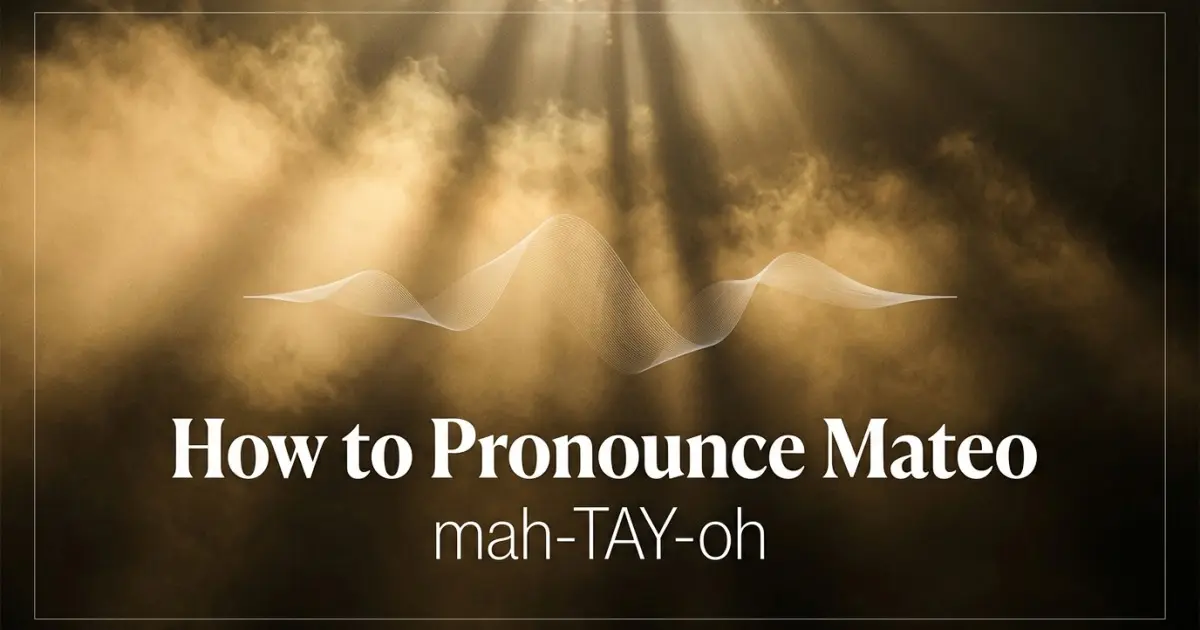
The easiest way to understand how Mateo is pronounced is to picture a real introduction, not a phonetics lesson. A teacher calls a new student from the attendance list. A nurse says the name in a waiting room. A barista reads it off a cup. A graduation announcer reaches the name and has only one chance to get it right. Mateo tends to do well in those moments, but only if the speaker hears its rhythm correctly. The name does not lead with its stress. It blooms toward the middle. That is the crucial thing to notice. Mateo is not a hard, front-loaded English name. It moves forward and opens on the second syllable.
That is part of what gives the name its warmth. muh-TAY-oh has a rising shape rather than a blunt one. The first syllable is light, the second carries the emphasis, and the last syllable releases the name gently instead of snapping it shut. This is one reason Mateo feels musical in everyday speech. It does not march. It unfolds. For parents, that matters. A name can look beautiful on paper and still become awkward if people keep stressing the wrong part of it. Mateo’s appeal depends on letting its natural rise-and-fall remain intact.
Where Mateo puts the stress and why that changes the whole sound
| Element | Phonetic Detail | Quick Tip |
|---|---|---|
| Common spoken form | muh-TAY-oh | Keep the first syllable light and let the second syllable carry the name. |
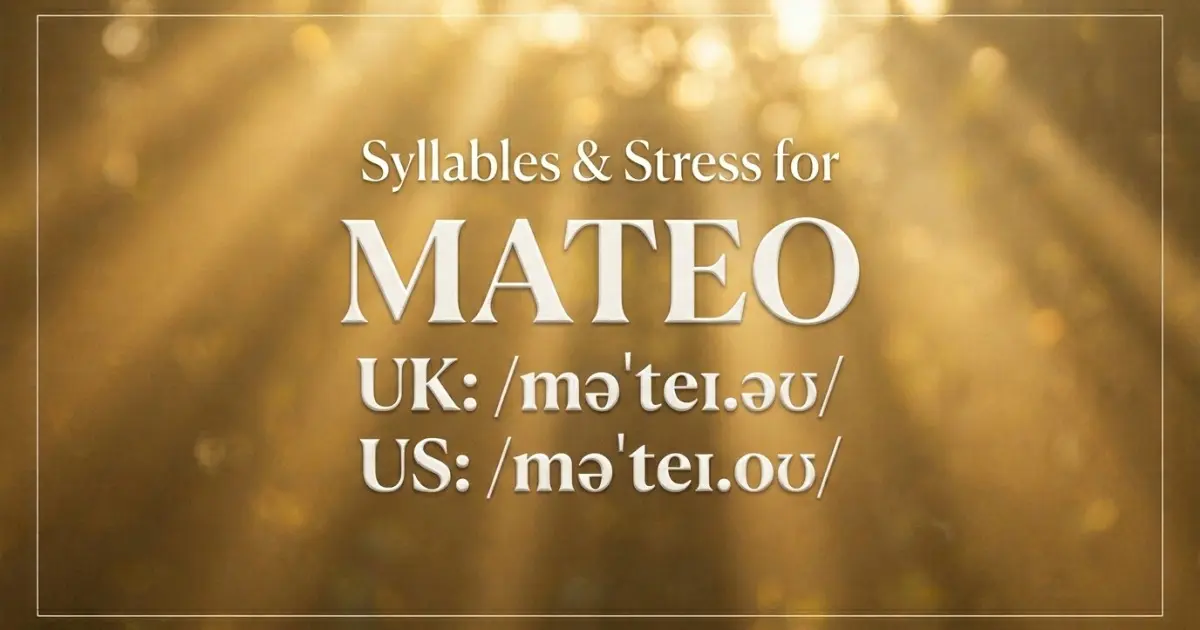
| U.S. IPA | /məˈteɪoʊ/ | The stress falls on TAY, not on the opening syllable. |
| U.K. IPA | /məˈteɪəʊ/ | The British form is very close to the American one, with only a small difference in the final vowel glide. |
| Syllable count | 3 syllables | Think in three distinct beats: muh | TAY | oh. |
| Stress pattern | Primary stress on the middle syllable | If the stress moves to the front, the name starts sounding less like Mateo and more like a different name family. |
| Ending sound | Open final -oh | Let the last syllable finish clearly instead of rushing or swallowing it. |
| Nickname clue | Teo follows the stressed center | The most natural short form comes from the part of the name that carries the emphasis. |
Mateo works because the middle syllable carries the identity
The defining feature of Mateo is its stress. In English, many familiar boys’ names put the strongest beat at the beginning. Mateo does not. Its energy gathers in the center. That middle syllable, TAY, is where the name becomes unmistakably itself. The opening syllable, muh, is lighter and more transitional. The ending, oh, is clear but secondary. Once you hear that pattern, the whole name settles into place. Before focusing only on syllables and stress, it helps to step back into the fuller frame of Mateo meaning.
Linguistically, the structure is straightforward but graceful. The first syllable begins with m, a nasal consonant that naturally softens the opening. The second syllable carries the strong consonant t and the bright diphthong /eɪ/, which gives the name its lift. The final vowel opens the word rather than closing it with a hard consonant. That open ending is one reason Mateo feels warm and fluid in speech.
Why the first syllable should stay light
People sometimes overpronounce the opening because they are trying to be careful. But in natural English pronunciation, the first syllable is not the headline. It should sound more like a soft approach into the name than a strong stand-alone beat. If you make the opening too heavy, Mateo can begin to sound clumsy or overly Anglicized.
Why the final syllable should still be heard
The ending matters because it keeps the name from collapsing into a two-syllable approximation. Mateo is not muh-TAY. The final -oh gives the name its release and some of its cultural texture. It should be clear, even if it is not strongly stressed.
This structure also explains why Teo works so naturally as a nickname. It comes from the strongest part of the name and keeps the open ending that gives Mateo so much of its character. The nickname preserves the pronunciation logic instead of fighting it.
Mateo in American and British mouths stays remarkably close
The American and British IPA forms are almost identical: /məˈteɪoʊ/ in the U.S. and /məˈteɪəʊ/ in the U.K. That tells you something important. Mateo is not one of those names that changes dramatically when it crosses the Atlantic. The main structure remains stable: light opening, stressed middle, open ending. The slight difference lies in the way the final vowel glides, not in the stress or core identity of the name.
Accent notes that matter in real life
In American speech, the last syllable may sound a touch rounder or more closed. In British speech, it may feel a little lighter and more open in its glide. But these are fine-tuning details. The overall melody of the name remains intact. Most English speakers, once they know where the stress belongs, can say Mateo very comfortably.
Mateo and its closest sound neighbors
Where confusion can happen is with neighboring names rather than with accent. Mateo sits near Matteo, Matheo, Matias, and even Matthew in the broader name family. That is why some speakers may briefly expect a different rhythm or a different ending when they first see it. But Mateo’s three-beat structure and stressed middle syllable quickly distinguish it. It is not Matthew in disguise, and it is not a two-syllable nickname stretched out. Its identity depends on keeping all three beats audible. The way the name resolves at the end often decides which short forms feel natural in speech, and that becomes clearer in nicknames for Mateo.
Where people get Mateo wrong, and how to keep it elegant
Most pronunciation mistakes with Mateo come from one of three habits: moving the stress forward, flattening the final syllable, or rushing the entire name into something shorter than it really is. The good news is that all three problems are easy to fix once you know what to hear.
Mistake pattern one: stressing the wrong syllable
The most common issue is a front-heavy pronunciation that gives too much force to the opening. Mateo should rise toward the middle, not hit hard at the start. If the stress lands too early, the name loses much of its natural grace.
Mistake pattern two: swallowing the last syllable
Because the second syllable is so prominent, some speakers rush past the ending and nearly drop it. But the final -oh is part of what makes the name feel complete. Without it, Mateo starts to sound unfinished or clipped.
Mistake pattern three: turning the whole name into a blur
Fast speech can compress three-syllable names. With Mateo, the risk is that the name becomes m-TAY-oh or even something closer to two and a half beats. The solution is not to overpronounce it, but to keep the three-part rhythm present even in casual speech.
Practising Mateo until the rhythm feels natural
The easiest way to practice Mateo is to stop thinking about spelling for a moment and hear the name as a pattern of beats: soft, strong, open. Once you get that, the pronunciation becomes much easier to trust. The goal is not theatrical precision. It is relaxed clarity.
Useful practice lines for Mateo
- Mateo is here.
- This is Mateo James.
- Mateo, your table is ready.
- We named him Mateo.
A useful memory trick is to build the name from its center. Start with TAY, then add the soft opening and open ending around it: muh-TAY-oh. Another easy guide is the nickname Teo. If Teo sounds natural to you, the full name will usually follow. Since the nickname grows out of the stressed center, it can help anchor the whole pronunciation.
Why Mateo sounds best when it keeps its openness
Mateo loses some of its beauty when speakers make it too tight or too hurried. The name’s charm depends on a small amount of breathing room. You do not need to exaggerate it, but you do need to let the three syllables happen. That is what keeps the name elegant instead of merely efficient.