
How to Pronounce Mariella: What People Often Get Wrong
The practical life of a name begins when someone has to say it without rehearsal. It begins in the school corridor, at the pediatrician’s desk, during a roll call, at a birthday party where one parent meets another and repeats the name back to make sure they heard it correctly. Mariella is exactly the sort of name that produces that tiny half-second pause. Most people recognize its beauty immediately. The question is not whether it sounds lovely, but where the stress belongs and how much weight to give each syllable. That is where first impressions are made. A name this musical needs its rhythm protected.
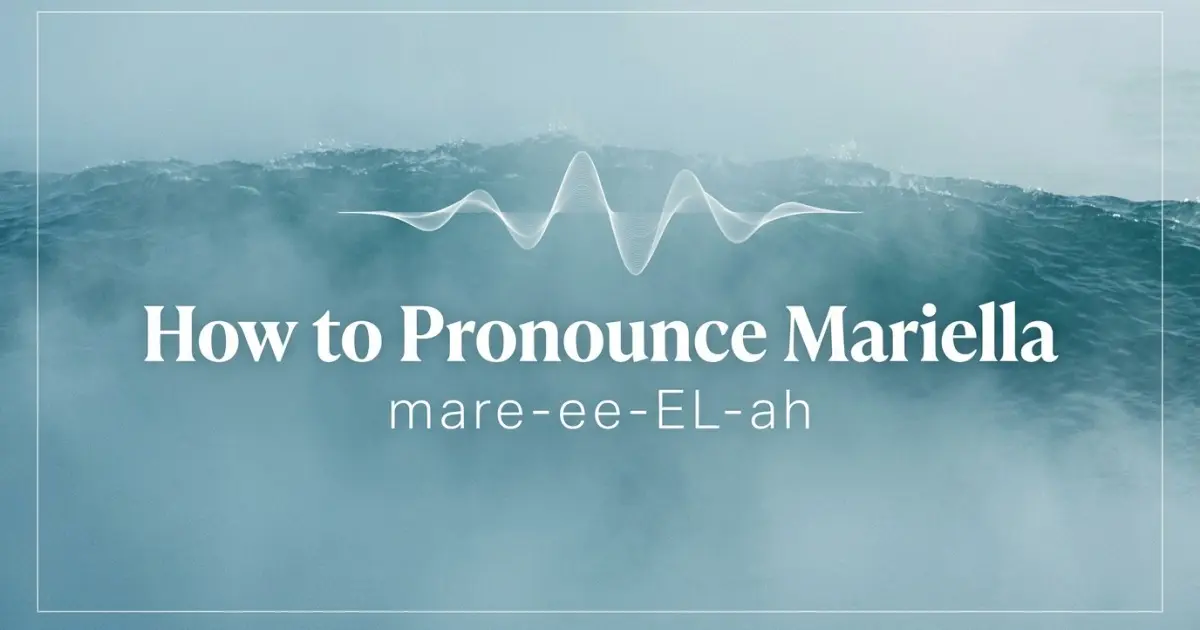
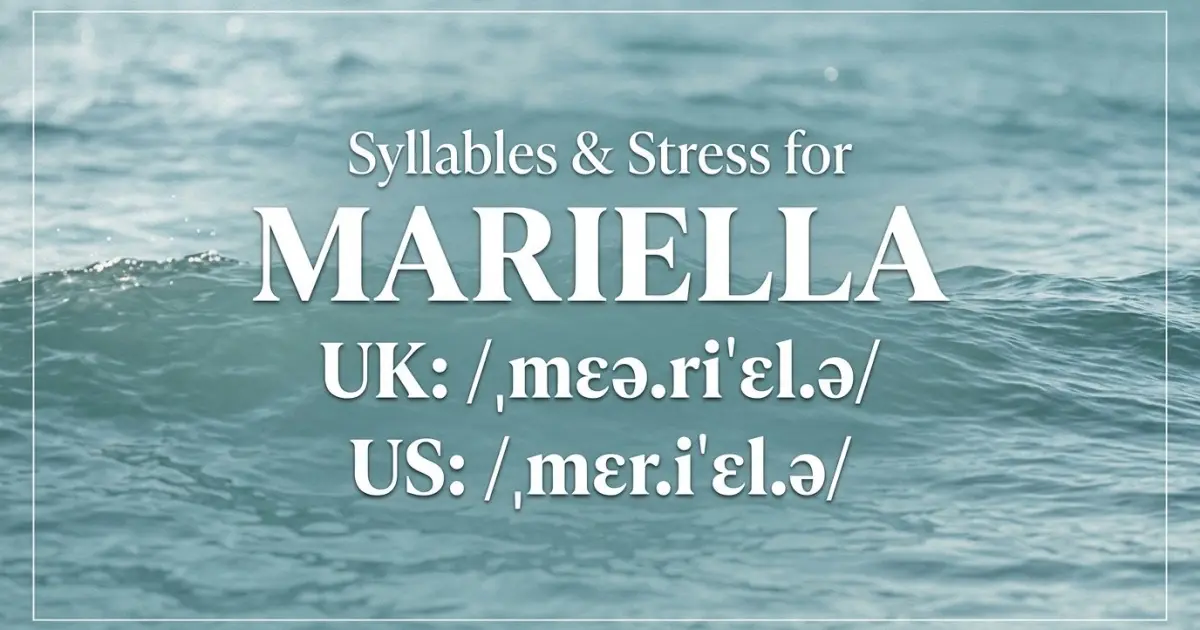
The intended pronunciation is mar-ee-EL-uh. The key is the lift on the third syllable. Mariella does not open with its strongest beat and then fade. It glides forward and blooms at the center, which is one reason it sounds elegant rather than blunt. Official pronunciation data gives the U.S. form as /ˌmæriˈɛlə/ and the U.K. form as /ˌmæriˈelə/. In real life, that means the name stays very stable across accents: four syllables, a light beginning, a clear EL in the middle, and a soft final uh.
What Needs to Be Clear Before Mariella Is Said Well
| Element | Phonetic Detail | Quick Tip |
|---|---|---|
| Everyday pronunciation | mar-ee-EL-uh | Let the name rise into the third syllable instead of stressing the beginning too hard. |
| Syllable count | 4 syllables | Say it in four clear beats: mar / ee / EL / uh, not as one long blur. |
| Primary stress | Stress on the third syllable | The EL is the heart of the name. If that syllable is weak, the whole rhythm flattens. |
| U.S. IPA | /ˌmæriˈɛlə/ | In American speech, the opening usually sounds like mar in “marry,” followed by a crisp EL. |
| U.K. IPA | /ˌmæriˈelə/ | British pronunciation keeps the same rhythm, with only a slightly different vowel shaping in the stressed syllable. |
| Final syllable | Soft uh | Do not over-pronounce the ending. It should close gently, not like a full ah. |
| Closest spoken guide | mar-ee-EL-uh | If you can say Maria and Ella, the sound logic will already feel familiar. |
Mariella Works Because the Stress Arrives Late
The most important thing to understand about Mariella is that its elegance comes from delayed emphasis. Many names announce themselves immediately with a heavy first syllable. Mariella does something more graceful. It moves lightly through the first two syllables and then lands on EL. That delayed stress is what gives the name its lifted, romantic quality. The sound matters more once you know what the name is meant to carry, which is why the wider frame starts in Mariella meaning.
The opening of Mariella should stay light
The first two syllables, mar-ee, are not supposed to dominate. They set up the name. The initial m is a soft nasal consonant, which makes the beginning feel warm rather than sharp. The liquid quality of the r helps the sound flow into the next syllable instead of stopping abruptly. Together, these sounds create a kind of runway. They prepare the ear for the stressed center.
This is where many speakers make a subtle error: they treat Mariella as though it were a name that should be front-heavy, giving too much weight to MAR. That produces something closer to MAR-ee-ella, which feels flatter and more obvious. The intended form is lighter at the front. Think of the beginning as movement, not arrival.
The third syllable is where Mariella becomes itself
The syllable EL carries the identity of the name. In phonetic terms, this is the stressed nucleus, and in ordinary listening it is where the name suddenly gathers brightness. If that syllable is crisp and clear, Mariella sounds poised. If it is swallowed or underplayed, the name loses definition.
This is also why the name remains manageable despite having four syllables. The stress pattern organizes it. Without that internal emphasis, Mariella might feel overlong. With it, the name feels shaped and memorable. The ear hears a rise and release rather than a string of equal sounds.
Mariella Across American and British Speech
Mariella is a helpful example of a name that travels well across English accents. The listed U.S. and U.K. forms are extremely close: /ˌmæriˈɛlə/ and /ˌmæriˈelə/. In practice, this means that the overall architecture of the name does not change. What shifts is mainly the color of the stressed vowel and the level of crispness in the middle of the name.
In American speech, Mariella often sounds slightly brighter
American English usually gives the stressed syllable a clear, bright EL sound, with the opening mar resembling the start of marry. The result is a pronunciation that feels distinct and highly legible: mar-ee-EL-uh. Because American speech often favors firm internal stress, the center of the name can sound especially polished here.
In British speech, Mariella stays smooth and balanced
In British pronunciation, the shape remains the same, but the vowels may sound a touch smoother and slightly less wide. The stressed syllable still carries the name. The difference is not enough to create a second pronunciation tradition. It is simply accent color. That is good news for everyday use. Mariella belongs to the category of names that can move internationally without constant correction.
In both accents, the final syllable should remain relaxed. It is a soft closing uh, not a theatrical ah. Overdoing the final sound makes the name feel more ornate than it needs to be.
Where Mariella Usually Gets Mispronounced
Most mispronunciations of Mariella come from one of three instincts: overemphasizing the start, flattening the stress, or treating the final vowel too dramatically. None of these errors make the name unrecognizable, but they do change its character.
The first mistake is stressing the wrong part of Mariella
The most common drift is to put too much force on the first syllable, creating something like MAR-ee-ella. This happens because English speakers often assume a long name should begin strongly. But Mariella is not built that way. Its elegance depends on holding back until the third syllable. If the front of the name becomes too heavy, the sound turns more ordinary and loses some of its Italian-style lift.
The second mistake is flattening Mariella into even beats
Another error is to pronounce all four syllables with nearly equal emphasis: mar-ee-el-ah. This can happen when someone is being overly careful or is reading the name for the first time from paper. Ironically, trying too hard to honor every written vowel can make the name sound less natural. Mariella needs contour. It should not sound mechanical.
The third mistake is overplaying the ending
Because the name ends in -ella, some speakers lean too far into the final ah-like shape and make the last syllable sound bigger than it is. The ending should be gentle, almost trailing. The spotlight belongs to EL, not to the final vowel. Once that is understood, the whole pronunciation becomes easier.
Mariella and Its Sound Neighbors
One reason Mariella is easy to learn is that it sits near several familiar sound patterns. It shares the opening family resemblance of Maria and Mariel, and it shares the ending shape found in names like Gabriella, Daniella, and Arabella. These neighbors help the ear. Even when someone has never met a Mariella before, the sound pieces already belong to known naming patterns. When the stress sits in the center, the nickname logic often follows that same center of gravity, which is why nicknames for Mariella is the natural next step.
That familiarity can help or hinder. It helps because the name does not feel alien. It hinders because some speakers may borrow the wrong stress habits from neighboring names. Maria tends to emphasize the second syllable, while some English speakers flatten -ella names into predictable front-heavy rhythms. Mariella is close to these forms, but not identical to them. Its pronunciation works best when treated as its own melodic line rather than a blend of pieces from other names.
Still, those sound neighbors are useful for practice. If a speaker can hear the opening softness of Maria and the clear center of Ella without letting either one dominate too much, they are already close to saying Mariella well.
How to Practice Mariella Until It Feels Natural
The easiest way to learn Mariella is to say it in real-life phrases instead of isolating it too long. Names become natural when they live inside ordinary speech. The goal is not laboratory precision. The goal is confidence and ease.
Three practice lines for Mariella
Try these aloud:
“Mariella, your table is ready.”
“This is Mariella.”
“Great job, Mariella.”
Each phrase tests the rhythm in a different setting: calling, introducing, and encouraging. If the stress slips forward, repeat the phrase and let EL carry the lift again. Most people find that once they hear the center clearly, the rest of the name falls into place.
A simple memory rule for Mariella
A useful shortcut is this: light beginning, bright center, soft ending. That phrase captures the whole experience of the name. Start gently, let the third syllable shine, and then close without force. Mariella is not a difficult name, but it is a shaped one. Once the shape is felt, pronunciation becomes much more intuitive.
That is ultimately why Mariella works so well in spoken life. It sounds refined, but it is not fragile. It has musical movement, but it is not hard to remember. The pronunciation gives the name what the spelling promises: grace, clarity, and a center strong enough to carry all four syllables beautifully.