
How to Pronounce Mariam: How the Rhythm of the Name Really Works
Picture a teacher on the first day of school reading a class list that includes names from many traditions. Some names are instantly familiar. Others cause a pause because the spelling looks elegant but the rhythm is not yet obvious. Mariam often sits in the middle of those two experiences. It looks classical, devotional, and slightly formal, so a first-time reader may slow down for a second. Then the name is spoken aloud—MAIR-ee-um—and it usually settles immediately. That is one of Mariam’s practical strengths. It has the dignity of an old name, but not the burden of a difficult one.
That ease matters because Mariam is often encountered first in writing: on school rosters, forms, invitations, clinic check-ins, and email signatures. A name can have great beauty and still become tiring if it constantly needs repair in ordinary conversation. Mariam generally avoids that problem. Its rhythm is smooth, its stress is clear, and its American and British forms are essentially the same. The goal is not to make the name grander than it is. The goal is to let its three syllables fall naturally, so the sound stays as calm and humane as the name itself.
How Mariam is actually said when people say it naturally
The pronunciation of Mariam is simple once you hear how the three syllables cooperate. It begins clearly, softens in the middle, and lands gently at the end.
| Element | Phonetic Detail | Quick Tip |
|---|---|---|
| Common Pronunciation | MAIR-ee-um | Say it in three clean beats, with the first syllable carrying the main stress. |
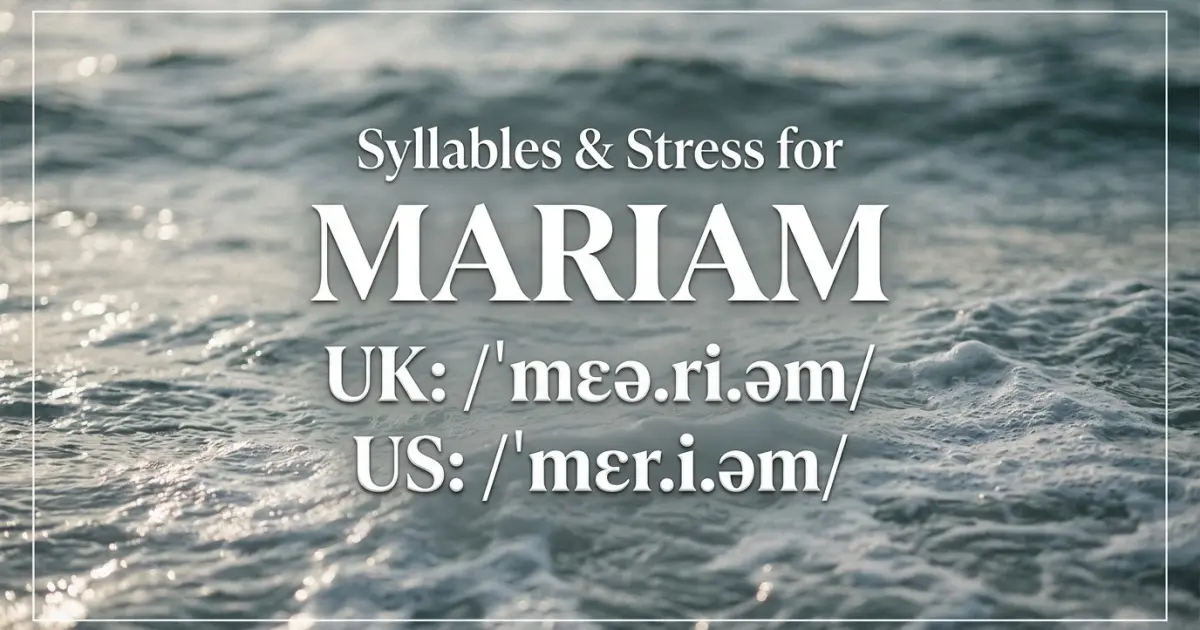
| US IPA | /ˈmæriəm/ | The opening sounds like mar in “marry,” not a long mah or a clipped meh. |
| UK IPA | /ˈmæriəm/ | The British form is essentially the same, which makes Mariam unusually stable across accents. |
| Syllables | 3 syllables | Think of it as MAIR + ee + um, not as one rushed blur. |
| Stress Pattern | Primary stress on the first syllable | The name should lean forward at the start and then soften. |
| Middle Sound | Light /r/ into /i/ movement | Let the middle glide; do not hit the second syllable too hard. |
| Ending Sound | Final /əm/ sound | The last syllable is gentle and quick, not heavily emphasized. |
Why Mariam sounds right when the first syllable carries the name
Mariam is a three-syllable name, but it does not spread its weight evenly across all three parts. The first syllable does the main identifying work. In the IPA, that opening is represented as /mæ/, the same vowel family heard in words like man, map, or marry. That gives the name a grounded and familiar opening. It does not float in uncertainly. It begins with confidence. Before focusing only on syllables and stress, it helps to step back into the fuller frame of Mariam meaning.
After that comes the softer middle syllable, -ee-. This is where the name relaxes. It is not supposed to rival the first syllable for attention. Instead, it smooths the transition into the ending. Then the final -um closes the name quietly. This last syllable matters because it keeps Mariam from sounding clipped or hard. The name ends in softness rather than in force, which suits its emotional tone very well.
Why the first syllable should sound clear, not overdramatic
Because Mariam is a traditional and emotionally serious name, some speakers instinctively over-pronounce it, almost as if reading from a sacred text rather than calling a person across a room. That usually makes the name sound stiffer than it should. The first syllable needs to be clear, but not inflated. Mariam sounds best when spoken naturally.
Why the middle syllable should stay light
The second syllable often goes wrong when speakers try to make each syllable equally important. That can create a choppy version of the name. In natural English speech, the middle syllable is lighter. It should connect, not dominate. Mariam is graceful because it moves forward smoothly after the stressed opening.
Why the last syllable keeps Mariam gentle
The ending -um is one of the most important parts of Mariam’s tone. It softens the name and gives it a compassionate finish. If the last syllable is dropped too quickly, the name can feel abrupt. If it is overpronounced, the name can sound too formal. The best version lets the final syllable land quietly.
Mariam stays steady across accents, which helps in real life
One of Mariam’s most useful qualities is that the American and British IPA are the same: /ˈmæriəm/. That does not mean every speaker sounds identical, but it does mean the basic rhythm and vowel structure remain stable. For parents, this is practical good news. A name that travels well across accents tends to create less correction fatigue and more everyday ease.
This stability also helps Mariam feel globally familiar. The name belongs to a wide historical family, yet the English pronunciation remains accessible and easy to teach. That combination is rare. Some internationally recognized names look elegant in writing but produce several competing spoken forms. Mariam, at least in the pronunciation given here, stays centered and predictable.
What may shift slightly between speakers
Some accents may make the r more audible, especially in rhotic speech. Others may let it soften more into the surrounding vowels. A few speakers may shorten the final syllable more than others. But these are accent textures, not true pronunciation changes. The identity of the name stays the same.
Sound neighbors that help people hear Mariam correctly
A simple way to hear Mariam correctly is to think of the opening like marry, then add a quick um at the end. This is not meant as a rigid formula, but it helps many English speakers anchor the sound immediately. It also separates Mariam from names that lean more toward Maria or Miriam in rhythm and syllable emphasis. Mariam has its own calm three-step movement. Because the strongest energy lands early, the shorter forms often grow from the opening of the name, and that pattern is easier to see in nicknames for Mariam.
Where Mariam can go wrong when people first read it
Because the spelling is familiar-looking and the name family is so broad, most mistakes come from assumption rather than deep phonetic difficulty. Speakers often import the rhythm of a nearby name they already know.
The rushed two-syllable Mariam
One common problem is compressing the name too much, almost turning it into two syllables in fast speech. That weakens the name’s structure. Mariam needs all three syllables to keep its balance. The middle syllable may be light, but it should not disappear.
The too-flat Mariam
Another issue is flattening the stress so every syllable feels equally weighted. That can make the name sound mechanical. Mariam works best when the first syllable leads and the other two follow gently behind it.
The over-careful formal version
Some speakers make Mariam sound too ceremonial, especially because of the name’s religious and historical associations. But Mariam does not need to be spoken with extra gravity to sound beautiful. Its elegance comes from ease. The most natural version is usually the best one.
How to practice Mariam until it feels effortless
The easiest way to settle a pronunciation is not to repeat it in isolation, but to hear it inside real speech. Mariam especially benefits from that, because its rhythm becomes obvious once it is placed in ordinary sentences.
Practice lines that make Mariam sound natural
Mariam, your ride is here.
This is Mariam Claire.
Have you seen Mariam today?
Mariam is in my morning class.
These lines matter because they place the name inside normal English stress patterns. Once Mariam is heard that way, most people remember it quickly. It is not a name that needs constant phonetic coaching. It simply needs one clear hearing.
Why Mariam is easier than it may first appear
At first glance, Mariam can look as though it might split into several possible pronunciations because it sits near names like Maria, Maryam, Miriam, and Marian. In practice, the given pronunciation is quite straightforward: three syllables, first-syllable stress, gentle finish. That makes Mariam one of those names that feels dignified on paper but easy in the mouth. It carries history without demanding strain.