
How to Say Margot Correctly: A Quick Guide to Saying It Well
Margot is the kind of name that often reveals its pronunciation at the exact moment someone sees it on paper for the first time. A teacher pauses at the attendance list. A receptionist studies a form. A relative reads a birth announcement and hesitates over the final letter. Then the decision has to be made: is that last t spoken or not? In real life, that small moment matters because Margot looks more complicated than it actually sounds. Once heard aloud, the name is usually easy to remember. Before that, its French spelling can make people second-guess themselves.
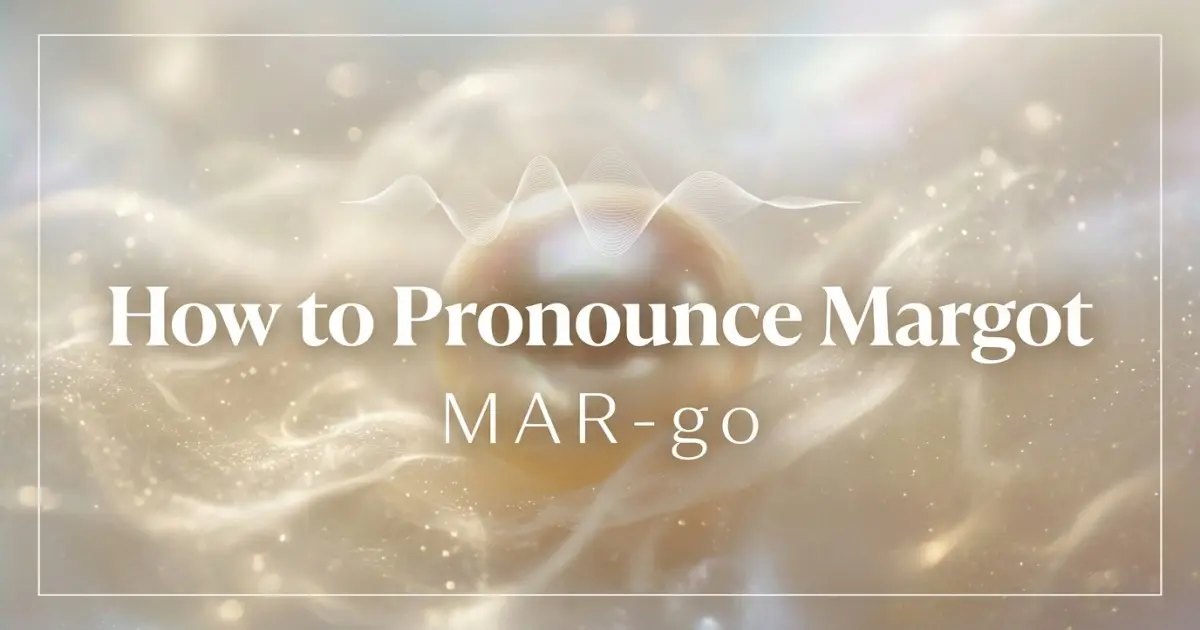
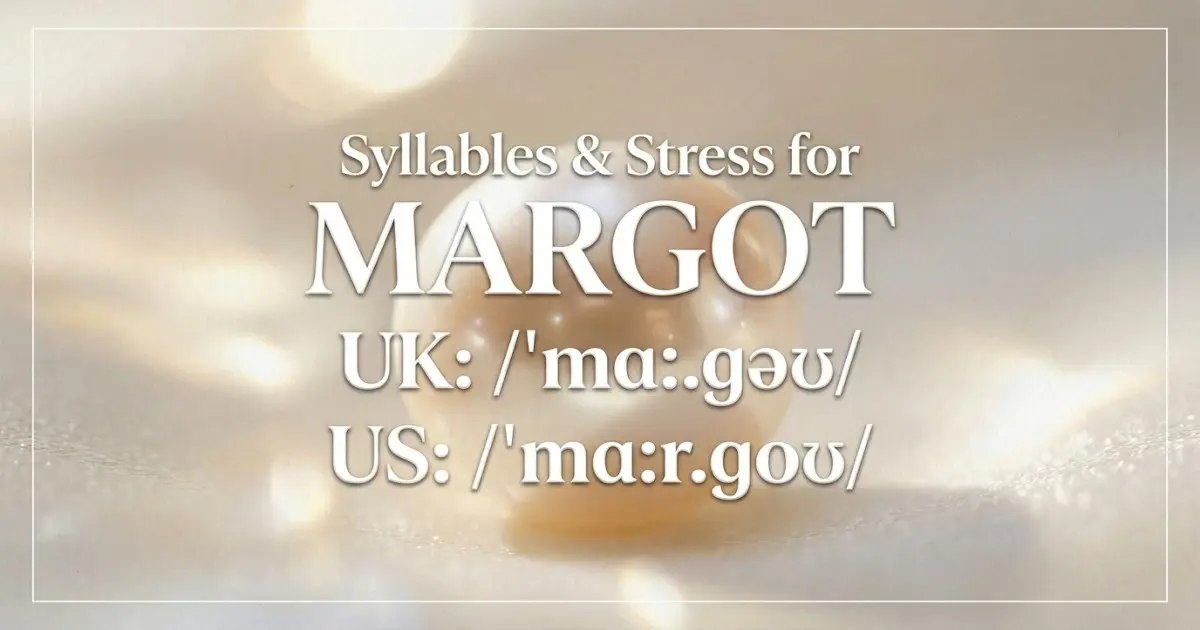
That is one reason pronunciation matters so much with Margot. The name’s appeal is partly visual, but its elegance depends on getting the sound right. Margot is not pronounced with a hard ending. It is said MAR-goh, with the final t silent. That spoken form gives the name its composure. Officially, the American IPA is /ˈmɑːrɡoʊ/ and the British IPA is /ˈmɑːɡəʊ/. The structure remains the same in both: two syllables, stress on the first, and a smooth glide into the final -goh. In other words, the spelling may look a little guarded, but the spoken name is direct and graceful.
How Margot is actually said when the name is spoken naturally
| Element | Phonetic Detail | Quick Tip |
|---|---|---|
| Standard pronunciation | MAR-goh | Say the first syllable firmly, then let the second syllable round off smoothly. |
| IPA (US) | /ˈmɑːrɡoʊ/ | The stress mark before the first syllable shows that the weight belongs on MAR. |
| IPA (UK) | /ˈmɑːɡəʊ/ | The overall rhythm stays the same even though the ending may sound slightly different in British speech. |
| Syllable count | 2 syllables | Think of it as one grounded beat plus one rounded release: MAR + goh. |
| Stress pattern | First-syllable stress | Do not flatten both syllables equally; the first should clearly carry the name. |
| Final letter | Silent t | The ending is written with a t but spoken without it. |
| Middle consonant | /ɡ/ voiced velar stop | The g should stay audible enough to keep the name from dissolving into “Mar-oh.” |
| Ending vowel glide | /oʊ/ in US, /əʊ/ in UK | The last syllable should sound like “goh,” not “got” and not “goo.” |
Margot works because the silence at the end is part of the design
The final letter in Margot is seen, not heard
The most important pronunciation fact about Margot is simple: the final t is silent. That silence is not an accident or a modern shortcut. It is part of the French form of the name, and it contributes heavily to the name’s atmosphere. Many English speakers see the written ending and instinctively want to pronounce it, but the polished sound of Margot depends on resisting that impulse. Spoken correctly, the name closes softly at goh, not sharply at got. Before focusing only on syllables and stress, it helps to step back into the fuller frame of Margot meaning.
This is also why Margot can feel more refined than other related spellings. The spelling carries extra visual texture, but the pronunciation stays smooth. There is a small tension between what the eye expects and what the ear receives, and that tension is part of the name’s appeal. Margot looks precise and slightly formal, then sounds cleaner and warmer than the spelling first suggests.
Why the first syllable keeps Margot from sounding delicate
The first syllable, MAR, does important work. It takes the stress, and it grounds the name immediately. In phonetic terms, the strong opening prevents Margot from becoming too airy. The vowel is broad, and the following r in American pronunciation adds extra body. Then the name passes through a voiced g, which gives it internal structure before the softer ending arrives.
That middle g matters more than people sometimes realize. It is not a fricative, where air keeps flowing through a narrow opening. It is a stop, meaning the airflow is briefly blocked and released. That tiny moment of closure gives Margot shape. Without it, the name would risk sounding overly soft. Because of it, Margot sounds poised rather than fragile.
Why two syllables make Margot easy to carry
Margot is only two syllables, and that helps enormously. Names with this kind of compact structure are often easier to learn, easier to repeat, and easier to remember. The stress falls early, so listeners catch the name quickly. Then the second syllable resolves it without overcomplicating the line. That makes Margot effective in everyday speech, from introductions and phone calls to roll call and formal announcements.
Margot in American and British speech sounds nearly the same, but not quite
The U.S. version of Margot
In American English, Margot is typically rendered as /ˈmɑːrɡoʊ/. That means the first syllable is strong and open, and the second ends with the familiar American oh glide. The American version often feels slightly fuller because of the pronounced r in the first syllable. This gives the name a touch more texture and weight.
The U.K. version of Margot
In British English, the IPA is usually given as /ˈmɑːɡəʊ/. The structure is still the same: first-syllable stress, the same silent final t, and the same two-part shape. The main difference is that the British form usually does not pronounce the r unless another vowel follows, and the final vowel glide may sound slightly different to American ears. But the name is still clearly Margot. No major reinterpretation is happening.
What stays stable across accents
The stability matters. A name can survive accent differences very easily when its rhythm and basic vowel path remain fixed. With Margot, that is exactly what happens. Both major English standards agree on the silent final t, the front-loaded stress, and the rounded final syllable. So while the color of the sound may shift slightly, the structure remains dependable. That makes Margot easier to carry internationally than its spelling alone might suggest.
Where people most often mispronounce Margot
The most common mistake patterns
The biggest mistake is pronouncing the final t, turning the name into something like Mar-got. This is understandable if someone is meeting the name only in writing, but it immediately changes the style of the name and strips away the French logic built into it. A second common problem is weakening the middle too much so the name drifts toward Mar-oh. That loses the helpful firmness of the g.
A third, smaller issue is flattening the name so both syllables feel equally stressed. Natural speech usually emphasizes the first syllable more clearly. MAR-goh sounds balanced and polished. MAR-GOH as two equally punched syllables sounds a little too deliberate.
Sound neighbors that can confuse the ear
Margot sits near several related names and spellings: Margo, Margaux, Margaret, and Marguerite. That means listeners sometimes transfer a pronunciation pattern from one name to another. Margo and Margot are typically pronounced the same in English. Margaux usually is as well, though its spelling looks more overtly French. Margaret and Marguerite, of course, are different names altogether, but they belong to the same broader family. This is useful context because pronunciation errors often come less from the name itself than from confusion with its relatives. Once the sound pattern is clear, some shortenings stop feeling optional and start feeling natural, and the clearest map is in nicknames for Margot.
Three practice lines for saying Margot naturally
The easiest way to settle the pronunciation is to use the name in whole sentences rather than isolation. Try these aloud:
Margot is here.
I spoke with Margot this morning.
Margot will join us later.
In each one, let the first syllable do the work. Keep the g audible, and let the ending round off gently. If you hear the final t sneaking in, remove it completely. If the g disappears, strengthen it slightly.
Why Margot sounds more approachable once you hear it than once you read it
The final lesson of Margot is that its pronunciation is easier than its spelling first suggests. On paper, the name may look formal, slightly guarded, even intimidating to speakers unfamiliar with French-influenced forms. Spoken aloud, it is much simpler: two syllables, a strong beginning, a rounded ending, and a silent final letter that disappears cleanly. That combination makes the name both elegant and usable.
In practical life, that is a powerful advantage. Margot has enough structure to feel distinctive, enough familiarity to be learned quickly, and enough phonetic clarity to survive repeated everyday use. Once the final t is understood as silent, the rest of the name tends to fall into place. Margot may begin as a spelling question, but it usually ends as an easy, memorable sound.