
How to Pronounce Margo: How to Break It Down Smoothly
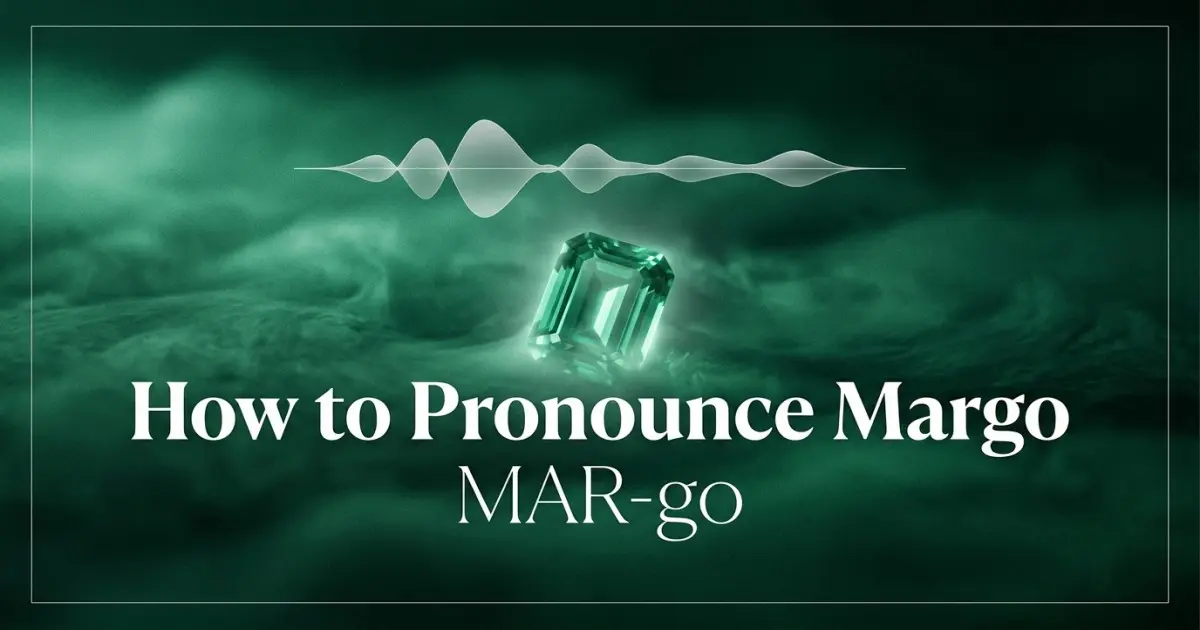
The most revealing pronunciation test for a name is not a phonetics chart. It is a real room. A teacher pauses over a roster on the first day of school. A receptionist looks at a form and says the name out loud before the person stands up. A friend reads a birth announcement and decides, in a split second, whether the name belongs to the world of guesswork or the world of immediate recognition. Margo usually lands in the second category. It looks elegant, but it does not behave mysteriously. People may register a little French polish in the spelling, yet the sound itself comes through clearly: MAR-goh.
That combination is one of the name’s quiet strengths. Margo feels stylish without becoming phonetically fragile. It has just enough structure to feel grounded and just enough softness to keep the whole sound from turning blunt. In everyday English, the pronunciation is stable, efficient, and easy to repeat after one hearing. That matters more than many parents expect. A polished name that can move through ordinary speech without friction tends to age especially well, because it never asks the child to carry beauty and correction at the same time.
How Margo is actually said when people say it naturally
This quick guide clarifies what the name is doing in real speech and why it sounds more straightforward than its refined look might suggest.
| Element | Phonetic Detail | Quick Tip |
|---|---|---|
| Common spoken form | MAR-goh | Say it in two clean beats, with the first one clearly stronger than the second. |
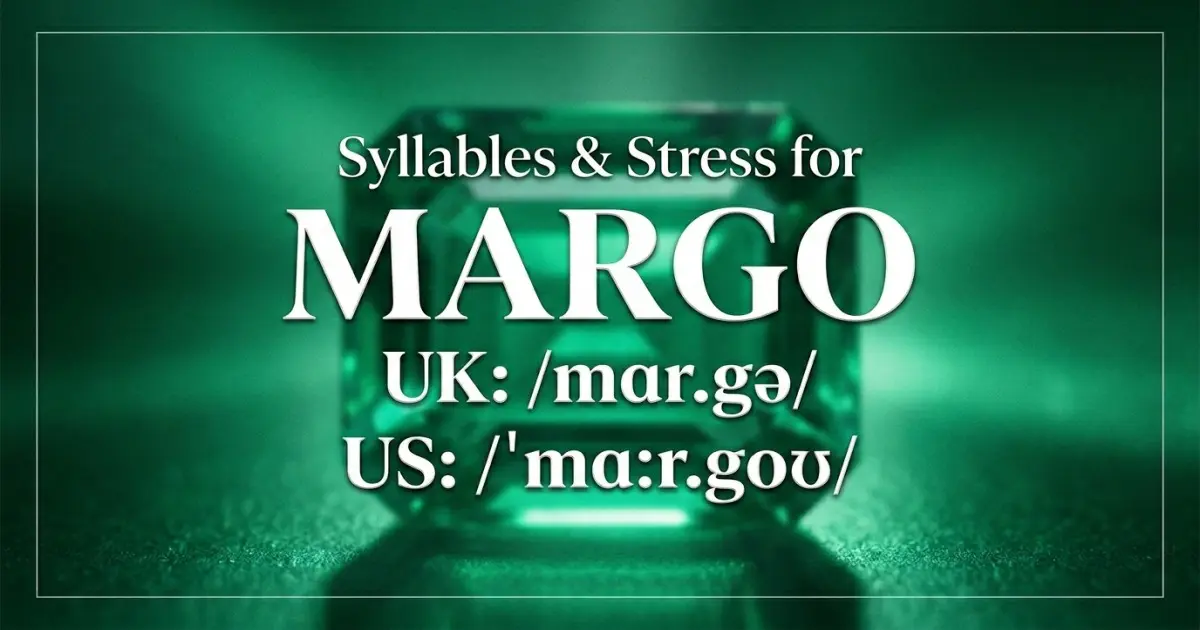
| IPA (US) | /ˈmɑːrɡoʊ/ | The first vowel is broad and open, then the name glides into a rounded final sound. |
| IPA (UK) | /ˈmɑːɡəʊ/ | The British form keeps the same overall shape, with only a slight difference in the final glide. |
| Syllable count | 2 syllables | Think MAR + goh, not a rushed single chunk and not a longer, more elaborate French-style rendering. |
| Stress pattern | Primary stress on the first syllable | If the second syllable gets too much weight, the name starts to sound less natural immediately. |
| Opening consonant | /m/ | The name begins softly, so let the lips close and open cleanly without forcing the start. |
| Middle consonant | Hard /ɡ/ sound | The “g” is hard, like the sound in “go,” not soft like the “g” in “gem.” |
| Final vowel glide | /oʊ/ in US English, /əʊ/ in UK English | Finish smoothly rather than chopping the ending short or turning it into a flat “go.” |
Margo works because the stress lands exactly where English expects it
The most important thing about pronouncing Margo well is where the energy falls. English speakers naturally hear the name from the front. MAR-goh is the stable pattern. The first syllable carries the identity, and the second lets the name taper out with polish. That front-loaded stress is what keeps Margo from sounding either too foreign or too flimsy in English. The sound matters more once you know what the name is meant to carry, which is why the wider frame starts in Margo meaning.
Why the first syllable gives Margo its backbone
The name opens with /m/, a bilabial nasal made by closing the lips and letting the sound resonate softly. This kind of opening immediately gives Margo warmth. It does not snap into the room; it enters with body. Then the first vowel opens wide. In American English, the /ɑːr/ sequence gives the name a rich center of gravity. That is why Margo sounds firmer than many other short elegant girls’ names. The opening syllable has real weight.
That first syllable is also why Margo sounds more tailored than decorative. If the name began with a lighter vowel or a softer internal structure, it might drift toward fragility. Instead, Mar anchors it. The name has poise because it has ballast.
Why the ending keeps Margo from sounding severe
The second syllable does quieter work, but it matters just as much. The hard g gives the middle of the name a crisp internal edge, and the final vowel glide softens the landing. This is a very useful balance. Without the hard g, the name could become too airy. Without the rounded ending, it could become too blunt. Margo succeeds because it uses both.
In more technical terms, the final syllable contains a glide rather than a dead stop. That means the name ends with motion. It does not just stop after the consonant. It opens and rounds away. This is one of the reasons the name feels elegant rather than clipped.
Where Margo usually goes wrong in everyday speech
Margo is not difficult, but it does attract a few predictable mistakes. Most of them happen because speakers either overthink the stylish spelling or underestimate the importance of the hard g sound in the middle.
The most common mistake patterns around Margo
The first common problem is softening the g too much, as though the name should drift toward a softer French or jewel-like sound. In standard English usage for Margo, that is not how the name works. The consonant is hard. It should sound like the g in “go,” not like the g in “genre” or “gem.” If the g is softened, the whole name starts to lose its spine.
The second issue is clipping the ending too abruptly. Some speakers reduce the final syllable until it sounds almost like Marg with a faint afterthought. That makes the name feel harsher and less polished. Margo needs the full rounded ending to sound finished.
A third mistake is adding too much theatrical French flavor in ordinary English conversation. There is nothing wrong with respecting the name’s French origin, but in everyday English use Margo is already naturalized. It should sound graceful, not overperformed.
Why Margo looks more delicate than it sounds
Part of the hesitation comes from the visual impression. Margo looks like a name that might require a careful, continental pronunciation. But once spoken, it is actually quite sturdy. The opening is broad, the middle consonant is firm, and the ending is smooth rather than fussy. In real life, the sound is more robust than the styling suggests. That is one reason the name wears so well.
Margo stays stable across accents because the shape is compact
Some elegant names shift noticeably across accents, especially when they depend on delicate vowels or region-specific consonants. Margo is less vulnerable to that problem. The American and British IPA forms differ only slightly in the last vowel glide. The main architecture stays the same: strong first syllable, hard internal g, rounded finish.
US and UK Margo still sound like the same name
In American English, the ending usually resolves as /oʊ/. In British English, it more often resolves as /əʊ/. But this is a small difference in practice. The first syllable remains the same broad MAR, and the overall rhythm is unchanged. That means Margo travels well. A child with this name is unlikely to hear several competing “correct” versions depending on where she is.
This consistency is one of the name’s practical advantages. It lets a refined name stay socially easy. Margo sounds like itself in different English-speaking environments, and that reliability makes the name more usable than its polish might initially imply.
Sound neighbors that help people say Margo quickly
If someone hesitates, the easiest help is rhythmic rather than technical: “It’s MAR-goh.” The first syllable sounds like the start of “marble,” and the second ends like “go” with a softer glide. That is usually enough. Margo fits comfortably into English sound habits, which is why most people correct themselves instantly once they hear it once. Once the sound pattern is clear, some shortenings stop feeling optional and start feeling natural, and the clearest map is in nicknames for Margo.
How to practice Margo until it sounds effortless
The best test is not saying the name alone in a vacuum. It is putting it inside ordinary speech and listening to whether it flows naturally.
Practice lines that make Margo feel automatic
- “Margo, it’s your turn.”
- “Have you met Margo yet?”
- “Margo is on the list.”
- “I’m looking for Margo.”
- “Margo did a great job today.”
In these natural phrases, the structure becomes obvious. The first syllable carries the identity, and the second syllable closes the name with polish instead of abruptness. If the name sounds easy in ordinary sentences, it will almost always work well in life.
A final Margo check
If you want one quick self-test, listen for three things. Are you stressing the first syllable clearly? Are you keeping the g hard? Are you letting the last syllable round out instead of cutting it short? If yes, you are almost certainly saying Margo well.
That is one of the quiet triumphs of the name. Margo looks elegant, and it sounds elegant, but it does not demand awkward precision to achieve that effect. The pronunciation stays crisp, warm, and highly livable.