
How to Say Maisie Correctly: Where the Stress Falls and Why
Maisie is the kind of name that usually sounds correct the moment it is spoken in a real room. Picture a teacher reading a kindergarten roster on the first morning of school, or a grandparent saying the name into the air for the first time while holding a new baby. Some names look sweet on paper but become uncertain in motion. Maisie does not usually have that problem. It lands quickly, brightly, and with a friendliness that feels immediate. That is one reason the name travels so easily through modern life.
Its pronunciation matters because so much of Maisie’s appeal lives in sound. The meaning may point to something precious and formed slowly, but the spoken name feels light on its feet. It begins with a clear, sunny opening and ends with a soft, familiar finish. Nothing in it feels stiff. Nothing in it drags. Said correctly, Maisie sounds warm, lively, and entirely usable, which is exactly why the name can carry old roots without seeming heavy.
How Maisie is actually said when the name falls naturally into speech
Before getting into common mistakes or sound-neighbors, it helps to pin down the shape that makes Maisie feel so easy in ordinary conversation. Because the strongest energy lands early, the shorter forms often grow from the opening of the name, and that pattern is easier to see in Maisie nicknames.
| Element | Phonetic Detail | Quick Tip |
|---|---|---|
| Common pronunciation | MAY-zee | Say it in two clean beats, with the first syllable carrying the main stress. |
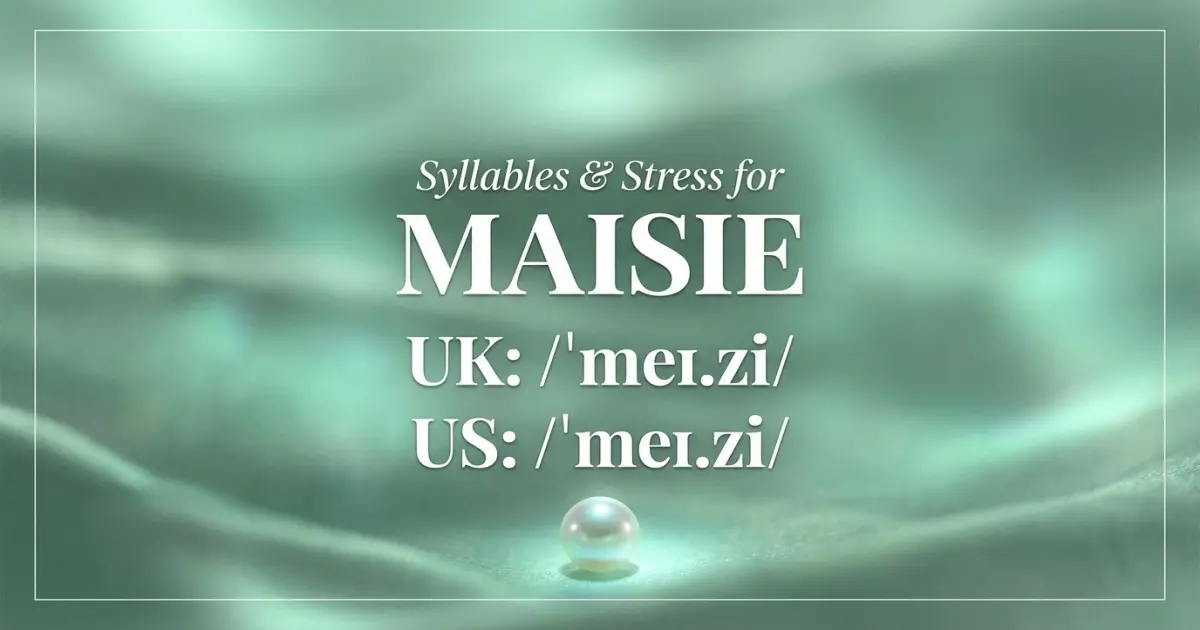
| U.S. IPA | /ˈmeɪzi/ | The first syllable uses the same vowel sound as “day,” and the second finishes lightly with zee. |
| U.K. IPA | /ˈmeɪzi/ | The standard British form is effectively the same, which makes the name highly stable across accents. |
| Syllable count | 2 syllables | Do not blur it into one rushed sound. The small pause between the syllables gives the name its bounce. |
| Stress pattern | First syllable stressed | The emphasis belongs on MAY; the second syllable should feel lighter and friendlier. |
| Opening consonant | /m/ nasal consonant | The name begins softly, which is part of why it sounds warm instead of sharp. |
| Main vowel | /eɪ/ long A sound | Think of the vowel in “may” or “play,” not the shorter sound in “mess.” |
| Final syllable | /zi/ voiced z + ee | The ending should sound like zee, not see or a fully stressed second name-part. |
Why Maisie sounds bright in front and warm at the finish
Maisie works because it balances brightness with softness. The first syllable, MAY, is open, clear, and immediately familiar to English-speaking ears. The second syllable, zee, gives the name movement and friendliness rather than weight. Put together, the two parts make the name sound cheerful without becoming flimsy. Before focusing only on syllables and stress, it helps to step back into the fuller frame of Maisie meaning.
Maisie begins with an easy, human sound
The opening m is a nasal consonant, which means the sound begins softly rather than striking the ear. Compare that with names that open on k, t, or b. Those can feel firmer or more abrupt. Maisie begins with warmth. That matters because it shapes the whole personality of the name before the vowel even arrives.
Then comes the long a sound, written in IPA as /eɪ/. This is one of the most accessible vowels in English. It gives Maisie much of its brightness and helps explain why the name sounds optimistic and socially easy. There is very little phonetic resistance in that first syllable. It opens and carries.
The ending keeps Maisie affectionate instead of formal
The second syllable is shorter and lighter, but it matters a great deal. The z sound keeps the ending lively. If the consonant were voiceless, the name would sound thinner or more clipped. Because it is voiced, the name retains warmth as it closes. That is part of what makes Maisie feel companionable rather than merely pretty.
The final ee also gives the name its approachable finish. Many affectionate English names end in this kind of light vowel, which is why Maisie sounds friendly almost before any meaning enters the picture. The key is not to overemphasize it. The second syllable should finish the name, not compete with the first.
Maisie across accents stays remarkably consistent
One practical strength of Maisie is how little the pronunciation changes across major English accents. The fact packet gives the same IPA form for U.S. and U.K. English: /ˈmeɪzi/. That kind of stability is useful. It means the name does not have to be defended or re-explained every time it crosses borders.
Why American and British Maisie usually sound almost identical
The sounds in Maisie are all highly familiar and widely shared across English. The opening m, the long a vowel, the voiced z, and the final ee all exist comfortably in both American and British speech. Unlike names that depend on region-specific vowels or more complex consonant patterns, Maisie does not change much from one setting to another.
What may vary in real speech
In everyday life, the biggest differences are usually in speed, not identity. Some speakers may clip the second syllable a little more quickly. Others may let the first syllable stretch just slightly longer. But the overall silhouette of the name stays the same. It remains unmistakably MAY-zee.
This helps explain why Maisie feels so socially portable. It has old roots, but it does not create old pronunciation problems. The name survives motion well.
Where Maisie gets misheard or overcorrected
Maisie is not a difficult name, but there are still a few predictable places where speakers can nudge it off course.
Turning the z into an s
The most common mistake is flattening the second syllable into a softer see sound instead of zee. But the pronunciation given here clearly wants the voiced consonant. That small difference matters. The z keeps the name lively and prevents it from sounding too delicate or washed out.
Making the first vowel too short
Another issue is shortening the first syllable so the name loses some of its brightness. Maisie wants the long a of “may,” not a shorter, flatter vowel. If the opening becomes too clipped, the name can sound duller than intended.
Overstressing the second syllable
At the other extreme, some speakers make the ending too emphatic, as though the name were built from two equally strong parts. Maisie should not feel heavy at the back. The first syllable leads; the second follows. That is where the name gets its natural charm.
Maisie beside Daisy, Macy, and Margaret
Comparison often makes pronunciation easier to hear. Maisie becomes especially clear when placed beside names that share part of its sound or family history.
Maisie vs. Daisy: the rhythm is similar, but Daisy begins on a harder consonant and often feels brisker or more floral in atmosphere. Maisie opens more softly and sounds more heirloom-warm.
Maisie vs. Macy: Macy keeps the same bright first syllable but moves into a different second consonant. Maisie sounds softer and more affectionate because the z and final ee carry more warmth than the cleaner c-based line in Macy.
Maisie vs. Margaret: historically, Maisie lives in the wider Margaret family, but in sound they are worlds apart. Margaret is more formal, heavier, and more anchored by consonants. Maisie feels like the bright, spoken, close-to-home branch of that older tree.
These comparisons help show why Maisie works so well. It keeps the dignity of old roots while sounding lighter and more immediate than many of the names around it.
How to practice Maisie until it sounds effortless
Maisie is not hard to pronounce, but it helps to hear the rhythm in ordinary speech instead of as an isolated label.
Three simple practice lines for Maisie
Maisie is ready for school.
I saw Maisie after lunch.
Maisie left her sweater by the chair.
What to listen for in your own voice
Listen for a clear long a in the first syllable and a lighter, voiced zee at the end. The name should feel bright at the start and affectionate at the finish. If it sounds warm, quick, and easy to repeat, you are probably right where Maisie wants to be.
Why Maisie sounds more casual than its roots
Maisie is a good example of how pronunciation can modernize a name’s historical inheritance. Its background may be older and deeper, but the spoken form feels completely contemporary because it is so clear, compact, and friendly. The name does not ask for ceremony. It asks for ordinary use.
That is why Maisie continues to work so well in daily life. It sounds polished without being formal, affectionate without being childish, and stable across accents without losing charm. Said correctly, Maisie sounds exactly like what many people hope it will be: bright, warm, and easy to love.
Accent and Pronunciation FAQ for Maisie
How do you pronounce Maisie correctly?
Maisie is commonly pronounced MAY-zee, with two syllables and the stress on the first.
What is the IPA pronunciation of Maisie?
The pronunciation given here is /ˈmeɪzi/ in both U.S. and U.K. English.
How many syllables does Maisie have?
Maisie has two syllables. The first is stronger and brighter, and the second should be lighter and more relaxed.
What pronunciation mistake happens most often with Maisie?
The most common mistake is softening the second syllable into an s sound instead of the voiced z sound. Maisie should end in zee, not see.
Does Maisie sound different in American and British English?
Very little. The standard pronunciation is effectively the same in both, which is one reason the name feels so stable and easy to use.