
Nicknames for Lottie: Creative Picks with Real Everyday Charm
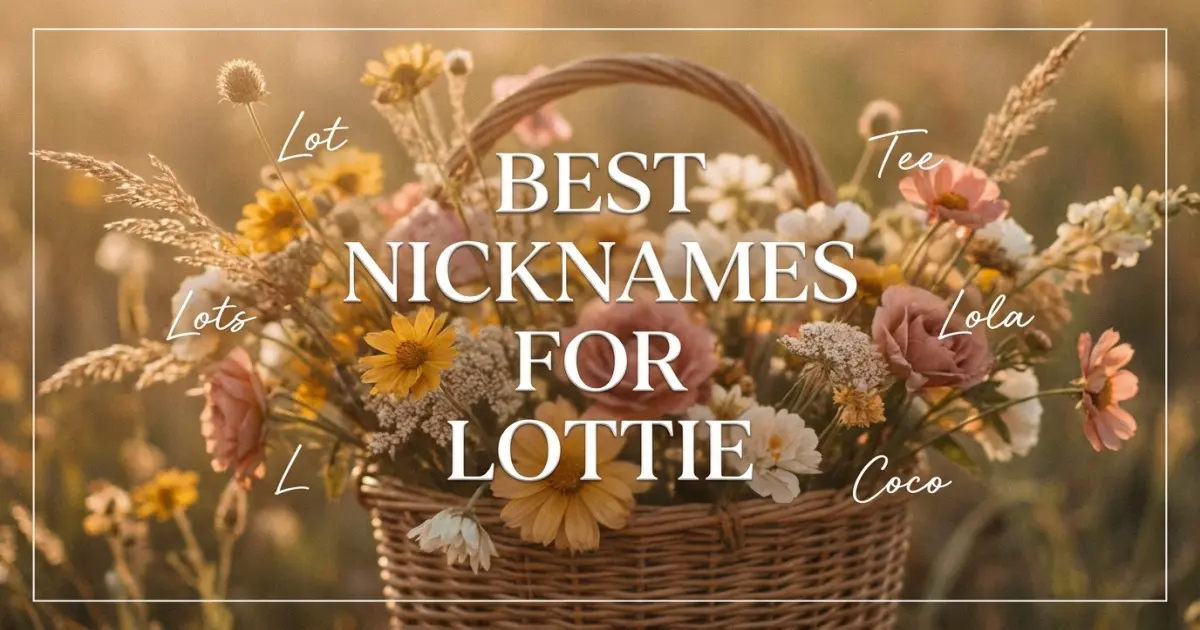
A nickname is never only a shorter sound. It is a social signal. It tells you who gets to speak to the child in the language of home rather than the language of forms and introductions. It can make a name feel smaller, sweeter, quicker, cooler, or more private. That is why nicknames matter even when a name is already short. They do not exist only to save time. They reveal intimacy, personality, and the emotional weather around the name.
Lottie is especially interesting because it already arrives halfway into that intimate territory. Historically, it has long lived as an affectionate form within the Charlotte family, and even now it sounds like a name people already love when they say it. That changes the entire nickname landscape. Lottie does not need much shortening to feel warm. It already feels warm. So the real question is not whether Lottie can have nicknames. It can. The real question is what kind of closeness those nicknames express: a playful family softness, a brisker older-child edge, or a small private version used only by the people closest to her. Nicknames add personality at the surface, but the deeper weight of the name still sits in Lottie meaning.
What the nickname world around Lottie is actually revealing
| Group | Suggested Nicknames | Persona | Use Context |
|---|---|---|---|
| Full-form loyalty | Lottie | Bright, vintage, already affectionate | Everyday public use, school, family life, introductions |
| Classic short forms | Lotts, Lot, Lo | Closer, brisker, slightly cooler | Close friends, siblings, casual daily use |
| Soft home-circle forms | Lottie-Lou, Lottie-girl, Lottie-bug | Tender, playful, family-centered | Parents, grandparents, baby years, home use |
| Vintage echo forms | Lotte, Tottie, Totty | Old-world, distinctive, slightly more selective | Family traditions, playful household use, heritage-inspired choices |
| Modern minimal forms | L, Lo, L.C. with a fitting middle name | Clean, contemporary, self-styled | Texts, saved contacts, teen years, digital spaces |
Why Lottie often stays Lottie
The first thing to say about Lottie is that many families never feel much need to change it at all. The full name is already only two syllables, already soft at the end, and already emotionally warm. A teacher can say Lottie naturally. A parent can call Lottie from the next room and it already sounds loving. A friend can text “Where are you, Lottie?” and the name still feels personal, not formal. That is a real strength. Some names need nicknames to become livable. Lottie does not.
This matters because it changes the logic of all further nicknames. With a longer or more ceremonial name, the nickname solves a practical problem. With Lottie, the nickname usually solves an emotional one. It tells you what kind of affection is being added. That means the best nicknames for Lottie tend to be small adjustments rather than total reinventions.
Why full-form Lottie already sounds intimate
Lottie belongs to that rare category of names that are public and affectionate at the same time. It is not stiff enough to require softening, and it is not too babyish to survive into adulthood. That makes the full form unusually strong. Parents can use it warmly in childhood, and an adult woman can still wear it without the name feeling unfinished or overly cute. In practical terms, this means Lottie itself is one of the best nickname choices available.
Why that changes the nickname landscape completely
Because the full name already works so well, every nickname around Lottie becomes more revealing. It is not about making the name easier. It is about showing relationship. The difference between Lottie and Lotts is not efficiency. It is tone. The difference between Lottie and Lottie-Lou is not practicality. It is tenderness.
Lottie’s opening sound is where the strongest short forms live
Phonetically, the strongest nickname zone in Lottie is the opening Lot-. The stress lands there, so that is the part the ear hears first and remembers most clearly. In everyday nickname formation, stressed openings usually produce the most believable short forms because they preserve the heart of the original name. Lottie follows that pattern very naturally.
Lotts is the cleanest clipped version of Lottie
Lotts is probably the most believable direct short form for Lottie. It keeps the stressed opening and trims away the softer ending, which changes the emotional tone instantly. Lottie sounds bright and openly warm. Lotts sounds closer, a little brisker, and slightly more grown. This is the kind of nickname that works especially well with siblings, close friends, or later in childhood when someone wants something more streamlined without abandoning the original identity.
It also feels plausible because the full name is still easy to hear inside it. Lotts is not fighting Lottie. It is simply using the strongest part of the name more directly.
Lot and Lo move the name in different directions
Lot is rarer, but still plausible as a tightly clipped inner-circle nickname. It sounds pared back and a little unusual, so it works best in family or highly casual friend-group use rather than as the obvious public short form. Lo, by contrast, is softer and more fluid. It does not preserve as much of the full shape, but it can work beautifully in texts, at home, or in intimate social circles.
The difference between them is tonal. Lot feels compact and slightly unexpected. Lo feels airy and modern. Both are believable because they come from the stressed opening, but they point to different moods.
Lottie’s stressed center and opening are almost the same place
In a longer name, the opening and the stressed center can produce different nickname paths. With Lottie, they almost overlap. The name reaches its strongest point immediately in the first syllable. That is why the clipped nicknames stay so close to the front. There is simply more identity there than anywhere else. Many short forms only become obvious once the opening sound is clear, which is why Lottie pronunciation guide belongs naturally here.
That first beat is why Lottie never needs much shortening
Because the first beat of Lottie is so strong, the name already feels shaped before the second syllable arrives. That makes the original form efficient as well as affectionate. It also explains why most plausible short forms remain so modest. You do not need to do very much to Lottie before it starts sounding like a nickname.
Why older-child nicknames usually come from the front
As children grow, friend groups often prefer nicknames that sound a little sharper or quicker than the family version. For Lottie, those names usually come from the front: Lotts, Lo, or sometimes just L in digital spaces. The front of the name already carries enough character to support that change.
Lottie’s ending is where the softness and the house nicknames live
The second syllable of Lottie, the bright little -ie ending, is what gives the name its built-in warmth. It is also where the most family-made pet names tend to gather. These are usually not the names the whole world uses. They are the names that arise because a parent, sibling, or grandparent has said Lottie so often that it naturally turns into something smaller, sillier, or softer.
Lottie-Lou is the most natural expanded pet form
Lottie-Lou is one of the most believable affectionate extensions because it keeps the full name intact while adding rhythm and tenderness. It sounds domestic in the best sense: the kind of name that belongs in kitchens, on bedtime routines, and in family photos. It is not a public identity replacement. It is a house name, and that is exactly why it works.
Other expansions like Lottie-girl or Lottie-bug belong in the same category. They are not meant to be polished. They are meant to feel used and loved.
Tottie and Totty are playful vintage echoes
Tottie and Totty are especially interesting because they have older historical life around the broader Charlotte–Lottie nickname tradition. In modern use, they feel much more playful and selective than Lottie itself. They are believable as family nicknames, but they sound more eccentric and old-fashioned than the simpler clipped forms. That is not a flaw. For the right family, it may be the charm.
Because these names shift away from the strong opening of Lottie, they work best as clearly private pet forms rather than default public nicknames. They feel intimate, homemade, and a little theatrical in a way that suits the right household beautifully.
How Lottie’s nicknames change with age
Because Lottie is already such a usable full name, its nickname life changes more by age and relationship than by structural need. In babyhood and early childhood, people tend to add softness. In later childhood and adolescence, the clipped and cooler forms often appear. In adulthood, many people simply remain Lottie, with one or two selective inner-circle versions still surviving at home.
Young Lottie usually invites extra sweetness
In the early years, Lottie-Lou, Lottie-bug, or even playful vintage forms like Tottie can feel completely natural. They are less about identity management and more about affection. The child hears warmth layered around a name that is already warm.
Older Lottie often returns to the whole name or a cleaner cut
As the child grows, the full name often becomes strong enough to carry everything again. Some may keep Lotts or Lo among friends, but many will simply remain Lottie. That is one of the quiet advantages of the name. It does not trap the bearer inside a babyish sound that later has to be escaped. The original form is charming enough for childhood and stable enough for adulthood.
Why believable Lottie nicknames stay close to the real sound
The strongest nickname advice for Lottie is not to overbuild. The name already has personality, shape, and warmth. The best nicknames are the ones that sound like people would really say them: Lottie, Lotts, Lo, Lottie-Lou, and a few softer private forms depending on family style. Anything much more elaborate risks sounding less like a nickname and more like a performance.
That modesty is not a weakness. It is evidence of a very well-shaped name. Lottie begins near affection already, so the nickname only has to adjust the degree. That is why the whole nickname landscape feels so human. It is not about invention for its own sake. It is about relationship finding the version of Lottie it wants to keep closest.