
How to Say Lola Correctly: Tips for Saying It Smoothly in Conversation
The pronunciation of Lola usually becomes clear in the kinds of moments when people do not have time to puzzle over a name. A preschool teacher scans the attendance sheet, pauses for half a beat, and says it cleanly on the first try. A barista calls it across a crowded room and nobody turns to ask for a repeat. A grandparent who has only seen it written once can still say it aloud with confidence. That is one of Lola’s quiet strengths. It looks like speech already. Even before anyone learns its background, the name tends to arrive in the mouth as easily as it arrives on the page.
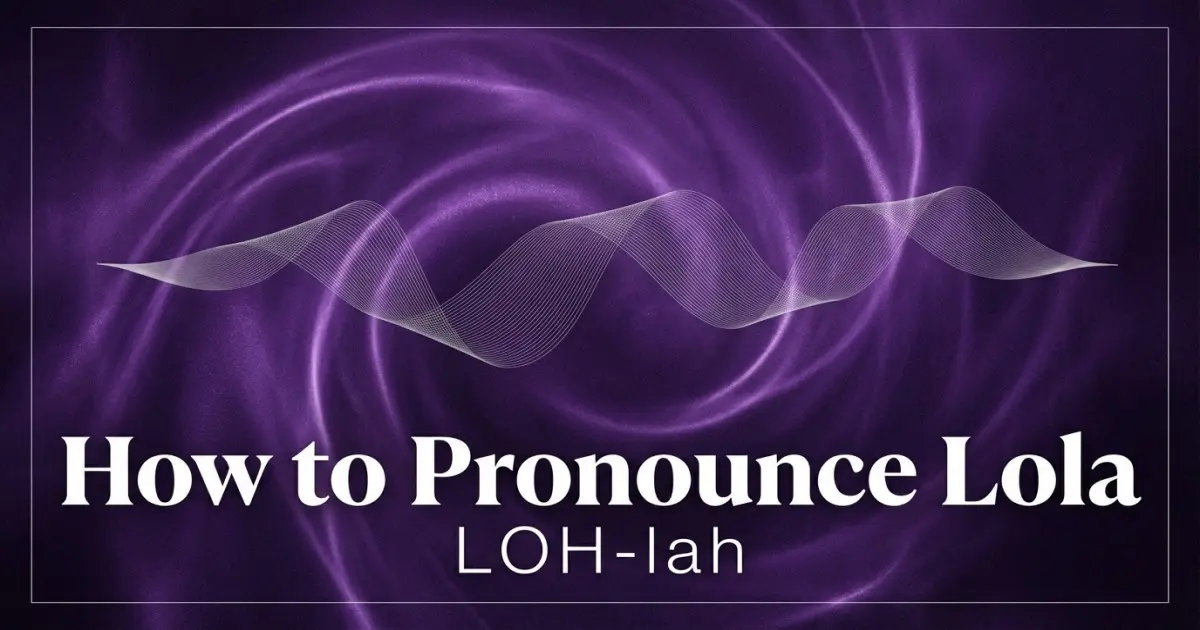
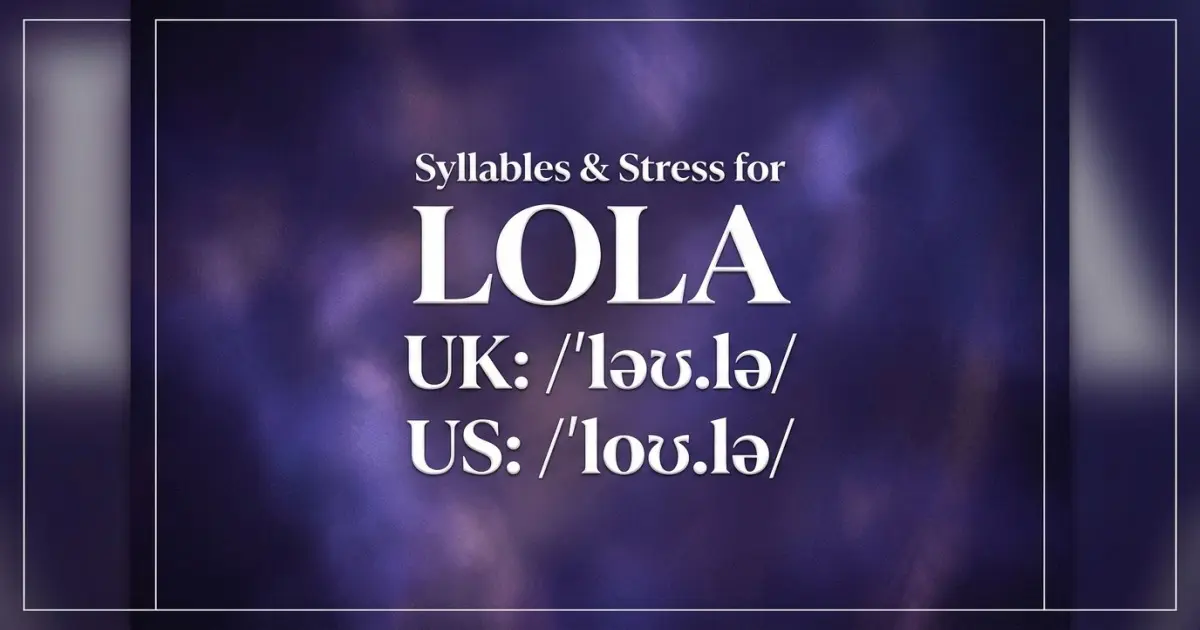
Still, easy names deserve accurate explanation too, because small sound differences shape the whole feel of a name. The pronunciation used here is LOH-luh. In U.S. reference style, the IPA is /ˈloʊlə/. In U.K. reference style, it is /ˈləʊlə/. The rhythm stays the same in both: two syllables, stress on the first, and a soft, lighter ending. That pattern is what gives Lola its warmth. It opens with clarity, then relaxes. Once that structure is understood, the name sounds exactly the way it should sound in everyday life: easy, bright, and unfussy.
How Lola is actually said once the spelling becomes sound
Lola does not need a complicated pronunciation guide, but it does benefit from a clear one. The chart below shows the few details that matter most when you want the name to sound natural rather than merely approximate.
| Element | Phonetic Detail | Quick Tip |
|---|---|---|
| Everyday pronunciation | LOH-luh | Say the first syllable clearly, then let the second soften. |
| IPA (U.S.) | /ˈloʊlə/ | The first vowel glides like the sound in “low.” |
| IPA (U.K.) | /ˈləʊlə/ | The rhythm is the same, with only a slightly different vowel coloring. |
| Syllable count | 2 syllables | Think of it as one strong beat followed by one softer beat. |
| Stress pattern | First-syllable stress | Put the emphasis on LOH, not on the ending. |
| Final sound | “-luh” | Keep the second syllable relaxed, closer to “luh” than to a sharply pronounced “lah.” |
Lola has two syllables, but the first one carries the name
The opening of Lola is where the identity lives
The first syllable of Lola does most of the work. It begins with l, a liquid consonant, which means the sound flows rather than snaps. That helps explain why Lola sounds smooth from the very first moment. After that comes the long rounded vowel glide represented in American English as /oʊ/ and in British reference style as /əʊ/. In ordinary speech, most listeners simply hear this as the “oh” sound in low. That is why the spelling cue LOH is so useful. It gets you immediately into the right vowel space. The sound matters more once you know what the name is meant to carry, which is why the wider frame starts in Lola meaning.
This first beat should be clear but not theatrical. A good pronunciation does not stretch it into something overly dramatic, and it does not flatten it either. The stress is firm, not heavy. Say it as though it belongs in conversation, not in a spelling lesson. When people pronounce Lola well, the opening sounds bright and stable, as if the whole name has already settled by the end of the first syllable.
The second syllable in Lola is softer for a reason
The ending -la looks simple, but in the pronunciation used here it is lighter than some first-time readers expect. The IPA ends with /lə/, which points to a schwa-like final vowel rather than a fully stressed open ah. In everyday terms, that means the second syllable should sound closer to luh than to a dramatic, wide-open lah. The difference is subtle, but it matters. It is one reason Lola sounds gentle and easy rather than overly stylized.
This second syllable should not disappear, but it also should not compete with the first. Think of it as a release. The first syllable presents the name; the second lets it land. That balance is what makes Lola feel so socially usable. It is polished without sounding formal, and melodic without sounding fragile.
Where Lola gets misread, and why the mistakes are usually small rather than serious
When speakers over-open the ending
The most common slip with Lola is not a wild mispronunciation. It is a shift in emphasis or vowel quality. Some speakers see the final -la and instinctively open it into a stronger lah sound. That can happen because many names and words in English invite fuller final vowels. But in the pronunciation used here, the ending is softer. It should not sound clipped, but it should not suddenly become the most dramatic part of the name either.
If you want a quick correction, keep your attention on the first syllable. Once LOH is doing its job, the ending usually relaxes naturally into place.
When both syllables get treated as equally strong
Another predictable pattern is overbalancing the name, giving both syllables nearly equal emphasis. That can make Lola sound more mechanical than conversational. English rhythm usually favors contrast, especially in names like this. The first syllable should lead. The second should follow lightly. When both are stressed too evenly, the name loses its natural bounce.
This is one reason the simplest guide remains the best: LOH-luh. The visual cue reminds the speaker where the energy belongs and where it should ease off.
Accent differences change color more than structure
The U.S. and U.K. IPA forms are slightly different in their opening vowel glide, but not in overall rhythm. In American English, /ˈloʊlə/ often sounds a touch brighter and more rounded at the start. In British reference style, /ˈləʊlə/ can carry a slightly different onset to that same glide. What stays constant is the architecture: two syllables, stress first, gentle finish.
That makes Lola a very portable name. It survives movement across accents without losing itself. The listener may notice a regional tint, but not a different name. That kind of stability is one reason easy names tend to travel well internationally and socially.
Lola sounds familiar because its sound neighbors are familiar too
The repeated L gives Lola its glide
One of the most appealing things about Lola is the repetition of the l sound. Liquid consonants are naturally flowing, and when a name repeats one in both syllables, the result often feels musical without becoming ornate. Lola benefits from exactly that effect. The repeated l smooths the transition between syllables and helps the name feel light on the tongue. Once the sound pattern is clear, some shortenings stop feeling optional and start feeling natural, and the clearest map is in Lola nicknames.
There are no thorny consonant clusters here, no fricative-heavy passages, and no unstable ending to manage. The sounds are ordinary, but their arrangement is elegant. That is why Lola tends to feel memorable after a single hearing. It is simple, but not plain.
Why Lola is easier to say than it looks to analyze
On paper, it is possible to make Lola sound more technical than it feels in real life: liquid consonants, diphthongs, schwa-like endings. In practice, though, the name is extremely cooperative. The speaker starts with a familiar l, moves through an “oh” vowel glide, and finishes with a softened second syllable. Nothing in it resists ordinary English speech. If anything, the name’s greatest pronunciation strength is that it does not ask for much conscious effort once the stress pattern is understood.
Lola becomes effortless when you practice it inside real speech
Practice lines that make Lola feel natural
The best way to confirm pronunciation is to say the name in normal sentences rather than in isolation. Try these aloud:
“Lola, your table is ready.”
“I spoke with Lola this morning.”
“Lola will join us after lunch.”
These lines work because they place the name in everyday rhythm. If the first syllable still feels clearly stronger and the second stays soft, you are almost certainly pronouncing Lola well. Another useful exercise is contrast practice: say LOH-luh once slowly, then again at normal conversational speed. The second version should sound lighter, not less correct.
What good Lola pronunciation sounds like socially
Good pronunciation of Lola does not sound overcareful. It sounds confident, warm, and immediate. The name should not require delicate handling or repeated self-correction. That is part of its appeal. Once heard once, it tends to stay understood. And because the structure is stable across accents, most people can reproduce it quickly without turning it into something else.
In that sense, Lola has one of the best kinds of pronunciation profiles a name can have. It is clear on first hearing, recognizable on second hearing, and easy to carry through everyday life. The instruction is simple: say LOH clearly, soften the luh, and let the repeated l do the graceful work in between.