
How to Pronounce Leila: Easy Breakdown and Speaking Tips
The true pronunciation test for a name rarely happens in theory. It happens in public, in small unscripted moments: a teacher pausing at a classroom door, a receptionist calling across a waiting room, a friend reading a contact name for the first time and deciding whether to say it with confidence or caution. Leila is one of those names that looks almost simple enough to invite overconfidence. People recognize it, or think they do, and that is exactly why pronunciation matters. A name this short leaves very little room for blur. If the opening vowel is off, or if the second syllable is pushed too hard, the whole name changes shape immediately.
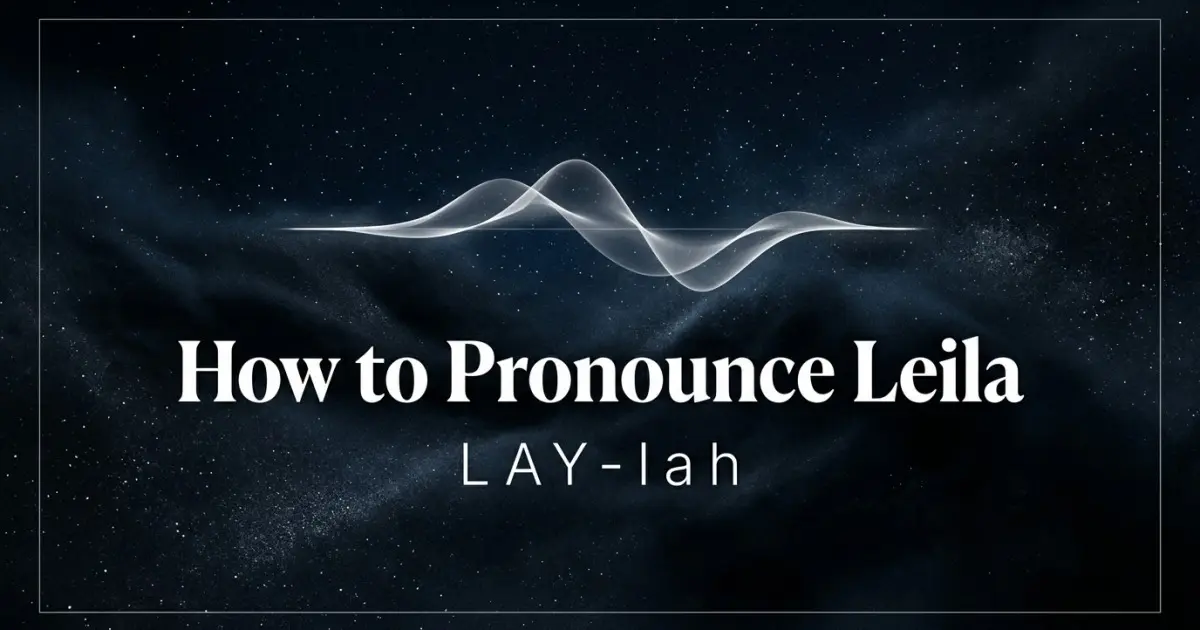
In everyday English, Leila works because it sounds both bright and relaxed: LAY-luh. The first syllable opens cleanly and carries the emotional weight of the name. The second syllable softens and lets it settle. That balance is what makes Leila feel elegant rather than fussy. It is not a difficult name, but it is a name that rewards proportion. Say it with the right stress and it feels luminous, familiar, and easy to carry. Say it with uncertainty, and its grace can flatten surprisingly fast.
How Leila is actually said when people say it naturally
| Element | Phonetic Detail | Quick Tip |
|---|---|---|
| Everyday pronunciation | LAY-luh | Think of it as two clear beats, with the first one brighter and stronger than the second. |
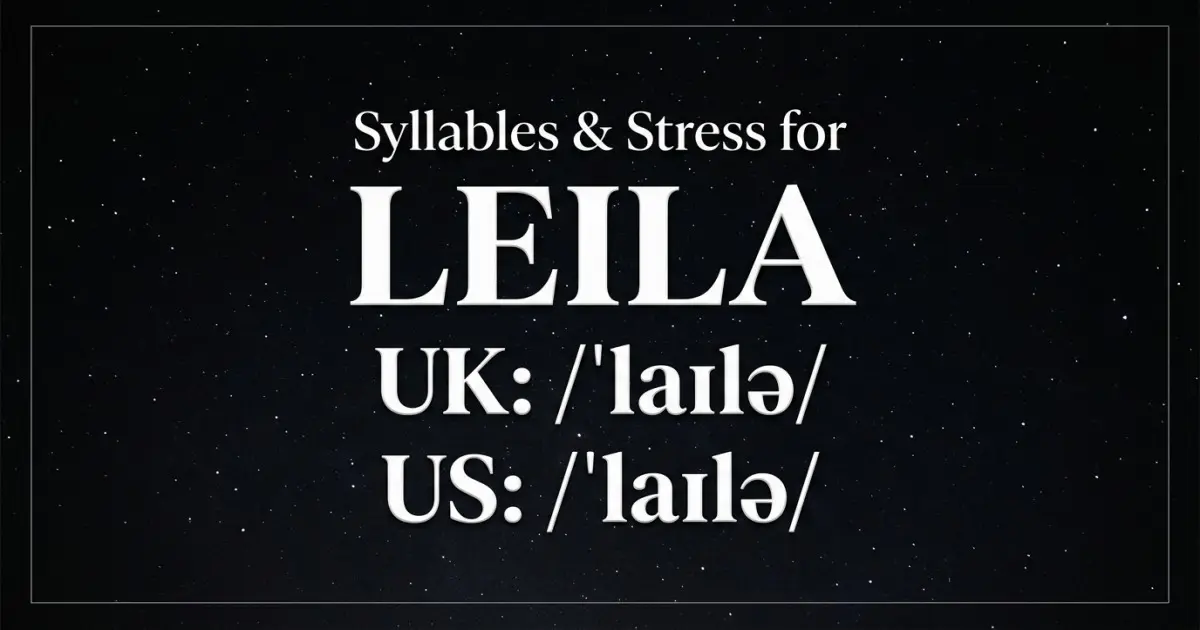
| IPA (US) | /ˈlaɪlə/ | The opening diphthong is the key. Start with a full lay/lie-style glide rather than a flat short vowel. |
| IPA (UK) | /ˈlaɪlə/ | The British and American forms align closely, which helps the name stay stable across accents. |
| Syllable count | 2 syllables | Say it as LAY | luh, not as one rushed blur and not with equal emphasis on both parts. |
| Primary stress | First syllable | The name should open with confidence. If the second syllable takes too much weight, Leila loses its shape. |
| Opening sound | Broad diphthong at the start | Let the vowel move. The first syllable should feel open and bright, not clipped or flat. |
| Ending sound | Light final schwa, like luh | Finish softly. The last syllable should relax rather than stand up like a second headline. |
Why Leila sounds graceful once the first syllable lands correctly
The opening of Leila carries almost all the name’s identity
Leila is a short name, but it is not a blunt one. Its identity lives in the first syllable. That opening sound is a diphthong, which means the vowel glides from one position to another rather than staying fixed. In practical terms, that is why the first part of Leila feels alive instead of flat. It opens, moves, and gives the name its brightness before the second syllable ever arrives. Pronunciation lands more fully when the name’s roots and history are already in view, so begin with Leila meaning.
This matters because with two-syllable names, stress is everything. Longer names can sometimes survive a slightly uncertain beginning because the rest of the form supplies more clues. Leila has less room for repair. If the first syllable is right, the whole name usually sounds right. If it is too short, too tense, or too dull, the name can lose much of its polish in an instant.
The second syllable is softer on purpose
The final syllable of Leila is not where the drama lives. It is where the name exhales. In natural English speech, that last sound is usually a light schwa, the same kind of relaxed vowel heard at the end of many everyday words and names. This is one reason Leila sounds intimate rather than formal. It does not end with a hard stop or an emphatic flourish. It trails gently into place.
That soft ending also helps balance the meaning of the name. A name associated with “night” could easily have become hushed, heavy, or overly shadowed in sound. Leila avoids that because the first syllable is so bright and the second so calm. The sound pattern creates elegance by keeping the name open at the front and tender at the back.
Leila travels well because English accents do not pull it far apart
The U.S. and UK versions are effectively aligned
One of Leila’s strengths is pronunciation stability. In both American and British English, the standard IPA is the same: /ˈlaɪlə/. That does not mean every speaker sounds identical, but it does mean the essential shape of the name is broadly agreed upon. The first syllable remains stressed. The opening diphthong remains central. The last syllable stays lighter. Those three facts do most of the work.
This is a real advantage in everyday life. Some beautiful names become socially tiring because they are repeatedly shifted by region, accent, or uncertainty. Leila generally avoids that problem. People may vary slightly in how open the first vowel sounds or how gently the second syllable falls away, but the name keeps its recognizability. It does not require constant maintenance.
Where tiny accent differences may still appear
As with many names, small differences can still happen at the edges. Some speakers may give the first syllable a slightly narrower or brighter glide. Others may make the final syllable a little crisper. But these are refinements, not changes in identity. Leila remains one of those names whose overall shape is strong enough to survive accent variation without stress.
That helps explain why the name feels both international and easy in English. It has cultural depth, but it does not ask English speakers to remake their mouths around an unfamiliar pattern. It sits comfortably in the language while still carrying its own character.
The most common Leila mistakes happen when people overthink the spelling
Giving the second syllable too much force
The most frequent problem with Leila is overstressing the ending. Because the name is visually elegant, some speakers unconsciously try to pronounce every syllable with equal weight, as though the name needs extra ceremony. It does not. Leila sounds best when the second syllable stays lighter. If the ending becomes too emphatic, the whole name can feel stiffer and less natural.
Flattening the opening vowel
Another common mistake is flattening the first syllable into something duller or shorter than it should be. The opening needs room to move. That vowel glide is part of what makes the name sound graceful. If the first syllable is clipped too tightly, Leila can lose much of its brightness and begin to sound more ordinary than it is.
Reading the spelling too mechanically
Names with multiple possible spellings often invite hesitation. When people see Leila on the page, they may instinctively slow down and try to decode it letter by letter. That is often where trouble begins. The name works better when treated as a familiar spoken unit rather than a small spelling puzzle. In other words, Leila is better heard as music than processed as orthography.
Leila sounds best when practiced in real speech, not in isolation
Use everyday lines to settle the rhythm
The easiest way to internalize Leila is to place it into ordinary spoken phrases rather than repeating it like a dictionary example. For instance:
- “Leila, it’s your turn.”
- “This is Leila.”
- “Has Leila called back yet?”
These practice lines help because they show whether the name still holds its balance in motion. Leila generally does. The stressed opening remains clear even in fast speech, and the soft ending keeps the name from sounding abrupt or too formal.
How to know you are saying Leila naturally
You are probably saying Leila comfortably when the first syllable feels like one smooth bright gesture and the second syllable feels like a gentle settling. If you hear two equally strong beats, the name may be overworked. If the first syllable sounds clipped or cautious, the name may feel underpowered. Leila lives in proportion: open first, softer second, no excess in either direction.
That is the deeper pronunciation lesson of the name. Leila does not need theatrical precision. It needs balance. Once that balance is there, the name sounds exactly as it should sound: intimate, poised, and quietly luminous in ordinary life.
Common Questions About Pronouncing Leila
How do you pronounce Leila in everyday English?
The standard everyday pronunciation is LAY-luh. The first syllable carries the stress, and the second syllable is lighter and softer.
Do American and British speakers pronounce Leila differently?
Not in any major way. The standard U.S. and UK IPA forms are effectively the same, so the name remains highly stable across accents.
What is the most common pronunciation mistake with Leila?
The most common problem is giving too much weight to the second syllable or flattening the opening vowel. Leila sounds best when the first syllable leads and the last syllable relaxes.
Why does Leila sound so elegant even though it is short?
Its elegance comes from proportion. The opening diphthong gives the name brightness and movement, while the soft final syllable keeps it intimate and controlled rather than abrupt.