
Laurel Name Meaning: Its Roots, Symbolism, and Lasting Identity
Laurel is one of those rare names that arrives with two complete lives already inside it. One life is botanical: a tree, glossy-leaved, rooted, green, specific. The other is public and ceremonial: the wreath laid on the brow of a victor, a poet, a person judged worthy of remembrance. That double inheritance is what gives Laurel its unusual depth. Many nature names feel private, domestic, almost whispered. Many triumph names feel loud, metallic, or martial. Laurel stands in the narrow and elegant place between them. It suggests achievement, but not swagger. It suggests beauty, but not decoration alone. Its central idea is not display. It is earned distinction.
That is why Laurel has lasted in the language longer than many names that once sounded more fashionable. It belongs not only to the nursery but to the vocabulary of culture itself. The leaf becomes a wreath; the wreath becomes a sign of honor; the sign of honor turns back into a girl’s name that feels calm, intelligent, and self-possessed. Even before anyone studies its etymology, they often sense that Laurel carries both steadiness and recognition. It feels composed because it is attached to something living. It feels elevated because history trained the word to stand for excellence. Few names manage that balance so naturally.
Laurel's U.S. popularity rank over time, 1883–2024
Popularity statistics are based on official data from the Social Security Administration baby name records.
Laurel: A Serene and Victorious Nature Name
Laurel reads as a name with one unmistakable center of gravity, with its visibility concentrated entirely in the girls’ lane. Reaching a high point in 1956, it fits a broader taste for nature names that represent high achievement and peace.
While historical traces exist for boys, its modern force belongs unmistakably to its primary track. Referring to the evergreen leaf, its simple two-syllable structure provides an approachable rhythm that has stood the test of time.
The Quiet Facts Behind the Public Grace
| Key Facts | Information | Quick Insight |
|---|---|---|
| Name | Laurel | The word is immediately recognizable, which gives the name familiarity without making it feel generic. |
| Primary origin | Latin | Its classical root helps explain why Laurel sounds literary and enduring rather than newly invented. |
| Core meaning | Laurel tree; victory | This is a rare pairing of natural imagery and earned honor, which is much of the name’s appeal. |
| Pronunciation | LOR-ul | The rhythm is soft but not flimsy: one rounded stressed syllable followed by a light, quick finish. |
| IPA | /ˈlɔːrəl/ (US and UK) | Its pronunciation is stable across major English varieties, which gives the name practical ease. |
| Syllable count | 2 | Two-syllable names often feel poised in speech, and Laurel benefits from that compact balance. |
| Primary current usage | Female | Although the word has broad cultural visibility, its present naming profile still reads clearly feminine here. |
| U.S. girls’ rank (2024) | No. 728 | Official data places Laurel in the familiar-but-selective range: known, usable, and not oversaturated. |
Why Laurel Means More Than a Tree
If Laurel meant only “tree,” it would still be attractive. Tree names tend to carry a built-in dignity because they imply rootedness, shelter, and growth without requiring much explanation. But Laurel does not stop there. Historically, the laurel leaf was trained into culture as an emblem. That movement matters. A flower can be admired. A tree can be loved. A laurel can also be bestowed. Once leaves are woven into a crown, the name crosses from the garden into public life.
When a leaf becomes a prize
In classical tradition, laurel wreaths became associated with victory, artistic excellence, and formal honor. That old association still survives in modern English more than many people realize. The word laureate is the clearest example. When a society still speaks of a poet laureate or a Nobel laureate, it is still, in effect, speaking the language of laurel. The plant’s meaning was never merely decorative. It became a way to mark accomplishment that had been recognized by others.
This is what makes Laurel more interesting than a straightforward virtue name. A name like Glory declares itself. A name like Victory can feel blunt. Laurel reaches the same territory by a subtler path. It names the thing that signifies honor rather than the honor in the abstract. That indirection gives it polish. The image is vivid, but the tone remains controlled.
Why that history still works in a modern child’s name
Parents today often want a name that carries aspiration without sounding like a burden. That is one reason Laurel still feels so well judged. The name does not command a child to conquer. It does not demand brilliance in every room. Instead, it offers a gentler idea of worth: to be cultivated, to do something well, to be recognized in due time. Its “victory” is less about domination than about merit and completion.
That distinction changes the emotional color of the name. Laurel is not sharp-edged. It does not sound like a trophy lifted overhead. It sounds like praise after the work is done. For many parents, that makes it more humane than names built around force, speed, or status. The message is not “be grand at once.” It is “grow, endure, and earn respect.”

Laurel’s Roots Run Through Latin but Bloom in English
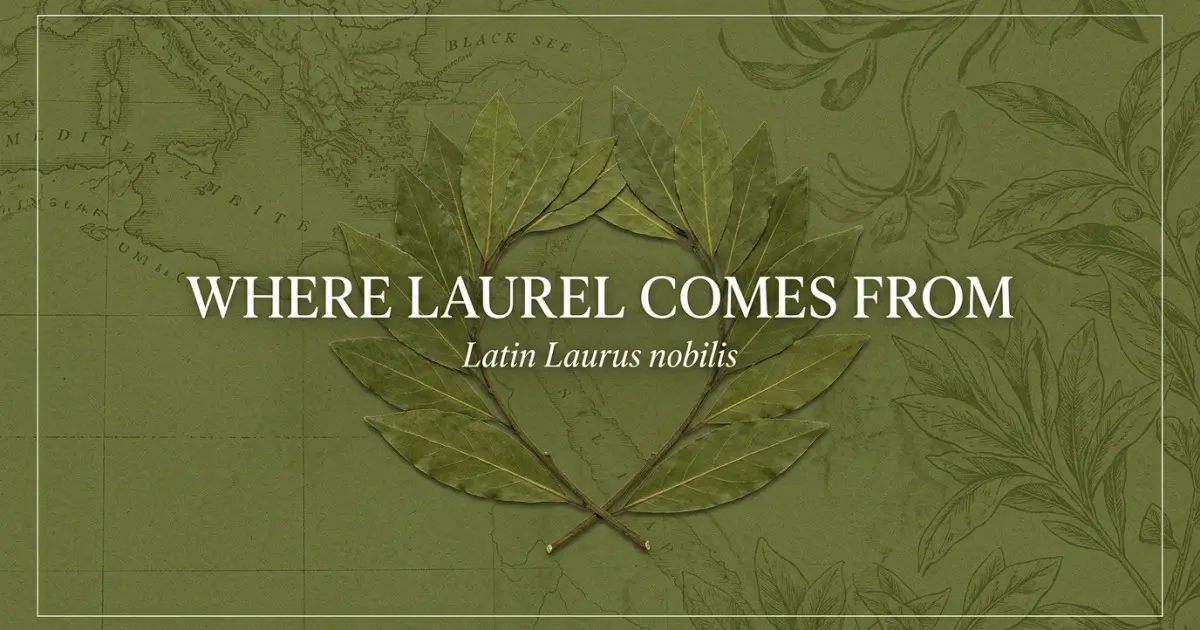
At its foundation, Laurel belongs to the Latin family built around laurus, the laurel tree. From that root come a wide cluster of familiar names and forms: Laura, Lauren, Laurence, Laurent, Lorenzo, Laurie, Lowri, and others that have moved through French, English, Welsh, Spanish, Italian, and Scandinavian usage. Laurel belongs to that larger naming family, but it has always done something a little different from its relatives. It keeps the image visible. To browse more names from this linguistic and cultural background, explore Latin baby names.
Laura and Lauren, for example, are deeply established and widely recognizable, but many speakers do not actively picture a tree when they hear them. The root has become elegant sound more than living image. Laurel reverses that process. It preserves the object inside the name. You can still hear bark, leaf, branch, wreath. That makes Laurel feel more concrete than Laura and less fashion-shaped than Lauren, even though all three names share inherited ground.
The Laur- family and Laurel’s distinct lane
That family resemblance matters because it explains why Laurel feels both familiar and singular at once. It is familiar because it sits near a cluster of names English speakers have known for generations. It is singular because it refuses to blur into them completely. Laura is smooth and classic. Lauren is polished and late-modern. Laurence and Lawrence carry older masculine formality. Laurel remains more imagistic than any of them. It retains the leaf and the wreath rather than only the root.
In practical naming terms, that gives Laurel an advantage. It sounds established without feeling overcirculated. It belongs to a respected lineage without seeming derivative. It can stand beside Laura and Lauren in the family tree of names, yet it has a different personality: greener, quieter, more textural, and a little less socially pre-scripted.
It also helps that English has long been comfortable turning meaningful words into names when the word already carries grace or gravity. Rose, Ivy, Hazel, and Violet all thrive partly because they are real words before they are given names. Laurel benefits from the same mechanism, but with a more classical afterlife than most botanical choices. It has one foot in the natural world and one in inherited culture. That is a strong foundation for longevity.
A Crown Made of Leaves, Not Gold
One reason Laurel keeps attracting serious attention is that it solves a problem many beautiful names cannot. It feels distinguished without sounding expensive. It feels cultured without sounding studied. It feels like it belongs to a person with an inner life, not merely to a set of tastes. That effect is partly literary. The wider Laur- family has long lived near poetry, classicism, and cultivated language, and even when Laurel itself is not the headline literary heroine, it inherits some of that atmosphere.
A literary atmosphere without theatrical weight
The name’s association with honor and with the older language of laurels and laureates gives it a shelf-life beyond trend cycles. It sounds as though it has been read as much as heard. Yet it is not ornate. There are no flourishes, no elaborate endings, no decorative consonant clusters. Laurel’s literacy is quiet. It comes through implication, not performance.
That makes it especially attractive to parents who want an intellectual or artistic name but do not want something obviously precious. Laurel suggests poems, classical memory, essays, ceremonies, and old campus trees without requiring a child to live inside anyone else’s fantasy of refinement. It is a name with references, but it does not trap the child in them.
Why the name already feels known in the wider culture
Laurel also benefits from broad cultural familiarity outside given-name use. It is a plant word, a ceremonial word, and a surname people recognize from entertainment history. That means the name rarely feels obscure, even when it is not common in the classroom. People may not know many Laurels personally, but they know the word. That is often a sweet spot in naming. A name can feel distinctive while still being easy to absorb on first hearing.
The supplied latest US ranking reinforces that impression. Laurel at No. 728 for girls in 2024 is not invisible, but it is far from dominant. In real terms, that usually means the name reads as intentional rather than ubiquitous. It will not feel baffling to others, yet it is unlikely to disappear into a crowd of near-duplicates. For parents wary of names that are either too common or too obscure, Laurel occupies a useful middle register. For a broader shortlist in the same group, visit girl naming ideas.
What Laurel Signals Socially Without Needing to Announce It
Every durable name develops a social texture. Not a rigid stereotype, but a likely first impression. Laurel’s is unusually balanced. It tends to be heard as thoughtful, self-contained, and competent. The tree image helps. So does the history of honor attached to the laurel wreath. And so does the sound of the name itself, which is calmer than many contemporary choices built around bright, clipped endings.
A soft ending with backbone
Phonetically, Laurel does interesting work. The opening stressed syllable has weight: LOR. It is rounded and grounded rather than sparkly or sharp. The second syllable relaxes into a softer close: -ul. That gives the whole name a pattern of strength followed by ease. It does not hit and stop. It settles. For that reason Laurel often sounds mature even on a child, and gentle even on an adult.
Names with that structure often age well because they do not depend on cuteness. Laurel is pleasant on a little girl, but it does not ask to remain little. It can belong to a student, an artist, a teacher, a judge, a neighbor, a grandmother. The sound is serious enough for adulthood and warm enough for intimacy. That range is one of the name’s real assets.
How Laurel sits beside today’s style neighbors
In contemporary taste, Laurel lives near several different camps without belonging fully to any of them. It can sit beside nature names such as Hazel, Ivy, Juniper, and Willow, but it feels less whimsical than some of those choices because its classical history steadies it. It can sit beside vintage revivals such as Mabel, Clara, and Edith, but it feels less overtly antique because Laurel never sounds dusty. It can sit beside literary names, yet it is plainer and more breathable than the grandest of them.
That versatility affects how the name is perceived. Laurel can read outdoorsy, academic, creative, restrained, or quietly traditional depending on the family around it. Some names arrive with only one costume. Laurel changes register easily. That does not make it vague. It makes it adaptable. It offers a child room to become herself without having to spend years correcting the assumptions built into her name.

Laurel Opens Into Other Decisions Gracefully
A strong first name often suggests the next layers of naming without forcing them. Laurel does that particularly well because it is compact, image-rich, and tonally even. It neither overwhelms a middle name nor disappears beside one.
Middle-name pairings that keep Laurel in proportion
Laurel usually works best with middle names that either sharpen its quietness or echo its classical poise. Shorter, cleaner middles can give it extra lift, while longer traditional middles can deepen its formal grace. The best pairings tend to preserve the name’s balance rather than compete with it. If you want the full pairing logic behind that contrast, see Laurel middle names.
The nicknames that Laurel invites without requiring
One advantage of Laurel is that it does not need shortening in order to feel affectionate. Still, it can support softer household forms when family life creates them. That flexibility matters: the full name stands easily in public, while private use can become warmer if that suits the child. To see how those different moods shorten in real life, explore nicknames for Laurel.
Why Laurel’s pronunciation stays relatively manageable
Compared with many distinctive names, Laurel asks little of strangers. The supplied pronunciation and IPA point to a stable spoken form, and most English speakers can approach it with confidence. That ease gives the name everyday practicality without flattening its elegance. If you want the full sound pattern behind that rhythm, read how to pronounce Laurel.
What Laurel Ultimately Gives a Child
In the end, Laurel offers a child an unusually complete inheritance. It gives her nature, but not only prettiness. It gives her ambition, but not aggression. It gives her history, but not heaviness. The tree inside the name keeps it living; the victory inside the name keeps it aspirational. Together they make Laurel feel less like a passing preference and more like a durable idea of personhood: someone who grows steadily, carries herself well, and may one day be honored for what she has made of her gifts.
That is why Laurel lingers in the mind. It is not merely a botanical label and not merely a classical echo. It is a name about merit made graceful. In an age that often confuses visibility with worth, Laurel remembers an older standard. The crown is made of leaves. The praise is attached to work. And the beauty of Laurel is that it lets all of that be felt before it ever has to be explained.