
Nicknames for Lakelyn: Playful Picks with Everyday Potential
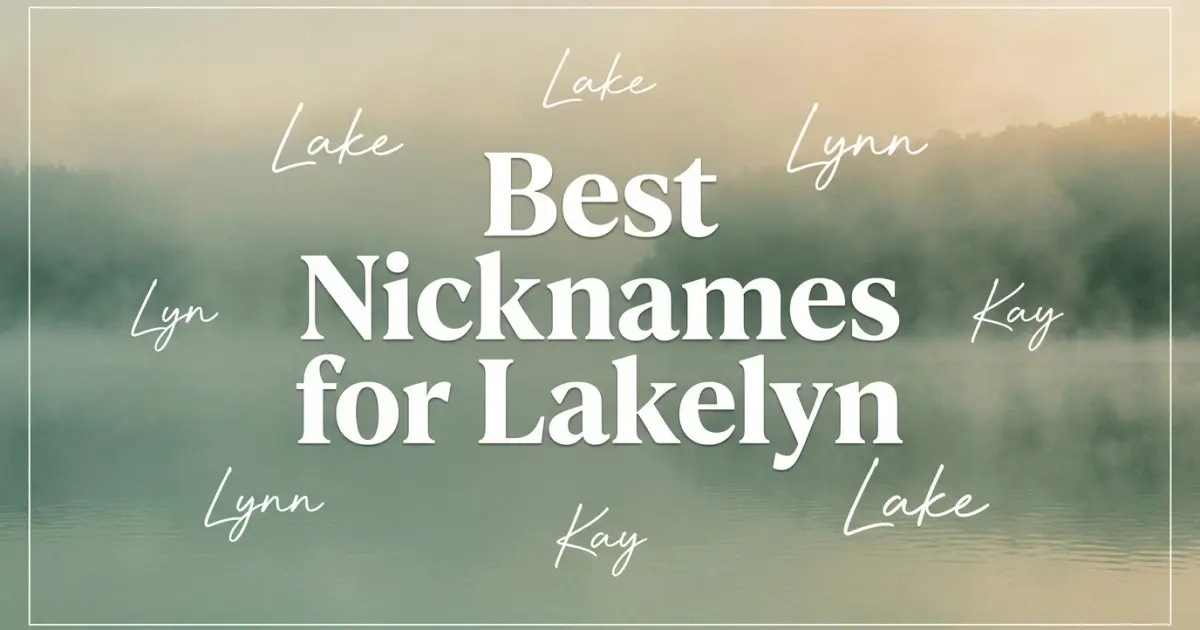
A nickname is never just a shorter sound. It is a social signal. It tells a child who gets to be close, who is allowed to soften the edges of her name, and what version of her identity is being called forward in a given moment. Full names tend to belong to the public world: school forms, introductions, attendance rolls, signatures. Nicknames belong to the smaller circles around a person. They come from siblings, grandparents, best friends, teammates, and sometimes from the child herself when she decides which version of her name feels most like home. That is why nickname logic matters more than many parents expect. A believable nickname makes a modern name feel lived in.
Lakelyn is especially interesting on this front because it already sounds polished and complete. It does not need a nickname in order to function. Yet that is exactly what makes its nickname landscape useful: every shorter form changes the mood of the name very clearly. Some make Lakelyn sound cooler and more streamlined. Some make it softer and more domestic. Some work beautifully in early childhood but would probably stay inside the family rather than travel into adult life. The best way to understand Lakelyn, then, is not as one nickname-rich name in the old Elizabeth or Katherine sense, but as a name with a few strong, realistic paths that reveal different sides of the same person. If these shorter forms feel natural, it is usually because the full name is already doing something strong and clear, which you can see in Lakelyn meaning.
What Lakelyn’s nickname world really tells you
| Group | Suggested Nicknames | Persona | Use Context |
|---|---|---|---|
| Clean modern short forms | Lake | Cool, self-possessed, contemporary | Most natural public nickname; works from childhood into adulthood |
| Affectionate everyday forms | Lakey, Lakie | Warm, easy, familiar | Best for family, close friends, and early childhood |
| Ending-based classics | Lyn, Lin | Quieter, steadier, more understated | Useful if parents want a softer, less image-led short form |
| Sweet home nicknames | Lynnie, Linnie, LaLa | Playful, cuddly, intimate | Mostly family use, especially for toddlers and younger children |
| DIY minimalist forms | Lay, Kay, Lee | Breezy, casual, highly personal | Possible, but usually chosen by family style rather than arising automatically |
Lakelyn begins at the shoreline: the opening sound gives the strongest nicknames
The most productive part of Lakelyn is the front. Research and common naming practice suggest that nicknames most often grow from obvious shortenings and the first strong sound of a name. Lakelyn follows that pattern almost perfectly. The opening syllable is vivid, stressed, and image-heavy. It is not abstract. It is a real word, and because it is a real word, it gives the name a ready-made short form that feels complete rather than clipped. That is why the nickname landscape of Lakelyn starts, and mostly stays, with Lake. Many short forms only become obvious once the opening sound is clear, which is why how to pronounce Lakelyn belongs naturally here.
Lake is the strongest public nickname Lakelyn has
Lake is the cleanest, most convincing short form for Lakelyn because it sounds intentional. It does not feel like something that has merely been chopped off. It feels like a modern nickname in the best sense: brief, stylish, and socially usable. On a toddler, Lake sounds bright and easy. On a teenager, it sounds crisp and current. On an adult, it can still function because it has a certain composure to it. That age range matters. Many nicknames are charming in a nursery but harder to imagine in a meeting or on a business card. Lake avoids that problem.
It also suits the emotional tone of Lakelyn. The full name has scenic softness; Lake keeps that image but strips away ornament. If Lakelyn is the complete portrait, Lake is the sharp sketch. Parents who love modern, uncluttered nicknames will likely find this the most satisfying outcome. It is the kind of short form a child might actually choose for herself later on.
Lakey softens Lakelyn without losing the source
If Lake is the sleek version, Lakey is the affectionate version. It is what happens when family speech adds warmth and repetition to a clean short form. Lakey feels younger, more domestic, and more obviously loved. It is easy to imagine from parents, siblings, cousins, and grandparents. It has the right kind of softness for everyday home life, where names are often rounded off and made more musical.
Lakie is a spelling variation of the same instinct. It is plausible, but visually less standard, so Lakey is usually the more natural choice on the page. In speech, the two are effectively the same. The important point is not spelling but social register: this is a nickname for closeness, not necessarily for the outside world. It works beautifully in childhood and may remain inside the family long after the child grows out of using it publicly.
The bright center of Lakelyn makes some ultra-short forms possible, but not equally natural
Lakelyn is stressed on the first syllable, which means the name’s energy sits early and clearly in the mouth. That brightness can tempt families toward very short sound-based nicknames. Some of these are possible. Not all of them feel equally organic. This is where nickname logic becomes useful rather than merely imaginative. A name can technically yield several shortened forms, but only a few will sound like something real people would actually say over many years.
Lay is possible, but it usually stays private
Lay can come out of Lakelyn naturally in fast family speech, especially when a name is being softened for a baby or called quickly across a room. It has the advantage of simplicity, but it also feels unfinished. Unlike Lake, which lands as a full image, Lay sounds more like a fragment of a sound than a stable nickname identity. That does not make it unusable. It simply means it is more likely to remain inside the house than become the nickname everyone knows.
For some families, that private quality is an advantage. The best nicknames are not always the most public ones. Sometimes a very short, almost secret form is exactly what intimacy sounds like. Lay can work in that way: gentle, fast, and personal, but probably not the form a child would default to in wider social life.
Kay and Lee belong to the DIY category
Kay and Lee are both possible if a family likes minimalist nickname style, but neither rises automatically out of Lakelyn the way Lake does. Kay is carried more by sound than by visual structure. Lee is even looser, drawn from the tail end of the spoken name rather than from the clearest written form. These are the sorts of nicknames that happen because a family enjoys abbreviation, not because the name strongly demands them.
That distinction matters. DIY nicknames can be wonderful, but they tend to depend on household voice, sibling speech, or one particular relationship. They are less likely to be the nickname strangers adopt on first hearing the name. With Lakelyn, that makes Kay and Lee plausible but secondary.
Lakelyn’s ending opens the gentler, more old-fashioned route
The ending of Lakelyn creates a very different nickname mood from the front. Where Lake feels modern and visually sharp, the final -lyn opens the door to nicknames that are softer, more traditional in feeling, and often more inward-looking. These are not the nicknames people hear first when they meet Lakelyn, but they can become very meaningful because they pull the name away from scenery and toward personhood. That is the subtle power of the ending-based forms: they make Lakelyn sound less like a landscape word and more like a familiar girl’s name.
Lyn is the simplest ending-based option
Lyn is the cleanest version of this route. It is spare, calm, and a little quieter than Lake. It also has an older cadence. For parents who like Lakelyn but want a fallback nickname that sounds less visibly modern, Lyn can be a smart choice. It reads more traditionally and may appeal to families who prefer understated short forms over catchy ones.
Lin works as a spelling-light alternative, though Lyn is more directly aligned with the visual ending of Lakelyn. In practice, the sound is almost identical. The difference is mainly aesthetic: Lyn looks more connected to the parent name, while Lin feels plainer and more neutral.
Lynnie and Linnie are the true cuddle forms
Once families begin adding warmth to ending-based nicknames, Lynnie and Linnie appear very naturally. These are affectionate, child-centered, and unmistakably intimate. They feel believable for toddler years, early school years, and close family life. They are the nicknames of cuddles, photo captions, bedtime routines, and siblings learning to pronounce a name with ease.
These forms can endure, but they usually do so selectively. A girl may remain Lynnie to her parents long after she is Lakelyn everywhere else. That split is common and healthy. Nicknames do not all need to scale equally into public adulthood. Some exist precisely to mark the people who knew the earliest version of the child.
Lakelyn has one playful family lane, but it should stay human
Every modern name invites a little playful improvisation, and Lakelyn is no exception. LaLa is the most believable playful form here. It is easy for siblings to say, easy for adults to repeat, and common enough in family speech to feel natural. It also has the right emotional size: clearly affectionate, clearly informal, and not pretending to be a formal alternative.
What Lakelyn does not need is a long chain of clever invented nicknames that no one would naturally reach for. This is one of the best caution notes parents can keep in mind. Nicknames work when they sound as though they emerged from life, not from a brainstorming session. With Lakelyn, the believable pool is not huge, but it is strong. That is better than having ten elaborate possibilities and only one that a real child would actually carry.
How Lakelyn’s nicknames shift as the child grows
The most useful way to think about Lakelyn is by life stage. In baby and toddler years, Lakey, Lynnie, Linnie, and LaLa all feel warm and plausible. In school years, Lake and Lakey are probably the most resilient. In adolescence and adulthood, Lake becomes the standout if a public nickname is wanted, while Lakelyn itself remains perfectly usable in full. Lyn may also survive well for someone who prefers a quieter, less image-led short form.
That range is a strength. Research and everyday experience suggest that nicknames often change with context rather than replacing the full name permanently. Lakelyn supports that pattern well. A child can be Lakey at home, Lakelyn at school, and Lake among friends later on without the shifts feeling forced. That flexibility is often what parents are really seeking when they ask whether a name has “good nicknames.”
Nickname FAQ for Lakelyn
What is the most natural nickname for Lakelyn?
The most natural nickname is usually Lake. It comes directly from the strongest sound in the name and works well in both casual and more grown-up settings.
Is Lakey a believable everyday nickname for Lakelyn?
Yes. Lakey feels affectionate and easy, especially in family use. It is one of the most believable warm-home nicknames Lakelyn can produce.
Can Lakelyn use Lyn or Lynnie as a nickname?
Yes. Lyn is the cleaner, quieter option, while Lynnie is sweeter and more intimate. Both come naturally from the ending of Lakelyn, though they create a different vibe from Lake.
Should parents force a nickname for Lakelyn?
Usually no. Lakelyn already works well as a full name. The best nickname is the one that arises naturally from family speech, close relationships, and the child’s own preferences over time.