
How to Pronounce Kingston: A Simple Pronunciation Guide
The first real test of Kingston’s pronunciation does not happen in a phonetics guide. It happens in a room. A teacher scans a class list on the first morning of school. A receptionist calls the next patient. A relative sees the name in a message before ever hearing it aloud. Kingston usually does well in those moments because it looks like what it sounds like. That is a practical strength. A name can carry size and status in meaning, but if it creates hesitation every time someone has to say it, daily life grows heavier around it. Kingston avoids that trap. It sounds substantial, yet it remains easy to speak.
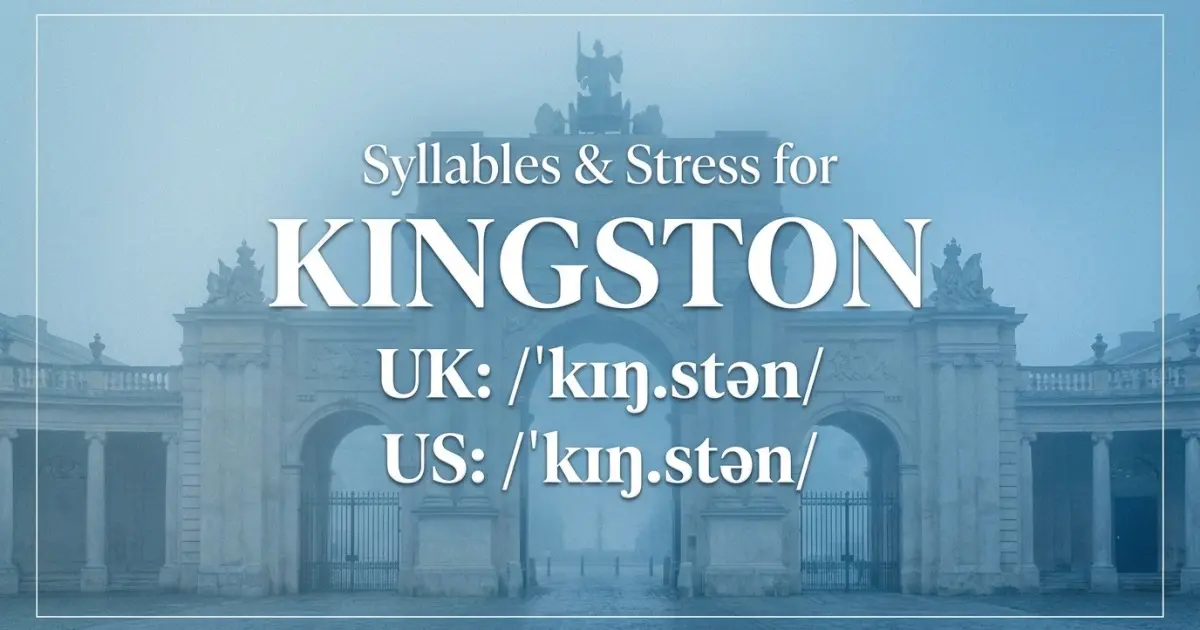
In everyday English, Kingston is pronounced KING-stun. In both American and British IPA, that appears as /ˈkɪŋstən/. The stress falls clearly on the first syllable, and the second syllable softens into a lighter ending. That pattern matters because it keeps the name from sounding too formal or too literal. A careful reader might be tempted to say every written element strongly, but the natural spoken form is smoother than the spelling alone might suggest. Kingston works because the sound is confident without being stiff.
How Kingston is actually said once it leaves the page
Before looking at common mistakes or accent differences, it helps to see the name’s core sound structure clearly. Kingston is not a difficult name, but it does sound best when the speaker understands which syllable carries the weight and which one relaxes.
| Element | Phonetic Detail | Quick Tip |
|---|---|---|
| Everyday pronunciation | KING-stun | Say the first syllable firmly and let the second syllable soften. |
| IPA (U.S.) | /ˈkɪŋstən/ | The stress mark shows the opening syllable is the strong beat. |
| IPA (U.K.) | /ˈkɪŋstən/ | American and British pronunciation line up closely, so the name travels well. |
| Syllable count | 2 syllables | Think one strong opening beat followed by one lighter resolving beat. |
| Stress pattern | First-syllable stress | Do not spread the emphasis evenly across both syllables. |
| Opening sound | /kɪŋ/ | The first syllable rhymes with sing and ring. |
| Middle cluster | /ŋst/ transition | Move smoothly from the final ng into st without inserting an extra vowel. |
| Ending | Unstressed -stən | The second vowel reduces, so it sounds closer to stun than a fully stressed stone. |
| Closest sound cue | “king” + “stun” | If the first part is crisp and the second part lighter, the name will sound natural. |
Kingston works because the first syllable carries the authority
The name’s center of gravity is the opening KING. That first syllable does most of the work, both musically and socially. It begins with /k/, a clean voiceless stop, moves into the short vowel /ɪ/, and closes on the nasal /ŋ/. That final nasal sound is important because it gives the name weight without making it hard. Kingston would sound much blunter if the first syllable ended differently. Instead, the ng lets the syllable close with firmness and resonance. Before focusing only on syllables and stress, it helps to step back into the fuller frame of Kingston meaning.
Then comes the second half: -stən. This part is lighter and less prominent, which is why the name works so well in natural speech. The second syllable contains a reduced vowel, often called a schwa in English. That means the sound is softer and less fully articulated than the spelling might suggest. In practice, speakers do not usually say a bold, fully shaped ston as if they were emphasizing a separate word. They say a gentler stun, with the stress kept clearly at the front.
Why the consonant cluster matters in Kingston
Kingston contains an interesting internal moment: the move from /ŋ/ to /s/ to /t/. That cluster can look intimidating on paper, but English speakers make these transitions all the time. The key is not to force extra space into it. There is no need to insert another vowel between king and ston. The sound should remain one connected unit: KING-stun.
Why the second syllable should not dominate
Because the name is visually made of two familiar-looking halves, some speakers may be tempted to give equal force to both. That makes the name sound overly deliberate. English rhythm prefers a stronger opening here. Once the first syllable leads and the second relaxes, Kingston starts sounding effortless rather than assembled.
Where Kingston tends to go wrong when people over-read the spelling
Kingston is generally easy, but even easy names have predictable weak spots. In this case, the trouble usually does not come from ignorance. It comes from careful readers trying too hard to honor every letter equally.
Mistake pattern one: turning the ending into “stone”
The most common mild error is giving the second syllable too much shape, especially the long o feeling implied by the spelling. That can push the name toward something like KING-stone. While that is understandable from the page, it is not the natural spoken form here. The standard English rhythm keeps the ending lighter: -stun, not a fully stressed -stone.
Mistake pattern two: breaking Kingston into two words
Because the name visibly contains the word king, some speakers instinctively separate the two halves too sharply. That can make the name sound like a title followed by a noun instead of one continuous name. In real speech, Kingston should flow as one unit. The second half follows the first quickly rather than standing beside it.
Mistake pattern three: flattening the rhythm
Another issue is giving both syllables the same amount of emphasis. This can happen when speakers are reading slowly or trying not to make a mistake. Ironically, that caution can make the name sound less natural. The fix is simple: trust the first syllable to carry the weight, and let the second syllable release it.
Kingston across accents stays steadier than many place-style names do
Some English names shift a lot between countries or regions. Kingston does not, at least not in any way that changes its identity. The U.S. and U.K. IPA forms are the same, which tells you something important: the backbone of the pronunciation is stable. That is one of the name’s practical advantages. It carries a polished, place-based feel without demanding accent-specific expertise.
Accent notes that change texture, not structure
Different accents may handle the reduced vowel in the second syllable with slightly different softness. Some speakers may also release the final n more cleanly, while others let it blend more naturally into connected speech. These changes affect texture, not correctness. The name remains clearly Kingston as long as the first syllable carries the stress and the ending stays lighter.
Why Kingston is easy for strangers to say
Part of Kingston’s success is that it uses very familiar English materials. The first syllable is a common sound unit. The second syllable contains a reduced unstressed pattern that English speakers use constantly. This means the name sounds polished but does not require effort. That is a valuable combination in everyday life.
Kingston beside its sound neighbors makes its shape easier to hear
Comparison can help the ear more than abstract rules do. Kingston shares some structural traits with names like Weston, Paxton, and Easton, especially in the way the second syllable relaxes. But Kingston feels heavier at the front because of the closed king syllable. It also sits near actual place names and surnames, which reinforces its polished, built quality. Yet compared with those neighbors, Kingston sounds more weighted in the opening and more settled in the finish. The way the name resolves at the end often decides which short forms feel natural in speech, and that becomes clearer in Kingston nicknames.
This is why the name often leaves such a strong first impression. It combines familiarity with density. You hear the pieces immediately, but you also hear that they are functioning as one designed whole.
Practicing Kingston until it sounds natural in real life
Practice help that follows the name’s real rhythm
Start with the opening syllable alone: KING. Then add the second syllable softly: stun. Finally say the full name at a natural pace: Kingston. The goal is not classroom-style over-enunciation. The goal is a name that sounds like something a person would actually say several times a day.
A useful memory cue is simple: think king plus a lighter stun. If the first half is confident and the second half is less stressed, the name will usually sound right.
Practice lines that sound like real speech
“Kingston, your turn.”
“Have you met Kingston yet?”
“Kingston left his jacket here.”
“This seat is for Kingston.”
These lines matter because names often change shape once they are placed in real sentences. Kingston holds together well under sentence pressure, which is one reason it works so smoothly in ordinary life.
Why Kingston sounds bigger than two syllables without becoming hard to say
The larger pronunciation story of Kingston is all about control. The first syllable gives the name symbolic and sonic authority. The second syllable keeps that authority usable by reducing the weight and letting the line settle. The internal consonant cluster adds character without making the name difficult. In other words, Kingston sounds substantial because of its construction, not because it is long or ornate.
That is why the name performs so well. It looks important, sounds familiar, and asks very little of the speaker once the basic rhythm is understood. Say the first syllable clearly. Keep the second softer. Let the whole name move as one unit. Once those habits are in place, Kingston sounds exactly as it should: strong, polished, and highly speakable.
Stress and Sound FAQ for Kingston
Is Kingston pronounced the same in American and British English?
Yes, in standard IPA both are given as /ˈkɪŋstən/. Small accent differences may change the softness of the second syllable, but the overall pronunciation stays the same.
Which syllable is stressed in Kingston?
The first syllable is stressed, so the name should sound like KING-stun, with the second syllable lighter and less prominent.
What is the most common pronunciation mistake with Kingston?
The most common issue is turning the ending into a fully stressed stone or separating the name too sharply into two visible parts. In natural speech, the ending is lighter and the whole name flows as one unit.
Is Kingston generally easy for teachers and relatives to say?
Usually yes. Kingston uses familiar English sounds and a stable stress pattern, so most speakers can pronounce it confidently after hearing it once, and many will get it right on first reading.