
Nicknames for Kieran: Fresh Ideas Beyond the Obvious Short Form
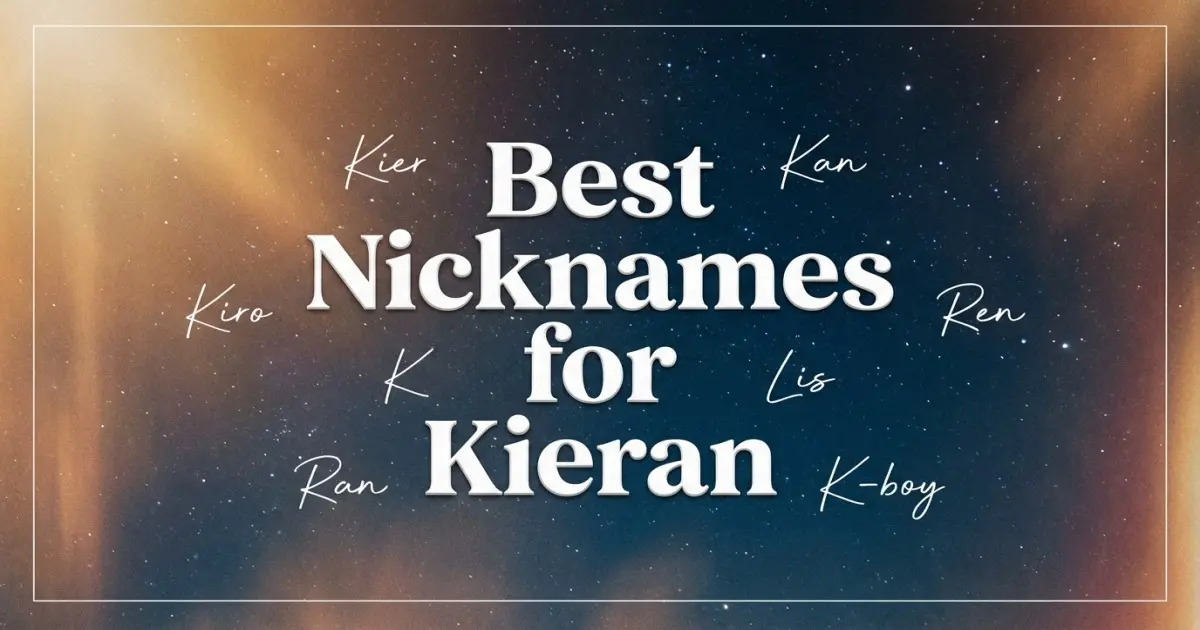
A nickname is rarely just a shorter form of a name. It is a social signal, the version of identity that appears when distance falls away. The full name belongs to forms, introductions, school lists, team rosters, and the public world where clarity matters. The nickname belongs to whoever has moved closer. Friends often shorten for speed. Siblings shorten for habit. Parents soften for tenderness. Partners change a name not because it needs editing, but because affection almost always wants language to come closer than formal life allows.
That matters with Kieran because the full name is already compact, polished, and highly usable. Official data shows it remains established in current American use, and the name itself carries an unusual balance: Irish-rooted, modern-sounding, and distinct without being difficult. At just two syllables, KEER-uhn does not need to be cut down in order to function. So when nicknames do emerge, they usually exist to change emotional tone rather than practical length. They make Kieran quicker, warmer, more playful, or more private. And because the stress falls firmly at the front, most believable short forms stay close to the opening sound rather than drifting far away from the name’s natural center of gravity. If these shorter forms feel natural, it is usually because the full name is already doing something strong and clear, which you can see in Kieran meaning.
What the nickname landscape of Kieran really reveals
| Group | Suggested Nicknames | Persona | Use Context |
|---|---|---|---|
| Classic familiar forms | Kier, Keir | Grounded, easy, quietly distinctive | School, friends, family, everyday casual use |
| Minimal modern forms | K, Kie | Clean, current, lightly cool | Texting, siblings, close peers, team environments |
| Soft affectionate forms | Kiki, Kie-Kie | Warm, playful, intimate | Parents, grandparents, early childhood, home use |
| Playful social forms | K-Man, Kiero | Teasing, energetic, personality-led | Friend groups, cousins, sports, joking family use |
| DIY private forms | Kier-bear, Kie-boy, K | Relationship-specific, tender, homegrown | Partners, very close family, inner-circle language |
Kieran has a tighter nickname world than longer names, and that is part of its strength
Why short names do not need endless nicknames to feel alive
Kieran belongs to a category of names that are already close to complete in public life. It is not so long that it begs to be shortened, and not so brief that it resists variation altogether. That middle position is useful. It allows the full name to stay fully functional almost everywhere while still leaving room for smaller social versions to grow around it.
This is one reason the nickname ecosystem of Kieran feels more realistic than theatrical. The strongest forms are not endless. They are specific. They arise because relationships change the temperature of a name, not because the full version is cumbersome. A Kieran may remain Kieran in school, at work, and in formal settings, while becoming Kier to friends, Keir in certain families, or something softer and more playful at home. That layered structure is often a sign of a healthy name rather than a limited one.
How the variant family around Kieran helps the nickname logic
The project’s naming books are useful here because they show that Kieran already stands inside a wider spelling family. One guide explicitly lists Keir among the related forms around Kieran, while the Irish-name sources ground the name in the older Ciarán line. That matters. It means that some of the most believable nicknames do not have to be invented from scratch. They already live near the name in accepted usage.
This is important because it gives Kier and Keir more credibility than a casual reader might realize. They are not merely arbitrary trims. They are sound-near, family-adjacent, and culturally plausible. That makes them especially strong options for parents who want the nickname to feel natural rather than improvised.
The front of Kieran does almost all the nickname work
The opening zone: why Kier feels inevitable
The strongest nickname inside Kieran is Kier. The reason is structural. The stress falls on the first syllable, and English speakers almost always build casual shortenings around the stressed opening when that opening is distinctive enough to stand on its own. In Kieran, it is. Kier sounds concise, plausible, and very easy to use in real life.
It also works across ages, which matters. On a little boy it sounds lively and smart. On a teenager it sounds quietly cool. On an adult it still feels wearable because it is not excessively cute or overly stylized. That makes Kier one of the best all-purpose nickname outcomes for the name.
Why Keir feels slightly more rooted and a little more literary
Keir is closely related, but it has a slightly different atmosphere. Because it appears as a known variant in the name family, it carries a touch more history and looks a little less like an off-the-cuff trim. For some families, that difference will matter. Kier feels more obviously modern in nickname form. Keir can feel a little more rooted, a little more surname-like, and perhaps a little more literary on the page.
That does not make one better than the other. It simply means they perform different social work. If the family wants the nickname to feel spontaneous and spoken, Kier is often the stronger choice. If they want something that feels closer to an established form, Keir can be especially appealing.
The stressed heart of Kieran overlaps with the opening, so warmth usually comes from softening rather than cutting
Why Kieran’s strongest public forms stay close to Kier-
With longer names, it often makes sense to divide nickname potential into clearly separate zones: opening, stressed center, and ending. Kieran is too compact for that kind of dramatic architecture. The opening and the stressed center are effectively fused into the same sound field. That is why most believable public short forms cluster around Kier or Keir rather than branching into completely different identities. Nicknames often grow from the stressed part of a name rather than from spelling alone, so the next useful step is Kieran pronunciation guide.
This is actually one of the name’s strengths. It keeps the nickname culture from becoming padded or artificial. The best Kieran nicknames sound like things people would actually say, not like forms invented because an article needed a longer list.
Why Kie works best in modern shorthand culture
Kie is a lighter, more reduced form that works mostly in modern shorthand settings. It feels like a text-message nickname, a sibling call across the house, or a fast peer-group shortening. It is not quite as stable or all-purpose as Kier, but it is believable because it comes from the same stressed front of the name and because contemporary nickname culture often trims names to the smallest useful sound unit.
What Kie changes is tone. It makes the name feel younger, faster, and less formal. That can be exactly what some circles want. It is less likely to be the nickname a grandparent chooses and more likely to be the one that grows out of friendship and speed.
The end of Kieran is weaker as a public nickname source, so the softer forms usually belong to intimacy
The ending zone: why public ending-led cuts are less natural here
The trailing part of Kieran does not generate especially strong public nicknames. The name’s identity is simply too front-loaded for the ending to feel like the obvious place to cut. Forms built mainly from the back half tend to sound more detached from the full name, which is why the most believable options still return to the opening stress pattern.
This is useful to understand because it keeps expectations realistic. Kieran is not the kind of name that naturally turns into a completely different ending-based identity in broad everyday use. The energy of the name lives at the front, and the best nicknames respect that.
Why Kiki and Kie-Kie belong to affection rather than public life
Once intimacy enters the picture, however, strict structure matters less. That is where forms like Kiki and Kie-Kie begin to make sense. These are not broad public nicknames. They are the names that grow out of repetition, childhood speech, family habit, and the universal human tendency to duplicate sounds when a name becomes affectionate enough.
That does not make them frivolous. In many lives, the softest family nicknames are the most emotionally meaningful ones. They simply belong to a different social layer than the public forms. A man may be Kieran everywhere official, Kier among his friends, and Kiki only to the people who knew him when he was small or love him in private now.
Which Kieran nicknames actually last as he grows
The forms most likely to survive from childhood into adulthood
If the question is durability, the strongest answers are Kier, Keir, and in narrower circles K. Kier is the easiest all-purpose nickname because it sounds natural in speech and does not overplay style. Keir can last just as well, especially for families who like its slightly more rooted appearance. K is more context-dependent, but can stay active in text culture, sport, or close male friendship for years.
Kie can last too, though it tends to feel younger and more socially specific. It is more likely to belong to the peer world than to formal adult life.
The forms most likely to stay private
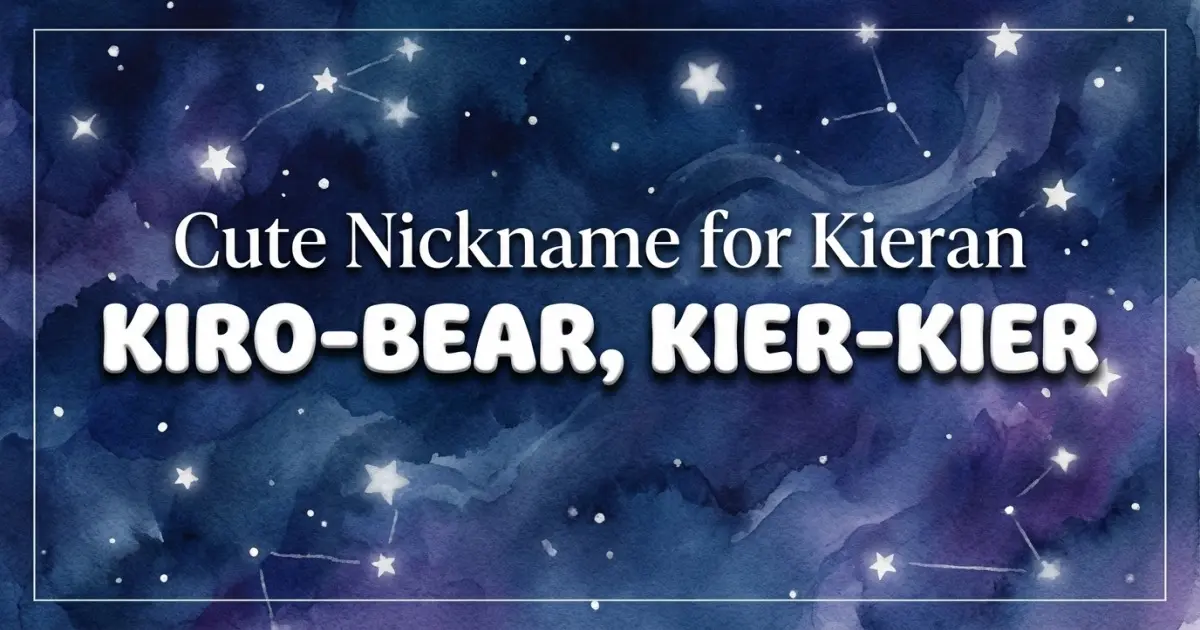
Kiki, Kie-Kie, K-Man, Kiero, and other one-off affectionate inventions like Kier-bear are most likely to remain inside close circles. That does not make them less real. It simply means they are relationship names rather than public names. Many of the most lasting nicknames in a life are precisely the ones that never leave the home or the inner circle.
In the end, Kieran has the kind of nickname range that suits its full name well: not crowded, not inflated, but genuinely flexible. A boy can remain Kieran in public, become Kier or Keir among friends, shrink into Kie in casual shorthand, and gather softer private forms in the relationships that matter most. That is not limitation. It is proportion, and proportion is often what makes a nickname system feel fully human.