
How to Pronounce Kamiyah: Syllables, Stress, and Common Mistakes
The most important pronunciation moment for a name usually happens before anyone has time to explain it. A teacher is reading the first-day roll. A pediatric nurse steps into the waiting room. A grandparent sees the name in a birth text before hearing it out loud. Kamiyah is exactly the kind of name that can create a brief pause in that moment. The spelling is readable, but it offers more than one possible route to the eye. Some people will wonder whether the middle should sound like mee, whether the ending should stretch longer, or whether the first syllable should carry more weight than it actually does. That is not because the name is especially difficult. It is because Kamiyah is a name whose rhythm matters.
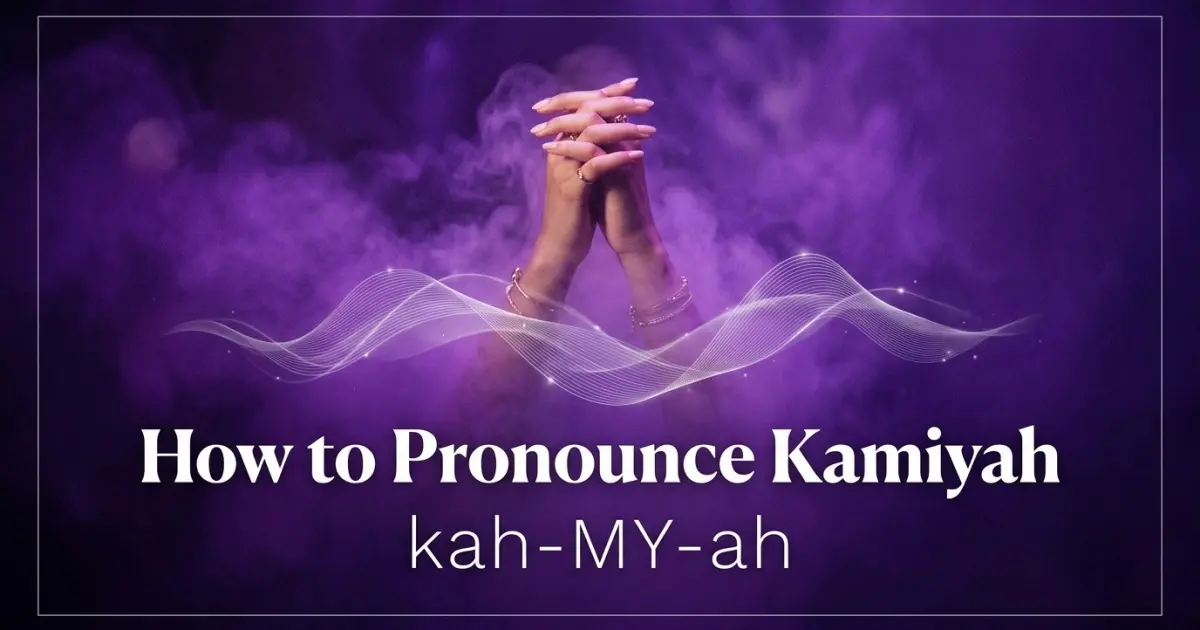
Once spoken clearly, though, Kamiyah usually settles fast. The intended pronunciation is kuh-MY-uh. It begins lightly, places the main stress in the middle, and then softens at the end. In other words, the name does not arrive all at once. It rises. That rising motion is what gives Kamiyah much of its grace. It also explains why mispronunciations tend to happen on the page, not after the first correct hearing. Kamiyah is less a hard name than a name that benefits from one confident example.
How Kamiyah is actually said when the hesitation ends
| Element | Phonetic Detail | Quick Tip |
|---|---|---|
| Standard pronunciation | kuh-MY-uh | Keep the first syllable light, stress the middle strongly, and let the ending fall away gently. |
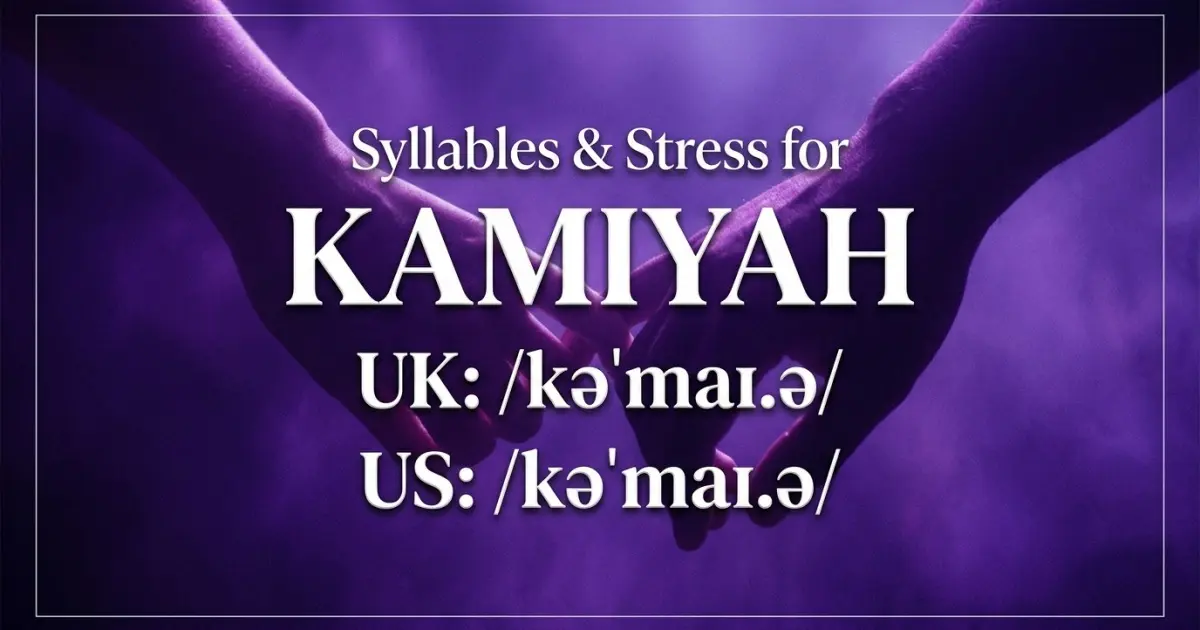
| IPA (US) | /kəˈmaɪə/ | The opening uses a schwa sound, so it should not be heavily pronounced. |
| IPA (UK) | /kəˈmaɪə/ | The core pronunciation remains the same in major British and American usage. |
| Syllable count | 3 syllables | Think in three beats: kuh / MY / uh. |
| Primary stress | Second syllable | The middle syllable carries the name’s identity. If that stress moves, the name starts to wobble. |
| Opening sound | /kə/ with a reduced vowel | Start softly, almost like the beginning of “about,” not with a hard “KAY.” |
| Middle vowel | /aɪ/ as in “my” | This is the anchor of the name. Let it sound clear and open. |
| Ending | Light unstressed “uh” | The last syllable should taper naturally, not compete with the middle. |
Kamiyah rises in the middle, and that is what makes it sound right
The easiest way to understand Kamiyah is to hear its rhythm before worrying about the letters. This is a three-syllable name with the main stress on the second syllable: kuh-MY-uh. That middle emphasis matters more than anything else. It is the point where the name comes fully into focus. The first syllable leads in. The second syllable declares the shape. The third syllable relaxes the ending. Before focusing only on syllables and stress, it helps to step back into the fuller frame of Kamiyah meaning.
In phonetic terms, the opening vowel is a schwa, written /ə/ in the IPA. English speakers use this reduced vowel constantly in unstressed syllables, which is why the first part of Kamiyah should feel light and almost effortless. The middle syllable, by contrast, contains the diphthong /aɪ/, the same core vowel movement heard in “my” and “sky.” That bright central movement gives the name its lift. The last syllable returns to a softer, weaker sound so that the stress remains exactly where it belongs.
The consonants help create that balance. The opening k gives the name a clean start, but it does not make the overall sound harsh because the vowel relaxes immediately after it. The m in the middle warms the line and keeps the stressed syllable from sounding brittle. The final glide into uh lets the name settle rather than stop abruptly. All of that makes Kamiyah sound composed and fluid instead of choppy.
Why the first syllable should not be overplayed
A very common instinct is to give the opening too much strength, especially by turning it into something closer to KAY or another fully stressed syllable. That shifts the balance of the whole name. Kamiyah works because the first syllable is there to prepare the ear, not to dominate it.
Why the MY syllable is the name’s true center
If the middle syllable is clear, most listeners will remember the name correctly after one hearing. That is because the stress pattern is emotionally intuitive once established. Kamiyah sounds graceful not because it is vague, but because it knows exactly where to put its force.
Where Kamiyah gets misread before someone hears it aloud
Most pronunciation trouble with Kamiyah begins visually. The letters are familiar enough that readers try to solve the name quickly by borrowing patterns they already know. That is a normal reading habit, especially with modern names that share sounds with several neighboring forms. The issue is not that Kamiyah is opaque. The issue is that the eye sees multiple plausible options before the ear confirms the intended one.
Common mistake patterns around Kamiyah
One likely mistake is shifting the stress away from the middle and giving the first syllable too much importance. Another is flattening the middle so the name loses the clear MY sound and starts to sound less musical. A third is stretching the ending too much, as though the name were meant to finish with equal emphasis on the final syllable. All of these versions make the name sound less poised than it actually is.
These are understandable first-read errors. They are not signs that the name is impractical. In fact, Kamiyah is quite easy once its stress pattern is known. The uncertainty is almost entirely a first-impression issue.
Sound neighbors that can pull Kamiyah off course
Kamiyah sits near other modern three-syllable names with open vowels and a strong middle beat. That means readers may unconsciously borrow a pattern from a nearby familiar name before adjusting to Kamiyah’s exact rhythm. This is common with names that feel contemporary and phonetic but still leave room for multiple initial guesses. One calm correction, or one confident first hearing, is usually enough to settle it. Once the sound pattern is clear, some shortenings stop feeling optional and start feeling natural, and the clearest map is in nicknames for Kamiyah.
Kamiyah travels well across accents because the core pattern is stable
One reassuring detail about Kamiyah is that the U.S. and UK IPA are the same: /kəˈmaɪə/. That does not mean every speaker will sound identical, but it does mean the name’s fundamental architecture remains stable across major English-speaking accents. The schwa opening stays light. The MY syllable stays stressed. The ending stays softer.
What can vary a little from place to place
The main differences tend to be matters of accent color rather than meaningfully different pronunciations. Some speakers may make the first syllable slightly tighter or more relaxed. Others may let the last syllable blur more softly into connected speech. But these are surface variations. They do not change the identity of the name. Kamiyah still sounds like Kamiyah.
This stability is valuable in real life. It means the name can move through different classrooms, workplaces, and regions without constantly being renegotiated. Parents often worry about whether a modern name will fracture into competing versions. Kamiyah is relatively protected from that problem because its core rhythm is so clear once heard.
Why Kamiyah is easier to live with than some people expect
Names become difficult when their spelling and rhythm fight each other. Kamiyah does not really do that. The only real challenge is that the spelling offers a brief fork in the road to the eye. Once the middle stress is established, the name becomes natural very quickly.
Practice lines that make Kamiyah feel natural in real speech
The best way to internalize Kamiyah is to say it inside ordinary sentences. Try: “Kamiyah is right over there.” “Have you met Kamiyah yet?” “Kamiyah, your turn.” “This award goes to Kamiyah.” These practice lines matter because names should not only sound correct in isolation. They should work in motion, at the speed of real life.
A simple way to build the sound
Start with the center: MY. Then add the light opening: kuh-MY. Then let the name settle into the last beat: kuh-MY-uh. This is often the easiest method for teachers, relatives, or front-desk staff who want to feel confident before saying the name aloud.
The easiest useful correction
If someone hesitates, the clearest correction is usually: “It’s kuh-MY-uh, with the stress in the middle.” That gives the listener the one thing they actually need. Once the rhythm is in place, the spelling no longer feels uncertain.
In the end, Kamiyah is one of those names that may look slightly more uncertain than it sounds. On paper, it invites a brief pause. In speech, it becomes smooth, warm, and memorable almost immediately. The secret is simple: light opening, clear middle, soft finish. Once that pattern is heard, Kamiyah sounds exactly as it should—graceful, dignified, and easy to carry.