
Nicknames for Jream: Short Nicknames That Sound Instantly Natural
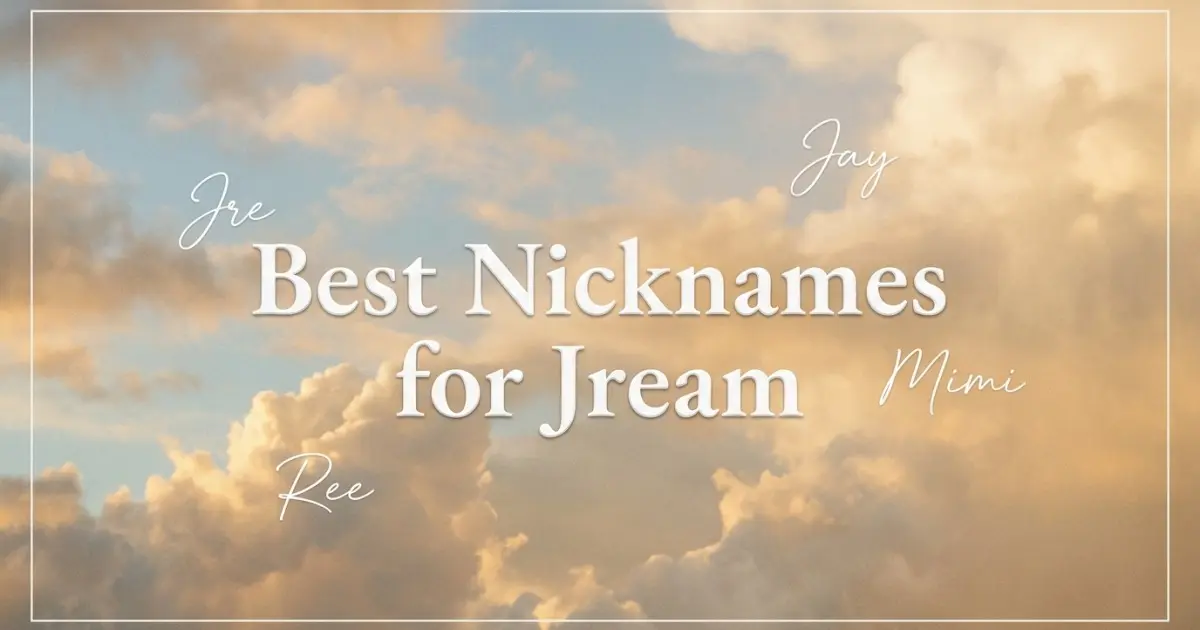
Nicknames are often treated as smaller versions of a name, but in real family life they do something more revealing than that. They mark intimacy. They tell you who is speaking from across a kitchen, who is texting quickly from school, who is using a name with play in it, and who is choosing the form that feels most like selfhood. A nickname is not only a shortcut. It is a social signal. It says how close the speaker is, how casual the moment is, and what emotional version of the person is being called forward.
That makes Jream especially interesting, because Jream is already only one syllable. It does not need reduction for practical reasons. No one is shortening Jream because the full form is cumbersome. That means every nickname around it is doing tonal work instead. It may make the name softer, friendlier, more teasing, more playful, more peer-shaped, or more private. Since Jream also carries the meaning of “dream,” any nickname has to negotiate two things at once: the unusual visual spelling and the aspirational emotional field beneath it. The best ones sound human, not overdesigned. They make the name easier to live with, not stranger. Before judging which short form feels right, it helps to look again at the full identity of the name in Jream meaning.
What Jream’s nickname landscape reveals about the name itself
| Group | Suggested Nicknames | Persona | Use Context |
|---|---|---|---|
| Classic everyday | Dre, Dream, Reem | Direct, easygoing, socially usable | Works best in school, among friends, and in everyday family use |
| Short and modern | Dre, D, J | Minimal, current, peer-shaped | Fits texting culture, team life, and teen social circles |
| Cute and affectionate | Dreamy, Dree-Dree, Reemie | Warm, playful, child-centered | Most natural in early childhood and close family life |
| Soft vowel-led forms | Reem, Reemie | Gentle, intimate, a little more private | Usually grows inside family or very close friendships |
| Balanced style forms | Dre, Dreamy | Flexible, memorable, age-aware | Useful when a family wants one public nickname and one softer house form |
| DIY family-made | Dream-Bug, Dree, Reem-Bear | Personal, affectionate, homegrown | Best when they emerge naturally rather than being formally planned |
Jream is unusual because most of its nickname life happens inside one syllable
Many names generate nicknames by offering several syllables, several stressed zones, or several natural break points. Jream does not work that way. It is one syllable, fully stressed, and phonetically concentrated. That means there are not three broad nickname zones in the ordinary sense. Instead, most nicknames come from one of three smaller moves inside the same compact sound: clipping the opening, softening the end, or expanding the name through affectionate repetition.
Why one-syllable names produce tone shifts more than true shortenings
With Jream, a nickname is rarely a dramatic reduction. It is more often a change in emotional pressure. The full name sounds intentional, focused, and a little visionary. A nickname can make it easier, more social, more ordinary, or more tender. That is why the strongest options around Jream are not the cleverest ones. They are the ones that sound like something people would actually say in motion.
This is also why families should not feel pressured to generate too many alternatives. Jream already behaves almost like a nickname in structure: short, memorable, and high in emotional charge. The supporting nickname system around it works best when it remains small and believable.
Why the sound of Jream pushes people toward just a few natural options
Because the name is pronounced like dream, most plausible nicknames come from what the ear hears rather than what the eye sees. This is important. The spelling is distinctive, but daily speech follows sound first. That is why forms like Dre, Dream, and Reem feel more natural than something that tries too hard to preserve the visual Jr cluster. People usually nickname from the mouth, not the spelling chart.
The result is a nickname field that is compact, but not poor. Jream may not offer dozens of paths, but the ones it does offer can be very usable.
The opening of Jream creates the strongest public nicknames
The most obvious nickname energy in Jream lives at the front of the sound. Even though the name is only one syllable, the beginning carries enough force that clipped forms from the opening feel socially natural. This is why Dre often emerges first in modern nickname logic. It is fast, clean, and familiar enough in English-speaking life to feel immediately wearable. Many short forms only become obvious once the opening sound is clear, which is why Jream pronunciation guide belongs naturally here.

Why Dre is the most plausible everyday nickname for Jream
Dre works because it keeps the strongest social force of the name while trimming away some of the dream-language atmosphere. That can be extremely useful. Jream as a full name sounds aspirational and intentional. Dre sounds casual, mobile, and socially easy. For some children, that will be exactly the balance a family wants: a meaningful full name with a nickname that moves more freely in school halls, sports rosters, or friend groups.
Dre also ages well. It can belong to a little child, but it does not trap the person in obvious babyishness. That makes it especially valuable as a public nickname. It is one of the few forms around Jream that can plausibly serve from childhood through adult life.
Why D and J tend to be peer nicknames, not heart nicknames
Minimal forms like D or J are possible, especially in texting culture or close peer groups. But they tend to function more like shorthand than like emotionally rich nicknames. They are what teammates, classmates, or close friends may use when speed matters. They are less likely to be the name a parent chooses in a soft moment.
That does not make them unimportant. It simply places them in a different category. D and J are social abbreviations. Dre is a fuller nickname.
The center and ending of Jream create softer and more private forms
Because Jream is so compact, the middle and ending do not break off into separate major nickname worlds. But they still shape the softer options. In particular, the long ee sound and the final m allow for a small family of intimate, more affectionate forms built around the second half of the sound.
Why Reem is one of the gentlest believable options
Reem works because it preserves the long vowel and the soft close, which gives it a calmer, more inward feel than Dre. It sounds less public-facing and less socially brisk. That can make it especially attractive inside family life, where a nickname often needs warmth more than swagger.
Reem is also useful because it changes the mood of the name without sounding disconnected from it. It is clearly born from Jream’s actual sound. That matters. A good nickname should feel like a nearby room, not a different building.
Why Dream and Dreamy carry different emotional weights
Dream is interesting because it is both the semantic core of the name and a plausible nickname. In some families it may feel almost interchangeable with Jream, especially if the distinctive spelling is reserved more for paper than speech. Dreamy is more affectionate and more obviously child-centered. It works well in intimate family life because it sounds tender and playful without becoming implausible.
The difference between the two is worth noting. Dream can still function outwardly. Dreamy is usually for the inside circle. That split can be useful if the family wants both a socially smooth nickname and a softer private one.
Jream’s nickname life changes a lot with age and social setting
Because Jream is already so short, age affects the nickname structure more than length does. The name does not demand reduction at any life stage. Instead, the social world around the child slowly decides which version feels most natural.
In early childhood, affectionate expansions often feel most natural
For babies and small children, the most believable nicknames are usually the ones that expand rather than reduce: Dreamy, Dree-Dree, Reemie, Dream-Bug. This is a common pattern with short names. Because there is not much to shorten, families create warmth by adding repetition or tenderness.
These nicknames are not meant to sound formal. Their purpose is to create emotional softness around a name that is otherwise highly focused and conceptually large.
In school years, the cleaner options usually take over
As the child enters school and larger peer life, Dre and sometimes Dream or Reem become the most plausible stable options. They are easy to hear, easy to say, and still clearly connected to the full name. For many children, that is enough. Others may simply remain Jream in public, especially since the full form is already brief.
In adolescence and adulthood, the full Jream may regain center stage
Later, many people may choose to use Jream itself in most formal settings because the full name already carries so much identity. Dre may remain the social nickname. Reem may stay inside family. Dreamy may fade with age. That progression is healthy and common. It means the nickname system has done its job without replacing the first name.
What feels natural for Jream, and what starts to feel overworked
The biggest risk with Jream is trying to force too much nickname complexity onto a name that is already compact and distinctive. Because the full name is unusual, some parents may feel pressure to generate many backup identities around it. Usually that is unnecessary. The best choices are the ones that sound grounded in actual speech: Dre, Dream, Reem, Dreamy, and a few private family-made forms.
It is also wise to avoid nicknames that lean too hard into concept and not enough into personhood. Jream already carries aspiration in its meaning. The nickname should usually move in the opposite direction—toward ease, warmth, or social practicality. That is how the full system stays human.
In the end, Jream’s nickname field works best when it remembers what the full name already is: short, focused, and emotionally charged. The supporting nicknames do not need to make it more imaginative. They only need to make it more lived in.