
Josie Pronunciation: How to Say It with More Confidence

Josie is the kind of name that proves itself in the smallest public moments. A teacher reads it from a first-day attendance sheet. A nurse says it from a waiting-room door. A barista hears it once and writes it down without needing a second try. Those moments matter because some names are only easy in theory. They look familiar on paper, but in live speech they wobble, invite correction, or split into competing versions. Josie usually avoids that. It is recognizable, warm, and phonetic enough that most English speakers can say it cleanly on first encounter.
That ease is part of why the name remains so wearable. Official data shows Josie is still a visible girls’ name in current American use, and its spoken shape helps explain that staying power. The standard pronunciation here is JOH-zee. It is not fussy, not overly regional, and not burdened by extra syllables. Yet there is still enough sound structure inside it to make pronunciation worth clarifying. The first syllable carries the weight, the second syllable keeps the name lively, and the whole thing works because it moves quickly without becoming flat.
How Josie is actually said when people know the name well
Before looking at mistakes, accent notes, or sound neighbors, it helps to see the whole pronunciation pattern in one place. Josie is short, but every part of it helps produce the name’s warmth and clarity.
| Element | Phonetic Detail | Quick Tip |
|---|---|---|
| Everyday pronunciation | JOH-zee | Start with a rounded “Joe” sound, then finish with a light “zee.” |
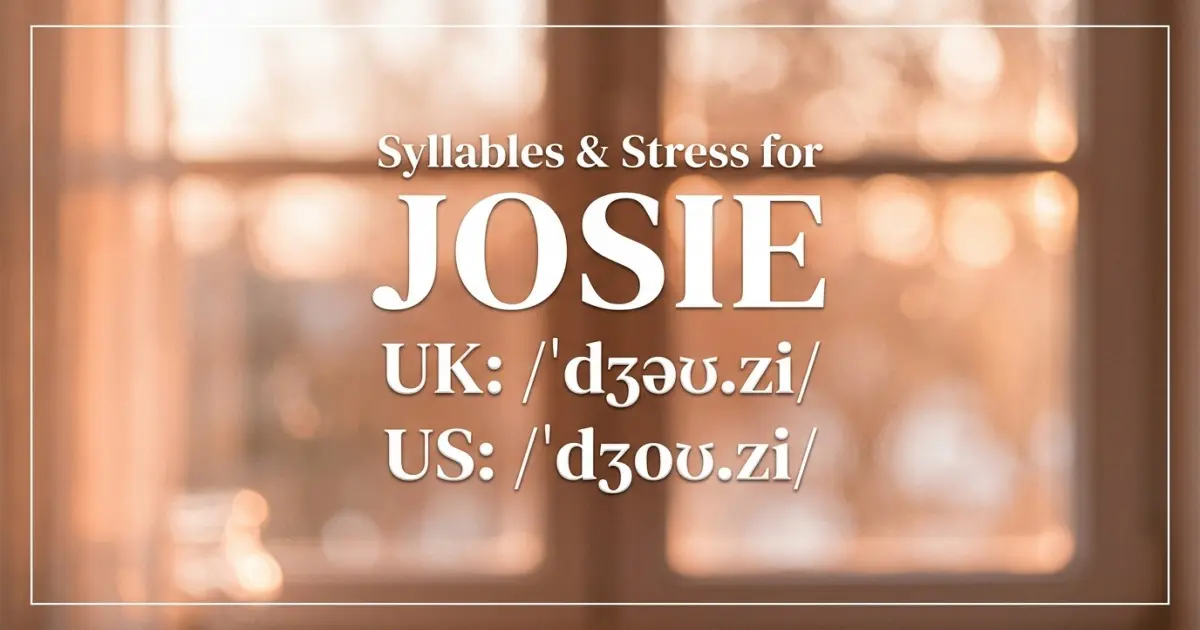
| IPA (US) | /ˈdʒoʊzi/ | The stress mark shows the first syllable carries the emphasis. |
| IPA (UK) | /ˈdʒəʊzi/ | The structure is the same in British English, with only a slight vowel coloring difference. |
| Syllable count | 2 syllables | Think of it as JOH + zee, not as a clipped one-beat name. |
| Stress pattern | First syllable stressed | The opening should feel fuller and stronger than the ending. |
| Ending sound | -zee | Keep the second syllable bright and short rather than dragging it out. |
Why Josie sounds effortless even when you slow it down
Josie feels easy because its sound pattern is familiar to English speakers. It starts with a common opening consonant cluster, moves through a rounded vowel, and finishes with a light voiced consonant plus a long ee sound. Nothing in it is especially difficult, but the balance is what makes it appealing. The name sounds friendly because it opens broadly and ends brightly. Pronunciation lands more fully when the name’s roots and history are already in view, so begin with Josie meaning.
The opening of Josie gives it warmth
The first sound in Josie is /dʒ/, an affricate. That means it begins like a stop and releases into friction, the same basic kind of opening heard in words like joy, joke, and June. This is one reason the name sounds energetic without sounding harsh. The mouth starts with a clear consonant action, so the name has shape immediately.
Then comes the rounded vowel in Jo-. In American English, it is typically /oʊ/; in British English, /əʊ/. For most practical purposes, both are heard as the familiar “Joe” sound. This rounded opening helps Josie feel open and sociable. It does not strike the ear sharply. It welcomes it.
The ending of Josie keeps the name lively
The second syllable, -zie, looks soft, but it is doing important work. The /z/ is a voiced fricative, which means the sound continues with a gentle buzz instead of stopping abruptly. That gives the name movement. It also separates Josie from names that end more heavily or more quietly. The final long ee sound lifts the whole name at the end.
That lift matters. Without it, Josie could sound heavier or more old-fashioned. With it, the name feels bright and approachable. The first syllable grounds the name; the second syllable keeps it smiling.
Josie in American and British mouths is different only in small ways
One practical advantage of Josie is that the US and UK pronunciations are extremely close. The IPA differs only in the vowel notation of the first syllable: /ˈdʒoʊzi/ in the US and /ˈdʒəʊzi/ in the UK. In real life, most speakers will still hear both as essentially JOH-zee.
Accent differences color Josie but do not reshape it
An American speaker may produce a slightly rounder or more forward opening vowel, depending on region. A British speaker may make that same opening sound a touch more centered at the start of the glide. But these are accent textures, not separate identities. Josie remains Josie. The stress stays on the first syllable, and the second syllable remains a light zee.
This is one reason the name travels so well. It does not become a different person when it crosses an ocean or moves between regions. Parents who want a name that stays stable in ordinary English-speaking life are often drawn to exactly this kind of phonetic reliability.
Why Josie avoids major regional confusion
Some names become difficult because they rely on vowels or consonants that shift dramatically between accents. Josie mostly avoids that. There is no unstable final r, no hidden syllable, no ambiguous stress, and no spelling pattern that strongly suggests two rival pronunciations. Once the name is heard, it tends to stay heard correctly.
Where Josie can go wrong in everyday speech
Even easy names can be bent out of shape, especially when people rush or try to over-correct. With Josie, the usual mistakes are not severe, but they are worth noticing because they change the name’s tone.
The most common mistake is flattening the second syllable
Josie should end in -zee, not in a dull -see or an underpowered blur. The voiced z matters. It gives the name its brightness and keeps the ending from sounding sleepy. If the second syllable is too weak, the name can begin to feel less lively than it should.
Another mistake is overemphasizing both syllables equally
Because Josie is short, some speakers make each syllable equally heavy: JOE-ZEE with too much force on the second part. That is not catastrophic, but it can make the name sound more mechanical. The best version gives more weight to the opening and lets the ending ride lightly behind it.
Sound neighbors can also tug the ear in the wrong direction
Josie lives near names and words such as Joey, Josey, and even the first half of Josephine. That can cause small hesitations in reading, especially when someone is moving quickly. But once the intended pronunciation is established, Josie is easy to retain. It is compact, memorable, and phonetically cooperative. Because the strongest energy lands early, the shorter forms often grow from the opening of the name, and that pattern is easier to see in Josie nicknames.
Josie beside its closest sound neighbors
One of the easiest ways to understand Josie’s pronunciation is to hear what it is not. Nearby names can make its sound profile clearer.
Josie versus Joey
These names share the same opening, but the ending changes the emotional effect. Joey ends more openly, with the softer glide into -ee after the vowel. Josie keeps a stronger internal consonant in the second syllable, which gives it more sparkle and a more distinctly feminine feel in current usage.
Josie versus Josephine
Josephine is longer and more formal, but it helps explain why Josie feels so natural. Josie sounds like the bright, familiar part of a bigger classic name, yet it has become independent enough that it no longer requires the longer form to feel complete. Phonetically, it keeps the warmth and drops the ceremonial weight.
Josie versus Rosie
The rhythm is similar, but the opening changes the mood. Rosie begins more softly, using a liquid consonant that makes it gentler from the first beat. Josie begins with the firmer affricate /dʒ/, which gives it a slightly more energetic entrance.
How to practice Josie until it sounds natural
Most people will not need much work to say Josie, but a clear rhythm always helps. The trick is to keep the first syllable fuller and the second syllable bright, not heavy.
Start with the sound frame
Say Joe. Then say zee. Now connect them: JOH-zee. The first part should feel rounded and complete. The second part should feel quick and lively.
Use real speech instead of repeating the name in isolation
Names settle more naturally inside normal sentences. Try these aloud:
Josie is here.
I called Josie this morning.
Josie said she would join us later.
These lines help keep the stress pattern natural. You should hear the opening syllable lead and the ending brighten the name without taking over.
Listen for friendliness, not babyishness
The best pronunciation of Josie sounds warm, not exaggeratedly cute. Let the first syllable do the grounding. Let the second syllable stay light. When said well, Josie sounds exactly like the kind of name it is: open, cheerful, and strong enough to carry itself easily through everyday life.
Stress and Sound FAQ for Josie
How do you pronounce Josie in everyday English?
Josie is usually pronounced JOH-zee, with the stress on the first syllable.
What is the IPA for Josie?
The pronunciation shown here is /ˈdʒoʊzi/ in US English and /ˈdʒəʊzi/ in UK English.
Is Josie pronounced differently in the US and UK?
Only slightly. The opening vowel is colored a little differently by accent, but both versions are effectively heard as JOH-zee.
What is the most common pronunciation mistake with Josie?
The most common issue is flattening the second syllable or weakening the voiced z sound, which can make the ending sound less lively than it should.
Does Josie rhyme with Rosie?
Yes, the rhythm is very similar, though the opening consonant changes the feel of the name. Josie and Rosie both end in the same bright -zee sound.