
How to Pronounce Jocelyn: Stress Pattern, Rhythm, and Common Errors

The real pronunciation test for a name rarely happens in a quiet study. It happens at the pediatrician’s desk, on the first day of school, at graduation roll call, or in that brief half-second when someone looks down at a printed name and must decide how to say it before the room hears the choice. Jocelyn usually passes that test well, but not because it is completely foolproof. It passes because once the pattern is heard, it feels settled. The name has enough familiarity to sound approachable, yet enough variation in spelling and cultural memory that people sometimes pause before committing to the right rhythm.
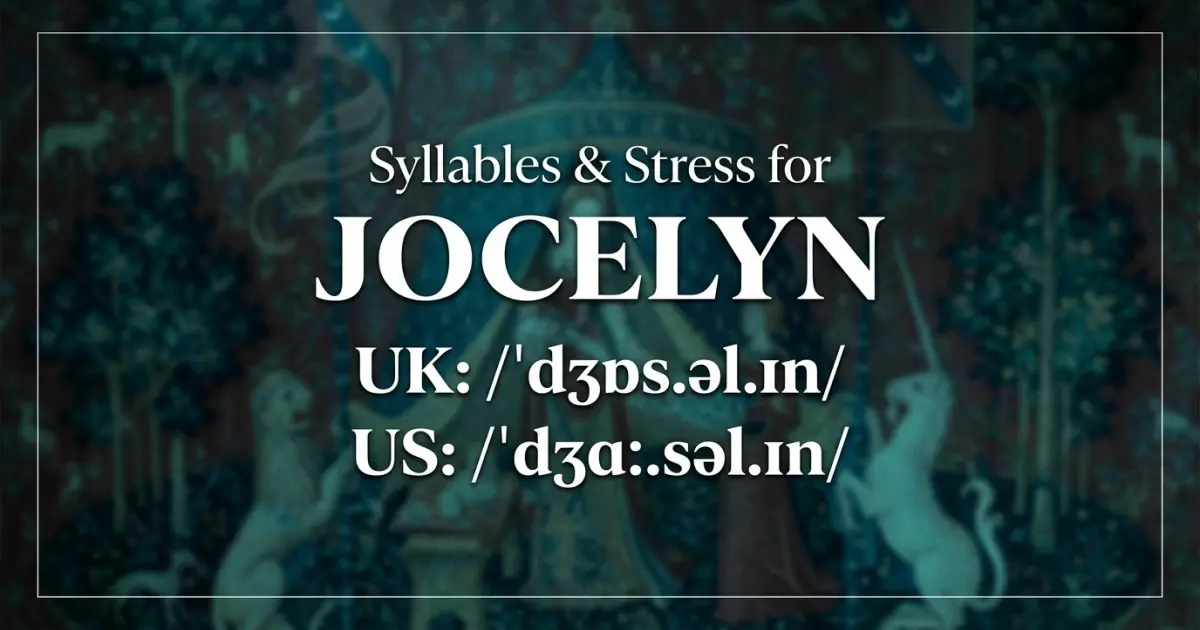
That is exactly what makes pronunciation worth discussing here. Official data shows Jocelyn remains established in American use, and part of its durability comes from the fact that it sounds graceful without being fragile. The standard spoken form is JOSS-lin: two syllables, clear stress on the first, and a light second syllable that closes the name without fuss. It is not stretched into three beats, and it does not need ornamental emphasis to sound elegant. Jocelyn works because the pronunciation is simpler than the visual refinement of the name might suggest.
How Jocelyn is actually said when people say it naturally
| Element | Phonetic Detail | Quick Tip |
|---|---|---|
| Everyday pronunciation | JOSS-lin | Say the first syllable firmly, then let the second one stay quick and light. |
| U.S. IPA | /ˈdʒɒslɪn/ | The name begins with the j sound in “job” and not with a softer “zh” sound. |
| U.K. IPA | /ˈdʒɒslɪn/ | Standard British guidance matches the American target closely, which helps keep the name stable across accents. |
| Syllable count | 2 syllables | Think of the name as JOSS | lin, not as a longer “JOS-uh-lyn.” |
| Stress pattern | Primary stress on the first syllable | If the second syllable gets too much emphasis, the name loses its natural English rhythm. |
| Ending quality | Short, reduced -lin | The last syllable should be neat and understated, not drawn out like “leen.” |
| Most common confusion | Adding an extra syllable or over-softening the center | Keep the structure compact and avoid turning the name into something longer than it is. |
Why Jocelyn works best when the first syllable carries the name
Jocelyn is a name whose center of gravity sits unmistakably at the front. The first syllable, JOSS, does most of the identity work. It gives the name its firmness, its recognizability, and much of its elegance. Without that clear first beat, the name starts to drift into vagueness. With it, the whole form feels composed. Pronunciation lands more fully when the name’s roots and history are already in view, so begin with Jocelyn meaning.
Why the opening consonant matters
The name begins with /dʒ/, an affricate sound. In practical terms, that means it starts with the same kind of j sound heard in “jump” or “job.” This matters because it gives the name a crisp, socially familiar opening. Jocelyn does not start in a whisper. It starts in a clear signal. That helps the name sound polished rather than overly delicate.
Why “JOSS” should stay full and grounded
The opening vowel and consonant pattern should stay compact. The strongest reading is JOSS, not something stretched into “joe” or softened into a longer, more ornamental first beat. That fuller sound keeps the name from becoming flimsy. It is one reason Jocelyn retains so much dignity even though it is approachable and easy to use. The first syllable gives the name structure.
That structure also supports the name’s versatility. A child can wear Jocelyn without it sounding too heavy, and an adult can wear it without it sounding too slight. The firmness of the opening is what makes that possible.
How Jocelyn stays elegant by keeping the second syllable light
If the first syllable gives Jocelyn its weight, the second gives it its social ease. The ending -lin should be lighter, shorter, and less stressed. This is typical of natural English rhythm, where many unstressed final syllables reduce slightly in ordinary speech. Jocelyn sounds best when it follows that instinct rather than resisting it.
Do not turn Jocelyn into three syllables
One of the most common pronunciation mistakes is to over-handle the middle and create an extra beat, something closer to “JOS-uh-lyn.” That may happen because the spelling looks more elaborate than the spoken form really is. But the cleanest pronunciation keeps the name to two syllables. Once a third beat enters, the name starts sounding heavier and less natural in modern English use.
Do not over-brighten the ending
Another avoidable mistake is to pull the final syllable too far toward “leen.” That changes the texture of the name and gives it a different shape than the intended one. Jocelyn’s ending is shorter and quieter: -lin, not -leen. The difference may seem small, but it is one of the things that keeps the name refined rather than sing-song.
In other words, Jocelyn stays elegant by resisting exaggeration. The first syllable is clear. The second syllable is restrained. That proportion is the whole music of the name.
Jocelyn across accents stays remarkably stable
One reassuring thing about Jocelyn is that the standard American and British IPA given here are the same: /ˈdʒɒslɪn/. That does not mean every speaker will sound identical, but it does mean the core pronunciation remains highly consistent across major English-speaking contexts. Parents who care about portability often underestimate how valuable that is.
What remains constant in different English settings
The opening JOSS remains constant. The first-syllable stress remains constant. The reduced final -lin remains constant. These are the features that define the name, and they travel well. A teacher in the United States and a relative in Britain are both likely to recognize the same shape, even if their accent colors the details differently.
What may vary slightly in everyday speech
In fast conversation, some speakers may let the final vowel relax more than others. Some may keep the final consonants slightly sharper. But these are only texture shifts. The name does not usually wobble into a different identity. That is one reason Jocelyn has remained such a workable name over time. It may look refined, but it behaves predictably.
This stability is especially useful because the name has lived through several spelling variants in broader naming history. The sound, however, has a way of staying centered. That gives the standard form more confidence in real life.
Where people are most likely to get Jocelyn wrong
Most pronunciation errors with Jocelyn come from overthinking, not from genuine difficulty. Because the spelling looks graceful and somewhat elaborate, readers sometimes assume the spoken form must be more extended than it really is. In fact, the name sounds better when handled with less ceremony.
The extra-syllable mistake
The most common issue is inserting an extra vowel sound and creating a three-syllable version. That usually happens when someone reads slowly from the page and tries to pronounce every visual segment separately. In natural speech, Jocelyn is more compact than that. It should move cleanly from JOSS to lin.
The wrong ending mistake
A smaller but still common mistake is shifting the ending too far toward -leen or making it overly bright. That gives the name a different feel and softens its crisp structure too much. The intended ending is shorter, plainer, and more balanced.
Sound neighbors worth noticing
Jocelyn sits near a large family of related or visually similar names and spellings, which can encourage small pronunciation guesses. But the standard spoken form here remains straightforward. Once heard once, it is usually easy to remember because the rhythm is so natural. The way the name resolves at the end often decides which short forms feel natural in speech, and that becomes clearer in Jocelyn nicknames.
Jocelyn sounds best when you test it in real sentences
Names do not live as dictionary entries. They live in direct address, in introductions, in warm conversation, and in formal announcements. Jocelyn is especially worth testing in sentences because the page can make it look more elaborate than the mouth actually makes it sound.
Practice lines that let Jocelyn settle naturally
Try saying these aloud:
“Jocelyn, it’s your turn.”
“This is Jocelyn Carter.”
“We’re so happy to meet Jocelyn.”
“Jocelyn Elise Parker.”
These lines matter because they place the name in the places where it will actually live: a call across the room, an introduction, a warm sentence, and a formal full-name context. If Jocelyn feels easy in all four, then you are hearing the name as it really works — compact, polished, and more practical than its elegant spelling first suggests.