
Janiyah Name Meaning: Roots, Mood, and Timeless Appeal
Some names feel inherited in the obvious way. They arrive already dressed in centuries of church stone, family Bibles, and fixed spellings. Others do something more distinctly American: they take an old sacred idea and let it move through a newer rhythm. Janiyah belongs to that second tradition. Its supplied meaning, “God is gracious,” carries one of the most enduring religious affirmations in naming history, but the sound of the name is unmistakably modern. That tension is what makes it compelling. Janiyah does not preserve grace as a relic. It makes grace audible in a contemporary voice.
That matters because modern names are often misread as if freshness and depth cannot coexist. Janiyah quietly argues the opposite. It is melodically current, socially legible, and shaped by the creative energy of American naming, yet the meaning beneath it is ancient in the oldest possible sense: it speaks of divine favor, mercy, and unearned goodness. In that way, Janiyah is not simply fashionable or simply spiritual. It is a name about transmission. It shows how a culture keeps carrying sacred language forward, not by freezing it, but by giving it new sound, new breath, and a new generation to live in.
Janiyah's U.S. popularity rank over time, 1995–2024
Popularity statistics are based on official data from the Social Security Administration baby name records.
Janiyah: A Rhythmic and Soulful Modern Pillar
Janiyah reads as a name with one unmistakable center of gravity, where the girls’ side of the chart provides nearly all of its public visibility. Reaching its height in 2009, it continues to behave as a reliable choice parents trust for its melodic sound and energetic charm.
The trace presence in other tracks behaves more like niche experimentation than a broad identity shift. Signifying “God is gracious,” its rhythmic three-syllable sound remains both polished and widely trusted across style cycles.
What Janiyah tells you before the story even begins
| Key Facts | Information | Quick Insight |
|---|---|---|
| Name | Janiyah | The name reads modern and melodic, but its meaning places it inside one of the oldest grace-centered naming traditions. |
| Primary gender usage | Female | Its rhythm and ending make it distinctly feminine in a contemporary American soundscape without feeling fragile. |
| Primary origin | American | The American origin matters because it frames the name as creative cultural development rather than mere borrowing. |
| Primary meaning | God is gracious | This is one of the most durable and emotionally resonant religious name meanings because it joins blessing with humility. |
| Pronunciation | juh-NY-uh | The spoken form has forward motion and a modern cadence, which helps the meaning feel alive rather than antiquarian. |
| Syllable count | 3 | Three syllables give Janiyah enough musical shape to sound graceful without becoming elaborate. |
| U.S. girls’ rank (2024) | No. 887 | Official data shows Janiyah is present in national use while still uncommon enough to feel personally chosen. |

Janiyah turns grace from theology into daily language
The meaning “God is gracious” has lasted across centuries because it captures one of the most profound ideas parents return to when naming a child: that life itself is gift before it is achievement. Grace is not a reward word. It does not mean earned success, social power, or strategic advantage. It points instead toward generosity that arrives before merit, love that exceeds calculation, and blessing that cannot be reduced to transaction. When a name carries that idea, it immediately acquires emotional depth.
In Janiyah, that depth takes on a new social texture. The name does not sound solemn or weighty in the way some old devotional names do. It sounds bright, mobile, and current. That makes the meaning more striking, not less. The child does not carry a name that feels like a sermon. She carries a name that moves easily through ordinary life while still holding one of the most serious theological statements available to naming culture. That combination is a large part of the name’s appeal.
Why “gracious” is stronger than it first appears
In modern speech, gracious can sometimes sound like surface politeness or elegant manners. In a name meaning, it reaches further. It suggests mercy, generosity, favor, and an orientation toward others that is larger than etiquette. Research and naming traditions repeatedly show that grace-based names persist because they can hold both spiritual and social readings at once. A gracious person is compassionate, but not weak. She is dignified, but not hard. She understands that strength and generosity are not opposites.
This gives Janiyah unusual balance. It is a modern American name, but its meaning does not trap it in trendiness. The idea of divine grace is too old and too durable for that. Even if the fashion cycle moves, the meaning remains. That is what gives the name substance.
Why “God is gracious” still feels current now
There is also a cultural reason grace names continue to matter. Many parents want names that sound uplifting without sounding hollow. “God is gracious” offers uplift with a foundation. It does not promise perfection. It does not announce conquest. It names a relationship between human life and divine generosity. In a noisy age, that can feel refreshingly humble. Janiyah therefore offers more than style. It offers orientation.

Janiyah belongs to an American tradition of creative reverence
The supplied origin identifies Janiyah as American, and that fact should not be treated as a placeholder or a lack of pedigree. American naming has its own real traditions, especially in the creation and reshaping of names that preserve older meanings while adapting sound, cadence, and visual identity to newer cultural tastes. Name books documenting American usage repeatedly show this pattern: inherited religious or historical meanings living inside newly configured forms, blended sounds, or fresh rhythmic endings. Janiyah fits naturally into that landscape.
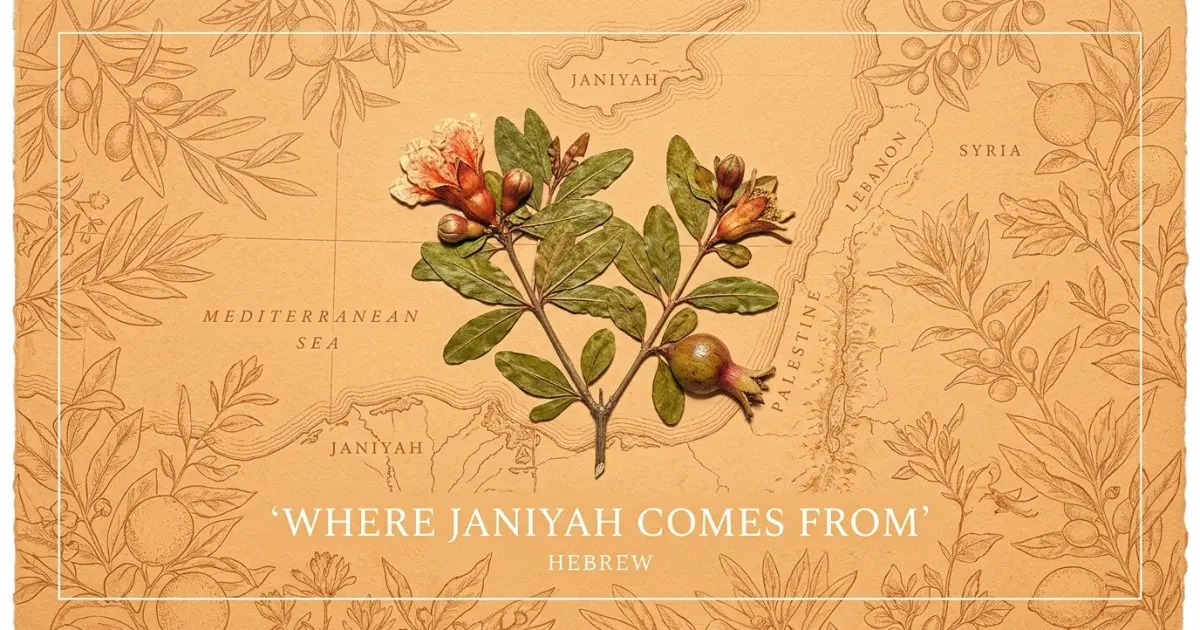
This is one of the most important ways to read the name correctly. Janiyah is not interesting despite being American; it is interesting because American naming has long been a site of invention. That invention is not random. It often shows deep continuity beneath surface change. A name may sound fresh, but the meaning underneath it may belong to a much older stream. That is exactly what happens here.
How American naming makes old meanings sound new
Modern American naming has been unusually open to melodic reshaping, especially in female names. Three-syllable names, vowel-rich movement, and expressive endings have all become part of the national naming soundscape. At the same time, many families still want names that carry blessing, faith, gratitude, or divine connection. The result is a pattern in which sacred meanings continue to travel, but in forms that sound unmistakably contemporary. Janiyah stands inside that pattern beautifully. If this is the kind of name you are drawn to, you can explore more in baby names for girls.
This is why the name can feel both culturally rooted and socially modern. It does not need an ancient spelling to possess ancient meaning. It carries continuity through interpretation rather than preservation alone. That is a profoundly American naming move.
Why that creative origin gives Janiyah dignity, not fragility
There is sometimes an unfair assumption that names with modern American formation are less durable than traditionally fixed names. But durability comes from more than age. It comes from coherence. Janiyah has coherence. The sound is graceful, the meaning is spiritually resonant, and the rank shows it has entered public use without being overexposed. Those are strong signs. A name does not have to be medieval to be lasting. It has to know what it is doing. Janiyah does. To compare Janiyah with other names from this origin, browse names linked to American history.
What the sound of Janiyah says before the meaning is explained
Phonetically, Janiyah sounds like movement. The first syllable is light and introductory. The second takes the stress and gives the name its emotional lift. The final syllable softens the landing. That pattern matters because people form impressions from sound before they consciously process meaning. Janiyah sounds contemporary, fluid, and open. The meaning then deepens what the ear has already welcomed.
The name’s three-syllable structure is an advantage. It gives enough space for the name to feel composed and expressive, but not so much that it becomes ornate. That middle balance is one reason Janiyah is socially workable. Short names can sometimes sound too abrupt for a meaning as spiritually weighty as “God is gracious.” Longer names can sound ceremonious in ways that overshadow ordinary life. Janiyah sits between those extremes.
The stressed middle also contributes to the name’s memorability. Stress is often what allows a name to hold its shape in the mind. In Janiyah, the lift in the center provides momentum. The name does not lie flat on the tongue. It rises. That rise supports the grace theme more than one might expect. The sound feels lifted without feeling theatrical.
There is another advantage here. Janiyah belongs to a broad modern American pattern of names that are rich in vowels and easy in motion, which helps it sound familiar even to people who have not met many bearers of the name. That kind of familiarity matters. It means the name can feel distinctive without seeming socially difficult. The best modern names often succeed by sounding like they belong immediately, even when they are not widely repeated. Janiyah achieves exactly that balance.
Janiyah at No. 887: visible enough to be known, rare enough to feel personal
Official Social Security Administration (SSA) data places Janiyah at No. 887 for girls in 2024, and that is an unusually attractive position for a name like this. It means the name is not obscure. It has entered the shared American naming conversation. People are using it, hearing it, and recognizing it. At the same time, it remains far from saturation. That gives the child individuality without forcing her to carry an experimental or socially puzzling choice.
Popularity rank is not merely about fashion; it predicts experience. A top-ten name often lives with duplication. A name in the high hundreds lives with selective recognition. Janiyah’s current standing suggests it will usually feel familiar in form but distinctive in actual encounter. For many parents, that is the ideal zone. The name sounds of its time, but it is not owned by the time.
Why this level of rarity suits Janiyah especially well
Names with explicitly spiritual meanings can sometimes feel more effective when they are not overused. A little rarity helps preserve seriousness. If a grace-centered name becomes too common, listeners may begin hearing only the sound and forgetting the idea. Janiyah’s current visibility avoids that. The name remains uncommon enough that the meaning can still feel like part of the choice rather than accidental background.
Why familiarity still matters
At the same time, Janiyah is not so rare that it seems detached from everyday life. That matters because grace is an everyday concept as much as a theological one. The name should be able to move through school, work, introductions, friendships, and family speech without feeling overconstructed. Its ranking suggests that it can. Janiyah sounds chosen, not isolated.
Janiyah in the wider grace-name tradition
Major naming references have long documented large families of names connected to the idea that God is gracious. That theme has traveled across cultures, languages, and sound systems for centuries because it is one of the most emotionally durable religious meanings in naming. Janiyah belongs to that enduring grace tradition, but it speaks it in a distinctly modern American register.
That matters because a name’s larger family often shapes how people receive it, even if they do not consciously know the genealogy. Grace-based names tend to feel warm, blessed, and spiritually intentional. They often carry less hardness than names built around conquest or rank. In Janiyah, that warm inheritance meets a sound pattern associated with confidence and movement. The result is a name that feels socially current while still anchored to a very old religious vocabulary.
It also gives the name a useful double register. In secular contexts, Janiyah can simply sound elegant and expressive. In faith-centered contexts, the meaning may become more explicit and more cherished. That flexibility is important. The best spiritually meaningful names often do not require constant explanation to function well. They can live comfortably in several worlds at once.

Three paths Janiyah opens next
Middle names after Janiyah can either add classic steadiness or continue the melodic flow
Because Janiyah already has a smooth three-syllable rhythm, the middle-name choice becomes a question of balance. A crisp middle can give the full name more structure, while a lyrical middle can deepen its musicality. If you want the full pairing logic behind that contrast, see middle names for Janiyah.
Nicknames from Janiyah are likely to come from its soft opening and lifted center
The name is already socially warm, so any nickname system would need to stay believable rather than forcing too many reductions. That makes the nickname life of Janiyah more intimate than drastic. To see how those different moods shorten in real life, explore nicknames for Janiyah.
Pronouncing Janiyah is part of its appeal because the stress pattern gives the name forward motion
A pronunciation page would show how the light first beat, lifted center, and soft ending work together to make Janiyah sound contemporary and graceful at the same time. For the detailed stress pattern, accent notes, and IPA, see how to pronounce Janiyah.
Why Janiyah keeps grace in motion
The deepest strength of Janiyah is that it refuses a false choice. It does not make parents choose between spiritual meaning and modern sound, between reverence and originality, between cultural presentness and moral depth. It carries all of those at once. That is why the name feels more substantial the longer one sits with it. Beneath the fluidity of the syllables is one of the oldest naming ideas still alive: that grace comes first.
And yet Janiyah does not sound ancient in the museum sense. It sounds alive. It sounds like a culture still making language, still reshaping blessing into speech that children can inhabit now. That may be its most beautiful quality. The name does not simply repeat a sacred idea; it renews it. It shows how grace survives not by staying frozen, but by finding new rhythm, new form, and a new voice.
In the end, Janiyah offers a child something larger than elegance. It offers a worldview condensed into sound. It says that favor is gift, that beauty can carry belief, and that modern American naming can hold memory without surrendering invention. That is why Janiyah lingers. It is not merely graceful. It is grace, set in motion.