
How to Pronounce Ivan: Clear Pronunciation Help for Everyday Use
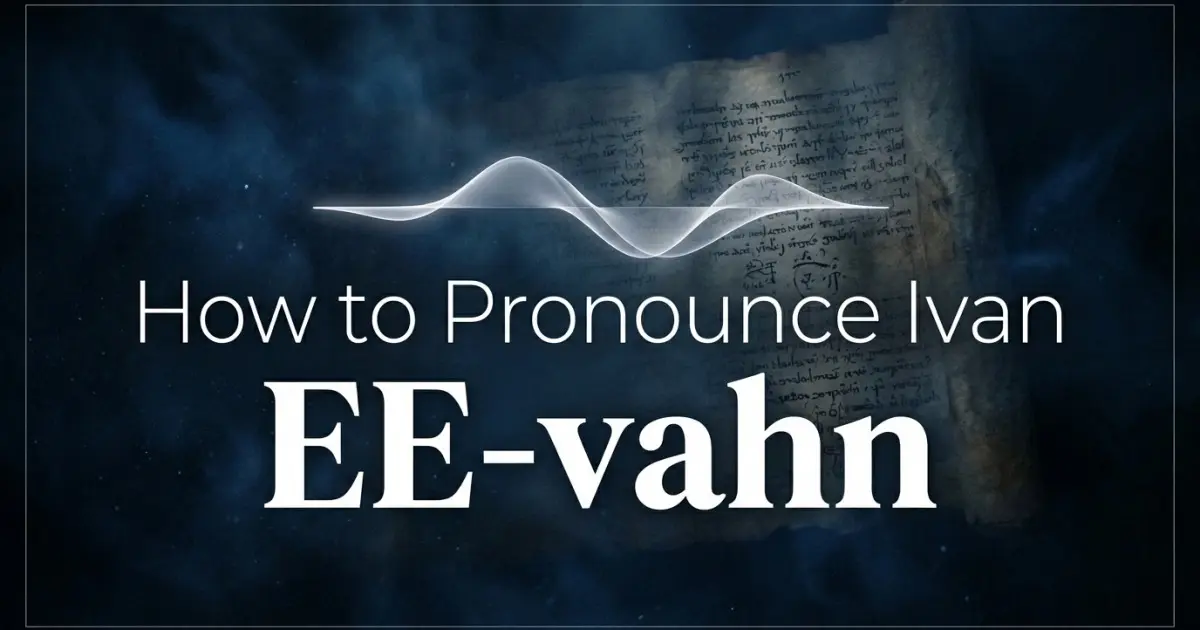
The first place pronunciation matters is rarely a dictionary. It is a voice in a room. A substitute teacher reading a roster, a barista repeating an order, a doctor calling a name in a waiting room, a grandparent meeting a newborn for the first time: these are the moments when a name either moves easily into speech or catches for a second on uncertainty. Ivan is interesting because it looks like a name that might divide people, especially those who know it from Russian history or literature, yet in current English-language use it often settles quickly once the intended sound is heard. The name has cultural depth, but the everyday pronunciation is compact and highly teachable.
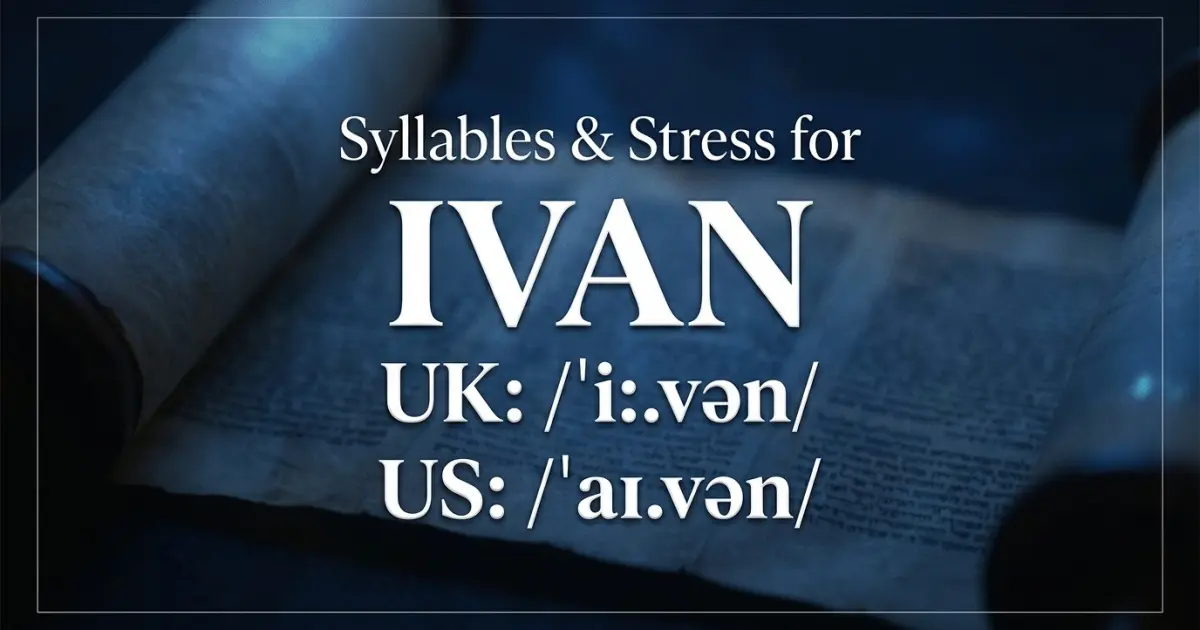
For this profile, Ivan is pronounced EYE-vun. In both American and British IPA, that appears as /ˈaɪvən/. The stress falls clearly on the first syllable, and the second syllable relaxes into a lighter ending. That pattern is part of the name’s appeal. Ivan sounds strong without sounding heavy, and simple without sounding flat. The meaning behind the name may be spiritual and expansive, but the spoken form is concise, memorable, and clean. In practical terms, that makes Ivan one of those names that can carry history while still functioning smoothly in modern English speech.
How Ivan is actually said when people say it naturally
Before getting into common mistakes or accent differences, it helps to lay out the pronunciation in a simple way. Ivan is not complicated, but it does have a clear stress pattern and a natural English rhythm that make it sound best when the speaker does not overwork it.
| Element | Phonetic Detail | Quick Tip |
|---|---|---|
| Everyday pronunciation | EYE-vun | Start strongly on EYE and let the second syllable soften. |
| IPA (U.S.) | /ˈaɪvən/ | The stress mark shows that the first syllable carries the name. |
| IPA (U.K.) | /ˈaɪvən/ | British and American transcription align here, so the name stays consistent across accents. |
| Syllable count | 2 syllables | Think one bright beat followed by one softer beat. |
| Stress pattern | First-syllable stress | Do not split the emphasis evenly across both syllables. |
| Opening sound | Long eye vowel /aɪ/ | The name begins exactly like the word eye. |
| Middle consonant | /v/ fricative | Keep the v voiced and smooth; it links the two syllables. |
| Ending | Unstressed -vən | The second vowel reduces, so it sounds closer to vun than a fully stressed van. |
| Closest sound cue | “eye” + “vun” | If the first half is clear and the second half is lighter, you are already very close. |
Ivan works because the first syllable carries almost everything
Ivan is a good example of how a short name can still have internal shape. The first syllable, EYE, does most of the work. It opens the name with a broad diphthong, the sound written in IPA as /aɪ/. That opening gives Ivan brightness and immediate identity. Then the name narrows through the /v/, a fricative consonant made by letting air pass through a small gap rather than stopping it entirely. That v is important. It gives the name texture and prevents the two syllables from feeling disconnected. Pronunciation lands more fully when the name’s roots and history are already in view, so begin with Ivan meaning.
After that, the second syllable settles quickly into -vun. This final part is unstressed, which means the vowel reduces. In natural English speech, unstressed vowels often relax toward a softer, shorter sound, and that is exactly what happens here. The result is a name that begins with brightness and ends with ease. That balance is part of why Ivan sounds firm but not rigid.
Why the stress pattern matters in Ivan
Names this short can sound oddly stiff if both syllables are given equal emphasis. Ivan sounds most natural when the stress lands clearly on the first syllable: EYE-vun. That is the rhythm most English speakers will hear as idiomatic. If the second syllable is pushed too hard, the name begins to sound overpronounced rather than natural.
Why the ending should stay lighter than the spelling suggests
The written a in Ivan can tempt some speakers to give the final syllable too much shape, almost as if they are saying a full, broad van. But in this pronunciation pattern the second vowel is lighter and more reduced. The final syllable should be heard clearly, just not stressed heavily.
Where Ivan can go wrong when speakers rely on assumptions
Ivan is one of those names that can be misdirected by cultural memory. Some people know it from Russian history, some from literary references, and others from modern English-language use. Because of that, the most common pronunciation mistakes do not usually come from the spelling itself. They come from assumption.
Mistake patterns built from over-reading the final syllable
The most common issue is giving the second syllable too much force and turning the name into something closer to EYE-VAN with equal or near-equal stress. That does not make the name unrecognizable, but it changes the feel of it. The intended English-language pattern here is more relaxed: EYE-vun, with the ending clearly present but subordinate.
A second issue is over-rounding the final vowel so that the name sounds more formal or foreign than intended in this pronunciation profile. The easiest fix is simply to keep the ending light and let the first syllable lead.
When Ivan is mistaken for a different cultural pronunciation
Because Ivan is widely associated with Russia and other Slavic naming traditions, some speakers may expect a pronunciation closer to ee-VAHN or another non-English stress pattern. Those versions belong to other linguistic settings, but for this profile the target form is clearly EYE-vun. This is a good reminder that names with international histories can carry more than one pronunciation tradition, even when one specific form is preferred in a given context.
Ivan across accents stays steadier than many parents expect
Some names change dramatically when they cross from American to British English. Ivan does not do that here. The IPA remains the same in both varieties, which means the name keeps a stable backbone in English-speaking use. The real differences are subtle and mostly involve how reduced the second syllable becomes and how sharply the final n resolves in connected speech.
Accent notes that do not change the identity of Ivan
Some speakers may produce a slightly clearer final vowel, while others reduce it more strongly. Some may give the opening diphthong a broader or narrower color. These are ordinary accent differences, not changes in the identity of the name. Ivan remains recognizably Ivan as long as the first syllable stays stressed and the overall two-beat rhythm remains intact.
Why Ivan travels well in English-speaking settings
The name works because its structure is efficient. The first syllable is memorable, the consonants are familiar, and the whole name can be repeated after hearing it once. That is one of the quiet advantages of Ivan. It may feel culturally rich or historically heavy, but in everyday pronunciation it is remarkably manageable.
Ivan beside its sound neighbors helps the ear hear it properly
Sometimes the clearest way to understand a pronunciation is by comparison. Ivan begins with the same opening vowel heard in names like Ira or the first syllable of Isaiah, but it closes more tightly. It sits near Evan visually, yet it sounds noticeably different because of the opening diphthong and the stronger first-syllable identity. It can also be compared loosely to names like Ivor in the sense that both begin with a bright stressed I sound, but Ivan resolves more quickly and more softly. Because the strongest energy lands early, the shorter forms often grow from the opening of the name, and that pattern is easier to see in Ivan nicknames.
These comparisons matter because they show why Ivan is memorable. It uses familiar English sounds, but not in a way that feels generic. The name is short enough to be easy and distinct enough to stay in the ear.
How to practice Ivan until it feels natural
Practice help that uses the real rhythm of the name
Start by saying the first syllable alone: EYE. Then add the second syllable softly: vun. Finally say the full name at normal conversational speed: Ivan. The goal is not to say the name as if you are sounding it out from a spelling list. The goal is to make it feel like a real call name in everyday speech.
A useful trick is to remember that the name should open fully and finish lightly. If the ending begins to dominate, the rhythm will sound off. If the opening is clear and confident, the rest usually falls into place.
Practice lines that sound like real life
“Ivan, you’re next.”
“Have you met Ivan yet?”
“Ivan left his book here.”
“This one belongs to Ivan.”
These practice lines matter because names can feel easy in isolation but change shape inside a sentence. Ivan generally performs well in connected speech because it is short and rhythmically straightforward. Once the first syllable is established, the name tends to hold itself.
Why Ivan sounds strong without sounding heavy
The larger pronunciation story of Ivan is one of contrast and control. The opening diphthong gives the name lift. The fricative v adds texture. The unstressed ending keeps the overall shape from becoming too rigid. That is why Ivan sounds serious, but not clumsy; historical, but not cumbersome; direct, but not blunt.
For parents, that is a practical gift. Ivan may look culturally weighty, but it does not ask much of the speaker. Say the first syllable like eye, keep the second lighter, and let the whole name move as one compact unit. Once that rhythm is in place, Ivan sounds exactly as it should: clear, memorable, and quietly forceful.
Common Questions About Pronunciation Tips for Ivan
Is Ivan pronounced the same in American and British English?
In this profile, yes. Both are given as /ˈaɪvən/, so the main differences are only slight accent coloring rather than a change in the actual name pattern.
Which syllable is stressed in Ivan?
The first syllable is stressed, so the name should sound like EYE-vun, not like two equally weighted parts.
What is the most common pronunciation mistake with Ivan?
The most common issue is giving the final syllable too much weight and turning the name into something closer to EYE-VAN. The intended rhythm keeps the second syllable lighter.
Is Ivan hard for teachers and relatives to say?
Usually no. Once the intended form is known, Ivan is short, memorable, and easy to repeat, which makes it highly workable in everyday English-speaking settings.