
Iris Pronunciation: The Most Common Ways to Mispronounce It
The pronunciation of Iris tends to matter in exactly the sort of ordinary moment that makes a name suddenly feel public: a teacher reading from a class list on the first day, a receptionist calling into a waiting room, a grandparent seeing the name written neatly on a birthday card, or a new friend hesitating for half a second before saying it aloud. Iris looks familiar, but that familiarity can be misleading. People recognize the word, yet they still sometimes rush it, flatten it, or overthink it because the spelling is so compact and the name carries literary and floral associations at once.
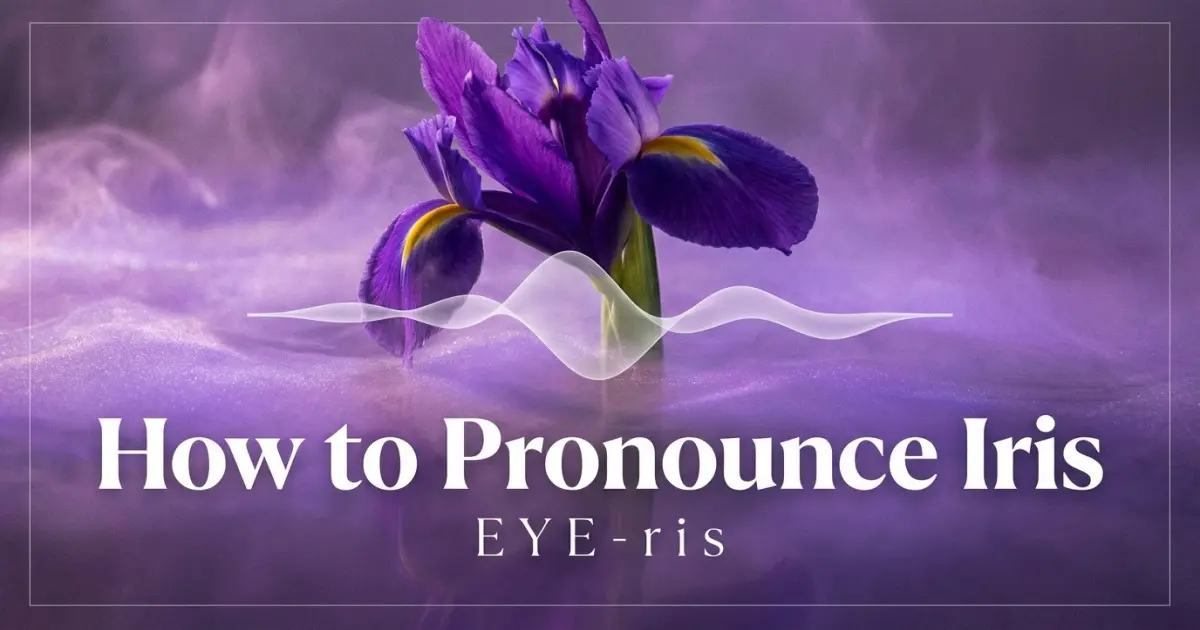
In the pronunciation used here, Iris is EYE-ris. The first syllable carries the stress, and it should sound exactly like the word eye. The second syllable is shorter, lighter, and more relaxed. That balance is what gives the name its poise. Iris should not sound overperformed, and it should not sound clipped into something harsher than it is. When said naturally, it feels bright, clean, and quietly elegant, which is one reason the name works so well across childhood and adulthood.
What Iris is actually telling the ear when it is spoken right
| Element | Phonetic Detail | Quick Tip |
|---|---|---|
| Everyday Pronunciation | EYE-ris | Begin with the word eye, then finish quickly and lightly with ris. |
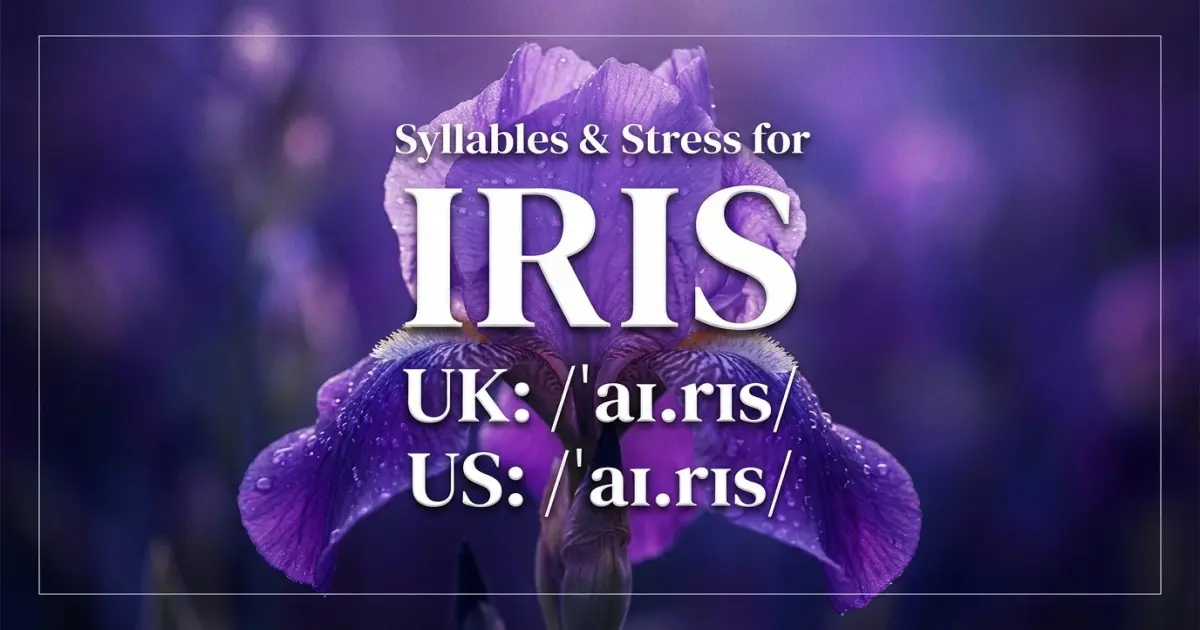
| IPA (US) | /ˈaɪrɪs/ | The first syllable uses the diphthong heard in words like my and light. |
| IPA (UK) | /ˈaɪrɪs/ | The overall rhythm stays essentially the same in British English here as well. |
| Syllable Count | 2 syllables | Think of the name as EYE + ris, not as one rushed sound. |
| Primary Stress | First syllable | Let the first beat carry the identity of the name. The second should not compete with it. |
| Ending Quality | Short, light -ris | Keep the ending neat and audible. Do not drag it out or blur it into a softer ending than intended. |
Iris begins with a clear rise, and that rise does most of the work
The most important part of Iris is the first syllable. EYE is where the listener recognizes the name immediately, which is why the stress belongs there. In phonetic terms, the opening sound is /aɪ/, a diphthong. A diphthong is simply a vowel that glides from one sound position to another. In practical terms, that means Iris does not begin flatly. It begins with movement. That movement is one of the reasons the name feels bright and alive. Pronunciation lands more fully when the name’s roots and history are already in view, so begin with Iris meaning.
This matters because short names depend heavily on their opening. Iris only has two syllables, so the first one has to establish the whole identity at once. If it is right, the name sounds effortless. If it is wrong, the whole name shifts. That is why the first syllable should sound like the word eye, not like a shorter clipped vowel and not like a broader sound that makes the name feel heavier than it is.
Why Iris should start like “eye,” not “ih”
The most common misstep is reducing the first syllable too much. But Iris is not IH-ris. The first syllable should open fully. A useful rule is simple: if the beginning sounds like the body part eye, you are already very close to the intended pronunciation.
How the opening consonant shapes the name
The name begins with a vowel rather than a strong consonant, which gives Iris a very open entrance. That openness is part of its elegance, but it also means the following r sound matters. The r acts like a bridge between the open first syllable and the shorter second one. In speech, that keeps the name from sounding abrupt. It helps Iris feel fluid instead of chopped into pieces.
Iris stays graceful because the second syllable lands quickly and lightly
If the first syllable gives Iris its brightness, the second gives it balance. The ending -ris should be light and contained. It is not meant to swell into a dramatic finish, and it is not supposed to disappear. The best spoken Iris has a clear first beat and a neat second one. That is what keeps the name from sounding either too sharp or too ornamental.
Phonetically, the second vowel is /ɪ/, the short vowel heard in words like sit, list, and wind. That short vowel matters because it stops the ending from becoming too soft or stretched. The name closes efficiently. That efficiency is part of what makes Iris feel intelligent and clean in the mouth.
Iris is not “EYE-reese”
One small but noticeable mistake is turning the second syllable into something longer, like reese. That changes the whole rhythm of the name. In the pronunciation used here, the final vowel stays short. Iris should sound compact, not extended.
Iris is also not “EYE-ruz”
Another drift is softening the final consonants too much until the ending feels muddier than it should. But Iris ends clearly on -ris, with the final s still audible. That final fricative, a sound made by controlled airflow, gives the name its clean edge. It should not be overemphasized, but it should be there.
How Iris behaves across accents, sound neighbors, and common confusions
One quiet advantage of Iris is that the U.S. and U.K. IPA forms given here are identical: /ˈaɪrɪs/. That means the overall structure of the name is very stable across major English accents. Speakers may differ slightly in how sharply they pronounce the r or how lightly they clip the second syllable, but the broad pattern remains the same: stressed EYE, short ris. Because the strongest energy lands early, the shorter forms often grow from the opening of the name, and that pattern is easier to see in nicknames for Iris.
Iris also sits near a few sound neighbors that can create momentary confusion. Because the spelling is brief and vowel-led, some people may half-expect a pronunciation closer to names with softer openings or longer endings. That is one reason it helps to anchor Iris to familiar English sounds: the word eye for the first syllable, then a quick short-vowel finish. Once heard clearly, the name is very easy to remember.
Why Iris does not need ornamental pronunciation
Because Iris is associated with myth, flowers, and color, some speakers instinctively try to say it with extra softness or flourish. But the name actually works best when it is spoken plainly. Its elegance comes from clarity, not embellishment. Iris should sound natural in the middle of an ordinary sentence.
How Iris stays distinct from similar short names
The combination of the open EYE beginning and the clipped -ris ending gives Iris a very particular profile. That is what separates it from names that begin similarly but resolve more softly or carry more syllables. In practice, the quickest way to keep Iris distinct is to honor that two-part balance: open first, neat second.
Where Iris most often gets misheard, and how to fix it fast
Most mistakes with Iris come from rushing the name. Because it is short, people assume it can be thrown away quickly. But short names often need clearer rhythm, not less. If the opening gets flattened or the ending stretched, the name starts to lose its identity. The correction is usually very simple.
Keep the first syllable tied to “eye”
If you are uncertain, start with the body word eye. That immediately places the stress and vowel quality where they belong. Once the opening is correct, the rest of the name usually settles naturally.
Keep the ending neat rather than theatrical
The second syllable should be heard, but it should not become a performance. The best spoken Iris sounds like a clean finish, not like a trailing decoration. That is what gives the name its composure.
How Iris sounds right in real speech
The easiest way to say Iris naturally is to keep it conversational. Start with a clear EYE, move quickly into ris, and let the whole name travel in one smooth line. It should not feel ceremonious. It should feel lived in. That is one reason the name works so well in daily life. It carries beauty without asking for special handling.
Practice lines that make Iris feel natural
- “Iris, your turn is next.”
- “Is Iris coming after school?”
- “Iris left her sweater in the car.”
- “Hi, I’m Iris.”
These examples matter because names reveal their real rhythm inside ordinary sentences. If Iris feels easy there, the pronunciation is almost certainly right.
Why Iris stays so easy to say and so hard to forget
Iris works phonetically because each part of the name has a clear role. The first syllable gives it brightness and lift. The second gives it shape and restraint. The same pattern holds across major English accents in the pronunciation used here, which helps the name remain stable and memorable. All of that makes Iris especially wearable: a short name with real clarity, beauty, and staying power.
The most practical advice is also the simplest: say EYE-ris, let the first syllable lead, and keep the second syllable short and clean. Once that rhythm is in place, Iris sounds exactly as it should—clear, graceful, and wonderfully easy to live with.