
Ian Name Meaning: Meaning, Legacy, and Style
Ian is a name that makes one of the oldest religious ideas sound almost weightless. “God is gracious” is not a small meaning. It belongs to the language of mercy, gift, pardon, and undeserved kindness. It could easily have arrived in a name that felt ceremonious, heavy, or overtly devotional. Instead, it arrives here in two quick syllables and three quiet letters between the first and last. That contrast is the whole mystery of Ian. It is a brief name built to carry an immense idea without drama.
That is why Ian remains so compelling. It does not advertise grace with flourish. It trusts grace to be strong enough without embellishment. The name sounds clean, self-possessed, and modestly modern, yet its meaning reaches into a much older spiritual imagination. In Ian, restraint itself becomes part of the message. The name suggests that what is deepest does not always need the loudest form. Sometimes a short name can carry more moral atmosphere than a long one, precisely because it refuses to perform its importance.
Ian's U.S. popularity rank over time, 1912–2024
Popularity statistics are based on official data from the Social Security Administration baby name records.
Ian: A Sophisticated and Universal Scottish Pillar
Ian functions as a name with one unmistakable center of gravity, sustained by its primary visibility in the boys’ lane. Reaching its height in 2003, it continues to behave as a reliable choice parents trust for its soft sound and representation of a “gracious” spirit.
While historical traces exist in other tracks, the modern era defines it as a primarily masculine staple. Meaning “God is gracious,” its simple two-syllable structure remains both durable and widely trusted across generations.
What Ian makes clear before the story even begins
| Key Facts | Information | Quick Insight |
|---|---|---|
| Name | Ian | The form is compact and unadorned, which helps the name feel quietly confident rather than attention-seeking. |
| Meaning | God is gracious | This gives Ian a theological and emotional center built around mercy, gift, and unearned kindness rather than force or status. |
| Origin | Scottish | The Scottish frame helps the name feel lean, durable, and culturally rooted without sounding overly formal. |
| Primary gender usage | Male | Current use keeps Ian clearly readable as a boys’ name while preserving a gentler sound than many similarly common male names. |
| Pronunciation | EE-un | The open first syllable and softened ending make the name feel bright and approachable rather than blunt. |
| Syllable count | 2 | Two syllables give Ian enough shape to sound complete while still preserving its notable economy. |
| Latest U.S. year | 2024 | The current data shows Ian remains active in living use, not merely admired as a familiar holdover. |
| U.S. girls’ rank (2024) | No. 11449 | Girls’ use is extremely faint, which keeps Ian strongly established as male in the public ear. |
| U.S. boys’ rank (2024) | No. 75 | Official data places Ian in a durable middle zone: visible, trusted, and well known without feeling overexposed. |
Ian proves that grace can sound restrained
The central beauty of Ian is that its meaning is expansive while its sound is disciplined. “God is gracious” points toward mercy, and mercy is not a flashy virtue. It is not conquest. It is not triumph. It is not radiance or spectacle. It is the kind of power that repairs, forgives, and gives room. That makes Ian unusual among boys’ names, because many male names are socially prized for sounding hard, large, or visibly authoritative. Ian does not try to dominate the room. It does something more subtle. It steadies it.
This gives the name a different kind of masculine energy. Ian does not sound fragile, but it also does not sound burdened by aggression. It suggests clarity without harshness. The meaning reinforces that effect. Grace, in the deepest sense, is not softness without strength. It is strength that does not need cruelty. When a name carries that idea, it can feel morally deeper than names built mainly on force.
There is also a distinctly modern appeal in this combination. Many contemporary parents want boys’ names that feel calm, intelligent, and emotionally literate without losing public confidence. Ian answers that desire almost perfectly. It is short enough to feel contemporary, but meaningful enough to avoid emptiness. It sounds polished, but not ornate. It sounds trustworthy, but not heavy. In other words, Ian is not merely pleasant. It is composed.
That composure is why the name wears so well over time. Grace is one of those meanings that does not depend on fashion. A culture may change what it considers stylish, bold, or cutting-edge. It does not really outgrow mercy. Ian remains persuasive because its inner logic belongs to a much older and more stable human hope: that power can be kind, and that life can be received as gift rather than merely taken as claim.
Ian and the Scottish art of saying enough with very little
Ian’s Scottish identity matters because it helps explain the name’s tone. Some names feel as though they are trying to persuade you of their importance through length or ornament. Ian does not. It belongs to a naming style that can feel lean, practical, and culturally sure of itself. That gives the name a particular kind of authority. It does not sound improvised. It sounds settled.

Ian feels rooted rather than fabricated
This rooted quality is one reason Ian has remained so socially durable. The name feels as though it has already lived in real families, real documents, and real conversations for a long time. Even when heard in highly modern settings, it does not sound invented for trend alone. It sounds inherited. That matters because grace, as a meaning, can easily become abstract if the name carrying it feels too airy or too newly designed. Ian avoids that problem. Its cultural frame gives the meaning structure.
In practice, this makes Ian feel more substantial than some other short boys’ names. It may be just as brief, but it does not feel interchangeable. It carries a sense of place and continuity. That helps the name keep its dignity even while remaining very usable in everyday speech.
Why Scottish brevity suits a grace-centered meaning
There is an almost literary rightness in the way this short Scottish form carries a theology of grace. A more elaborate name might have made the meaning sound ceremonial. Ian makes it sound inhabitable. It keeps the spiritual idea close to daily life. A child named Ian can sound entirely ordinary and still carry a meaning of divine generosity under the surface. That is a powerful combination. The name does not need to announce its sacred depth every time it is said. It simply holds it.
That quietness is one of Ian’s greatest strengths. Some names ask to be admired. Ian tends instead to be trusted. It feels competent, grounded, and emotionally steady. The Scottish shape of the name helps preserve that tone. It gives grace a durable outer form.
Ian does not need grandeur to feel historical
Another benefit of its Scottish identity is that Ian can feel historical without sounding antique. That is a very useful distinction. Many families want names with roots, but they do not necessarily want names that sound trapped in another century. Ian manages this balance extremely well. It has history behind it, but not dust on it. It can sound at home on a child born now without severing its connection to older cultural memory. If this origin is what attracts you most, browse Scottish-origin names.
That combination of root and readability is exactly what often allows a name to endure. Ian is not surviving because it is loud. It is surviving because it is clear, grounded, and deeply portable across generations.
Why Ian sounds gentler than many names around it
Phonetically, Ian is a lesson in how a small sound pattern can create a large emotional effect. The pronunciation, EE-un, begins with an open, elongated vowel. That immediately gives the name brightness. Then it resolves into a softer second syllable, which prevents the line from sounding clipped or severe. The result is a name that is firm enough to be public and clear, but gentle enough to feel humane.
This matters because the meaning “God is gracious” could easily have sounded too abstract if the name itself were more rigid. Instead, the sound of Ian supports the meaning. It opens rather than strikes. It settles rather than crashes. Even without consciously analyzing it, listeners often hear something calm in the name. The phonetics make room for the grace inside it.
There is also an important social advantage in the simplicity of the sound. Ian is easy to say, easy to hear, and easy to remember. That gives the name a kind of everyday dignity. A name that must constantly be explained often loses some of its natural authority in public life. Ian does not have that problem. It moves smoothly through classrooms, offices, and family spaces alike.
The two-syllable structure is also part of its success. One-syllable names can sometimes sound overly abrupt. Three-syllable names can sometimes feel more formal than necessary. Ian sits in an excellent middle position. It is brief, but not blunt. It is complete, but not ceremonial. That rhythmic balance is one reason the name feels so stable across age and setting.
Ian in current U.S. life
Official 2024 U.S. data places Ian at No. 75 for boys and far down at No. 11449 for girls. That tells a useful story. Ian is still very much present in the lives of American families. It is not a forgotten classic, and it is not a novelty. It remains visible, recognizable, and easy to place. At the same time, it is not sitting in the most crowded and overexposed part of the chart, which helps preserve some of its individual clarity.
A boys’ rank of 75 often indicates the kind of name parents trust. It is familiar enough to feel socially effortless, but not so common that it becomes emotionally flat. Ian sits well in that zone. It has enough circulation to feel completely normal, yet still enough space around it to feel chosen rather than automatic. This is especially helpful for a name whose greatest strength is quiet distinction rather than dramatic novelty.
The girls’ ranking clarifies something else. Although public naming culture sometimes blurs gender lines more than it once did, Ian remains overwhelmingly read as male in practice. That stable usage lane gives the name public confidence. Families choosing Ian for a boy are not entering uncertain territory. They are selecting a name with a clear and durable social identity.
Ian among today’s most trusted boys’ names
Ian belongs to a class of boys’ names that feel thoughtful without sounding soft in an uncertain way. But what distinguishes it from many neighbors is the combination of brevity and grace. Some widely trusted boys’ names lean more overtly strong, more rugged, or more formal. Ian offers another model of confidence. It feels self-possessed rather than forceful. That can be especially attractive in a naming culture increasingly interested in emotional steadiness alongside masculine clarity. For a broader shortlist in the same group, visit classic and modern boy names.
The name also benefits from not relying on novelty mechanics. Ian is not a surname-style invention. It is not an altered spelling. It is not a compressed trend experiment. It succeeds on older foundations: meaning, sound, and established use. That tends to make names more durable. Ian feels current, but it does not sound fashion-dependent.
There is also the practical social charm of the name. Ian is the kind of name many people feel they already understand how to live with. It is simple to say, simple to write, and easy to imagine on a child, a friend, a colleague, or a grandfather. Names that can move so easily across age and context often last longer than flashier choices. Ian earns trust by being quietly adequate to many different lives.
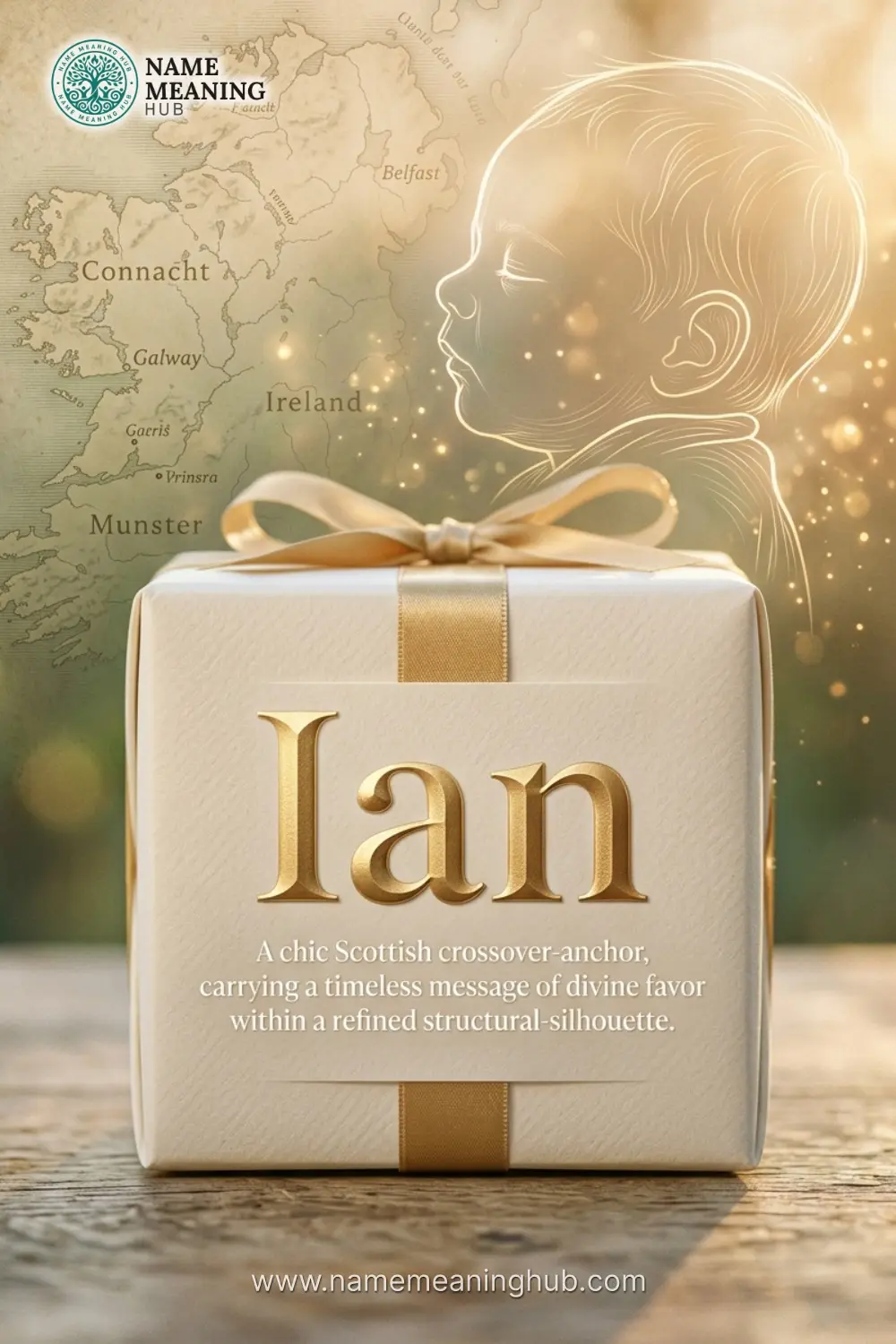
Where Ian opens next
Middle names that can widen Ian without weighing it down
Because Ian is brief and clean, a middle name can add breadth, softness, or formality behind it. The best pairings usually help the full name feel more dimensional without taking away the first name’s economy. If you want the full pairing logic behind that contrast, see middle names for Ian.
Nicknames that make Ian more intimate without changing its center
Ian is already short enough to stand in full, so nickname life usually changes tone more than length. That is part of the name’s charm. It can stay calm in public and become warmer at home. To see how those different moods shorten in real life, explore Ian nicknames.
Pronunciation that keeps Ian so effortlessly usable
EE-un is one of Ian’s great strengths. It is easy to grasp, highly stable in English, and simple enough that the name rarely loses energy in everyday speech. For the detailed stress pattern, accent notes, and IPA, see Ian pronunciation guide.
Why Ian still feels like grace in a small frame
In the end, Ian succeeds because it does not confuse size with significance. It is a small name carrying a large theological and emotional idea, and the compression only makes that idea more striking. “God is gracious” could have arrived in a form that felt visibly solemn. Ian lets it arrive in a form that feels breathable. That is one reason the name remains so compelling. It carries a spiritual atmosphere without demanding spiritual performance from the sound itself.
There is something deeply humane in that. Ian does not try to impress you with its own holiness. It simply holds a meaning of mercy inside an ordinary, elegant public form. The child receives a name that sounds easy to live with and yet remains anchored in a vision of life as gift. That is not a small inheritance.
So Ian endures because it makes grace sound inhabitable. It gives parents a name that is brief without being bare, meaningful without being heavy, and rooted without being stiff. Under its Scottish clarity and its everyday calm, the old sentence still remains: God is gracious. And that is why Ian still feels so strong. It is proof that a very small name can carry a very large kindness.