
Nicknames for Haven: Simple Nicknames That Still Feel Distinctive
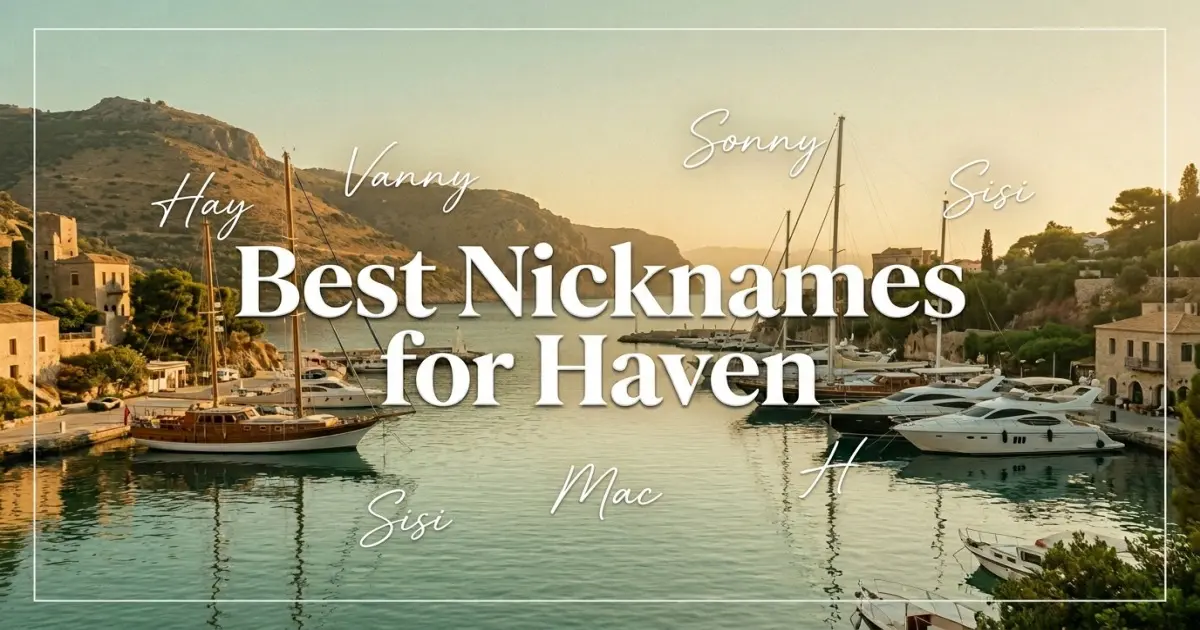
A nickname is rarely just a shortcut. More often, it is a social signal: a sign of who is close enough to soften a name, who uses the home version instead of the public one, and how a person’s identity changes slightly depending on who is speaking. The full name belongs to school rosters, forms, and introductions. The nickname belongs to the inner ring—to the sibling in the back seat, the grandparent writing on a birthday card, the friend typing too fast to use the formal version, or the parent calling across the kitchen. A nickname tells you not only what someone is called, but how they are being held.
Haven is especially interesting in this respect because the full name already carries an emotional atmosphere. It means “safe place,” and even without that meaning, it sounds calm, modern, and self-contained. It is only two syllables long. That changes the whole nickname logic. Haven does not need to be shortened in order to function. It already feels complete. So when nicknames emerge, they are not usually solving a practical problem. They are changing the mood. They can make Haven sound warmer, younger, more playful, more intimate, or more casually modern. The strongest nickname forms for Haven are the ones that feel like natural shifts of closeness rather than forced inventions. Nicknames add personality at the surface, but the deeper weight of the name still sits in Haven meaning.
What Haven’s nickname world reveals about the name itself
| Group | Suggested Nicknames | Persona | Use Context |
|---|---|---|---|
| Classic everyday trims | Have, Hay, H | Calm, modern, unfussy | Friends, school, texting, casual everyday use |
| Soft affectionate forms | Hay-Hay, Havy, Haven-Bee | Warm, playful, family-softened | Home life, grandparents, early childhood |
| Ending-led private forms | Ven, Venny, Vennie | More intimate, more personal, less public | Parents, siblings, close-friend circles |
| Minimal modern shorthand | H, Have, V | Clean, digital, lightly self-styled | Group chats, saved contacts, online handles |
| DIY household nicknames | H-Bear, Haybug, Havy-Girl, Haven-Love | Inventive, relationship-led, highly affectionate | Private family language, inside jokes, childhood-only use |
Haven is one of those names that may simply stay Haven
The first useful truth about Haven is that many children with this name will remain Haven in most public settings. This is not because the name lacks nickname potential. It is because the full form is already doing its job so well. Haven is clear, two-syllable, easy to pronounce, and emotionally complete. It does not sound stiff. It does not sound over-formal. It already feels like a name someone can wear from childhood through adulthood without needing a smaller version to smooth the path.
That means the nickname life of Haven is usually more selective than expansive. The best nicknames do not exist because the full name needs help. They exist because a relationship wants warmth, speed, or private style. This often produces better results. Instead of a long list of technically possible nicknames, Haven tends to generate a small set of believable, human ones.
It also means the strongest nickname strategy for Haven is often restraint. A family can absolutely use a sweet household form, but the public center of the identity remains strong. That is one of the name’s quiet advantages. It can support affection around the edges without losing its calm modern core.
The opening of Haven gives the strongest nickname material
The first phonetic zone inside Haven is the opening Hay-, which carries the main stress of the name. This is where the clearest and most usable nicknames naturally come from. In everyday speech, people tend to shorten names from the strongest audible part, and with Haven, that strongest part is unmistakably at the front. These nickname choices read more clearly once the spoken shape of the full name is in view, so see Haven pronunciation guide.
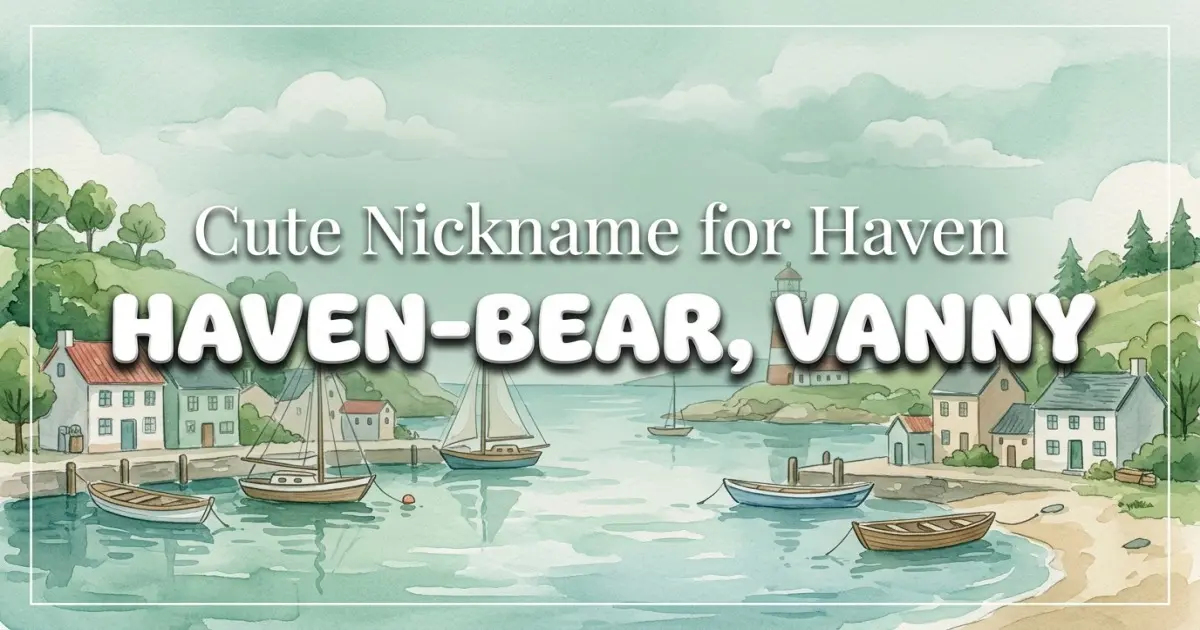
Hay is the cleanest spoken trim of Haven
Hay is the most natural direct shortening of Haven. It keeps the stressed first syllable and preserves the sound identity of the original name. Socially, Hay feels casual, brisk, and lightly modern. It is easy to imagine among siblings, teammates, or close friends who naturally shorten names in conversation.
This nickname works because it does not sentimentalize the name. It simply pares it down. For a child whose social world is active, sporty, or fast-moving, Hay is one of the most believable nickname outcomes.
Have and H live well in shorthand culture
Have and especially H are less likely to become full spoken replacements, but they are highly plausible in modern shorthand culture. Saved contacts, group chats, school notebooks, and quick texts often turn two-syllable names into one-letter or one-sound references, and Haven fits that pattern very naturally.
These versions feel more digital than ceremonial. That does not make them less real. It simply means they belong more to peer culture and quick communication than to spoken life across every setting.
The heart of Haven is where warmth begins to appear
The second social zone inside Haven is the emotional center created by the stress pattern and the soft transition from Hay into -ven. This is where nicknames often stop being mere trims and start becoming signs of affection. They are built less by formal logic and more by the way families naturally speak to someone they love.
Havy is the softest plausible expansion
Havy is one of the most believable affectionate expansions of Haven. It works because families often add an -y or -ie ending to make a strong name feel more child-sized and warm. Havy sounds friendly, a little playful, and recognizably connected to the original name.
This is the sort of nickname that can thrive in early childhood and still sound plausible inside the family later on, even if it is not the form the child uses at school. It softens Haven without flattening it completely.
Hay-Hay belongs to repetition and early intimacy
Hay-Hay is another believable form, especially in households where repeated sounds emerge naturally in toddler years. Doubled nicknames often do important emotional work. They are easy for small children to say, easy for adults to repeat with warmth, and often attached to a specific season of childhood.
Hay-Hay is not likely to become a formal nickname for adolescence or adulthood, but it does not need to. Its value is in what it says about closeness: this is the name used when the child is still tiny enough for repetition to sound like affection rather than excess.
The ending of Haven offers fewer nicknames, but more privacy
The final sound zone, -ven, is less productive than the opening, but it can still create believable private nicknames. These forms often sound less public and more relationship-specific because they pull from the quieter half of the name rather than the stressed, more identity-bearing front.
Ven works, but mostly inside close circles
Ven is a plausible nickname, but it is more intimate and personality-dependent than Hay. It asks listeners to focus on the weaker ending rather than the stronger opening, which means it usually needs a relationship to make it stick. A sibling or very close friend may absolutely use Ven naturally. A classroom full of peers is less likely to arrive there on its own.
That makes Ven a good example of how Haven’s nickname culture really works. The most obvious nicknames come from the front. The more personal ones often come from the back.
Venny and Vennie are household names more than public names
Venny or Vennie are softer still. These are exactly the kinds of pet names that grow out of home speech rather than out of formal naming logic. A grandparent might use one. A younger sibling might land on it before mastering the whole name. They are entirely believable, but they live best in private circles.
That private quality is not a weakness. In fact, it fits the name beautifully. Haven already carries a meaning of shelter and closeness. It makes sense that some of its softer nicknames would stay inside the shelter of home.
How Haven nicknames usually change as a child grows
Haven’s nickname life often follows a recognizable age pattern. In early childhood, affectionate and repetitive forms are the most likely: Hay-Hay, Havy, Haven-Bee, Haybug. These names are warmth-first. They are about emotional closeness, not social efficiency.
Little Haven often gets the decorated forms
Because Haven is already tidy and complete, adults often respond by adding rather than subtracting. A parent may say Haven-Bee. A grandparent may drift toward Havy. A sibling may invent Haybug. These expanded household names are common with compact modern names because the full form already feels public-ready. The family wants a version that feels more private.
Older Haven usually narrows back to Haven, Hay, or H
As the child grows, the nickname world often becomes cleaner. Many children named Haven will simply stay Haven. Those who use a shorter form are most likely to settle into Hay in speech or H in digital shorthand. These nicknames suit the name’s naturally modern profile and age well more easily than the warmer childhood forms do.
This is one of Haven’s strengths. It can absorb a sweet household nickname phase without needing a full identity reset later. The formal name was already usable all along.
Why Haven works best when the nickname feels real, not manufactured
The biggest mistake with Haven is trying to force too many clever options around a name that does not need them. Haven is strongest when the nicknames remain plausible and social. Hay, Havy, Hay-Hay, Ven, and H all sound like forms real people might actually use. That matters more than novelty.
DIY pet names can still be lovely. A family may naturally end up with H-Bear, Haven-Love, or another private form that would never appear on a list of standard nicknames. That is perfectly normal. But the most successful Haven nickname culture keeps the full name intact as the public center and lets the softer forms grow naturally from affection. That feels right for the name. Haven is already a refuge. The nickname should sound like someone stepping a little closer inside it.