
Nicknames for Harry: Playful, Pretty, and Memorable Picks
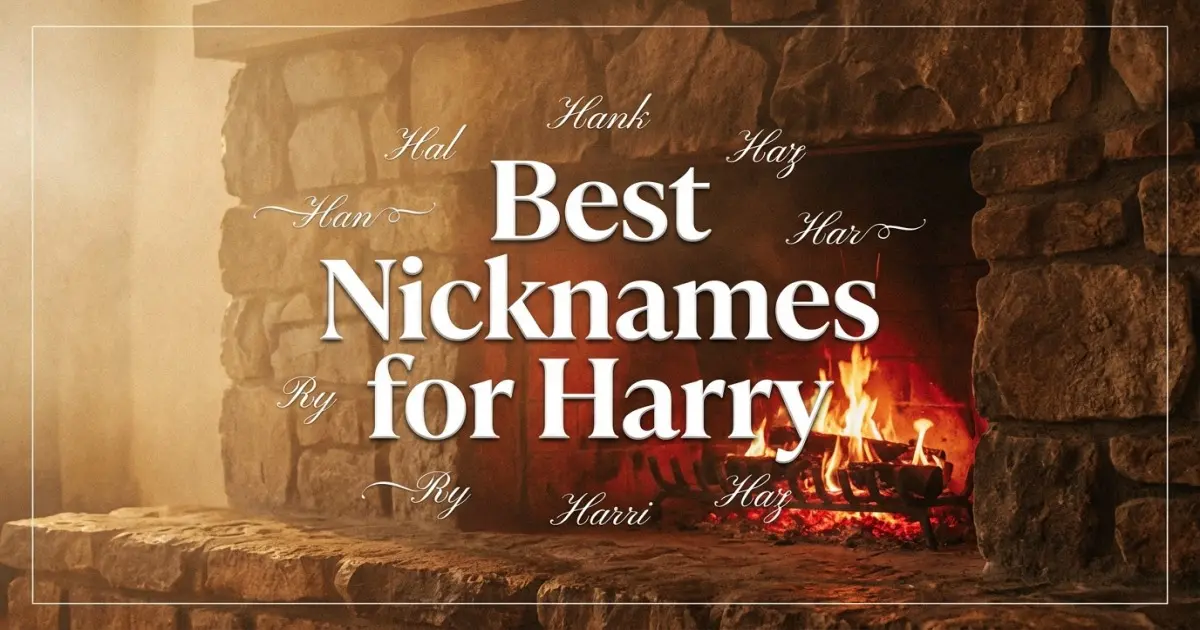
Nicknames are not just shorter versions of names. They are social signals. They tell you who is allowed closer, who is speaking casually, who is joking, who is protecting, and who is trying to make a child feel known in a more intimate register. A formal name can stand at the edge of the room and introduce itself; a nickname usually enters after relationship has already begun. That is why nickname culture matters so much to parents. It is less about trimming syllables than about imagining the many small identities a child may wear across family life, school, friendship, and adulthood.
Harry is especially interesting in this respect because it already sounds socially close. Historically, it lived for a long time as the everyday vernacular form beside Henry, and that older familiarity still clings to it. In modern English, Harry does not feel stiff enough to require shortening, nor long enough to demand it. That changes the nickname landscape completely. Instead of producing dozens of obvious diminutives, Harry tends to generate a smaller, more believable set of nicknames shaped by tone: affectionate, sporty, teasing, private, or family-made. In other words, Harry is not a name that needs rescuing by nicknames. It is a name that invites subtle variations around an already warm center. Before judging which short form feels right, it helps to look again at the full identity of the name in Harry meaning.
The Harry nicknames people can actually imagine using
| Group | Suggested Nicknames | Persona | Use Context |
|---|---|---|---|
| Classic shorthand | Har, Haz | Relaxed, familiar, easygoing | Friends, siblings, teammates, everyday speech |
| Minimalist short forms | H, Haze | Modern, clipped, socially confident | Text messages, school circles, older kids, casual peer groups |
| Playful British-style forms | Hazza, Harro | Outgoing, teasing, high-energy | Teen friendships, cousins, sports settings, joking family use |
| Cute home nicknames | Harry-boy, Har-Bear, Hazy | Affectionate, protected, small-child warmth | Parents, grandparents, early childhood, family-only use |
| Ending-based private forms | Ry, Rye | Soft, insider, lightly unconventional | One-on-one family use, sibling speech, private household language |
| Historic or heritage-leaning options | Hal | Vintage, deliberate, slightly literary | Families consciously choosing an older-feeling short form |

Harry already feels like the nickname, which changes the rules
Some names produce nicknames because they are long. Others produce them because they are formal. Harry is neither. That is the first thing to understand. Harry already sounds spoken, friendly, and emotionally close. In practice, that means many families will simply use Harry most of the time. The child may collect nicknames anyway, but they are more likely to emerge from affection and context than from necessity.
This matters because it protects the name from forced creativity. Parents sometimes feel pressure to pre-plan half a dozen nickname options, as though a good name must come with a large accessory set. Harry does not work that way. Its nickname culture is narrower, but often more authentic. The best forms feel like something a sibling would really say, something a school friend might naturally shorten, or something a parent would use for a few tender years and then gradually retire.
It also means that the full name remains strong at every age. A child can be Harry in the nursery, Harry on the team sheet, Harry in an email signature, and Harry in adult life without sounding unfinished. That gives nicknames a different role. Instead of acting as a substitute for the formal name, they become tonal variations around it. That is where Harry is strongest.
Harry’s opening sounds create the most natural nicknames
The richest nickname territory inside Harry sits at the front. The opening Har- is compact, recognizable, and easy to manipulate without losing the identity of the original name. This is why most plausible Harry nicknames begin there rather than at the end.
Har is the simplest private shortening
Har is the kind of nickname that often appears without ceremony. A sibling says it first. A friend clips the name while calling across a field. A parent uses it absentmindedly while multitasking. It is not especially decorative, but that is part of its realism. Har feels like spoken compression rather than invention.
Because it is so close to the full name, Har keeps Harry’s personality intact. It still sounds warm, still sounds masculine, and still sounds tied to the original. It works best in families that like understated nicknames and do not want anything overly cute.
Haz and Hazza add energy, not elegance
Haz is one of the most believable social nicknames for Harry, especially in settings where boys’ names are casually reshaped by friends. It sounds quick, slightly sporty, and very peer-driven. Hazza takes that same energy and pushes it further into teasing affection. It is louder, more public, and more likely to come from cousins, teammates, or teenage friends than from formal family use.
These nicknames suit a boy whose social world is playful and outward-facing. They are less polished than Harry itself, but that is exactly their job. They show membership in a group. They say: you are known here closely enough that your name has been bent a little.
H and Haze feel more modern than traditional
H is the minimalist version of Harry: quick in texts, natural in some friend circles, and especially plausible once a child is older. Haze is more stylized and should be used with more caution, but in the right social setting it can feel relaxed and contemporary rather than forced. These are not timeless household nicknames in the way Har is. They belong more to school culture, digital shorthand, and friendship style.
The stressed heart of Harry is where the vibe shifts
Harry’s stressed center, the HARE sound, is one reason the name resists extreme shortening. That central vowel is already open and complete. It gives the name its friendliness and makes Harry feel finished even before any nickname appears. In phonetic terms, the name already lands early. That limits how much useful reduction it really wants. Nicknames often grow from the stressed part of a name rather than from spelling alone, so the next useful step is how to pronounce Harry.
Why Harry does not naturally collapse into dozens of forms
Longer names often contain obvious removable pieces. Harry does not. Its strongest sound comes right at the front and middle, which means the name already arrives with its own nickname-like ease. This is why many attempted inventions around Harry feel artificial. The sound structure is telling you something: do not overwork this name.
That is also why the full form often remains the best everyday option. Parents sometimes discover that the nickname they planned sounds less natural than Harry itself. With this name, that is not a failure. It is a sign that the original form already has the social softness other names need a nickname to achieve.
Playful center-based forms can work, but mostly in jokes
Occasional forms built from the sound of the center can arise in school or family circles, especially as teasing one-offs. But these tend to be temporary rather than identity-level nicknames. Harry is not a name that benefits much from overly clever sound play. When people do reshape it successfully, they usually return to the opening zone or use a family pet form instead.
The ending of Harry is softer, more private, and less public
The ending -ry creates a different nickname mood. It is gentler, less anchored, and usually more intimate. That is why ending-based forms such as Ry or Rye can exist, but often stay inside the home or within a very small circle. They do not announce Harry as clearly as Har or Haz do.
These forms are best understood as relationship nicknames, not broad social ones. A younger sibling may say Rye because it is easier. A parent may use it because it sounds soft at bedtime. But outside that private sphere, it can feel disconnected from the original name. That does not make it wrong. It simply makes it less portable.
Family-built forms such as Harry-boy, Har-Bear, or Hazy live in the same emotional territory. They are affectionate and plausible, especially in early childhood, but they do not need to survive into every stage. Good home nicknames are allowed to be temporary. Their purpose is tenderness, not permanence.
When Harry changes with age, the nickname usually changes with it
Early childhood invites the softest forms
In toddler years, families often drift toward the most affectionate options. Harry-boy and Har-Bear make emotional sense because they enlarge the name with warmth. These are useful nicknames precisely because they are not meant for the whole world. They belong to a protected season of family life.
School years favor the easiest public shorthand
Once a child enters broader social settings, the nickname field usually narrows. Friends are more likely to use Har, Haz, or just Harry. The pressure of daily speech favors what is quick and obvious. This is when parents often discover that the most realistic nickname is not the cutest one but the one other children can adopt naturally.
Teen and adult Harry often returns to Harry
As the child grows, Harry itself usually becomes the most stable form again. A few peer nicknames may stick, especially Haz or H, but many boys named Harry end up living primarily as Harry because the name already has enough ease, maturity, and familiarity to stand on its own. That is one of its quiet advantages. It does not need constant adjustment to age well.
Which Harry nicknames deserve a little caution
The biggest risk with Harry is overengineering. Because the name is already short and socially warm, heavily customized nicknames can sound imposed rather than earned. If a form feels like it belongs more in a naming notebook than in someone’s mouth, it probably will not last.
It is also wise to separate family affection from public identity. A nickname that works beautifully at home may sound overly juvenile in wider use. That does not mean you should avoid cute forms. It simply means you should not expect every sweet family nickname to become the child’s main social name.
Finally, historical shadow forms such as Hal should be chosen deliberately rather than casually. Hal has real heritage flavor and can connect back to the older Henry-Harry world, but it does not automatically arise from Harry in modern speech. It works best when a family genuinely likes its vintage tone and intends to use it on purpose.
Harry does not need many nicknames to feel personal
That may be the clearest truth about this name. Harry already carries intimacy in its full form. Its best nicknames do not replace that quality; they tilt it slightly. Har makes it closer. Haz makes it livelier. Hazza makes it more playful. H makes it more modern. Ry makes it more private. Harry-boy and Har-Bear make it more protected. Each one is less a new identity than a subtle shift in relationship.
For parents, that is good news. You do not need an elaborate nickname plan for Harry. You only need to know what kinds of closeness you can imagine around him. If the answer is warm family speech, easy school familiarity, and a full name that holds up without help, then Harry is already doing most of the work. The nicknames simply prove that a socially generous name can remain itself while still making room for love.
Shortening Harry: FAQ
Does Harry really need a nickname?
Not usually. Harry already sounds familiar and complete, so many children use the full name most of the time. Nicknames tend to grow from closeness or group culture rather than from any need to shorten the name.
What is the most natural nickname for Harry?
Har and Haz are usually the most believable everyday options. They stay close to the original name and sound like something friends or siblings would actually say.
Are cute nicknames for Harry likely to last?
Usually only within the family and mostly during childhood. Forms like Harry-boy or Har-Bear are warm and useful, but they are often stage-specific rather than lifelong public nicknames.
Is Hal a real nickname for Harry?
It can be, especially in a heritage-minded or vintage context, but it is less automatic in modern everyday use than Har or Haz. Families should choose it intentionally if they love the sound and style.