
How to Pronounce Giselle: Sound Breakdown for Confident Speech
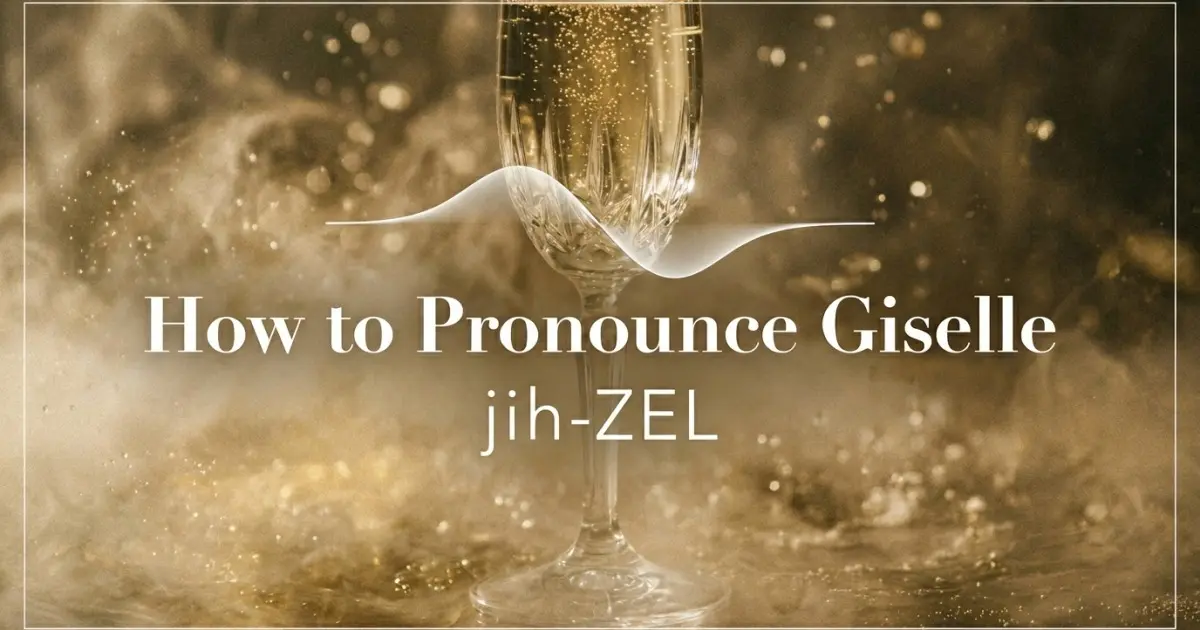
One of the clearest tests of a name happens in a small pause before a stranger says it aloud. It is the moment a teacher reads a class list for the first time, a nurse calls the next patient from the waiting room, or a receptionist looks up from a screen and tries not to misplace the stress. Giselle is a name that often creates that pause, not because it is especially difficult, but because it carries French polish into English-speaking rooms. People can see that it is elegant. The question is how that elegance should sound when it lands in an ordinary voice.
That is exactly why pronunciation matters here. Giselle is only two syllables long, but it does more than many longer names. It asks the speaker to handle a softened opening, a clear stressed second syllable, and a final shape that feels graceful without becoming weak. The good news is that the name is easier in practice than it may look on the page. Once heard correctly, it tends to stay in the ear. And once the stress is placed where it belongs, the whole name becomes much more natural to say.
What Giselle is really asking the ear to hear
| Element | Phonetic Detail | Quick Tip |
|---|---|---|
| Everyday pronunciation | jih-ZEL | Keep the first syllable light and let the second syllable carry the emphasis. |
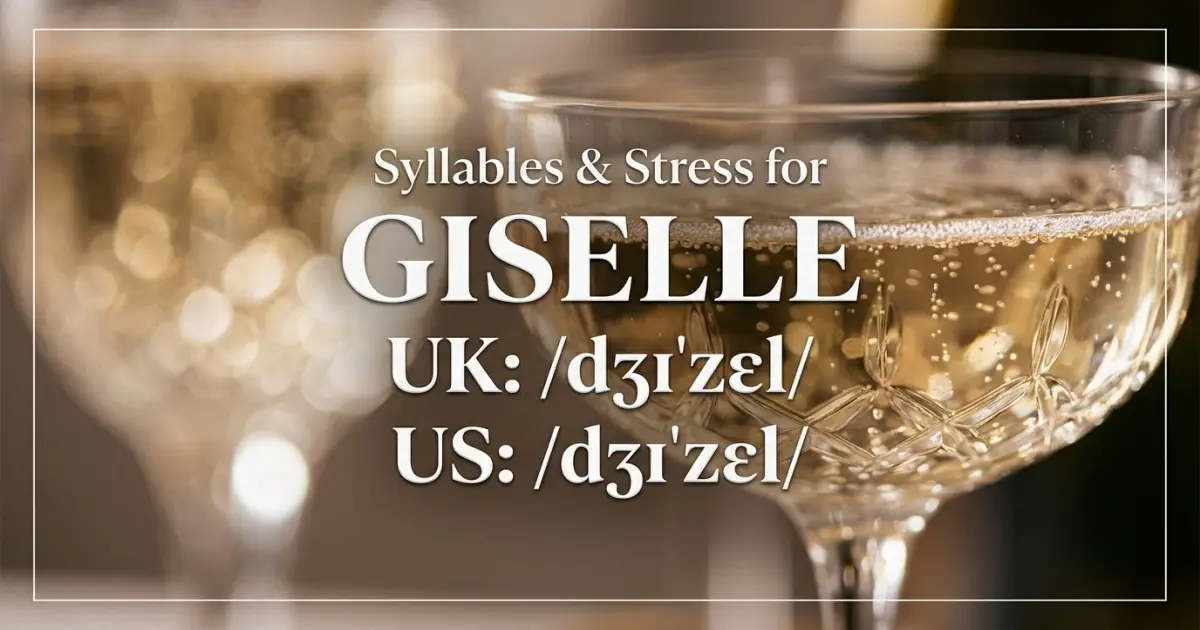
| US IPA | /ʒɪˈzɛl/ | In American English, the opening usually begins with the soft sound heard in the middle of “measure.” |
| UK IPA | /dʒɪˈzel/ | In British English, the opening often sounds closer to the beginning of “jam.” |
| Syllables | 2 syllables | Think of the rhythm as a gentle setup followed by a clean landing. |
| Stress pattern | Primary stress on the second syllable | The name should rise into -ZEL, not flatten into GIH-zul. |
| Opening sound | /ʒ/ in US, /dʒ/ in UK | Do not force the first sound too hard; the elegance of the name begins with softness or light pressure. |
| Ending sound | /zɛl/ | The second syllable should be clear and crisp, not dragged into “zale” or softened into “zul.” |
| Overall feel | Light opening, firm close | Giselle sounds best when it moves forward and finishes neatly. |
Giselle lives on the second syllable
The most important fact about Giselle is that the name’s energy sits in the second syllable. This is not a name that lands heavily at the front. It begins lightly and then arrives. That stress pattern is one of the main reasons Giselle sounds refined in English. Names with second-syllable stress often feel a little more poised or elevated because they ask the voice to move forward rather than strike downward immediately. Before focusing only on syllables and stress, it helps to step back into the fuller frame of Giselle meaning.
The first syllable, jih, should be short and controlled. It is not there to dominate the name. It acts almost like a runway. The second syllable, ZEL, is where the name resolves. If the first part becomes too loud or too long, the whole name starts to sound less French and less polished. If the second part is swallowed, Giselle loses its shape entirely.
Why the opening of Giselle matters more than it seems
In American English, the opening consonant is commonly a fricative, written phonetically as /ʒ/. This is the soft sound heard in words like “measure” or “vision.” It gives Giselle its silky opening. In British English, many speakers use the slightly firmer affricate /dʒ/, the sound at the start of “jam.” Both are accepted and both are natural in context. The difference is not about correctness so much as accent texture. American Giselle often sounds smoother at the start. British Giselle often sounds a little more defined. The way the name resolves at the end often decides which short forms feel natural in speech, and that becomes clearer in nicknames for Giselle.
That difference matters because it changes the first impression without changing the identity of the name. A softer opening makes Giselle sound more flowing. A firmer opening gives it a little more structure. But in both cases the real anchor remains the same: the name must rise into -ZEL.
How the final consonant keeps Giselle from drifting
The second syllable ends in l, a liquid consonant. Liquid consonants help names sound smooth because they let the voice taper rather than stop abruptly. But Giselle also has the z sound before that liquid ending, which gives the second syllable crispness. This is why the name does not dissolve into air. It is graceful, but not vague. The z gives it edge. The l gives it finish.
How Giselle shifts between American and British mouths
The supplied pronunciation forms are very useful because they show exactly where English accents tend to divide. In American English, Giselle is commonly /ʒɪˈzɛl/. In British English, it is often /dʒɪˈzel/. The second syllable remains effectively the same in both. The main difference is at the opening.
American Giselle begins more softly
In the United States, many speakers naturally begin Giselle with the sound /ʒ/, which can feel more overtly French to English ears. This makes the whole name sound smoother and more blended. It also helps explain why the name can feel especially elegant in American usage: the opening does not strike; it glides.
British Giselle begins with a little more edge
In the United Kingdom, the /dʒ/ opening is more common, giving the name a slightly firmer front edge. That does not make it less elegant. It simply makes it more naturally integrated into British English sound habits. This version can feel a little clearer to speakers who are less accustomed to French-influenced openings.
In both cases, the rhythm stays stable. That is the important thing. Giselle does not become a different name across accents. It remains recognizably itself because the stress, vowel shape, and final syllable all hold steady.
Where Giselle most often gets misheard
Because Giselle looks refined and slightly foreign to some English-speaking readers, pronunciation errors usually come from overcorrection rather than ignorance. People can sense that the name deserves care, but that care sometimes pushes them too far.
The first common mistake is stressing the wrong syllable
Some speakers flatten the name into something like GIH-zul or overemphasize the first syllable because that feels more natural in English. But Giselle does not belong to that rhythm. The second syllable is the destination. If the emphasis shifts forward, the name loses its elegance and starts to sound heavier than it should.
The second common mistake is altering the final vowel
The end of Giselle should sound like ZEL, not like ZALE, ZELL-uh, or ZUL. These changes are small, but they alter the finish of the name. Giselle needs that crisp, clean second syllable to keep its line intact.
The third common mistake is over-Frenching the whole name
Sometimes speakers who know the name is French try to pronounce it with more flourish than everyday English requires. In real life, that often sounds less natural than a simple, well-stressed English rendering. The goal is not performance. The goal is a clear, graceful pronunciation that fits the speaker’s accent without distorting the name.
Giselle beside its sound-neighbors
One good way to hear Giselle clearly is to compare it to nearby names. It shares some tonal territory with names such as Noelle, Odette, and Colette, all of which rely on clean endings and a slightly elevated French register in English. But Giselle differs from them because its opening is softer and its center carries more internal contrast. It is also close in public feeling to names like Janelle or Jiselle, yet those names do not carry the same balance of softness and structure.
This comparison matters because it reveals what makes Giselle distinctive: the name is graceful, but it is not airy from start to finish. It begins in a softened sound and then lands with clarity. That mixture is what keeps it elegant rather than merely delicate.
Saying Giselle in real life: three practice lines that actually help
Start with the plain form
Giselle is here.
This is the best first check. Keep the first syllable short and let the voice rise into ZEL.
Then place Giselle inside a normal sentence
Giselle will call you back this afternoon.
This tests whether the name stays graceful in everyday speech rather than only in isolation.
Finally, pair Giselle with a surname
Giselle Martin is ready.
Or any surname you are considering. This shows whether the final l in Giselle flows well into the full name or whether the combination starts to feel crowded.