
Faris Name Meaning: History, Emotion, and Enduring Style

Faris is a name that seems to arrive on horseback. Pronounced FAIR-iss, it has only two syllables, but its meaning opens a wider scene: a rider, a road, a figure trained not only for movement but for readiness. The Arabic meaning “knight; horseman” gives Faris a rare balance of grace and strength. It is not simply a warrior name, and it is not merely an elegant sound. It carries the image of someone skilled, disciplined, and alert in motion.
The central story of Faris is noble movement. The name does not lean on heaviness to feel masculine. Instead, it suggests capability with refinement: the poise of a horseman, the moral idea of a knight, and the clarity of a short, memorable name. Official Social Security Administration (SSA) data shows Faris ranked No. 1443 for boys in 2024, making it uncommon in the United States but easy enough to pronounce once heard. That combination gives Faris its modern strength. It feels international, purposeful, and quietly heroic without sounding oversized.
Faris's U.S. popularity rank over time, 1915–2024
Popularity statistics are based on official data from the Social Security Administration baby name records.
Faris: A Radiant and Noble Multicultural Knight
Faris functions as a name with one unmistakable center of gravity in the modern naming landscape, sustained by its primary visibility on the boys’ side. This foundational favorite fits a broader taste for multicultural names that carry a beautiful message and refined international polish parents already trust.
The absence of crossover usage reinforced a focused masculine profile. Meaning “knight” or “horseman,” its simple two-syllable rhythm carries a sense of character that remains distinctive across style cycles.
Faris carries the image of a knight in a clean two-syllable form
| Key Facts | Information | Quick Insight |
|---|---|---|
| Name | Faris | The name is compact and elegant, with a meaning that gives it far more narrative force than its short length suggests. |
| Primary gender usage | Male | Faris reads clearly as a boy’s name in the supplied usage profile, with a refined masculine style. |
| Primary origin | Arabic | The Arabic origin gives Faris cultural depth and a meaning rooted in skill, movement, and noble bearing. |
| Primary meaning | Knight; horseman | The meaning suggests courage, discipline, readiness, and controlled strength rather than blunt force. |
| Pronunciation | FAIR-iss | The pronunciation is accessible in English, with a bright first syllable and a soft, quick ending. |
| IPA | US: /ˈfærɪs/; UK: /ˈfærɪs/ | The matching IPA forms make Faris stable across major English-speaking accents. |
| Syllable count | 2 syllables | The two-beat rhythm keeps the name crisp, memorable, and easy to pair with many middle names. |
| U.S. boys’ rank (2024) | No. 1443 | Official data shows Faris is uncommon but usable, offering distinction without difficult pronunciation. |
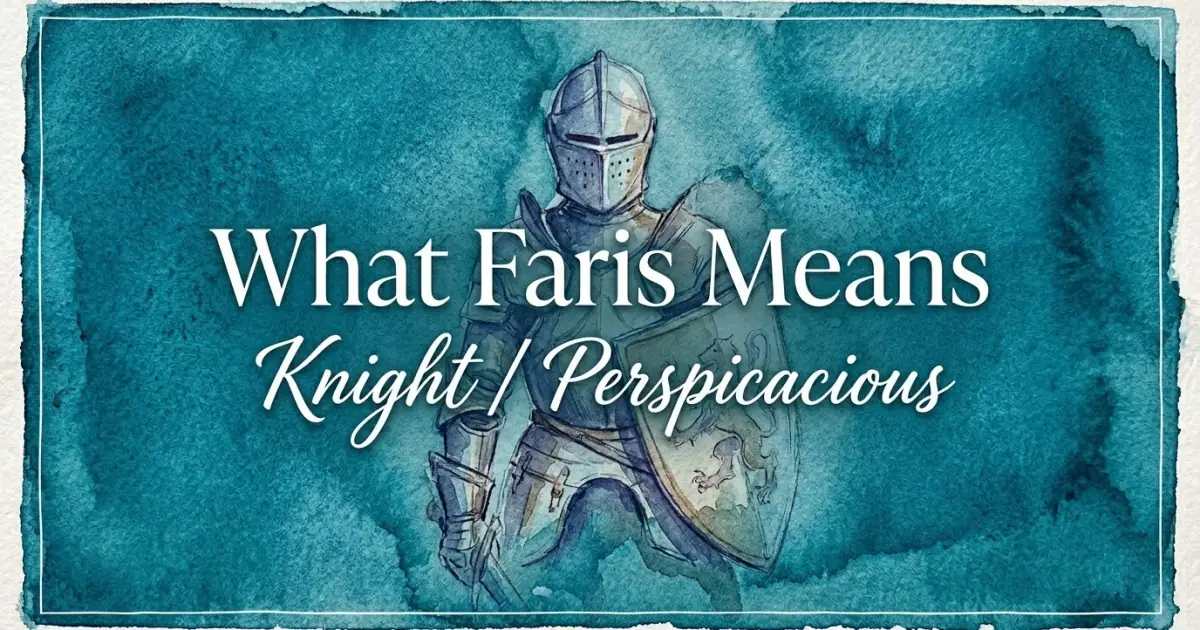
The meaning of Faris gives courage a disciplined shape
Faris means “knight; horseman,” and that meaning immediately gives the name a narrative center. A horseman is not only someone who rides. The image suggests skill, balance, coordination, and trust between rider and animal. A knight adds another layer: honor, service, protection, and trained courage. Together, the two meanings make Faris feel active but not reckless, strong but not rough.
This is what separates Faris from many names that simply sound bold. Its strength comes through mastery. The name does not suggest power for its own sake. It suggests practiced ability, movement with purpose, and a person who can respond when the road changes. For parents, Faris may feel like a wish for courage that is guided by judgment, not just energy.
“Horseman” gives Faris movement and skill
The horseman meaning makes Faris feel dynamic. It brings forward motion, open ground, and physical intelligence. A horseman must pay attention, adjust quickly, and stay balanced. This gives the name an athletic, alert quality without making it feel purely sporty.
That movement also gives Faris emotional lift. It is not a static name. It feels as if it is going somewhere. The sound itself supports this: FAIR-iss begins with a clear bright syllable and then moves lightly into the ending. The meaning and pronunciation both suggest forward motion.
“Knight” gives Faris honor and restraint
The knight meaning adds moral texture. A knight is not just a fighter in the symbolic imagination; he is someone associated with discipline, duty, protection, and conduct. That makes Faris feel more refined than a simple battle-name. It has strength, but it also has a code.
This matters for modern parents because many families want boy names that feel strong without feeling aggressive. Faris offers that balance naturally. It carries courage with manners, motion with purpose, and confidence with a sense of responsibility.
Faris’s Arabic origin gives the name depth beyond its sleek sound
Faris has an Arabic origin, which gives the name a cultural and linguistic foundation beneath its accessible English pronunciation. In English-speaking settings, Faris may sound stylish because it is short, vowel-rich, and lightly international. But its meaning keeps it from feeling merely fashionable. The name has substance built into its origin. To discover what else belongs to this origin group, browse baby names of Arabic origin.
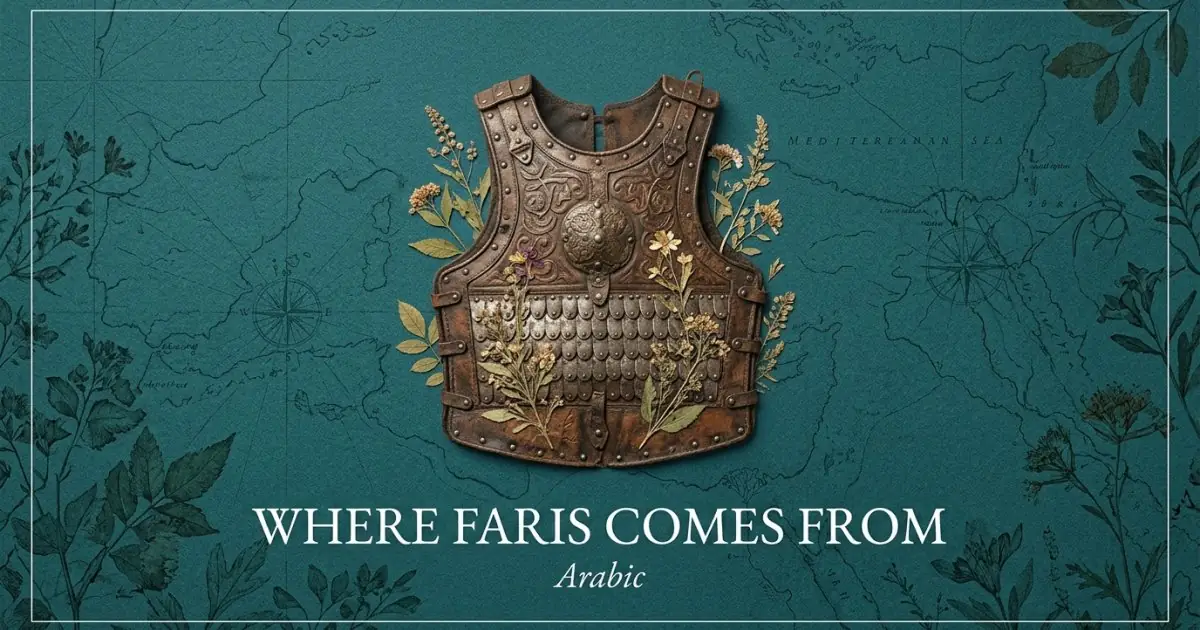
Its Arabic background also helps explain why the name feels both elegant and strong. Faris does not rely on a hard final consonant or a long formal structure to create presence. It has a clean internal rhythm and a meaning that carries the weight. That makes it especially appealing for parents who want a name that feels meaningful, globally aware, and easy to use in everyday English.
The compact form makes Faris approachable
Faris has only five letters and two syllables, which makes it visually and phonetically compact. It is easy to write, easy to call, and easy to remember. The name does not ask for a long explanation before it can function in daily life.
At the same time, Faris does not feel plain. The F opening gives it a soft but distinctive entrance, while the final -is keeps the name light. Its sound has more polish than force, which suits the knightly meaning beautifully.
The meaning keeps Faris from feeling only modern
Short names can sometimes feel stylish but thin. Faris avoids that because its meaning is so vivid. “Knight; horseman” gives the name a complete image. It feels like a title, a role, and a story compressed into one word.
This is why Faris can work across age. It is friendly enough for childhood, sharp enough for adolescence, and dignified enough for adulthood. The name’s meaning grows with the person carrying it.
Faris sounds bright, balanced, and quietly chivalric
Faris is pronounced FAIR-iss, with two syllables and stress on the first. The US and UK IPA forms are both /ˈfærɪs/, which makes the pronunciation stable across major English-speaking accents. The name begins with a soft fricative f sound, opens into a bright vowel, and ends with a light -iss sound.
That phonetic structure helps explain the name’s style. Faris does not sound heavy. It has motion and clarity. The first syllable gives it presence; the second gives it ease. It feels refined rather than blunt, which aligns well with the knightly meaning. Faris has a heroic idea, but the sound remains graceful.
The F opening gives Faris a softer kind of strength
The first sound in Faris is a fricative, meaning the air moves through a narrow opening as the sound is made. In ordinary terms, f is clear but not hard. It gives Faris definition without the bluntness of a stop consonant like b, d, or k.
This gives the name a refined entrance. Faris starts with focus, not force. That makes the meaning feel noble rather than harsh.
The FAIR sound makes Faris easy to hear
The pronunciation guide FAIR-iss gives English speakers a practical way to say the name. The first syllable is bright and familiar. It helps the name feel accessible even when the origin may be less common in some communities.
Because the stress falls on the first syllable, Faris is easy to call aloud. It does not require the speaker to build toward a difficult ending. The name arrives clearly from the beginning.
The light ending keeps Faris elegant
The final -iss sound keeps Faris quick and graceful. It does not end with a heavy thud. Instead, the name closes lightly, giving it a polished quality. That lightness is part of why Faris feels both masculine and refined.
In full-name combinations, this ending creates flexibility. Faris James, Faris Omar, Faris Alexander, and Faris Elias all flow well because the first name finishes cleanly.
Official data places Faris in a rare but practical boys’ lane
Official SSA data shows Faris ranked No. 1443 for boys in 2024. That places the name outside the most common choices, but not so far outside use that it feels inaccessible. A boy named Faris may not share his name with many classmates, yet the pronunciation is simple enough to learn quickly. For a broader shortlist in the same group, visit popular boy names and meanings.
This is a strong position for parents who want distinction without daily friction. Faris feels uncommon, but it does not look complicated. It has a clear sound, a strong meaning, and a compact spelling. In modern naming terms, that makes it highly usable: distinctive on paper, smooth in speech, and meaningful beneath the surface.
What a boys’ rank of 1443 suggests
A boys’ rank of 1443 suggests that Faris is present but not widespread. It is not a mainstream favorite, but it has enough use to appear in official data. That gives it a quiet social foothold.
For families, this may feel like a sweet spot. Faris can stand apart without feeling invented. It is uncommon because it is underused, not because it is hard to carry.
Why Faris’s rarity feels refined rather than obscure
Some rare names feel difficult because they are visually unfamiliar or hard to pronounce. Faris avoids much of that problem. The spelling is clean, the sound is direct, and the meaning is memorable. Once heard, the name is easy to repeat.
This makes Faris feel refined rather than obscure. It has the polish of a distinctive name and the practicality of a simple one.
Faris stands near Amir, Idris, Zayn, Malik, and Omar
Faris belongs in a style neighborhood of concise, Arabic-origin boys’ names that feel meaningful and internationally usable. Amir has a royal, commanding quality. Idris feels thoughtful and dignified. Zayn is sleek and modern. Malik carries authority. Omar is compact, familiar, and widely recognizable. Faris sits among them with a special emphasis on motion, skill, and knightly honor.
Compared with these names, Faris feels especially elegant. Amir may sound more overtly regal. Malik may feel more commanding. Zayn may feel more contemporary and streamlined. Omar may feel more familiar in many English-speaking contexts. Idris may feel softer and more literary. Faris, however, has the distinctive horseman image, giving it a blend of action and grace.
Faris compared with Amir and Malik
Amir and Malik both carry strong authority signals. Faris feels less governmental and more chivalric. Its strength is active, mobile, and skilled rather than strictly ruling or commanding. This makes Faris ideal for parents who like masculine strength but want it filtered through elegance and movement.
The name suggests someone capable rather than merely powerful. That distinction gives Faris emotional warmth.
Faris compared with Idris and Omar
Idris has a thoughtful, measured sound, while Omar is shorter and widely familiar. Faris falls between them in accessibility and imagery. It is easy to say like Omar, but its meaning is more visually dramatic. It is refined like Idris, but more energetic in tone.
This middle position is part of the name’s appeal. Faris is neither too common nor too difficult, neither too soft nor too hard.
The social impression of Faris is graceful, brave, and self-possessed
Faris gives a first impression of quiet confidence. It does not sound loud, but it does sound assured. The name’s meaning, “knight; horseman,” adds a noble, capable image, while the pronunciation keeps the name approachable. That balance makes Faris feel sophisticated without becoming distant.
Socially, Faris may read as thoughtful, athletic, honorable, and calm under pressure. It has the air of a name with discipline. It does not suggest chaos or showiness. Instead, it suggests someone who knows how to move, how to respond, and how to hold himself with grace.
Faris in childhood
For a child, Faris is simple enough to use every day. It is short, easy to say, and distinctive without being cumbersome. Nicknames such as Far, Fari, Ris, or Ari may develop naturally, though the full name is already compact enough to stand alone.
The knight and horseman meaning can also make the name feel imaginative in childhood. It gives the child a story of courage, skill, and movement without making the name feel like fantasy alone.
Faris in adulthood
As an adult name, Faris has polish. It can sound professional, cultured, and memorable. Its meaning gives it substance, while its short form keeps it efficient. It is not overly cute, and it does not depend on trendiness to feel appealing.
A strong middle name can shape its adult presence even further. Faris Alexander gives the name ceremony. Faris Omar keeps it concise and rooted. Faris Elias adds softness. Faris James gives it a familiar English-language frame.

Faris opens three practical paths for parents
Middle names can make Faris classic, Arabic-rooted, or lyrical
Because Faris is short and ends lightly, it pairs well with many middle-name styles. Arabic-rooted choices such as Omar, Ali, Zayn, Yusuf, and Idris preserve cultural cohesion. Classic choices such as James, Thomas, Henry, and Alexander give it a familiar frame in English-speaking contexts. Softer middles such as Elias, Jonah, Gabriel, and Sami bring out the name’s warmth. If you want the full pairing logic behind that contrast, see middle names for Faris.
Nicknames for Faris can be soft, sleek, or initials-based
Faris does not need a nickname, but several options are plausible. Fari is affectionate and close to the full name. Far is brief and simple. Ris is sharper and more unusual. Ari is soft and highly wearable, though it comes from the ending rather than the opening. Initial nicknames such as FJ or FA can also develop from the middle name. To see how those different moods shorten in real life, explore Faris nicknames.
Pronunciation gives Faris its accessible elegance
Faris is pronounced FAIR-iss, with two syllables and stress on the first. The US and UK IPA forms are both /ˈfærɪs/. The most important pronunciation point is to keep the first syllable clear and the ending light. For the detailed stress pattern, accent notes, and IPA, see Faris pronunciation guide.
Faris is a name where the knight rides lightly
Faris succeeds because it gives strength a graceful form. Its Arabic origin gives it depth. Its meaning, “knight; horseman,” gives it movement, discipline, and honor. Its pronunciation makes it accessible. Its 2024 ranking gives it rarity without making it feel impractical. The name feels like a bridge between cultural richness and everyday usability.
There is a special power in a name that does not have to sound heavy to feel strong. Faris carries the image of courage, but not recklessness. Movement, but not restlessness. Nobility, but not distance. It is a name for a child parents may imagine growing into confidence with restraint, skill with kindness, and independence with purpose.
At its best, Faris feels like a rider seen at the edge of morning: poised, capable, and moving toward the horizon with calm control. It is compact, but full of story. Gentle in sound, but brave in meaning. Faris is a name where elegance and courage meet, and neither has to overpower the other.