
How to Pronounce Emersyn: The Practical Guide to Saying It Right
The place where pronunciation matters most is usually not ceremonial. It is ordinary. A teacher pauses over the attendance sheet on the first day of school. A receptionist looks at a waiting-room list. A coach reads the roster quickly, with ten seconds to get through a line of names before practice starts. Emersyn is the kind of name that can produce a brief visual hesitation in those moments, not because it is hard to say, but because the spelling looks more customized than the sound actually is. Once heard aloud, it settles fast. The spoken name is familiar, balanced, and much easier than the eye may first predict.
That gap between appearance and sound is the real pronunciation story of Emersyn. The name looks highly contemporary on the page because of its -syn ending, but in the mouth it behaves in a very traditional English way. It has three clear syllables, an early stress, and no especially difficult consonant clusters. The trick is simply to keep the first syllable strongest and not let the spelling lure you into overthinking it. Emersyn is not a name that needs dramatic decoding. It needs clean timing: EM-er-sin, with the emphasis where English speakers naturally expect it.
What English Speakers Need to Hear Clearly in Emersyn
Because the spelling looks more modern than the sound feels, it helps to break the name into its working parts. The table below shows the pronunciation features that matter most in real speech.
| Element | Phonetic Detail | Quick Tip |
|---|---|---|
| Common spoken guide | EM-er-sin | Put the stress firmly on the first syllable. Once that opening lands, the rest of the name flows easily. |
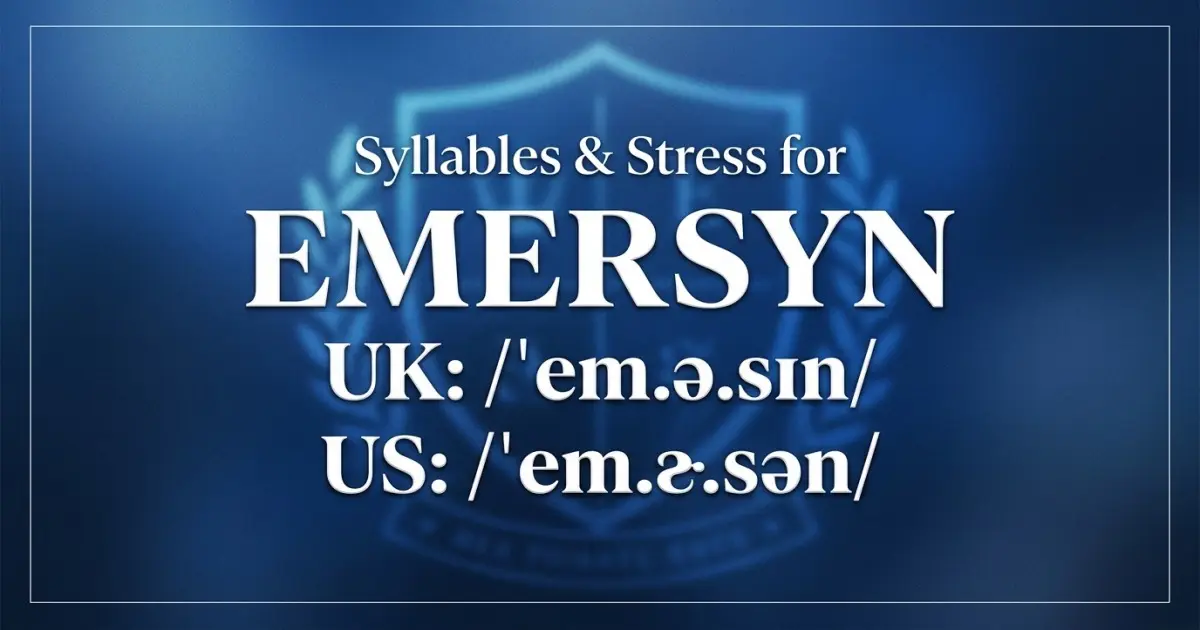
| IPA (US) | /ˈɛmərsən/ | The symbol at the front marks primary stress, which tells you immediately that the first syllable carries the weight. |
| IPA (UK) | /ˈɛmərsən/ | The same IPA in US and UK English means the name stays stable across major English-speaking accents. |
| Syllable count | 3 syllables | Think in three beats, not two. Compressing the middle too much can make the name sound rushed. |
| Primary stress | First syllable: EM | If the stress drifts later, the name starts sounding less natural and more overread from the spelling. |
| Middle consonant pattern | /m/ + schwa + /r/ | The middle should feel light and unstressed, not overpronounced as a separate dramatic unit. |
| Ending sound | -sin /sən/ | Finish cleanly with a soft, neutral final syllable. Do not turn it into “seen” or overhit the y in the spelling. |
Why Emersyn Sounds More Familiar Than It Looks
The easiest way to understand Emersyn is to notice that its sound pattern is more traditional than its spelling pattern. Many English speakers already know names built around the same opening rhythm: stressed first syllable, softer middle, and an unstressed final syllable. That makes Emersyn far less intimidating in speech than it may appear in writing. Before focusing only on syllables and stress, it helps to step back into the fuller frame of Emersyn meaning.
The first syllable carries the whole name
EM is where the name begins and where it anchors. The opening vowel is short and familiar, and the final m closes the syllable neatly before the name relaxes into the rest. This is important because English names with first-syllable stress tend to sound more immediately natural to American and British ears. Emersyn benefits from that pattern. The first beat gives the name firmness and clarity.
The middle of Emersyn should stay light
The second syllable is not the star of the name. It is a bridge. Linguistically, it contains a reduced vowel, often called a schwa, which is one reason the name moves so easily in everyday speech. That means the middle should not be puffed up into something like EM-air-sin or EM-eh-rare-sin. In natural pronunciation, it stays soft and efficient.
The ending is simpler than the spelling suggests
The final -syn may visually tempt some readers to overpronounce it, but in speech it behaves very calmly. The last syllable is essentially sin with a neutral vowel feel in connected English speech. The y does not ask for special treatment. It is part of the name’s styling, not a cue to change the final sound dramatically.
Where Emersyn Usually Goes Wrong in Real-Life Pronunciation
Most mispronunciations of Emersyn come from one of two habits: either readers follow the spelling too literally, or they assume the more customized spelling must hide a less familiar sound. In practice, neither approach helps.
The most common mistake is overreading the ending
Because -syn is visually unusual compared with -son, some people may wonder whether the last syllable should sound brighter or more emphatic. It should not. The final syllable remains light. Overpronouncing it makes the name feel less natural than it is supposed to feel.
Another mistake is shifting the stress too late
Some speakers hesitate and produce something closer to eh-MER-sin because they are unsure which syllable deserves emphasis. That changes the name’s whole balance. Emersyn is strongest when the first syllable stays clearly stressed: EM-er-sin. The rest of the name should follow, not compete with that opening beat.
Do not let the spelling create extra syllables
Emersyn is three syllables, not four. It should not be stretched into something more elaborate. This is a common risk with highly styled spellings in general: readers assume extra visual complexity means extra phonetic complexity. With Emersyn, that assumption leads in the wrong direction.
Emersyn Across Accents Still Sounds Like Emersyn
One advantage of the name is that its pronunciation remains stable across major English-speaking accents. The supplied US and UK IPA are the same, which tells you something useful right away: the core sound pattern does not need to be relearned from region to region.
American and British English both support the same rhythm
Accent differences may slightly color the reduced vowel in the middle or the softness of the final syllable, but the structure remains the same: three syllables, first-syllable stress, quick taper afterward. That makes Emersyn portable. It sounds like itself whether spoken in a more rhotic accent or a less rhotic one.
Why that stability matters socially
Names that change too much across accents can require repeated correction or explanation. Emersyn avoids that problem. It is modern in look, but stable in sound. That stability helps it perform well in classrooms, professional settings, and cross-regional environments where people encounter the name in speech before they understand its spelling choices.
How to Practice Emersyn Until It Feels Effortless
The best way to learn a name is to place it where names really live: inside ordinary sentences. That helps the mouth find the natural rhythm quickly and keeps the pronunciation from becoming stiff or overcareful.
Start by hearing the beat
Say it in three taps: EM / er / sin. The first beat should be strongest. The next two should move more lightly. Once that pattern is clear, the name usually becomes easy to repeat at conversational speed.
Use short practice lines
- “Emersyn, your table is ready.”
- “Has Emersyn checked in yet?”
- “I’m so glad to meet you, Emersyn.”
- “Can Emersyn come to the front office?”
- “Emersyn will join us after lunch.”
These lines help because they place the name in natural speech rather than isolated repetition. If Emersyn sounds smooth inside these ordinary sentences, the pronunciation is already in good shape.
Sound neighbors can guide the ear
If someone needs a quick comparison, think of the front of the name as related in rhythm to other familiar Em- names, then let the rest fade lightly. The goal is not to make Emersyn sound like another name, but to recognize that its structure is not exotic. It belongs comfortably inside everyday English pronunciation. The way the name resolves at the end often decides which short forms feel natural in speech, and that becomes clearer in Emersyn nicknames.
Why Emersyn Sounds Polished Once You Stop Fighting the Spelling
The elegance of Emersyn’s pronunciation lies in its contrast with the spelling. On the page, the name looks highly individualized. In speech, it is much calmer. That contrast is probably part of the name’s appeal. It looks distinctive, but it does not ask the wearer to constantly explain how to say it. The stressed first syllable, reduced middle, and soft ending give it a familiar rhythm that most English speakers can master quickly.
That is what makes Emersyn usable in real life. It can appear in a classroom, a waiting room, a team roster, or an email signature and still remain easy to say once heard. In pronunciation terms, that is one of the most practical strengths a modern name can have. Emersyn may look customized, but it sounds grounded. And that grounded sound is what helps the name carry its polish so well.
Saying Emersyn Correctly: FAQ
How do you pronounce Emersyn correctly?
Emersyn is pronounced EM-er-sin, with three syllables and clear stress on the first syllable.
What is the IPA pronunciation of Emersyn?
The IPA is /ˈɛmərsən/ in both American and British English, showing that the name has a stable pronunciation across major accents.
What is the most common pronunciation mistake with Emersyn?
The most common issue is overreading the spelling, especially the -syn ending, and giving the last syllable too much emphasis. The ending should stay light.
Is Emersyn hard for English speakers to say?
No. Although the spelling looks modern, the spoken rhythm is very familiar in English. Once heard once, most speakers find it easy to repeat.