
Best Middle Names for Dream: Fresh Pairings That Still Feel Timeless
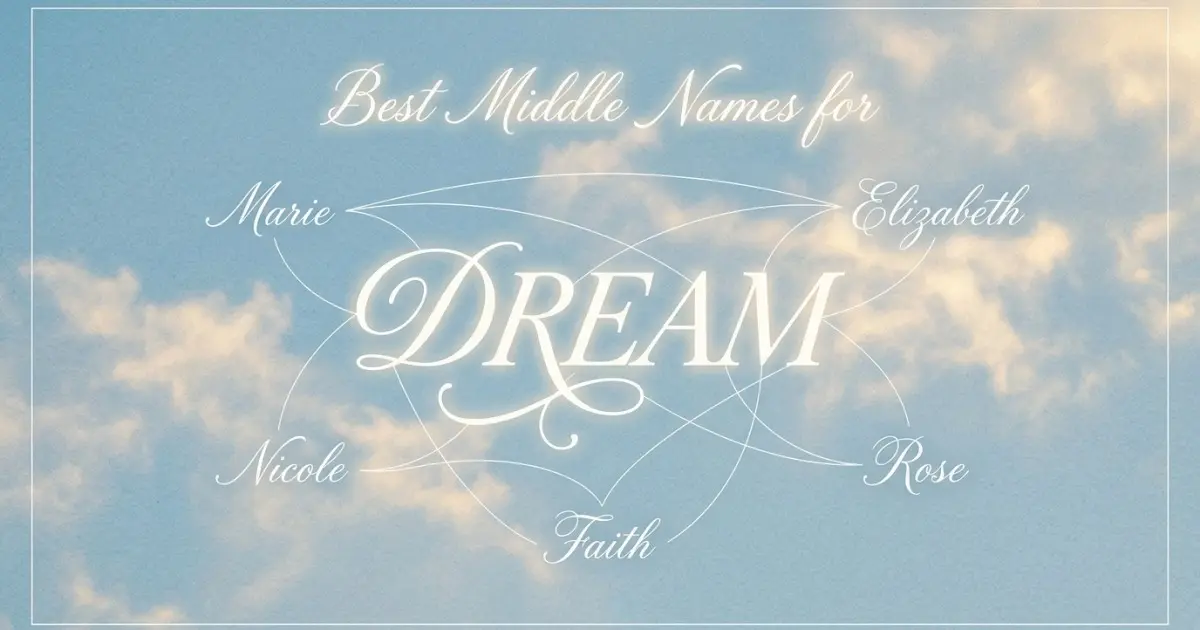
A middle name often does the social work a first name cannot safely do alone. The first name is what the world meets first: the sound on the classroom roll, the name on the birthday cake, the one that appears in introductions before a child has had any chance to explain herself. The middle name is quieter, but it is often the part that stabilizes the whole structure. It can soften a severe first name, dignify a playful one, carry family memory without placing that burden in daily use, or give a bold choice somewhere firmer to stand. That is why middle names matter so much in contemporary naming. They are not filler. They are the hidden architecture of how a name lives in real life.
Dream makes that especially clear because it is not a conventional inherited name at all. It is a one-syllable English word carrying a large concept: vision, aspiration, inward possibility. That gives it unusual beauty, but also unusual exposure. A middle name after Dream does not merely add sound. It decides how the name will be read. It can make Dream feel grounded, lyrical, fashion-forward, serious, gender-flexible, or surprisingly traditional. It can also rescue the full combination from sounding too airy, too slogan-like, or too delicate. The best middle names for Dream do one essential thing well: they turn a powerful idea into a wearable full name. The combination works best when the emotional color of the first name stays intact, which is easier to judge once you revisit Dream meaning.
What a middle name has to solve when the first name is Dream
| Style | Recommended Names | Why it works with Dream |
|---|---|---|
| Classic and grounding | Dream Elizabeth, Dream Catherine, Dream Alexander, Dream Thomas | These names add history and weight, which helps Dream feel anchored rather than purely conceptual. |
| Softly lyrical | Dream Elise, Dream Noelle, Dream Celeste, Dream Juliet | These pairings preserve the visionary quality of Dream while giving it a smoother, more melodic full-name line. |
| Modern and lean | Dream Quinn, Dream Blake, Dream Sage, Dream Wren | Shorter modern middles keep the full name contemporary and crisp without making it feel overloaded. |
| Unisex balancing choices | Dream Avery, Dream Ellis, Dream Rowan, Dream Morgan | These names support Dream’s unisex range and let the family lean more openly into a gender-neutral style. |
| Formal and expansive | Dream Josephine, Dream Beatrice, Dream Nathaniel, Dream Sebastian | A longer formal middle gives Dream contrast and turns the full name into something more layered and socially flexible. |
| Family bridge names | Dream Marie, Dream Anne, Dream Louise, Dream James | These familiar middle choices help a bolder first name sit more naturally inside a family and across generations. |

Dream needs a middle name that gives the concept a human frame
One-syllable first names usually need more structure behind them
Dream is only one syllable, but that does not make it acoustically simple. It begins with a strong consonant cluster, opens into a long vowel, and ends with a soft nasal close. It sounds decisive, not flimsy. The real issue is not sound alone. It is social scale. Because Dream is a full English word carrying a large idea, the middle name has to perform more social framing than it would after a conventional first name like Anna or James.
This is why the strongest Dream combinations often use a middle name with some historical or structural authority. Dream Elizabeth, Dream Catherine, Dream Alexander, and Dream Thomas all work because the second name reassures the ear. It tells the listener that the full name is not merely a concept floating free, but part of a more familiar naming rhythm. Research and naming advice often return to this principle in different forms: the bolder the first name, the more stabilizing work the middle may need to do.
That does not mean every middle must be old-fashioned or formal. It means the second name should know its job. Dream already provides the imaginative leap. The middle name should usually provide definition, continuity, or proportion.
Why contrast matters more than perfect matching
A common mistake with highly expressive first names is choosing a middle that repeats the same emotional tone. On paper, that may seem harmonious. In practice, it often leads to excess. Dream paired with an equally abstract or equally vaporous middle can start to sound more like a phrase than a person. The most successful combinations do not mirror Dream. They counterbalance it.
This is why Dream Claire feels cleaner than a more diffuse alternative, and why Dream Josephine can sound more sophisticated than a second concept name. The middle does not have to drain Dream of its poetry. It simply has to keep that poetry inhabitable. The full name should suggest a child who can move through ordinary institutions as well as imaginative ones.
Where Dream becomes wearable instead of merely striking

Classic middles make Dream feel more durable
When a first name is as conceptually visible as Dream, a classic middle can be a tremendous advantage. Names like Elizabeth, Catherine, Marie, Thomas, and James carry enough historical familiarity to make the full combination feel less experimental. This is not because Dream needs apologizing for. It is because contrast produces elegance.
Dream Elizabeth works by placing a modern aspiration word beside a time-tested formal name. The result is not tension in a bad sense, but depth. One part of the name sounds visionary. The other sounds durable. Likewise, Dream Thomas or Dream James can be particularly effective for families who want to emphasize the name’s unisex character while preserving a strong bridge to naming tradition.
These classic middles are especially useful if the surname is also unusual, double-barrelled, or phonetically soft. In those cases, the middle can serve as the one steady beam in the structure. It gives the full name credibility without dulling its originality.
Modern middles can work, but only if they stay disciplined
Modern middles are also possible and can sound excellent with Dream, but they need to be chosen carefully. Dream Quinn, Dream Blake, Dream Sage, and Dream Wren all offer a contemporary, sharp-edged balance. What makes them work is that they are concise and controlled. They do not pile more softness or abstraction onto the first name. They provide outline.
For families who love Dream because it feels fresh and unconventional, this may be the most appealing path. These pairings keep the name in a distinctly current register. But they still need a surname that can close the line convincingly. If the family name is extremely light, lyrical, or unusual, too much modern minimalism can make the whole combination feel underbuilt. Dream benefits from at least one surrounding piece that offers weight.
Dream can lean lyrical, but the middle should keep it from floating away
It is natural to want to pair Dream with a middle name that sounds beautiful. The danger is that Dream already sounds like a poetic image. If the middle is equally airy without any structural firmness, the full name can start to resemble a title rather than a person. This is why the strongest lyrical pairings are not the most ethereal ones. They are the ones with shape.
Dream Elise, Dream Celeste, Dream Noelle, and Dream Juliet all work because each middle has enough inner architecture to support the first name. Elise is neat and clear. Celeste has a strong final consonant. Noelle is soft, but still contained. Juliet carries literary grace with a clean stress pattern. These middles preserve Dream’s imaginative atmosphere while preventing the whole name from dissolving into mist.
This is especially important if the surname is short. A one-syllable first name plus a one-syllable surname can sound abrupt unless the middle adds some length and movement. In that situation, a lyrical two- or three-syllable middle can be exactly the right answer. Dream Juliet Hart or Dream Elise Brooks give the name room to unfold.
The rule here is simple: Dream can support beauty, but it needs beauty with bones. A middle name should not merely echo its mood. It should complete its form.
How Dream behaves with initials, surname rhythm, and gender signals
Initials matter more when the first name is already conspicuous
Because Dream is immediately noticeable, the technical parts of naming deserve extra attention. Initials should be checked carefully. Research and practical naming advice alike emphasize the same steps: say the full name aloud, write down the initials, and test the combination in both intimate and institutional contexts. That advice becomes even more important when the first name is unusual enough to attract attention on its own. If you want the IPA, accent detail, and stress pattern behind the flow advice, the next stop is how to pronounce Dream.
Dream works best when the initials do not create something distracting, jokelike, or unintentionally loaded. A family willing to choose Dream is already making a bold naming decision. That boldness usually benefits from one less avoidable complication elsewhere.
Surname harmony can either dignify Dream or destabilize it
The surname matters enormously here. If the surname is very conventional, Dream can often afford a more expressive middle. If the surname is highly unusual, heavily conceptual, or rhythmically soft, then the middle name may need to do more grounding work. Families should listen for whether the full sequence sounds like a plausible human name or like a phrase drifting into branding or performance.
Dream tends to pair especially well with surnames that are concrete, old, or otherwise well established. The contrast is healthy. A surname such as Carter, Bennett, Thomas, or Sullivan gives Dream somewhere real to stand. With a more lyrical surname, the middle should usually be firmer.
Middle names also let Dream lean more feminine, masculine, or openly unisex
Because Dream is unisex in principle but currently used more for girls than boys, the middle name becomes a powerful signaling device. Dream Elizabeth and Dream Josephine will naturally read more feminine. Dream Thomas and Dream Nathaniel will lean more masculine. Dream Avery, Dream Ellis, Dream Rowan, and Dream Morgan keep the unisex space more open.
This flexibility is one of Dream’s most interesting strengths. The first name carries the concept. The middle can guide the social reading. Families who want room rather than a narrow lane may find that especially attractive.
The strongest full-name directions for Dream
If the goal is grounding and long-term wearability, the strongest combinations are often Dream Elizabeth, Dream Catherine, Dream Alexander, and Dream Thomas. These names make the boldness of Dream feel deliberate and durable rather than fleeting.
If the goal is lyrical elegance, Dream Elise, Dream Juliet, Dream Celeste, and Dream Noelle are persuasive choices. They let Dream remain airy and imaginative, but they still give the full name a clear line.
If the goal is clean modernity, Dream Quinn, Dream Blake, Dream Sage, and Dream Wren can work especially well, particularly with a strong surname. These combinations feel contemporary without becoming flimsy.
If the goal is family continuity, Dream Marie, Dream Anne, Dream Louise, and Dream James provide excellent bridge choices. They help the name feel connected to something older than itself, which can be valuable when the first name is conceptually bold.
Flow and Initials FAQ for Dream
Does Dream need a traditional middle name?
Not always, but Dream often benefits from a middle name with some historical or structural familiarity. A traditional middle can help the full name feel more grounded and socially flexible.
What kind of middle name sounds best with Dream?
The strongest middle names for Dream usually provide contrast. They may be classic, formal, crisp, or gently lyrical, but they should give the one-syllable word-name more shape and footing.
Can Dream work as a unisex full name?
Yes. Dream is unisex, and the middle name can help steer the overall reading. A more traditionally feminine, masculine, or neutral middle can clarify the family’s preferred direction.
What should parents test before finalizing a middle name for Dream?
Say the full name aloud with the surname, check the initials, and listen for whether the combination sounds like a wearable personal name rather than a phrase. Dream sounds strongest when the middle adds structure and context.