
How to Pronounce Dov: A Simple Guide to the Right Vowel Sound

Dov is a name that can change in a split second when someone sees it on paper. A teacher reading a roster, a receptionist checking in a patient, or a family friend seeing it written on an invitation may be tempted to treat it like the English word dove. But Dov is not pronounced like the bird, and it is not pronounced like the past-tense form of dive. The name is pronounced DOV.
That compact pronunciation is part of the name’s force. Dov has one syllable, one clean beat, and one clear meaning: “bear.” Its Hebrew origin gives it depth, but in everyday English the pronunciation is simple once the vowel is understood. The name begins with a firm d, carries a short rounded vowel, and closes with a soft but audible v.
Dov Is Said in One Firm Beat, Not Like Dove
| Element | Phonetic Detail | Quick Tip |
|---|---|---|
| Everyday pronunciation | DOV | Say it as one compact syllable, with no extra vowel at the end. |
| Syllable count | 1 syllable | The whole name lands in a single beat. |
| Stress pattern | Single stressed syllable | Because Dov has one syllable, the full name carries the stress. |
| U.S. IPA | /dɒv/ | The vowel is short and rounded, not the long oh sound. |
| U.K. IPA | /dɒv/ | The listed U.S. and U.K. forms match, so the basic pronunciation stays stable. |
| Main pronunciation risk | Reading it as dove | Avoid both duv and dohv; keep the name short: DOV. |
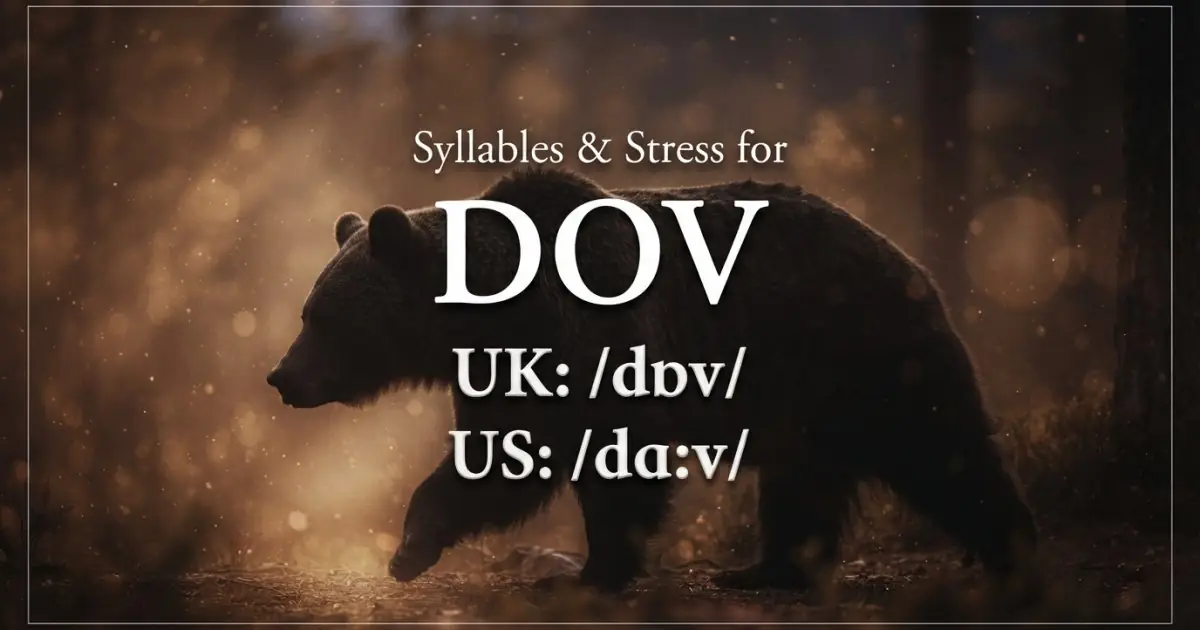
The One-Syllable Shape of Dov Gives the Name Its Strength
Dov is built from only three sounds: d, a short rounded vowel, and v. Because there is no second syllable, every sound matters. The name should not be stretched, softened into two beats, or given a silent final flourish. It is direct: DOV. Pronunciation lands more fully when the name’s roots and history are already in view, so begin with Dov meaning.
The opening D gives Dov a clear start
The first sound is a voiced d. In plain terms, that means the name begins with a definite contact and release. It is not airy or uncertain. That opening gives Dov a grounded start, which suits the name’s meaning, “bear.”
The d should be clean but not overdone. Dov is not a harsh name. It begins firmly, then moves quickly into the vowel and final v.
The final V keeps Dov warm rather than blunt
The last sound in Dov is v, a voiced fricative. A fricative is made with airflow; a voiced fricative also has vibration. That gives the ending a soft buzz rather than a hard stop. Dov does not close like Dot or Dock. It finishes with a small vibration: DOV.
This final sound is one reason the name feels compact but not cold. The name has strength, but the v gives it warmth.
The IPA for Dov Confirms a Short, Rounded Vowel
The IPA for Dov is /dɒv/ in both U.S. and U.K. English. This matters because the spelling can mislead English readers. Seeing Dov, many people may reach for the familiar word dove, but the IPA shows a different sound pattern.
Dov does not use a long O sound
Dov should not be pronounced with the long oh vowel, as in doe. That would turn the name into something closer to dohv, which is not the intended guide here. The correct sound is shorter and more compact.
A helpful way to think about it is this: Dov should feel like a one-beat name with a short vowel, not a name that glides outward. It lands quickly.
Dov also should not become the English bird word
Another common mistake is pronouncing Dov like dove, the bird. That word has a different vowel in everyday English. Dov’s pronunciation is more compact and more rooted in the short-vowel guide shown by the IPA.
Parents can clarify it simply: “Dov, pronounced DOV.” For most people, hearing it once is enough.
Common Mistakes With Dov Come From Familiar English Spellings
Dov is short, but short names can still create hesitation when their spelling resembles a familiar word. The main challenge is not length. It is preventing English readers from automatically converting Dov into something they already know.
Do not say DOHV
The first mistake is adding a long oh sound. Dov should not sound like dohv. There is no long vowel glide in the pronunciation. Keep the vowel short and the name compact.
Do not say DUV
The second mistake is reading it like dove, the bird. That pronunciation changes the vowel. Dov is its own name, not the English bird word in disguise.
Do not add an extra syllable
Dov should never become DO-vuh or DOV-ee when used as the full name. Dovi can be an affectionate nickname, but Dov itself has one syllable.
Sound Neighbors Help Dov Become Easier to Say
Dov sits near short, strong names such as Lev, Bo, Saul, Jude, Kai, and Avi in practical rhythm. These names are brief, memorable, and easy to call aloud. Dov stands apart because of its final v, which gives it a warmer finish than many one-syllable names. The way the name resolves at the end often decides which short forms feel natural in speech, and that becomes clearer in nicknames for Dov.
Its closest helpful comparison is not a perfect English rhyme, but a structure: one firm consonant, one short vowel, one clear final consonant. Say it without stretching. Let the d begin, the vowel stay compact, and the v finish audibly.
Practice lines for saying Dov naturally
Use these short lines to place Dov into ordinary speech:
- This is Dov.
- Dov is here today.
- I spoke with Dov.
- Welcome, Dov.
- Dov, come this way.
In each line, keep the name to one beat. The final v should be heard, but not exaggerated.