
How to Pronounce Diana: Clear Pronunciation Help for Everyday Use
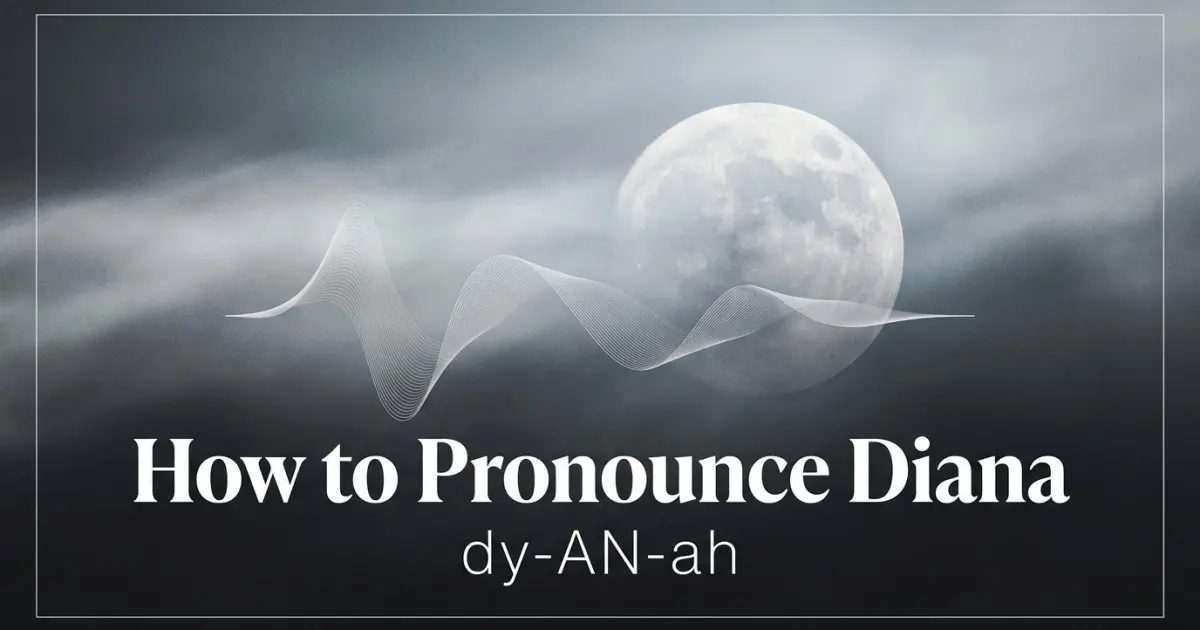
The real pronunciation test for Diana rarely happens in a naming book. It happens in ordinary public life: the teacher taking attendance on the first morning of school, the nurse calling from a waiting-room doorway, the presenter pausing over a graduation card and hoping to get the name right on the first try. Diana is one of those names that most people recognize instantly, but recognition is not the same thing as rhythm. What makes the name sound right is not only the letters. It is the way the stress falls. Once someone says it naturally—dy-AN-uh—the name settles into place and sounds exactly as it should: poised, familiar, and quietly elegant.
That ease is one of Diana’s hidden strengths. A name with classical roots and divine associations could easily become stiff in modern speech. Diana never really does. It works because the sound pattern is highly legible in English. The opening is bright, the middle is where the voice opens most fully, and the ending softens the name without weakening it. In other words, Diana sounds balanced. That balance is why it has survived so well across decades. It is not merely beautiful on the page. It is cooperative in the mouth.
What speakers need to know before Diana sounds natural
| Element | Phonetic Detail | Quick Tip |
|---|---|---|
| Everyday pronunciation | dy-AN-uh | Let the strongest emphasis fall on AN; that middle syllable is the name’s center. |
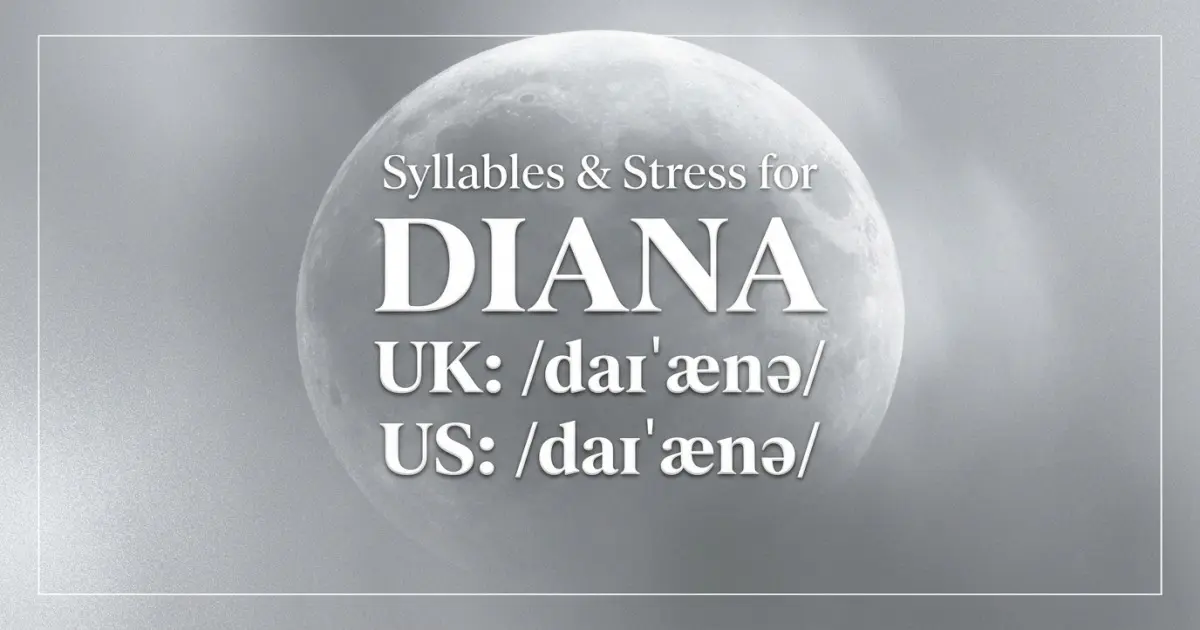
| US IPA | /daɪˈænə/ | The American form is smooth and familiar, which helps Diana feel timeless rather than formal. |
| UK IPA | /daɪˈænə/ | The British rendering matches the American one closely, making Diana highly stable across English accents. |
| Syllable count | 3 syllables | Think of Diana as three clean beats rather than one flowing blur. |
| Primary stress | Second syllable: AN | If the stress moves to the first syllable, the name immediately sounds less polished. |
| Opening sound | “dy” as in die | Start with a clear diphthong, not a flat “dee” in standard everyday English. |
| Ending sound | Soft “uh” | The final syllable should taper gently instead of sounding sharply pronounced. |
Diana rises and settles on one very clear rhythm
Why the stress belongs on AN
Diana is pronounced dy-AN-uh, and the most important part of that pattern is the stress on the middle syllable. The second beat carries the emotional weight of the name. The first syllable introduces it. The last syllable lets it land. If the emphasis slips away from AN, Diana stops sounding effortless and begins to feel either too clipped or too stiff. Before focusing only on syllables and stress, it helps to step back into the fuller frame of Diana meaning.
This is worth noticing because Diana is a classical name that stays modern largely through rhythm. Some older names survive because they are brief. Others survive because they become fashionable again. Diana survives because it sounds naturally balanced in English. The middle stress gives the name lift. It keeps the opening from doing too much work and the ending from feeling ornamental.
How the syllables should feel in the mouth
The easiest way to say Diana naturally is to hear it in three steps: dy / AN / uh. The first syllable begins with a diphthong, which means the mouth moves slightly through the vowel rather than holding one flat sound. That gives the opening brightness and motion. The second syllable opens wider and takes the stress. The third syllable reduces softly, which is typical of comfortable English speech.
There is also a useful reason the name flows so well: nothing in it is harsh. There is no fricative scraping through the middle, no dense consonant cluster forcing the tongue to stop and reset, and no abrupt final consonant to cut the line short. The consonants are light enough to support the vowels rather than interrupt them. In accessible terms, Diana sounds smooth because the sound materials cooperate with one another.
Diana stays remarkably stable across English accents
US and UK pronunciation are essentially the same
One of Diana’s practical strengths is that its U.S. and U.K. IPA are the same: /daɪˈænə/. That is not true of every established girls’ name. Some names change shape quite noticeably across English-speaking regions. Diana generally does not. The bright opening, the stressed middle, and the soft ending all remain in place. That makes the name unusually portable.
For parents, this matters because a name that sounds stable across accents tends to feel easier in public life. The child is less likely to spend time correcting pronunciation and more likely to hear her name said correctly after just one introduction. Diana benefits from exactly that kind of consistency.
Where tiny differences may still appear
There can still be subtle regional shifts in texture. Some speakers may make the opening diphthong a touch broader or the final vowel slightly lighter. But these are refinements, not meaningful differences in identity. In real-world listening, Diana remains Diana. The structure stays intact.
That stability is one reason the name continues to feel so usable. It carries classical history, but not classical fragility. The pronunciation is robust enough to survive ordinary speech without turning messy or uncertain.
Diana is simple, but a few pronunciation mistakes still happen
Do not flatten the opening into “dee”
One common mistake is losing the diphthong and starting the name with a plain dee. In standard everyday English, Diana begins with dy, like the word die. That bright opening is part of the name’s shape. If it becomes too flat, the name sounds less natural in English.
Do not shift the stress to the first syllable
Another mistake is overemphasizing the opening, almost turning the name into DY-uh-nuh. That weakens the central vowel and takes away the name’s elegance. Diana should open clearly, but it should bloom in the middle.
Do not overperform the ending
The last syllable in Diana is soft and reduced. It should not sound like a separate dramatic event. When speakers over-pronounce the final uh, the name can become more theatrical than graceful. The beauty of Diana comes from balance, not exaggeration.
It helps to compare Diana with neighboring names. It shares some openness with names like Brianna, Eliana, and Tiana, but it is shorter and more controlled. It also shares a classical clarity with names like Julia and Helena, though Diana feels a little brighter at the front because of that opening diphthong. These comparisons explain why the name sounds familiar without becoming ordinary.
Diana becomes easy very quickly when practiced in real speech
Use short, ordinary sentences
The best way to practice Diana is not to chant it in isolation, but to place it inside natural phrases: “Diana is here.” “Can Diana come to the front?” “Diana starts on Monday.” Once the name is used in full sentences, the rhythm becomes obvious. It stops looking like an object of analysis and starts functioning as what it is meant to be: a living everyday name.
You can also tap the beats once or twice: dy | AN | uh. Then say the full name normally. This helps many speakers feel where the center belongs without overthinking individual letters.
How to know you are saying Diana naturally
You are probably pronouncing Diana well if the opening sounds bright, the middle syllable feels fullest, and the ending fades lightly instead of stopping hard. A good pronunciation should feel smooth and confident. It should not sound like you are handling a classical relic. It should sound like you are saying a real person’s name.
That may be the most important truth about Diana’s pronunciation. For all its ancient roots and divine meaning, the name remains remarkably human in the mouth. It asks for no display. It asks only for accuracy and ease. Once the stress lands where it belongs, Diana does what the strongest names always do: it sounds elegant without sounding difficult.
Diana Pronunciation Common Questions
How do you pronounce Diana in everyday English?
The most useful everyday guide is dy-AN-uh, with the main stress on the middle syllable.
Is Diana hard to pronounce?
No. Diana is very straightforward once the rhythm is understood. The opening is bright, the middle carries the stress, and the ending softens naturally in English.
Do American and British speakers say Diana differently?
In standard usage, not in any major way. Both are commonly represented as /daɪˈænə/, which makes Diana very stable across English accents.
Which syllable in Diana should be emphasized?
The middle syllable should carry the emphasis: dy-AN-uh. That central stress is what gives the name its balanced, polished sound.