
How to Pronounce Delilah: Syllables, Stress, and Common Mistakes
Delilah is one of those names many people recognize before they ever have to say it carefully. It appears in literature, music, religious memory, and modern baby-name culture, so most listeners already think they know how it sounds. Yet real-life pronunciation is rarely tested in theory. It is tested at the pediatrician’s desk, on the first day of school, in a graduation lineup, over a phone call, and in those split-second moments when a stranger has to decide where the stress belongs. Delilah succeeds in those moments because, once heard properly, it is both memorable and easy to repeat.
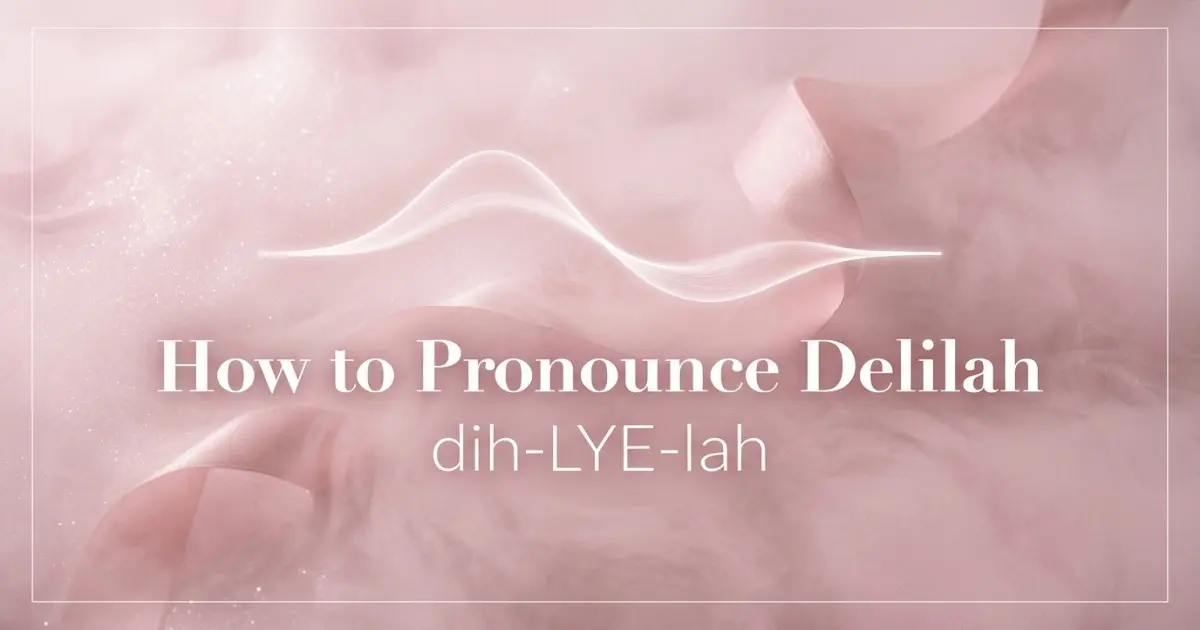
The practical anchor is simple: in everyday English, Delilah is said dih-LY-luh. The middle syllable carries the emphasis, and that stress is what gives the name its lift. If the stress slips forward or the vowels are flattened, the name can suddenly sound heavier or less elegant than it really is. Spoken correctly, Delilah has a smooth opening, a bright central rise, and a soft landing. That is why it feels lyrical without becoming difficult.
What Delilah’s pronunciation is really clearing up
| Element | Phonetic Detail | Quick Tip |
|---|---|---|
| Everyday pronunciation | dih-LY-luh | Think of three beats, with the strongest one in the middle. |
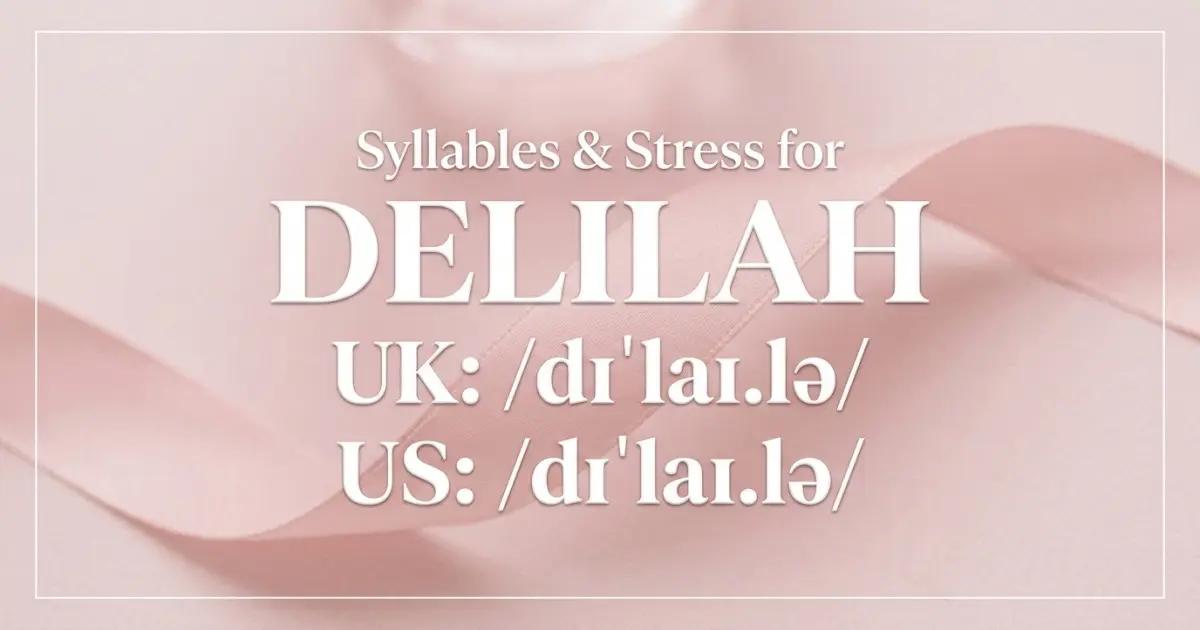
| IPA (US) | /dɪˈlaɪlə/ | The raised stress mark before laɪ shows where the voice should naturally lift. |
| IPA (UK) | /dɪˈlaɪlə/ | US and UK pronunciation are effectively the same in standard use. |
| Syllable count | 3 syllables | Say it as deh / LYE / luh in rhythm, not as a rushed two-syllable blur. |
| Primary stress | Second syllable | If you emphasize the first syllable, the name loses its familiar shape. |
| Key sound texture | Liquid consonant l repeated twice | The repeated l sound is what makes Delilah flow so smoothly. |
| Ending | Soft schwa-like luh | Do not over-pronounce the last syllable; let it fall away gently. |
How Delilah moves in the mouth
Delilah is easy to say because it is built from familiar English sounds arranged in a graceful pattern. The opening d is a clean stop consonant: it starts the name firmly. The repeated l is a liquid consonant, which means it lets the sound flow rather than snap. That is why Delilah feels smooth instead of clipped. Between those consonants, the stressed lye sound gives the name brightness and shape. The final syllable then relaxes into a soft luh, which stops the name from sounding too sharp or theatrical. Before focusing only on syllables and stress, it helps to step back into the fuller frame of Delilah meaning.
Why the middle syllable matters most
The real center of gravity in Delilah is the second syllable. That is where the voice rises, and it is what makes the name instantly recognizable. Say dih-LY-luh and the name sounds natural. Shift the stress to the first syllable and it starts to sound off-balance. Overstate the last syllable and it sounds stiff. In other words, Delilah depends less on unusual sounds than on correct stress.
This is one reason the name works well in public life. Once someone hears the pattern, they can usually repeat it accurately. The rhythm is stable and familiar to English-speaking ears, even if they have never studied phonetics.
The ending should stay light
The final syllable in Delilah is not a strong, fully weighted lah in everyday English. It is usually lighter, closer to luh. That softer ending prevents the name from sounding too dramatic. Parents sometimes worry that elegant names will feel overperformed when spoken aloud, but Delilah avoids that problem because the last syllable relaxes naturally. The way the name resolves at the end often decides which short forms feel natural in speech, and that becomes clearer in Delilah nicknames.
Delilah in American and British speech
In standard modern usage, the American and British IPA forms for Delilah are the same: /dɪˈlaɪlə/. That does not mean every speaker will sound identical. Accent always colors vowels slightly. But the overall structure of the name remains very stable across major English-speaking settings: short opening syllable, stressed middle, soft final release.
Where accent may change the feel, not the form
In some American accents, the opening dih may sound a touch tighter or shorter. In some British accents, the final vowel may come out a little lighter. But these are minor color differences, not structural changes. The name does not usually split into separate accepted pronunciations the way some names do. Delilah is reassuringly consistent.
That consistency is useful for daily life. It means the name travels well. Teachers, relatives, and strangers are more likely to land close to the intended pronunciation, even if they speak with different regional accents.
Why Delilah avoids major cross-accent confusion
Names often become difficult across accents when they contain unstable vowels, ambiguous stress, or unfamiliar consonant clusters. Delilah has none of those problems. Its sounds are common, and its stress is clear. The repeated liquid consonants also help smooth transitions between syllables. For that reason, Delilah tends to be heard as elegant rather than complicated.
Where people go wrong with Delilah
The most common mistakes with Delilah do not come from ignorance so much as from speed. People tend to rush names they recognize, and rushing is what distorts Delilah. The name needs three clear beats. Compress it, and it loses shape.
Stress mistakes flatten Delilah first
The biggest error is misplacing the stress. If someone says DEH-luh-luh or puts too much weight on the first part of the name, Delilah loses its familiar musical rise. That mistake is rare once corrected, but it can happen when a person is reading quickly from a list and guessing based on spelling alone.
Over-pronouncing the ending makes it sound heavier
Another mistake is turning the ending into a strong lah instead of a lighter luh. In performance or song, a fuller final vowel may appear for effect, but in everyday speech the softer ending is what keeps the name balanced. Parents who want the name to sound polished should remember that Delilah finishes gently.
Blurring it into two syllables loses the elegance
Some fast speakers may reduce Delilah so much that it almost sounds like two and a half syllables. That weakens the name. The safest habit is to hear the internal rhythm clearly: dih / LYE / luh. Not exaggerated, just distinct.
Names that sound near Delilah, and why Delilah still stands apart
Sound neighbors help parents understand what kind of pronunciation personality a name has. Delilah shares softness with names like Lila, Leila, Delia, and Dahlia, but it is not pronounced like any of them. Lila is shorter and more exposed. Delia is lighter and less dramatic. Dahlia has a different vowel pattern and a more floral register. Delilah stands apart because of its internal lift and repeated l sounds.
That repeated liquid consonant pattern is a major part of the name’s appeal. Liquids make names feel smooth and legato. Delilah therefore sounds more flowing than names built around harder consonants or strong fricatives. At the same time, the opening d keeps it from floating away. The name has softness, but it also has edges in the right places.
How to practice Delilah until it sounds natural
Pronunciation gets easier when it is tied to rhythm instead of abstract symbols. If you are practicing Delilah aloud, do not think first about complexity. Think about pulse. One quiet beat, one bright beat, one gentle beat.
Three simple practice lines
Delilah is ready.
Delilah Grace Walker.
Hello, Delilah.
These lines work because they place the name in natural speech rather than isolation. If the middle syllable lifts cleanly in all three, the pronunciation is set. Parents can also try saying the name in fast and slow speech to make sure it holds its shape both ways.
The easiest memory cue
If you need one quick memory cue, keep this: dih-LY-luh. The middle should sparkle a little. The last syllable should soften. That alone will get most speakers exactly where they need to be.