
How to Pronounce Dallas: What People Often Get Wrong
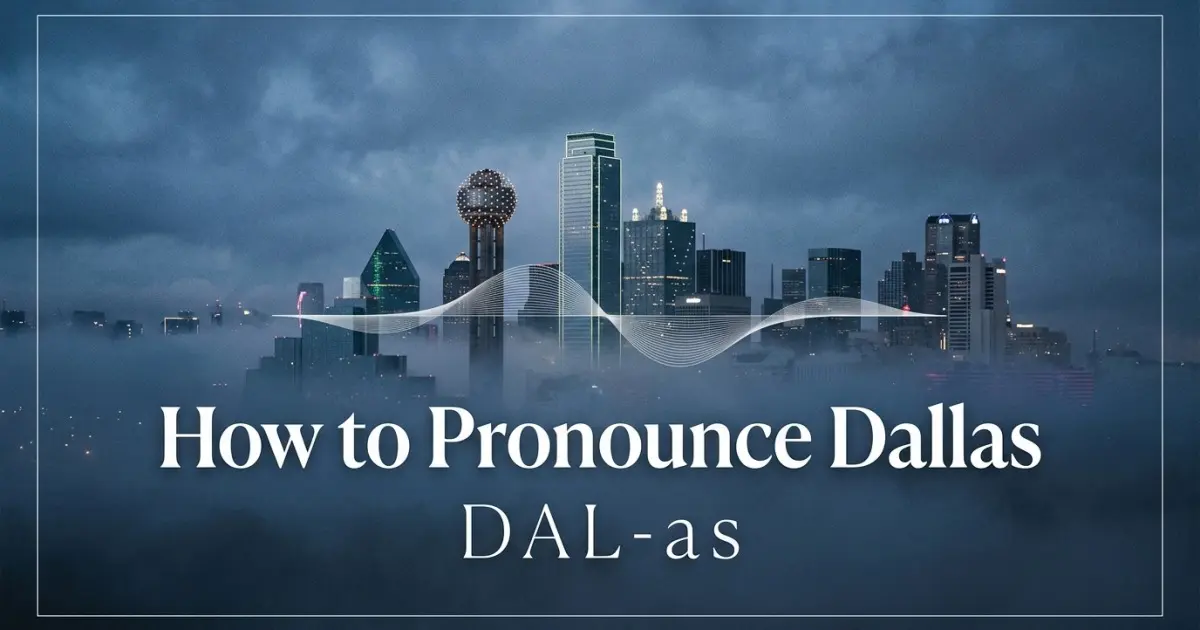
The pronunciation test for Dallas usually happens in a very ordinary moment: a teacher at first roll call, a nurse at a clinic door, a barista glancing down at a cup before calling a name into a noisy room. That matters because Dallas looks familiar enough that most people assume they already know it, but it also carries a place-name and surname feel that can make some speakers hesitate for a split second. Is it broad and Southern? Is it clipped and brisk? Does it sound more like the city, the surname, or the older Scottish root beneath both? In practice, the answer is simpler than the associations around it.
Dallas is typically pronounced DAL-us, with the main stress on the first syllable and a light, reduced second syllable. In IPA, that is /ˈdæləs/ in both U.S. and UK guidance. That shared notation is useful because it tells you the name is structurally stable across major English accents. Whatever imagery people bring to Dallas, the spoken shape remains compact, direct, and easy to carry. It sounds grounded because it is grounded: two syllables, one strong beat, and no ornamental extra movement.
How Dallas Is Actually Said When It Sounds Natural
| Element | Phonetic Detail | Quick Tip |
|---|---|---|
| Common spoken form | DAL-us | Put the stress on the first syllable and let the second syllable stay lighter and quicker. |
| IPA (US) | /ˈdæləs/ | The first vowel is the short a sound heard in words like “cat” and “map.” |
| IPA (UK) | /ˈdæləs/ | The broad rhythm is the same in British and American English. |
| Syllable count | 2 syllables | Think of Dallas in two neat beats, not as one long blur or an over-separated phrase. |
| Primary stress | First syllable | If the stress shifts or both syllables sound equally strong, the name loses its natural balance. |
| Middle consonant | Clear /l/ to /ə/ transition | Finish the first syllable cleanly on the l before letting the second syllable relax. |
| Ending sound | Soft -us with a reduced vowel | The ending should sound light, almost effortless, not dramatically emphasized. |

Why Dallas Sounds Brisk, Grounded, and Easy in the Mouth
Dallas works because it follows one of the most stable stress patterns in English naming: strong first syllable, lighter second syllable. That pattern gives names clarity and speed. You hear it, register it, and repeat it without much effort. In Dallas, the first syllable carries almost all the identity work. Dal- begins with a firm d, opens into the short vowel /æ/, and closes on the liquid consonant l. The sound is immediate and concrete. It does not drift in or ornament itself. Before focusing only on syllables and stress, it helps to step back into the fuller frame of Dallas meaning.
The first syllable is where Dallas gets its strength
The stressed DAL is the anchor of the name. Because the vowel is the same short front sound found in “cat” or “stack,” the name feels familiar to English speakers from the start. That helps Dallas sound sturdy instead of distant. The final l of the syllable also matters. As a liquid consonant, it keeps the name from sounding too abrupt. It allows the sound to flow forward while still giving the first syllable a clean edge.
The second syllable keeps Dallas from sounding too hard
The ending -us is lighter and less dramatic than many people expect. In natural speech, it usually contains a reduced vowel, which means it should not feel as weighty as the opening syllable. That reduced ending is part of what makes the name feel conversational. If the second syllable were as strong as the first, Dallas would sound more formal and less relaxed. Instead, it lands with an easy taper.
This balance is part of why Dallas works equally well as a place-derived name, surname-style name, or given name. It has enough structure to feel substantial and enough reduction at the end to remain socially fluid. It sounds built, but not heavy.
Where Dallas Commonly Goes Wrong in Everyday Speech
Dallas is not a difficult name, but there are a few predictable ways it can drift off course when people speak too quickly or overthink it.
Dallas should not become “DAWL-us” by accident
One common shift comes from people leaning too hard into certain regional or place-based associations and rounding the first vowel too much. That can push the opening toward something that sounds more like dawl than dal. In the pronunciation given here, the intended first vowel is the short a of /æ/, not a broad rounded sound. Keeping that vowel clear preserves the name’s clean, direct English shape.
Dallas should not be over-separated
Another mistake is speaking the name as if each syllable deserves equal emphasis: DAL-LAS. That can make the name sound heavier, almost mechanical. The natural pattern is one strong opening beat followed by a lighter second syllable. Dallas should feel compact, not hammered into parts.
Dallas should not lose the second syllable entirely
At the opposite extreme, some speakers rush so much that the ending nearly disappears into a murmur. That weakens the name too. The second syllable is reduced, but it still needs to be heard. The name should sound like two syllables, not one clipped chunk.
Dallas Across U.S. and UK Speech Stays Remarkably Stable
One of Dallas’s major practical strengths is that its pronunciation remains broadly the same across major English accents. The U.S. and UK IPA are both given as /ˈdæləs/, which means the core structure does not shift in any meaningful way. That is useful for a name with both surname and place-name associations, because it keeps the name portable and easy to repeat.
What may vary slightly from speaker to speaker
The main differences are subtle matters of vowel coloring and speed. Some speakers may make the first vowel a touch broader, while others keep it tighter and flatter. Some will reduce the second syllable more strongly in fast speech. But these are surface differences. The deep shape of the name stays the same: first-syllable stress, short first vowel, light ending.
Why that matters in real life
Names that hold their form across accents are easier to live with. They require less correction, less self-consciousness, and less repetition. Dallas benefits from that. It may evoke different images for different people, but it rarely becomes phonetically unstable once spoken aloud.
Dallas Beside Its Sound Neighbors
Sometimes the easiest way to hear a name clearly is to place it beside similar forms. Dallas sits near a few useful sound neighbors, and comparing them helps clarify what Dallas is and is not. Once the sound pattern is clear, some shortenings stop feeling optional and start feeling natural, and the clearest map is in nicknames for Dallas.
Dallas is closer to Dalton than to Darius
Dallas shares something with other sturdy two-syllable names like Dalton in that it begins with a strong stressed Dal-. But unlike Dalton, it does not pivot into a clearly articulated ton. Its second syllable is softer and lighter. On the other hand, it is much less flowing and much less vowel-rich than a name like Darius. Dallas stays compact where Darius expands.
Dallas is not just the city said louder
Place-name associations can make some speakers expect a more theatrical or regionally marked pronunciation, but Dallas as a personal name usually sounds more neutral and more trimmed than that. It does not require performance. It works best when treated as a straightforward two-syllable English name with one clear stress point.
How to Practice Dallas Until It Feels Effortless
Fortunately, Dallas does not need elaborate rehearsal. The goal is simply to keep the first syllable strong and the second one light.
A quick mouth cue for Dallas
Start with the word “dal” using the same short a you hear in “cat.” Then add a soft, quick us. Say it in one clean movement: DAL-us.
Useful practice lines
- “Dallas is here.”
- “This is Dallas.”
- “Have you met Dallas?”
- “Dallas wrote the note.”
If the name starts sounding too broad, tighten the first vowel back toward the short a. If it starts sounding too clipped, let the second syllable remain audible. Once those two adjustments are in place, Dallas usually feels completely natural.
That is one of the reasons the name works so well in modern use. Dallas may carry place-name associations and older Scottish roots, but in the mouth it is uncomplicated. It is short, stable, and socially easy. In pronunciation, as in style, Dallas succeeds by sounding more settled than showy.
Dallas Stress and Sound FAQ
How do you pronounce Dallas?
Dallas is pronounced DAL-us. In IPA, that is /ˈdæləs/.
How many syllables does Dallas have?
Dallas has two syllables: DAL and us.
Is Dallas pronounced differently in the U.S. and the UK?
Not in any major structural way. Standard guidance gives the same IPA in both, so the overall rhythm and stress pattern remain stable.
What is the most common pronunciation mistake with Dallas?
The most common mistake is either rounding the first vowel too much or over-stressing both syllables. The name sounds best with a clear short a and one strong opening beat.