
Nicknames for Daisy: Easy Short Forms with Strong Personality
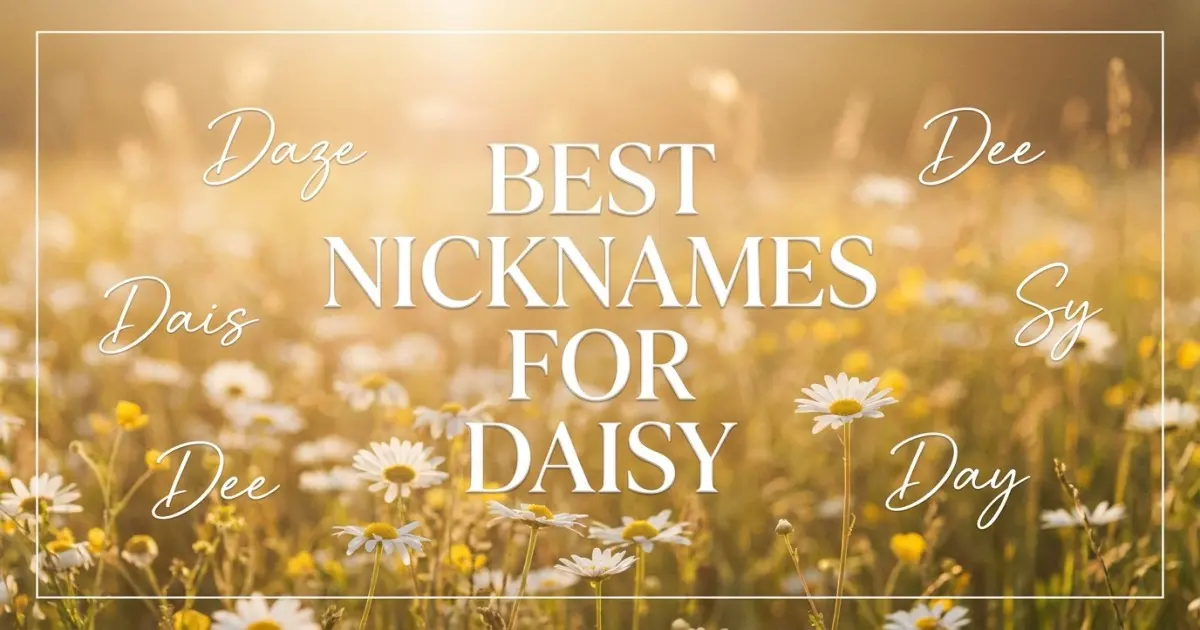
A nickname is rarely just a shorter version of a name. In real life, it acts more like a social password. It tells you who is allowed to soften the formal edges, who gets to be playful, who belongs to the inner circle, and how the person carrying the name is being read in that moment. Parents often think about nicknames as backup options, but they usually become something more revealing than that. A nickname can register affection, comic energy, protectiveness, teenage coolness, or adult self-editing. It is less about efficiency than relationship.
Daisy makes this especially interesting because the full name is already brief, bright, and complete. Official data shows Daisy remains familiar in current use, which means most people do not shorten it because they have to. They shorten it because they want to. That changes the whole nickname landscape. With Daisy, the nickname is not solving a problem of length or formality. It is adding a mood. Some versions make the name feel closer and softer; others make it feel sharper, funnier, or more relaxed. The best Daisy nicknames are the ones that sound as though a real family, real friend group, or real child would actually say them on an ordinary day. Before judging which short form feels right, it helps to look again at the full identity of the name in Daisy meaning.
What Daisy’s Nickname Landscape Reveals About the Name Itself
| Group | Suggested Nicknames | Persona | Use Context |
|---|---|---|---|
| Classic short forms | Day, Daze, Dee | Easygoing, familiar, socially natural | Used by parents, siblings, close friends, and partners who want something effortless and believable. |
| Cute at-home forms | Day-Day, Daisy-Doo, Dee-Dee | Warm, affectionate, child-centered | Most common in toddler years, family routines, bedtime talk, and playful home life. |
| Cool clipped forms | D, Zee | Modern, casual, slightly stylized | More likely in teen years, texting culture, sports teams, or among friends who like minimal nicknames. |
| Playful extended forms | Daisy-girl, Daisy-Boo, Daze-Bug | Sweet, teasing, intimate | Usually family-only or partner-only language rather than a name used in school or professional settings. |
| DIY personality forms | Sunshine-Daisy, Crazy Daze, Miss Day | Humorous, situation-based, highly personal | Best for families and friend groups that naturally invent names from habits, jokes, and personality rather than fixed rules. |
Daisy Is Already Short, So Its Nicknames Signal Closeness More Than Convenience
Why most people will simply stay Daisy
This is the first truth to understand about the name. Daisy does not need a nickname in the way Elizabeth, Josephine, or Katherine often do. It arrives already polished for daily use. Two syllables, clear stress, simple spelling, and immediate recognition give it very little friction in ordinary life. A teacher can say it on the first try. A child can learn it early. A colleague can remember it after one introduction. That means Daisy often remains Daisy in public settings, on school rolls, in work emails, and in adult introductions.
That is not a weakness in nickname potential. It is exactly what makes Daisy interesting. Because the full name is already so efficient, any shift away from Daisy tends to feel meaningful. The nickname is not functional. It is relational. The moment someone says Day instead of Daisy, they are telling you something about the level of ease between them.
Why believable Daisy nicknames stay simple
Names like Daisy can attract overdesigned nickname lists because people assume every name needs a dozen options. In reality, the most believable Daisy nicknames are modest. They usually come from clipping the opening, stretching the ending, repeating a sound, or adding a family-style tag. That is why Day, Daze, Dee, and Daisy-Doo feel more human than anything too clever or detached from the original shape. The nickname world of Daisy is small on purpose. It works by texture, not by endless variation.
The Day- Opening Gives Daisy Its Cleanest and Most Natural Short Forms
Day is the obvious nickname because it keeps the lightness
The opening sound in Daisy does most of the social work. Day is the most intuitive short form because it preserves the name’s brightness and clarity without making it feel overworked. It sounds affectionate but not babyish, and it can move easily from childhood into adult life. A parent can say “Day, shoes on,” a friend can text “see you later, Day,” and a partner can use it without it feeling theatrical. That range is what makes it strong.
Day also benefits from sounding complete. Some clipped nicknames feel like half a word. Day feels intentional, almost like a separate minimal name. For parents who want a nickname option that is simple, graceful, and not too cute, this is often the best answer.
Daze adds a little looseness and modern edge
Daze works differently. It is less formal, a little more playful, and more likely to come from friends or siblings than from official family naming plans. It has an easygoing, slightly contemporary feel. Where Day sounds clear and poised, Daze sounds relaxed and lived-in. It can suit a sporty Daisy, an artistic Daisy, or a teenager whose friends naturally turn names into softer slang-like shapes.
This nickname works best when it emerges organically. It is plausible in conversation, but it does not need to be forced from birth. Many of the best Daisy nicknames are like that: they appear because a group says the name often enough for it to loosen at the edges.
The Stressed Heart of Daisy Keeps Its Nicknames Bright Rather Than Heavy
Daisy has a strong internal shape. The long day vowel is open and confident, and the name never becomes muddy in the middle. That matters because nicknames built from Daisy tend to keep that brightness even when they shift tone. Dee, for example, is not an obvious visual shortening of Daisy, but it is still a plausible sound-based nickname in real families, especially when people move from first syllable to initial-style affection. Dee feels softer than Day and less specific than Daze. It is useful for people who like the intimacy of a pet name but want something smoother and less literal. These nickname choices read more clearly once the spoken shape of the full name is in view, so see Daisy pronunciation guide.
This central brightness is also why Daisy handles doubled forms well in childhood. Day-Day and Dee-Dee are believable toddler and family nicknames because the original name is already cheerful and rhythmically stable. Repetition does not distort it. It simply makes it warmer. These doubled forms are rarely the names that survive into formal adulthood, but that is not their purpose. Their job is to create intimacy at home, especially in the early years when names often function almost like songs.
The caution here is tone. Because Daisy is already sweet, repeated or softened forms can tip into over-cuteness if used too broadly outside the family. A nickname that feels adorable in a kitchen or nursery may feel forced in school or among peers. With Daisy, the line between affectionate and overly sugary is easy to cross, so context matters.
The -zee Ending Makes Daisy Playful in a Way Friends and Family Notice Fast
Zee is the most plausible ending-based twist
The ending of Daisy gives the name one of its hidden nickname advantages. That bright -zee sound is playful and memorable, which makes Zee a believable option in friend groups, especially in later childhood or teen years. Zee feels lighter and more stylized than Day. It is less likely to come from parents and more likely to arise socially—from teammates, classmates, or friends who enjoy giving everyone a slightly personalized tag.
Zee will not fit every Daisy, and that is part of its appeal. It feels selective. It works best for someone with a little bounce or comic ease in her social world. Because it relies on the ending rather than the beginning, it also sounds more insiderish, as though the speaker is playing with the name rather than simply shortening it.
Daisy-Doo and other ending-rich pet names belong mostly at home
Once a name ends in an -ee sound, it naturally invites affectionate extensions. Daisy-Doo, Daisy-Boo, and similar forms are entirely plausible, but they belong mostly to family life. These are not everyday public substitutes for Daisy. They are domestic language: bedtime language, joke language, comforting language, the language of a grandparent or parent who enjoys turning names into soft little refrains.
That distinction is important. Not every nickname needs to be transferable across all situations. Some of the most successful nicknames are powerful precisely because they remain private. Daisy handles that kind of private affection especially well because the name itself already sounds open and melodic.
Daisy Nicknames Shift With Age More Than With Formality
One of the useful things about Daisy is that the full name ages well, which means the nickname system can change without any pressure to replace the official name. In toddler years, families often lean into Day-Day, Daisy-Doo, or Dee-Dee because rhythm and repetition feel natural with small children. In school years, many girls simply become Daisy in all public settings, with Day or Daze reserved for siblings and close friends. By the teen years, clipped forms like D, Day, or Zee may appear in text chains and social circles because they sound quick and casual. In adulthood, many people return to Daisy as the public default while still keeping one private short form for those closest to them.
This is an advantage, not a problem. A name with one official form and several small private variations often feels more human than a name that constantly depends on a formal-versus-informal split. Daisy gives a child room to be fully Daisy in the world while still allowing intimacy to develop its own language around her.
Which Daisy Nickname Actually Feels Right in Real Life
If you want the safest, most timeless option, Day is usually the winner. It is natural, versatile, and easy to imagine at every age. If you want something a little more relaxed and peer-driven, Daze often feels freshest. If you like a softer sound for home use, Dee or Dee-Dee can work beautifully. If your family enjoys affectionate pet names, Daisy-Doo is plausible and warm, as long as it stays in the setting where that sweetness belongs. And if the child herself grows into a more individual social vibe, Zee may be the nickname that emerges naturally among friends.
The best test is not whether a nickname looks clever on a list. It is whether you can imagine saying it ten times in a real day without performing it. Daisy is a name that rewards honesty. Its best nicknames are the ones that feel effortless, affectionate, and slightly inevitable once the child is actually here.