
How to Pronounce Conrad: An Easy Sound-by-Sound Breakdown

Picture a teacher on the first day of school, pausing at a class list that mixes clipped modern names with older formal ones. Some names make the room hesitate. Others arrive fully assembled, as if they have already practiced being spoken aloud in public. Conrad usually belongs to that second category. It looks serious on paper, maybe even slightly literary, but the moment it is said, it settles. The sound is direct, balanced, and clear enough to survive introductions without explanation. That is part of the name’s appeal. It carries weight, but it does not create friction.
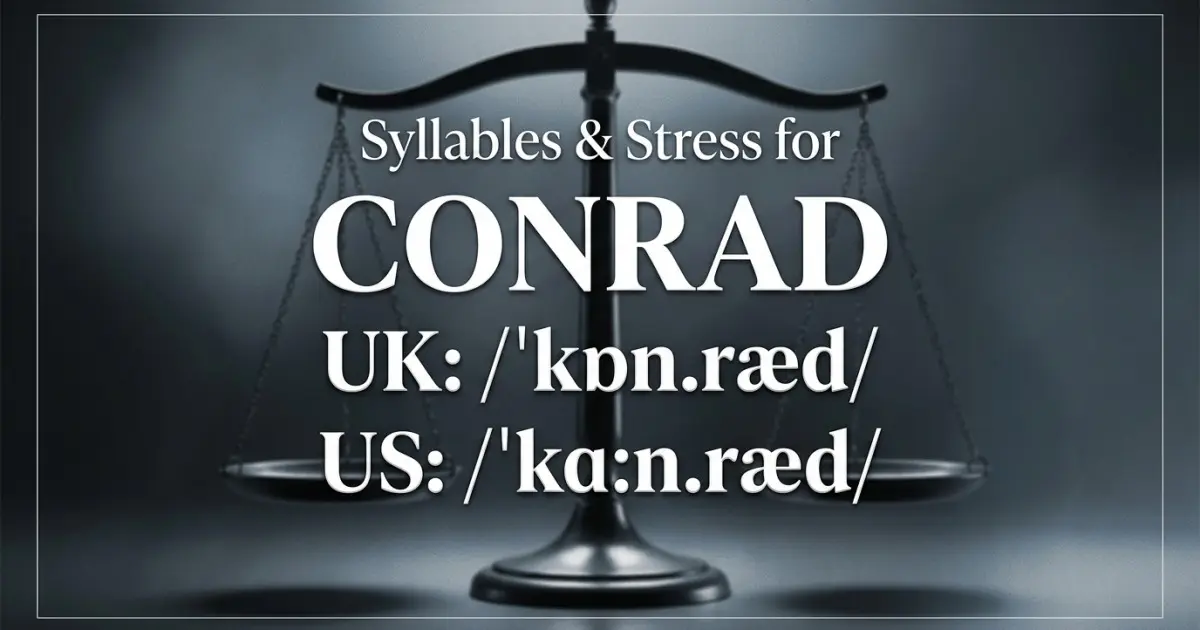
The everyday spoken form is KON-rad. In American English, the IPA is /ˈkɑːnræd/. In British English, the IPA is /ˈkɒnræd/. The difference is small but real: the American first vowel is broader, while the British one is slightly tighter and rounder. The structure, however, remains stable. Conrad is a two-syllable name with clear first-syllable stress, a strong opening consonant, and a firm second syllable that keeps the name from feeling too soft. It sounds like a name built to be spoken with certainty.
What Conrad Is Actually Clarifying When Someone Says It Out Loud
| Element | Phonetic Detail | Quick Tip |
|---|---|---|
| Everyday form | KON-rad | Say the first syllable like con or kahn depending on accent, then keep the second syllable crisp and short. |
| IPA (U.S.) | /ˈkɑːnræd/ | In American English, the first vowel is broad, and the second syllable ends with a clear -rad sound. |
| IPA (U.K.) | /ˈkɒnræd/ | In British English, the first vowel is tighter and rounder, but the overall rhythm stays the same. |
| Syllable count | 2 syllables | Conrad should sound like one strong beat followed by one slightly lighter but still distinct beat. |
| Stress | First syllable stressed | Emphasize KON, not the ending. It is KON-rad, never con-RAD. |
| Opening sound | /k/ voiceless stop consonant | Start with a clean hard k, not a softened s or ch sound. |
| Middle consonant cluster | /nr/ transition | Move smoothly from the n into the r without inserting an extra vowel between them. |
| Ending sound | /ræd/ second syllable | Keep the last syllable short and firm. It should sound grounded, not stretched or softened away. |
Conrad Works Because the Sound Is Serious Without Being Stiff
The opening gives Conrad its authority
Conrad begins with /k/, a voiceless stop consonant. In plain language, that means the sound starts with a clean closure and release. It is one of the clearest ways a name can begin. That matters because Conrad already carries a formal visual impression. The hard k sound makes sure the name does not drift into vagueness. It begins decisively. Before focusing only on syllables and stress, it helps to step back into the fuller frame of Conrad meaning.
After that opening comes the vowel that sets the accent color. In American English, the /ɑː/ gives Conrad breadth. In British English, the /ɒ/ makes it slightly tighter and darker. Either way, the first syllable has real weight. It is not thin, bright, or decorative. It sounds grounded, which suits the name’s older moral seriousness.
The second syllable keeps Conrad from sounding pompous
If Conrad stopped after the first syllable, it would sound too abrupt. The second syllable, -rad, gives it shape and resolution. It is not a weak ending. It remains clearly audible, but it does not overpower the opening. That is the balance that makes the name feel adult rather than theatrical. The first syllable carries the authority. The second syllable gives it finish.
This is also why Conrad sounds more practical than some other old-fashioned male names. The ending is firm enough to feel complete, but not ornate enough to feel ceremonial. The name can move between formal and everyday settings without sounding mismatched.
The internal transition matters more than people realize
One subtle feature of Conrad is the move from n to r in the center of the word. This transition gives the name a slight internal tension. It keeps the sound from becoming too smooth. That is useful. A name meaning “brave counsel” should not sound lazy in the mouth. Conrad does not. It has a little resistance inside it, and that resistance contributes to the impression of seriousness.
Conrad Across Accents Keeps the Same Structure Even When the Color Shifts
American Conrad is broader and slightly more open
In American English, /ˈkɑːnræd/ gives Conrad a broader opening. The first syllable feels larger, almost more architectural. This makes the name sound confident and expansive without turning it into something flashy. The second syllable stays short and clear, so the name never loses control.
This version often feels especially natural in modern American speech because it combines a strong opening with a practical finish. It sounds composed rather than antique.
British Conrad is tighter and more contained
In British English, /ˈkɒnræd/ slightly tightens the first vowel. That shift can make the name sound more restrained and a little more formal. But the difference is one of color, not structure. The stress remains the same, the second syllable remains grounded, and the name still moves in the same two-beat rhythm.
That is why Conrad travels well. It does not fracture across accents the way some names do. It simply changes tone slightly, from broader to tighter, while preserving its identity.
Where Conrad Usually Goes Wrong in Speech
The most common mistake is stressing the wrong syllable
The biggest error is shifting the emphasis onto the second syllable and saying something closer to con-RAD. That changes the whole name. Conrad is first-syllable dominant. The opening should lead, and the second syllable should follow with firmness but not with equal force. Once the stress moves, the name begins to sound less established and more unstable.
The simplest fix is to hold onto the spoken guide KON-rad. If the first syllable clearly leads, most of the pronunciation is already corrected.
The second mistake is weakening the ending too much
Another problem is letting the ending blur into something like -rud or -red without enough firmness. The last syllable should be short, but it should not vanish. Conrad needs that final grounding. Without it, the name can sound unfinished or oddly softened.
Helpful sound neighbors include names and words with similar endings, but the best guide remains the name itself said cleanly: a broad or rounded first syllable depending on accent, followed by a crisp -rad.
Do not insert extra sound into the middle
Because of the nr transition, some speakers slightly over-separate the syllables, producing an extra hint of vowel between them. That should not happen. Conrad should move directly from the first syllable into the second. The name has structure, but it should not sound chopped into pieces.
Practicing Conrad Until It Sounds Natural in Real Speech
How to build the sound cleanly
The easiest way to practice Conrad is to feel it in two linked parts: KON + rad. Start with the hard k. Choose the first vowel that matches your accent. Then let the second syllable arrive firmly but briefly. The whole name should feel controlled, not dragged out.
Useful practice lines include:
“Conrad is here.”
“I spoke with Conrad this morning.”
“Conrad and Julian are ready.”
“Please ask Conrad to come in.”
When saying these aloud, listen for three things: whether the stress stays on the first syllable, whether the first vowel matches the accent you want, and whether the ending stays crisp. If those three elements are in place, the name will sound natural almost immediately.
Why Conrad sounds more composed than many names with similar weight
The deeper reason Conrad works is that its sound never loses discipline. The opening gives it authority. The middle transition adds a little internal tension. The ending gives it finish. That is why the name can feel weighty without sounding clumsy. Conrad is serious in a controlled way, and its pronunciation is a large part of that effect.