
How to Pronounce Charlee: A Quick Guide to Saying It Well
The moment pronunciation becomes real is usually not when parents first read a name in a list. It happens later, in ordinary public life: a teacher pauses over the attendance sheet, a nurse calls a child from a waiting room, or a grandparent says the name aloud for the first time after seeing it on a birth announcement. Charlee is one of those names that usually survives that moment well, but for an interesting reason. The spelling looks customized and modern, which can make some people hesitate for a beat, yet the sound itself is deeply familiar. Most English speakers already know the rhythm from the wider Charlie and Charlotte family. The eye may pause, but the ear catches up quickly.
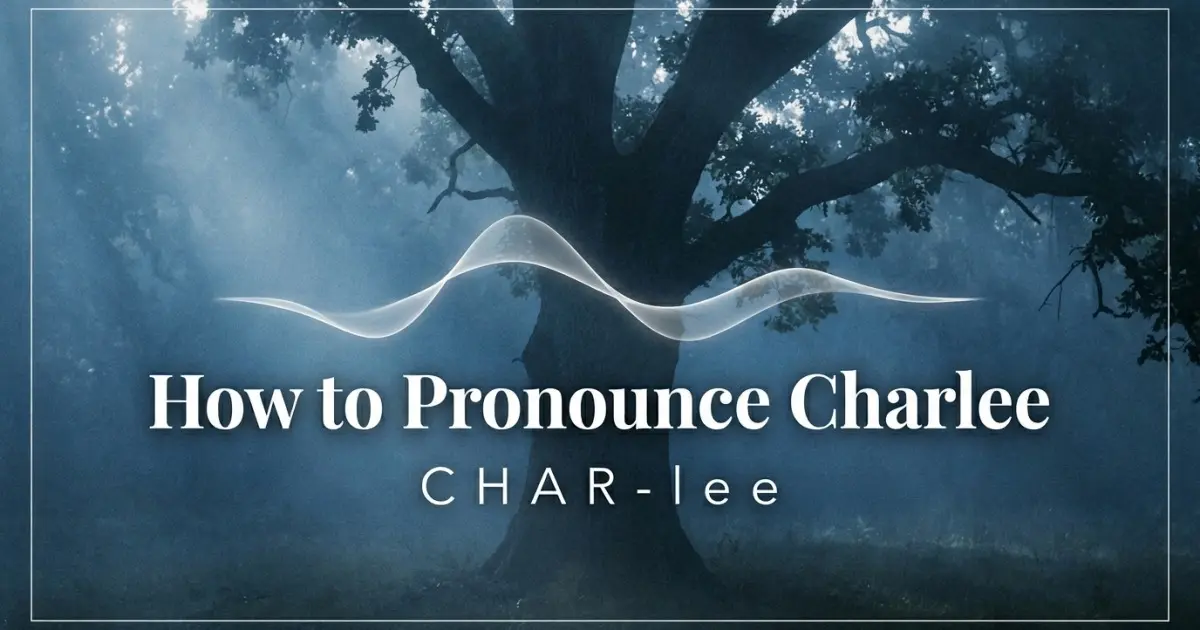
That is why the name is easier in practice than it may look on paper. In everyday English, Charlee is most naturally said as SHAR-lee. The first syllable carries the name. The second syllable finishes it lightly. Once heard clearly, the pronunciation feels immediate and stable. Because the spelling uses -ee rather than a more traditional ending, some people may wonder whether the pronunciation changes. In ordinary use, it does not need to. Charlee remains a two-beat name with a friendly, compact shape and a strong, familiar sound center.
How Charlee Is Actually Said When English Speakers Say It Naturally
| Element | Phonetic Detail | Quick Tip |
|---|---|---|
| Standard pronunciation | SHAR-lee | Keep the first syllable strongest and let the second one finish lightly. |
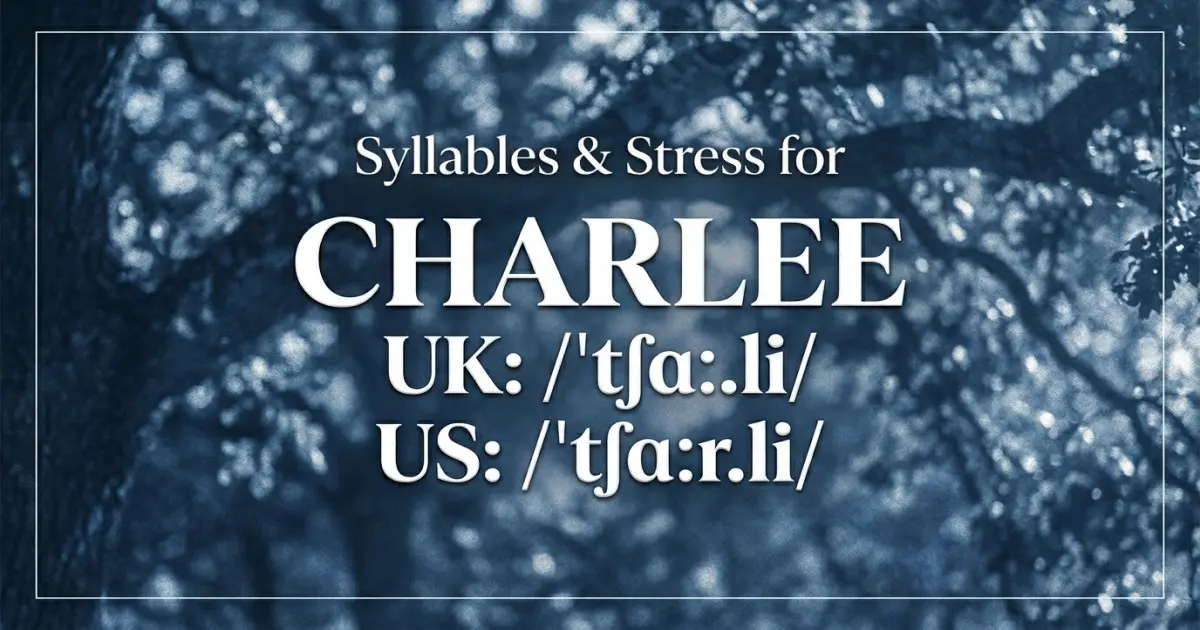
| US IPA | /ˈʃɑːrli/ | The stress lands at the front, so the opening should sound fullest and clearest. |
| UK IPA | /ˈʃɑːrli/ | The overall pronunciation pattern is effectively the same in UK English. |
| Syllable count | 2 syllables | Think of it in two beats: SHAR | lee. |
| Opening consonant | /ʃ/ as in “sh” | Start with a smooth “sh” sound, not a hard “ch.” |
| Main vowel | /ɑːr/ in the first syllable | The first syllable should sound broad and warm, not clipped. |
| Ending | /li/ | The final “lee” should be clear but lighter than the first syllable. |
| Overall rhythm | Strong opening, easy close | Charlee sounds best in one smooth motion rather than two equal chunks. |
Why Charlee Sounds More Familiar Than the Spelling Suggests
One of the great practical strengths of Charlee is that its sound system is already widely known, even if the exact spelling is newer. The name belongs to a large and familiar English sound family, which means most speakers do not need to learn an unfamiliar stress pattern, an unusual consonant cluster, or an unpredictable ending. The visual form may look customized, but the pronunciation remains highly intuitive once heard once. The sound matters more once you know what the name is meant to carry, which is why the wider frame starts in Charlee meaning.
The first syllable is where Charlee lives
The opening SHAR does most of the work. It begins with a fricative, the sh sound, which is produced by directing air through a narrow channel. In plain terms, this gives the name a soft, smooth start rather than a hard or abrupt one. That matters because it contributes to the name’s friendly tone. The broad vowel that follows gives the syllable body and warmth. If that first beat is spoken clearly, the name immediately sounds settled.
This is also why the name feels so usable. Many modern spellings depend heavily on appearance and then create confusion in speech. Charlee does the opposite. It may ask the eye to pause for a moment, but the sound lands easily because the core opening is familiar and strong.
The second syllable should finish, not compete
The ending -lee is bright, clean, and very common in English naming. That familiarity is one reason the name feels so accessible. But the second syllable should not be weighted as heavily as the first. If it is, the name can start to sound sing-song or overly emphasized. The better rhythm is front-loaded: the first syllable carries the identity, the second releases it.
That pattern helps Charlee sound spirited rather than childish. A strong beginning and lighter ending give it energy without making it feel flimsy.
Where Charlee Usually Goes Wrong When People Guess
Because Charlee is short and socially familiar, most pronunciation mistakes are not dramatic. The main issue is usually overthinking. People see the spelling and assume they must do something special with it. In daily speech, that is rarely necessary.
Mistake pattern one: treating the spelling as a new sound
The most common hesitation comes from the ending. Some speakers wonder whether the -ee spelling signals a different pronunciation from other forms in the same family. In ordinary English use, it does not need to. The ending remains a straightforward lee. The spelling personalizes the look of the name, not the sound.
Mistake pattern two: using a hard “ch” at the beginning
Another possible error is beginning the name with a hard ch sound, as in “chair.” That does not fit the standard form here. Charlee is most naturally spoken with the softer sh sound at the front. This one distinction matters because the opening sets the entire mood of the name. A hard start can make the name sound abrupt and unfamiliar, while the soft sh keeps it smooth and recognizable.
Mistake pattern three: flattening both syllables into equal weight
Short names often get over-pronounced because speakers assume that every syllable must carry the same amount of force. Charlee works better when the first syllable is clearly stronger. If the second syllable receives too much emphasis, the name can sound over-cheerful or rhythmically awkward. The cleanest version is simple: SHAR first, lee second, with a clear drop in weight.
How Charlee Holds Across Accents and Familiar Sound Neighbors
One useful feature of Charlee is that the US and UK IPA forms are the same. That does not mean every accent will sound identical in real life, but it does mean the broad English pronunciation remains stable. Parents do not need to choose between two competing mainstream versions. The name is structurally dependable. Because the strongest energy lands early, the shorter forms often grow from the opening of the name, and that pattern is easier to see in nicknames for Charlee.
Accent differences change color more than identity
In some accents, the first syllable may sound slightly broader or slightly more rounded. In others, the r coloring may be more or less audible. But the core pattern does not really change: the first syllable remains stressed, the soft sh opening remains intact, and the ending stays lee. This consistency is one reason the name is so workable across English-speaking settings.
Charlee benefits from familiar sound neighbors
The name also gains support from the fact that most people already know related sound shapes. That makes Charlee easier to correct, easier to repeat, and easier to remember. Even when someone first sees the spelling and hesitates, the pronunciation usually resolves quickly once the name is spoken aloud. It does not live in an unfamiliar sound world. It belongs to a very well-worn one.
How to Practice Charlee Until It Sounds Effortless
The easiest way to test pronunciation is not by saying the name in isolation, but by putting it into sentences people will actually use. Names that feel smooth in ordinary speech tend to work best over time. Charlee generally performs well here because its rhythm is so simple and its sounds are so familiar.
Useful practice lines for real life
- Charlee, it’s your turn.
- This is Charlee from school.
- Have you met Charlee yet?
- Charlee will call you later.
- Charlee Jane, dinner is ready.
If the name still feels awkward, the problem is usually too much effort rather than too little. Charlee sounds best when speakers trust the familiar sound family and let the name move quickly. Once that happens, the pronunciation feels natural almost immediately.
Why Charlee is so easy to teach
Linguistically, the name is low-friction. It has no dense consonant cluster, no unstable stress pattern, and no unpredictable vowel shift once the family settles on the standard form. That is one reason Charlee works so well despite its updated spelling. The name looks individualized, but it does not burden the child with a difficult spoken identity. In practice, that combination is one of its most durable strengths.