
How to Pronounce Celia: An Easy Sound-by-Sound Breakdown
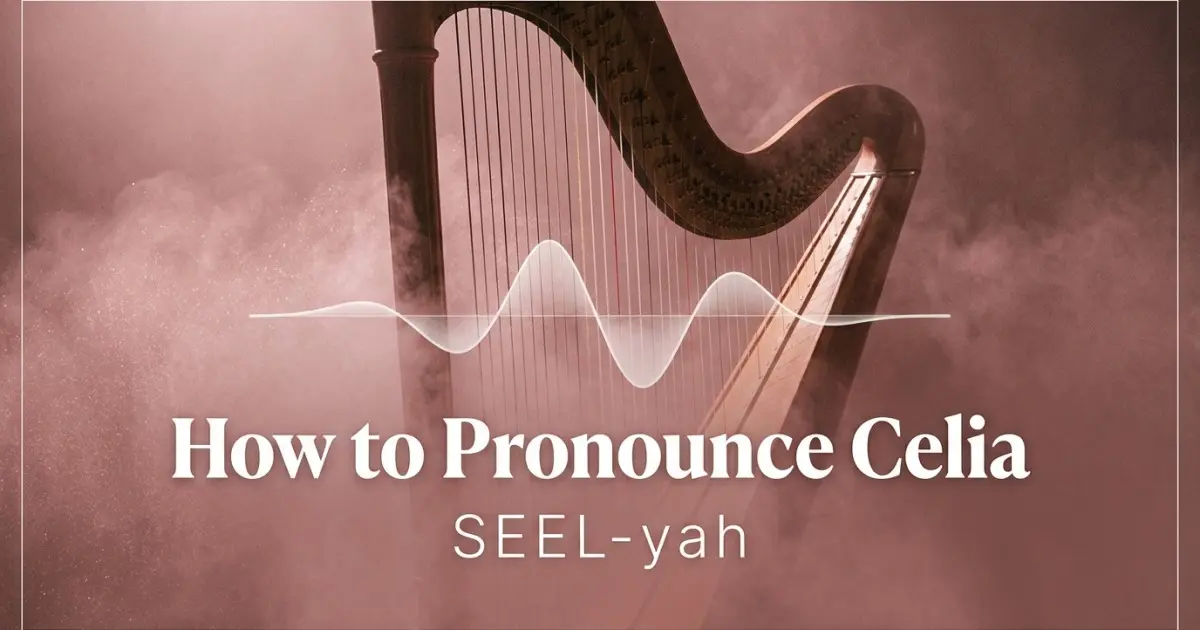
Celia is the kind of name that often proves itself at the exact moment someone first says it aloud from a list. A teacher scans the attendance sheet, recognizes the familiar beginning, pauses just long enough to decide whether this is one of the softer Latin classics or a trickier variant, and then says it cleanly: SEE-lee-uh. That small pause matters. It tells you something important about the name. Celia is not difficult, but it is more exact than it first appears. It needs its three syllables. It needs its lightness. And it works best when the speaker lets the sound open naturally instead of flattening it into something shorter or heavier.
That is why pronunciation matters so much with Celia. The name looks simple, and in many ways it is, but its elegance depends on keeping the full shape intact. Some people are tempted to rush it because the spelling feels familiar. Others drift toward neighboring names such as Cecilia, Cecily, or even Celeste because the eye catches the same first letters. But Celia has its own rhythm, and once that rhythm is heard properly, the name becomes both easy and memorable. It is airy without being flimsy, gentle without being vague, and one of the clearest examples of how a name can sound “heavenly” without sounding precious.
What Celia Is Really Telling You About How It Should Be Said
| Element | Phonetic Detail | Quick Tip |
|---|---|---|
| Everyday pronunciation | SEE-lee-uh | Say all three syllables clearly, but keep the overall line light and flowing. |
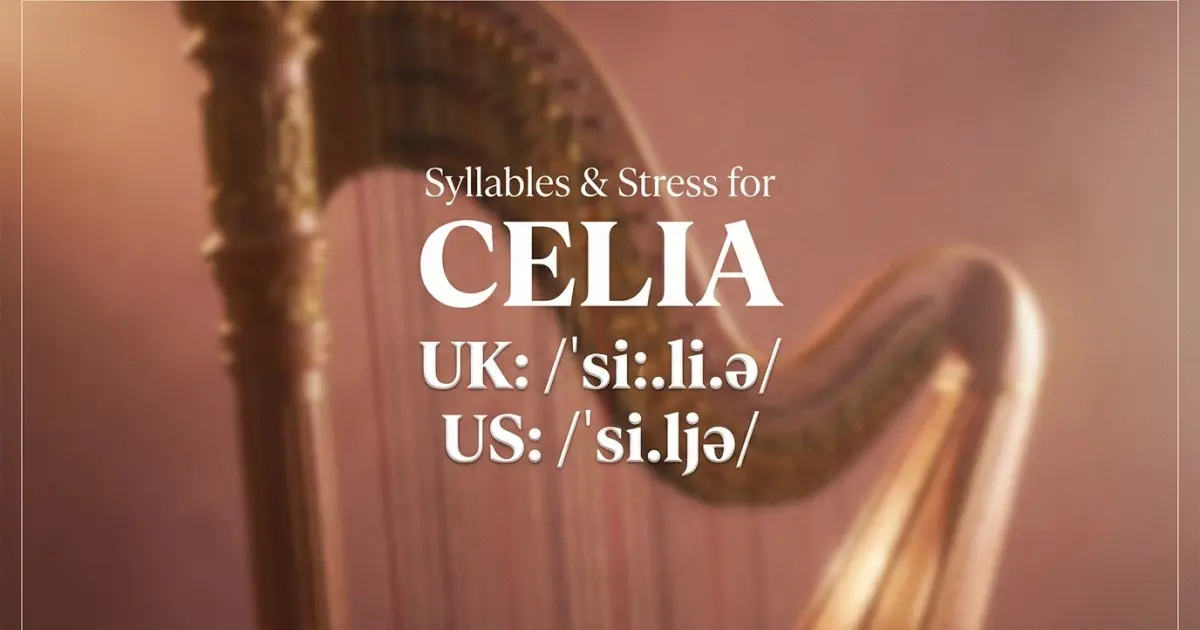
| IPA (US) | /ˈsiːliə/ | The opening vowel is the long ee sound heard in words like see and me. |
| IPA (UK) | /ˈsiːliə/ | The standard pronunciation pattern stays the same across major English accents. |
| Syllable count | 3 syllables | Do not compress Celia into two beats; the final -uh matters. |
| Stress pattern | Primary stress on the first syllable | The name should open brightly, then fall away gently. |
| Middle sound | -lee- | This middle syllable keeps the name fluid and prevents it from sounding clipped. |
| Most common confusion | Mixing Celia with Cecilia or Cecily | Remember that Celia is the shorter, cleaner three-syllable form with a bright opening. |
Celia Lives on Three Syllables and a Bright First Beat
The easiest way to understand Celia is to hear its structure as one bright opening followed by two lighter syllables: SEE-lee-uh. The first syllable carries the stress. That makes the name feel clear immediately. The next two syllables soften and release the line, which is why the name sounds graceful rather than abrupt. This pattern is one of Celia’s great strengths. It gives the name lift without making it dramatic. Before focusing only on syllables and stress, it helps to step back into the fuller frame of Celia meaning.
Why the opening of Celia matters so much
The first syllable, See, is doing most of the identity work. It is clean, open, and bright. Because the name begins with a soft consonant and a long vowel, it sounds approachable at once. There is no harsh stop and no consonant pile-up to slow the name down. That makes Celia feel effortless in speech. The way the name resolves at the end often decides which short forms feel natural in speech, and that becomes clearer in Celia nicknames.
But effortless does not mean weightless. If the first syllable is swallowed or rushed, the whole name can lose definition. A good spoken Celia begins clearly. The opening should sound like see, not like a shortened or blurred version of something else.
Why the final syllable must not disappear
Because Celia is visually simple, some speakers are tempted to say it too quickly and blur the ending. That is where the name can lose its shape. The final -uh is light, but it is not optional. It is what keeps Celia distinct from shorter or flatter name patterns. The goal is not to overemphasize it, but to let it remain audible.
In everyday English, this last vowel is usually reduced toward a soft schwa sound. That is normal. Celia should not end with a heavy theatrical ah. It should close gently, almost like an exhale. That softness is part of the name’s elegance.
Where Celia Most Commonly Goes Off Course
Most pronunciation slips with Celia come from neighboring names rather than from the name itself. Speakers recognize the opening letters and unconsciously reach for a different pattern they already know. That is why Celia often benefits from a quick, simple correction rather than a long explanation.
The Cecilia problem: adding too much name
One common drift is toward Cecilia, which is longer, more ornate, and stressed differently in many people’s minds. This happens because the eye sees the same opening Cec- family and anticipates a larger form. But Celia is much cleaner. It is not an embellished name shortened in speech. It is its own full name, and it should sound like one.
The easiest correction is also the simplest: SEE-lee-uh. Once the speaker hears the three clean syllables, the confusion usually disappears.
The Cecily problem: changing the middle texture
Another nearby name is Cecily, which has a very different center and ending. Cecily is sharper and more clipped in its second half. Celia, by contrast, is smoother and more open. That difference is important because it changes the emotional feel of the name. Celia should glide. Cecily tends to step.
This is why Celia sounds more airy. The middle syllable -lee- and the soft final -uh keep the line continuous.
The danger of flattening Celia into two syllables
Because the final vowel is light, some speakers may almost erase it. That leaves the name sounding unfinished or overly clipped. Celia needs all three syllables to keep its full balance. Even in fast speech, there should still be a soft little opening at the end of the word, not an abrupt stop. That tiny release is one of the things that makes the name sound refined.
Celia Across Accents Still Sounds Like Celia
One of the practical advantages of Celia is that the supplied US and UK IPA are the same. That does not mean every speaker sounds identical, but it does mean the core pattern is highly stable. Celia travels well across English-speaking settings because the structure of the name is so clear. Three syllables. Stress first. Light ending.
What may vary a little in real speech
Some speakers may give the final syllable a slightly fuller vowel. Others may reduce it more strongly. The opening ee may sound a touch brighter or rounder depending on accent. These are minor differences. They do not change the identity of the name. Celia remains easy to recognize across those variations.
Why this stability matters in daily life
Names that survive accent differences well tend to be easier to live with. They are repeated more accurately, misheard less often, and corrected less frequently. That matters in schools, offices, waiting rooms, and social introductions. Celia benefits from this kind of stability. It sounds polished, but it does not ask too much of strangers.
This is one reason the name feels more practical than some equally elegant Latin-rooted names. Its beauty does not come at the cost of usability.
Practicing Celia Until It Feels Completely Natural
The best way to practice Celia is not to overthink the spelling, but to place the name inside ordinary sentences. That helps the rhythm settle into natural speech. A name should not sound like a recitation. It should sound like someone being called, introduced, or spoken of in real life.
Three simple practice lines for Celia
Try saying: “This is Celia.” “Celia is here.” “I’m calling for Celia.” In each case, let the first syllable stay bright, let the second keep the line moving, and let the last one soften the end. If the name starts to sound too clipped, reopen the final syllable gently. If it starts to sound overcareful, relax the middle and let the flow return.
A quick memory cue for Celia
Think: See + lee + uh. The name opens clearly, continues smoothly, and ends lightly. That is the simplest pronunciation map for Celia, and once it is heard that way, it tends to stay easy in the mouth and in the ear.