
How to Say Caroline Correctly: A Better Way to Hear and Say It
Caroline is the kind of name that often creates a tiny pause in public speech. A teacher reaches it on the attendance list and hesitates at the ending. A receptionist sees it on a screen and instinctively knows the name, but still feels the need to choose which spoken shape to commit to. A barista writes it quickly, then repeats it back with just enough uncertainty to show that a familiar classic can still carry more than one pronunciation expectation. That is what makes Caroline interesting from a pronunciation point of view. It is not difficult, but it is one of those names that looks settled on the page while remaining more fluid in the ear.
For this page, the everyday cue appears as KAR-uh-lyn, while the phonetic line shown for both US and UK English is /ˈkærəlaɪn/. That difference matters. It means Caroline is not just a name to pronounce; it is a name to hear carefully. The opening stress is clear in both representations, but the final syllable expectation is not identical. That is exactly why Caroline remains a name people recognize immediately and still sometimes ask about. The form is classic. The spoken landing is where the real choice lives.
What this Caroline guide is actually clarifying in the ear
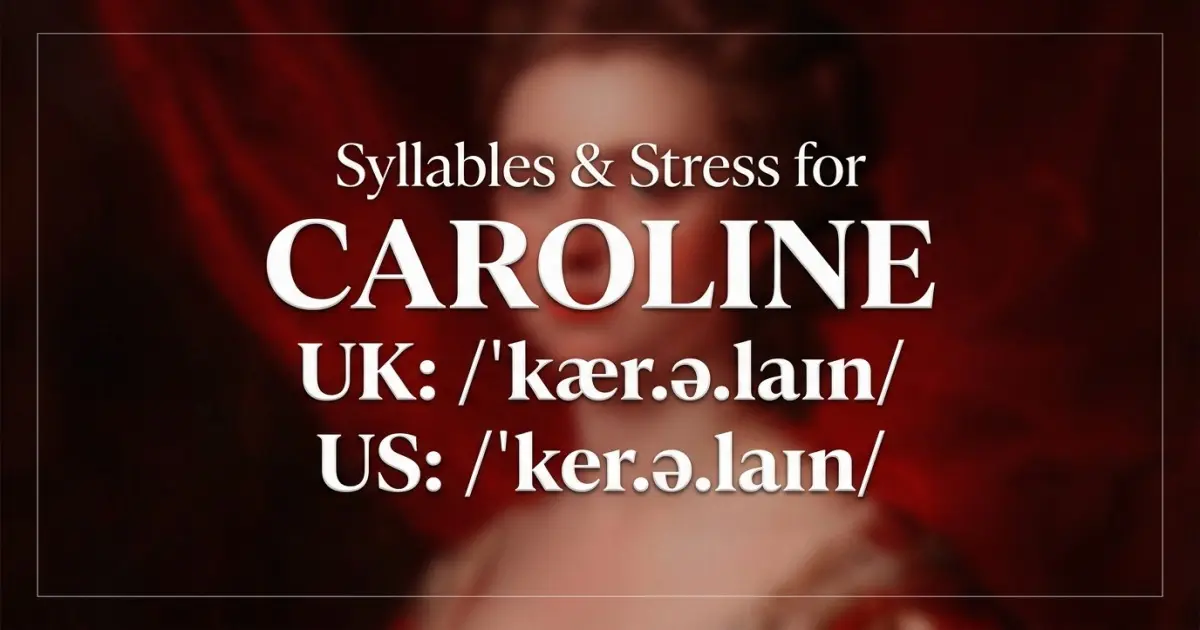
Caroline is a three-syllable name with a strong opening and a softer descent. The main point of uncertainty is the ending, not the beginning. Everything else about the name is relatively stable: the first syllable takes the stress, the middle is lighter, and the whole line should feel fluent rather than choppy.
| Element | Phonetic Detail | Quick Tip |
|---|---|---|
| Everyday pronunciation cue | KAR-uh-lyn | Hear the first syllable clearly, then let the final syllable settle softly. |
| IPA (US) | /ˈkærəlaɪn/ | The phonetic line points to a stressed opening and a final syllable aligned with line. |
| IPA (UK) | /ˈkærəlaɪn/ | The same phonetic pattern is shown in British English notation here. |
| Syllable count | 3 syllables | Think of Caroline as a three-part name with one strong opening beat and a lighter fall afterward. |
| Stress pattern | First syllable stressed | The opening is where the name plants its feet. Do not flatten all three syllables equally. |
| Main pronunciation tension | Ending expectation | The opening is rarely the issue; the final syllable is where spoken habits tend to diverge. |
Caroline begins firmly even when the ending remains contested
Whatever a speaker does with the last syllable, Caroline usually begins the same way. The first syllable carries the stress, and that gives the name its poise. The initial consonant is clean, the opening vowel is strong, and the line immediately feels more anchored than airy. This is one reason Caroline has such a stable social presence. It does not drift into a room. It arrives with shape. Before focusing only on syllables and stress, it helps to step back into the fuller frame of Caroline meaning.
The opening of Caroline gives the name its authority
The first syllable is the name’s point of control. It is what makes Caroline sound composed rather than decorative. In both the everyday cue and the IPA line associated with this page, the stress falls there. That means the listener should hear the name start with confidence. If the opening is weakened or rushed, the whole name can begin to feel more uncertain than it really is.
This is also why Caroline sounds so recognizably classic. Strong opening stress is part of its architecture. The ear hears order before it hears elegance.
The middle of Caroline should not slow the name down
The second syllable is not the star of the pronunciation. It is a lighter bridge between the strong opening and the more debated ending. In natural speech, that middle usually reduces rather than insisting on equal weight. Over-pronouncing it can make the name sound more formal than necessary and disturb the line’s flow.
That light middle is one reason Caroline stays usable in ordinary life. The name may look elaborate enough for formal settings, but the reduced center keeps it flexible and conversational.
Why Caroline can sound settled on paper and split in the air
Many classic names become socially stable because everyone recognizes them, not because every speaker produces them in exactly the same way. Caroline is a good example of that phenomenon. People know the name. They know its family of forms. They know its general feel. But the ending is where habits, expectations, and naming traditions can diverge.
Caroline often carries more than one spoken expectation
This page itself shows why. The everyday pronunciation cue points readers toward KAR-uh-lyn, while the IPA line shown for both American and British English points to /ˈkærəlaɪn/. That does not make the name unusable. It makes the name interesting. Caroline is one of those classics that lives at the edge of more than one pronunciation tradition, which is why speakers may recognize it instantly and still pause over the last beat.
In practical life, that means Caroline often benefits from spoken confirmation the first time. After that, it tends to settle quickly because the opening and overall rhythm are so familiar.
Caroline stays elegant because the structure is stronger than the variation
The reason the name survives this tension so well is that the core structure remains intact. The first syllable is stressed. The middle is lighter. The name unfolds over three beats. Those constants matter more than people sometimes realize. They keep Caroline recognizable even when the final syllable expectation shifts.
That is why the name does not feel unstable. It feels layered. Different endings may color the name differently, but the classical frame still holds.
Where Caroline most often catches the speaker
Caroline is not hard to pronounce, but it is easy to mishandle if a speaker assumes familiarity equals certainty. The main problem is rarely the opening. It is usually the final syllable, or else the tendency to flatten the rhythm too much.
The most common mistake is treating every syllable as equally important
Caroline should not sound mechanical. If each syllable receives the same emphasis, the name loses the natural elegance that makes it work. The first syllable should lead. The second should connect. The final syllable should complete the line according to the pronunciation being used. Without that hierarchy, Caroline can sound more rigid than it is meant to be.
The other common problem is assuming the ending without listening
Because Caroline is so recognizable visually, speakers often rush into the last syllable based on habit. That is understandable, but it is also why the name can benefit from a moment of attention. In many everyday situations, the safest move is to listen to how the name bearer says it and then mirror that pattern. Caroline is a familiar name, but familiarity is not the same thing as uniformity.
Sound neighbors can make Caroline feel more settled than it is
Caroline lives near other names such as Caroline-like variants, Carolyn-type forms, and longer classical names with similar openings. That can make the name feel easier than it is at first glance because the ear already knows the family. But knowing the family is not always the same as knowing the exact ending. This is another reason the first spoken example matters so much. The way the name resolves at the end often decides which short forms feel natural in speech, and that becomes clearer in nicknames for Caroline.
How to practice Caroline until the pronunciation feels natural
The best way to practice Caroline is to start with what is stable and then decide how the final syllable is meant to land. That means anchoring the opening stress first. Once the name has its footing, the rest becomes much easier to hear and repeat accurately.
Start with the frame: strong opening, light middle, chosen ending
Say the first syllable clearly. Then let the middle move quickly. Then complete the line according to the pronunciation being used. In the everyday cue here, that produces KAR-uh-lyn. In the IPA line shown here, the ending aligns with /laɪn/. The point is not to force a false certainty. The point is to recognize where the choice sits.
Use real speech instead of repeating the name in isolation
Names settle most naturally in context. Try these aloud:
Caroline is here.
I saved this for Caroline.
Caroline will join us later.
These practice lines help preserve the stress pattern and prevent the name from becoming stiff or over-enunciated. The first syllable should still lead, and the middle should remain light.
Listen for poise, not performance
The best pronunciation of Caroline sounds composed rather than theatrical. It should feel fluent, balanced, and socially easy. However the final syllable is being realized, the name works best when the opening stays strong and the overall line stays graceful. Caroline does not need to be dramatized. It needs to be carried cleanly.
Caroline Pronunciation FAQ
How is Caroline pronounced on this page?
The everyday pronunciation cue shown here is KAR-uh-lyn, while the IPA line shown for both US and UK English is /ˈkærəlaɪn/.
What part of Caroline carries the stress?
The first syllable carries the main stress. That is one of the most stable features of the name, even when expectations about the ending differ.
Why do people sometimes hesitate when saying Caroline?
Because Caroline is very familiar visually, but the final syllable may be approached with different spoken expectations. The opening is usually clear; the ending is where the pause often happens.
What is the most common pronunciation mistake with Caroline?
The most common issue is either flattening all three syllables equally or assuming the ending without listening to the intended spoken form.
Is Caroline difficult for English speakers to say?
Not usually. Caroline is highly familiar in English-speaking life. The main challenge is not difficulty, but deciding which final-syllable expectation is meant in a given context.