
Callum Name Meaning: Symbolism, Heritage, and Everyday Appeal

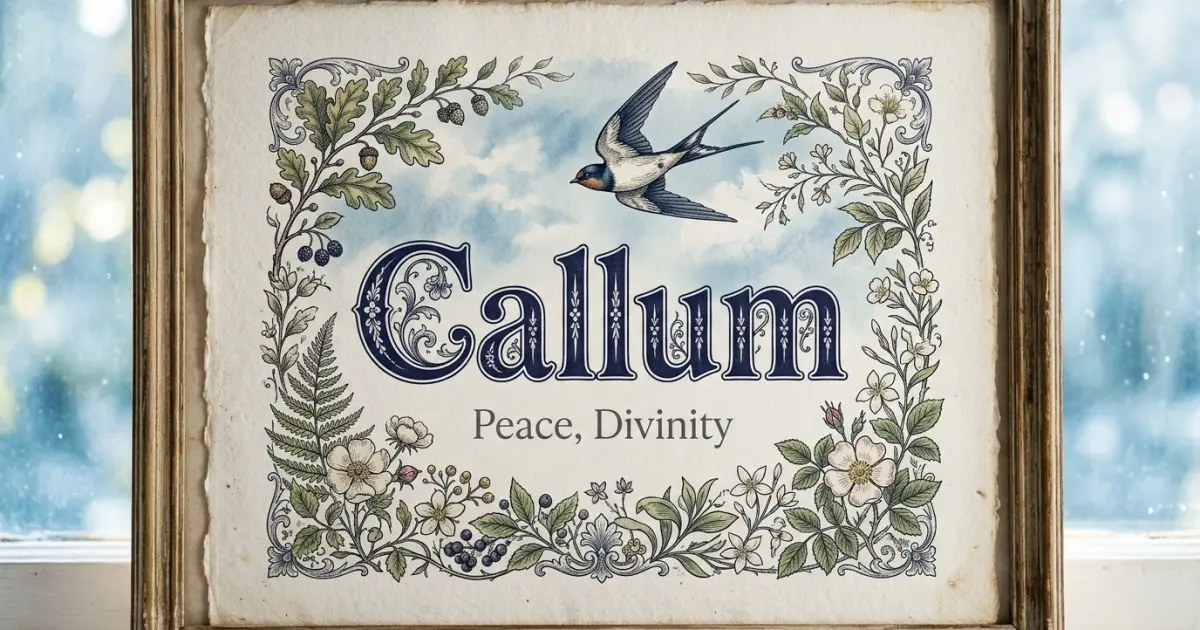
Callum is a name built around a quiet paradox: it sounds sturdy, even grounded, yet its meaning is “dove.” That contrast gives the name its emotional power. It does not present peace as something fragile or decorative. Instead, Callum suggests gentleness with a backbone — a calm presence carried in a name that still feels distinctly masculine, Scottish, and substantial.
Pronounced KAL-um, Callum has two syllables, a strong opening, and a soft landing. Official 2024 U.S. data places Callum at rank 159 for boys and No. 15678 for girls, showing a name that has become clearly visible for boys while remaining extremely rare for girls. It is meaningful without being overly ornate, traditional without sounding dusty, and gentle without losing strength. Callum is a name where peace does not whisper from the margins; it stands in the center.
Callum's U.S. popularity rank over time, 1983–2024
Popularity statistics are based on official data from the Social Security Administration baby name records.
Callum: A Friendly and Majestic Gaelic Dove
Callum reads as a name with one unmistakable center of gravity, reaching its record height for boys in 2024. Its rise reflects a preference for “soft-ending” Gaelic classics that carry a sense of “peaceful” grace and durable character parents already trust.
While historical traces exist in other tracks, its modern force belongs unmistakably to its primary lane. Meaning “dove,” its simple two-syllable rhythm carries a sense of approachable and fresh character.
Callum Holds the Dove Meaning Inside a Strong Scottish Frame
| Key Facts | Information | Quick Insight |
|---|---|---|
| Name | Callum | The name feels warm, grounded, and quietly distinctive, with a sound that balances softness and strength. |
| Primary gender | Male | Current usage strongly supports Callum as a boy name, while the gentle meaning gives it emotional softness. |
| Primary origin | Scottish | The Scottish origin gives Callum a rooted, heritage-rich feel rather than a purely modern softness. |
| Primary meaning | Dove | The dove meaning brings peace, gentleness, and grace into a name that still sounds sturdy and masculine. |
| Pronunciation | KAL-um | The first syllable gives the name strength, while the second syllable lets it end with warmth. |
| IPA | U.S. /ˈkæləm/; U.K. /ˈkæləm/ | The matching IPA forms make Callum stable and easy to pronounce across major English accents. |
| Syllable count | 2 | Two syllables give Callum enough body to feel complete without making it heavy. |
| U.S. boys’ rank (2024) | No. 159 | Official data shows Callum is well established for boys, no longer obscure but still not overfamiliar. |
| U.S. girls’ rank (2024) | No. 15678 | The girls’ ranking is extremely rare, reinforcing Callum’s current masculine profile. |

The Meaning of Callum Makes Peace Feel Strong Enough to Carry
The primary meaning of Callum is “dove,” and that meaning gives the name a gentle symbolic center. A dove often suggests peace, calm, hope, and softness. But Callum does not sound delicate in the way some gentle names do. Its opening Kal is firm, clear, and grounded. The result is a name where the meaning and sound create a useful tension: peaceful in image, sturdy in form.
This is why Callum feels so appealing to many modern parents. It gives a boy name a softer emotional vocabulary without making the name feel weak or overly sweet. The meaning invites tenderness; the sound gives structure. In a naming landscape where many boy names lean hard into force, surname sharpness, or clipped masculinity, Callum offers a quieter kind of strength.
The dove meaning gives Callum emotional grace
A dove meaning can feel deeply human because it points toward peace rather than conquest. Callum does not define a child through power, victory, or rule. It gives him an image of calm presence. That makes the name feel less performative than many strong boy names. It carries gentleness as a virtue, not an afterthought.
This emotional grace also makes Callum flexible. It can suit a thoughtful child, an energetic child, a creative child, or a quiet child because the meaning is broad and generous. It does not trap the bearer inside one narrow personality. Instead, it offers a peaceful center that can grow with him.
The sound keeps Callum from becoming too delicate
Callum’s meaning may be soft, but its pronunciation gives it weight. KAL-um begins with a clean consonant and a broad vowel. The name does not float away. It lands. That is why Callum can carry the dove meaning without sounding fragile.
The second syllable, um, gives the name warmth and closure. It avoids a sharp ending, but it also does not leave the name open or airy. Callum feels complete, balanced, and quietly strong.
Callum’s Scottish Origin Gives the Name a Rooted Kind of Gentleness
Callum’s Scottish origin is central to its character. Without that origin, the dove meaning might make the name feel purely symbolic or soft. With it, the name gains a sense of place, heritage, and old-world steadiness. It feels like a name with ground beneath it. To explore the wider naming world around Callum, visit names with Scottish roots.
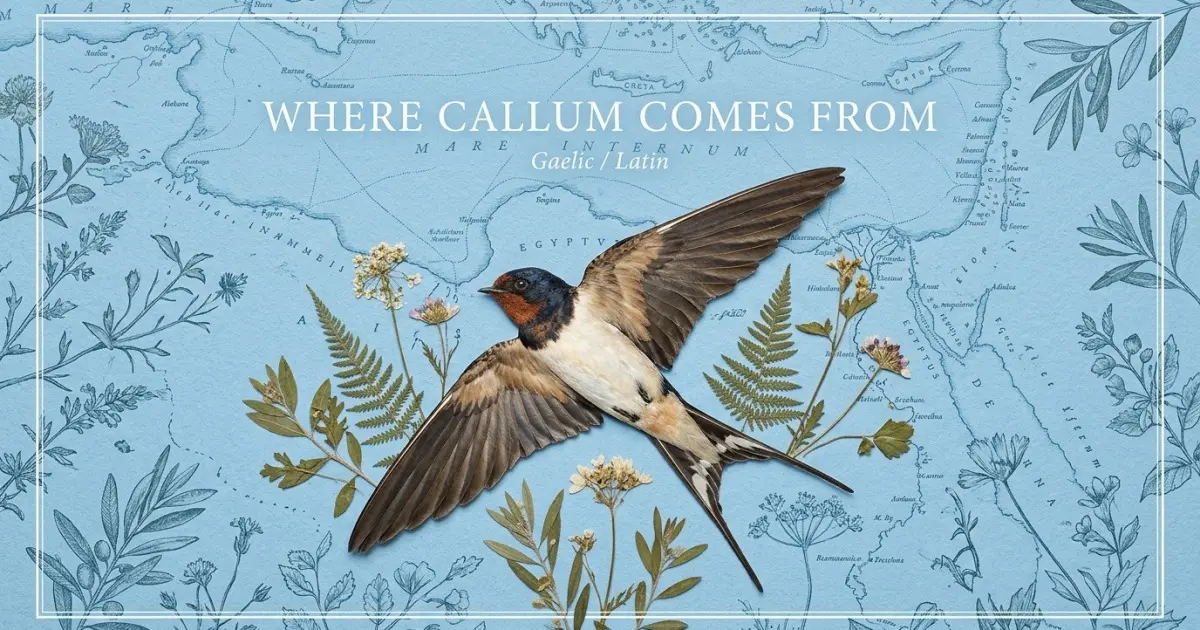
This combination of gentleness and rootedness is one of Callum’s strongest qualities. It does not sound newly invented or trend-built. It has the calm confidence of a name that has a cultural frame. At the same time, it feels fresh in contemporary American use, partly because it is familiar enough to pronounce but still more distinctive than many long-established English classics.
A Scottish name with everyday English ease
Callum is easy for English speakers to say. Its pronunciation, KAL-um, is direct, and the U.S. and U.K. IPA forms match: /ˈkæləm/. That makes the name practical across English-speaking settings. It has heritage without requiring complicated explanation.
This matters because many parents want names with roots, but they also want names their child will not have to correct constantly. Callum offers both. It feels culturally specific, yet accessible.
Why Callum feels less formal than many heritage names
Some heritage-rich names feel ceremonial or heavy. Callum does not. Its two syllables keep it relaxed, while its soft ending gives it warmth. The name can appear on a birth announcement, a school roster, a sports jersey, or a professional email without sounding out of place.
That ease is part of its modern strength. Callum feels rooted, but not stiff. It has history without becoming distant.
The Sound of Callum Balances a Firm Opening With a Warm Ending
Callum is pronounced KAL-um. The first syllable carries the stress, and the second syllable softens the name. The U.S. and U.K. IPA forms are the same, /ˈkæləm/, which gives the name a stable pronunciation across major English accents. There is no hidden sound, no tricky stress shift, and no final consonant cluster that makes the name harsh.
Phonetically, Callum begins with a crisp K sound. That opening gives it definition. The al sound adds warmth, and the final um closes the name gently. It has a rounded, grounded quality rather than a sharp or flashy one. This is why Callum can feel masculine without sounding aggressive.
The KAL syllable gives Callum its backbone
The first syllable is the strongest part of the name. KAL is short, clear, and easy to hear. It gives Callum enough firmness to balance the gentle dove meaning. Without that strong opening, the name might feel too soft. With it, Callum feels calm but confident.
The opening also gives the name a clean call-name quality. It can be spoken quickly and clearly, which makes it practical in everyday life.
The final -um makes Callum feel approachable
The ending -um gives Callum warmth. It is softer than a hard final consonant, but more grounded than an open vowel ending. The name closes gently, almost conversationally. That makes it friendly and human.
This ending also helps Callum age well. It is soft enough for a child, but not childish. It remains steady and mature in adulthood.
Official 2024 Data Shows Callum Has Moved Into a Confident Modern Lane
Official Social Security Administration (SSA) data places Callum at rank 159 for boys in 2024. That position shows a name that is no longer rare in the strict sense. It is visible, established, and clearly part of contemporary naming. Yet it still has a distinctive profile because it is not as universally familiar as long-standing staples.
For girls, Callum ranked 15678 in 2024, which makes that use extremely rare. This reinforces the name’s current masculine identity. Still, Callum’s sound and meaning are gentle enough to feel emotionally flexible. It is not a harsh boy name. It is a strongly used boy name with a peaceful inner image.
Rank 159 gives Callum practical familiarity
A name at this level has crossed into everyday recognition. Parents choosing Callum are not choosing something obscure. Teachers, classmates, and relatives are increasingly likely to have encountered the name or to understand it quickly once heard.
That familiarity can be reassuring. Callum feels distinctive, but it is not difficult. It has enough popularity to feel socially comfortable while retaining a strong identity.
The rare girls’ ranking keeps Callum’s boy-name profile clear
Callum’s very low ranking for girls means that, in current U.S. use, it reads strongly male. That clarity can matter for parents who want a soft-meaning name that still feels unmistakably boyish in practice. If you are weighing names with a similar gender profile, visit strong boy names and meanings.
The name’s softness comes from meaning and sound, not from gender ambiguity. Callum feels gentle, but its usage profile is clear.
Callum Feels Like a Neighbor to Celtic, Nature, and Gentle Boy Names
Callum sits in a style neighborhood that includes Scottish and Celtic-feeling names, gentle nature-linked names, and modern boy names with softer emotional energy. It may appeal to families who also like names such as Rowan, Lachlan, Declan, Ronan, Malcolm, Finn, Owen, Graham, and Ellis. Some share the heritage feeling; others share the warmth, rhythm, or grounded masculinity.
Callum is especially strong because it does not rely on one style category. It is not only a Scottish name. It is not only a peaceful meaning name. It is not only a modern favorite. It is the combination that gives it depth. It can feel outdoorsy without being a word name, traditional without feeling overly formal, and gentle without seeming slight.
Callum’s style is soft but not fragile
Names with gentle meanings can sometimes feel delicate. Callum avoids that because of its strong first syllable and rooted origin. It has a calm surface, but the structure beneath it is firm.
This is why the name can work across many personalities. It does not demand that the bearer be quiet, mild, or poetic. It simply gives him a name with peaceful depth and a sturdy frame.
The name’s modern rise does not erase its old soul
Callum’s current popularity shows modern appeal, but the name does not sound trend-dependent. It has a heritage quality that helps it feel anchored. Even as it becomes more familiar, the meaning and origin keep it from feeling empty.
That combination gives Callum a strong chance of aging well. It has enough contemporary momentum to feel current and enough depth to outlast fashion.
Callum Opens Three Practical Naming Paths
Because Callum has a soft meaning, a clear masculine usage profile, and a balanced two-syllable sound, the supporting choices around it matter. Middle names, nicknames, pronunciation, initials, and surname rhythm can make Callum feel more classic, more Celtic, more modern, or more gentle.
Middle names for Callum can shape its final tone
Callum pairs well with classic middles such as Callum James, Callum Thomas, Callum Henry, and Callum Edward. These names ground the gentle dove meaning. Shorter middles such as Callum Reid, Callum Jude, and Callum Grant make the full name crisp. Warmer middles such as Callum Gabriel, Callum Elias, and Callum Samuel bring out the peaceful side of the name. If you want the full pairing logic behind that contrast, see Callum middle names.
Nicknames for Callum can be casual without replacing the full name
Natural nickname options include Cal, Callie, Cally, and possibly Lum in playful family use. Cal is the strongest everyday nickname because it is short, masculine, and directly tied to the opening sound. Callie and Cally are softer and more affectionate. The full Callum remains polished and complete. To see how those different moods shorten in real life, explore nicknames for Callum.
Pronunciation of Callum is simple but worth keeping clean
Callum is pronounced KAL-um, with two syllables and stress on the first. The U.S. and U.K. IPA forms match: /ˈkæləm/. The main caution is not to pronounce it as KAY-lum or overemphasize the second syllable. The name should stay grounded: KAL-um. If you want the full sound pattern behind that rhythm, read how to pronounce Callum.
The Lasting Meaning of Callum Is Peace With a Steady Heart
Callum endures because it gives gentleness a strong shape. Its meaning, “dove,” brings peace and grace. Its Scottish origin gives it roots. Its pronunciation gives it clarity. Its current ranking shows it is widely usable for boys while still retaining a distinctive, heritage-rich feel.
What makes Callum especially memorable is the way it refuses a false choice between strength and softness. It does not sound weak because it means dove. It does not lose warmth because it sounds sturdy. The name holds both qualities at once, and that balance feels deeply modern.
In the end, Callum is a name of quiet force. It suggests a child who can carry calm without disappearing, kindness without fragility, and identity without excess. Callum is not peace as passivity. It is peace with presence — a dove held inside a name strong enough to fly.