
Nicknames for Caleb: Nickname Ideas for Different Moods and Styles
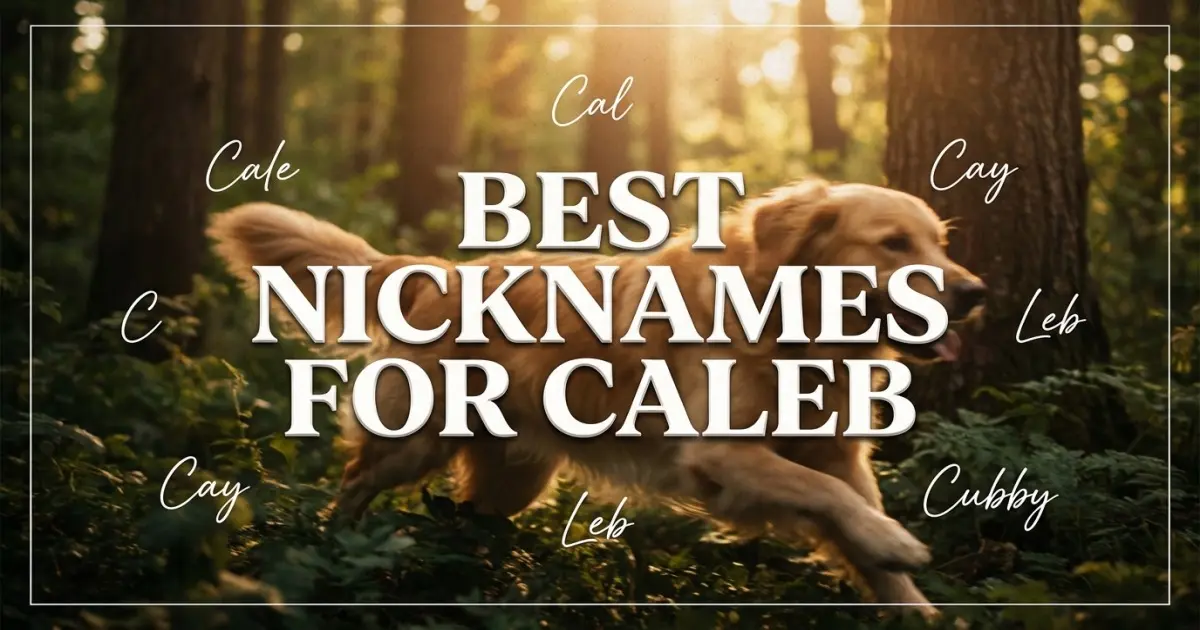
A nickname is rarely just a smaller version of a name. More often, it is a social signal: the form used by parents when affection softens their voice, by siblings when intimacy and teasing blur together, by teammates when speed matters more than formality, and by friends when the relationship has become close enough to trim the name without permission needing to be asked. That is why nickname logic matters. It tells you not only what can be shortened, but what kind of closeness a name naturally allows.
Caleb is especially revealing on this point because it sits in an interesting middle ground. Official data shows Caleb ranked No. 49 for boys in the United States in 2024, which means it is well known, widely used, and securely established. But it is not a sprawling, many-syllabled name that practically demands compression. Caleb is already brief, warm, and complete in the mouth. That makes its nickname world smaller than some parents expect, but also clearer. The good options are not endless. They are the ones that real families, classmates, and friends would actually say. If these shorter forms feel natural, it is usually because the full name is already doing something strong and clear, which you can see in Caleb meaning.
What the nickname world of Caleb reveals when the name leaves the birth certificate
| Group | Suggested Nicknames | Persona | Use Context |
|---|---|---|---|
| Full-name everyday form | Caleb | Warm, steady, complete | The most likely real-world outcome when the full name is already short, familiar, and easy to use |
| Classic short form | Cale | Clean, modern, relaxed | The strongest public nickname option for school, friendships, and adult life |
| Soft family forms | Caley, Kay | Affectionate, younger, domestic | Best for close family use, especially in early childhood or private home settings |
| Visual or playful variants | Cal | Casual, familiar, slightly improvised | More likely to arise from spelling or outside assumption than from the name’s actual spoken shape |
| DIY social forms | C, C.J.-style initials, surname-led variants | Group-driven, situational, boyish | Most likely in sports, school, work, or friend groups where nicknames grow from speed and habit |
The opening of Caleb is where the strongest nicknames actually live
When Caleb shortens naturally, it almost always happens from the opening sound zone. That makes sense linguistically. The name carries its stress on the first syllable, KAY-, and English nicknames usually cut where the ear already feels the weight. For Caleb, that means the beginning does almost all the nickname work. The ending is softer and less detachable, so the front of the name has to carry the burden of familiarity. These nickname choices read more clearly once the spoken shape of the full name is in view, so see Caleb pronunciation guide.
Why Cale is the most convincing short form of Caleb
Cale is by far the cleanest and most believable shortening. It preserves the actual spoken start of Caleb rather than merely reacting to the spelling. That distinction matters. A good nickname usually sounds as though it grew out of real speech, not out of someone staring at the name on paper and cutting letters away with scissors. Cale passes that test. It sounds natural, modern, and self-contained.
It also has the rare advantage of working across ages. On a small child, Cale sounds friendly and easy. On a teenager, it feels crisp and current. On an adult, it still holds together without sounding unfinished. That makes it the strongest public nickname available to Caleb. If parents want one nickname that could plausibly follow the child from early school years into adulthood, Cale is the safest choice.
Kay and Caley when Caleb softens at home
Families do not always want the sleekest version of a name in private. Sometimes intimacy pulls a name toward something gentler, smaller, or more playful. That is where Kay and Caley begin to make sense. These are not the most likely public labels, but they are plausible home voices. A parent may call a toddler Kay in quick affectionate speech. A grandparent may drift toward Caley because it sounds warmer and more diminutive.
These forms work best when they stay inside the emotional register that created them. Caley sounds sweet because it belongs to the kitchen, the family sofa, the bedtime routine, the small private world where names soften naturally. It does not need to be the version teachers or coworkers use in order to be real.
Why Caleb often stays Caleb in public life
One of the most important truths about Caleb is that it does not need a nickname to become usable. Some names must be shortened to feel socially livable. Caleb does not have that problem. It is only two syllables, its pronunciation is stable, and it already sounds approachable. That means the full name often remains the real everyday name, not just the formal one on documents.
Caleb already sounds like a complete social name
There is a reason many people named Caleb simply remain Caleb. The name is brief enough to say quickly, familiar enough not to require explanation, and warm enough that it does not feel stiff in ordinary conversation. A teacher can say Caleb without effort. Friends can call out Caleb across a field without needing a shorter substitute. The name already performs much of the work nicknames are supposed to do.
This is one of Caleb’s quiet strengths. Parents do not have to choose between a full formal name and a separate casual identity. Caleb can be both. That continuity often appeals to families who want a child’s name to feel stable over time.
How Caleb carries affection without changing shape
Not every nickname requires structural change. Sometimes intimacy is carried by tone, repetition, or context rather than by a different word. Caleb is a good example. “Caleb, come here” and “Caleb, sweetheart” are not the same emotionally, even though the name itself remains unchanged. The full form is flexible enough to handle tenderness, seriousness, and everyday routine without sounding overly formal in any of them.
That makes Caleb different from names that need a babyish pet form for childhood and a sharper form for adulthood. It can move through those seasons intact. That is not a weakness in the nickname field. It is part of the name’s design.
The ending of Caleb resists invention more than parents expect
The final sound zone of Caleb, -leb, is one reason the nickname field narrows. It is soft, but not especially productive. Unlike names with endings that spin off obvious pet forms, Caleb’s second syllable does not naturally detach into something elegant. That means most of the truly strong nickname options still come from the front half of the name.
Why Caleb rarely becomes a strong ending-based nickname
Forms built from the ending alone usually feel strained. Leb does not sound especially stable or affectionate in ordinary English speech, and longer inventions based on it tend to feel more forced than organic. This is worth saying plainly because parents sometimes expect every familiar two-syllable name to generate a broad menu of obvious nickname options. Caleb usually does not. It gives you a few credible routes and then stops.
That limitation is not a flaw. It is part of what keeps the name from scattering. The nickname culture around Caleb is more selective, but also more believable.
Why Cal is possible, but less natural than Cale
Cal is the nickname many people may assume at first glance because they are reacting to the spelling rather than the pronunciation. It is not impossible. In fact, some families or peer groups may use it quite naturally. But it is less inevitable than Cale because it shifts away from the name’s actual spoken opening. Caleb begins with KAY-, not CAL-. So while Cal can function as a casual visual cut, it often feels slightly borrowed from the letters rather than drawn directly from the sound.
That makes Cal a plausible but secondary option. It works best when it arises informally and without too much theory attached to it. If parents are planning ahead, Cale usually feels closer to the real living sound of Caleb.
How Caleb nicknames shift from family tenderness to team life
Nicknames do not belong to one person forever in a fixed form. They change depending on who is speaking and what kind of social world the child has entered. A boy may be Caleb at home, Cale among friends, Kay to one grandparent, and something entirely surname-based on a sports team. This is normal. Nicknames often map relationships more accurately than they map the name itself.
Which Caleb nicknames are most likely to last
The forms with the best chance of lasting are Caleb and Cale. They work across childhood, adolescence, and adulthood without sounding stuck in one life stage. Cal can last too, but usually where the family or peer circle has established it strongly enough to override the sound-based logic of the full name. Kay and Caley are less likely to become lifelong public forms. They tend to belong to smaller, more affectionate circles.
This is helpful because it lets parents distinguish between intimate nicknames and durable ones. Not every nickname needs to travel everywhere. Some are strongest because they stay private.
The DIY Caleb nicknames nobody can fully script
Research and common experience both suggest that some nicknames are never planned by parents at all. They arise from initials, surnames, sports culture, or some joke nobody could have predicted. That is especially true for boys’ names, where surname-based and initials-based nicknames often flourish in group settings. Caleb may well acquire a C, a C.J.-style school nickname, or a team label built from the surname rather than the first name.
This is another reason not to overthink the process. The realistic nickname map for Caleb is clear enough. Caleb itself is strong. Cale is the best short form. Kay and Caley soften the name at home. Cal exists, but usually by spelling or social drift rather than by phonetic inevitability. Everything else depends on the child’s personality and the communities he moves through.